
Exporting Twitter Ads data in 2026 means two different workflows depending on what you actually need. Campaign-level performance (impressions, spend, conversions per ad set) comes out of X Ads Manager as a CSV download from the campaigns dashboard.
Organic post performance, follower analytics, and engagement breakdowns ride on the official X content API and come out cleanly through Circleboom's analytics export. Most operators conflate the two and end up with half their data missing.
Circleboom exports follower analytics, engagement breakdowns, and post-level performance to CSV through Circleboom's verified Enterprise developer access. Pair it with Ads Manager's native CSV for the full reporting picture.
→ Export Twitter analytics to CSV
Below: which export covers which metric, the exact steps for each, and how to merge them into a single reporting view.
What "Export Twitter Ads Data" Actually Covers in 2026
The category broke into two pieces after X's API restructuring. The first piece is paid-campaign data, which X keeps inside Ads Manager and exports via the platform's native CSV download.
The second piece is organic-content and audience data, which is what most operators actually want when they search "export Twitter Ads data" because the paid campaign data only makes sense in context with the organic baseline.
The article on Twitter ads cost mechanics covers the same split from the cost-reporting angle. Operators running paid campaigns without organic context end up unable to attribute conversions, calculate true ROAS, or compare ad performance to organic-post performance on the same metrics.
Method 1: X Ads Manager Native CSV
For paid-campaign data (spend, impressions, clicks, conversions per campaign or ad set), X Ads Manager provides a native CSV export from the campaign dashboard.
The export is paid-account-only, requires the operator to be logged into the Ads Manager account directly, and does not include organic-post performance data. The CSV includes every metric Ads Manager surfaces, broken out by date and campaign hierarchy.
The export is a one-time pull, not a connected feed. Operators who want recurring reporting either re-run the export weekly or set up a Google Sheets script to ingest the CSV programmatically.
Method 2: Circleboom Analytics Export
For organic-content performance (engagement per tweet, click-through rate per post shape, follower growth, demographic breakdowns), Circleboom exports the same data layer the X content API surfaces, formatted as CSV with one row per metric. The export covers post analytics, follower analytics, engagement analytics, and audience composition.
The relevant feature flow runs through the Twitter Post Analytics dashboard plus the Export Twitter Analytics tool. The data is current as of the last X API sync (usually within minutes), and the CSV format is stable across runs, which means downstream reporting tools (Sheets, Airtable, Looker, Excel) ingest it consistently.
 infocircleboom.com
How to Export Twitter Ads Data (Step by Step)
The combined workflow runs both methods, then merges the outputs into one reporting view. The recommended order is organic-data first (Circleboom), paid-data second (Ads Manager), merge third.
Hands-on demo: how the Circleboom analytics export workflow runs end to end.
The flow, in order.
Pull the organic baseline through Circleboom
- Log in to Circleboom Twitter and connect your X account through OAuth.

- Open the Followers / Following Management menu for the analytics workspace.
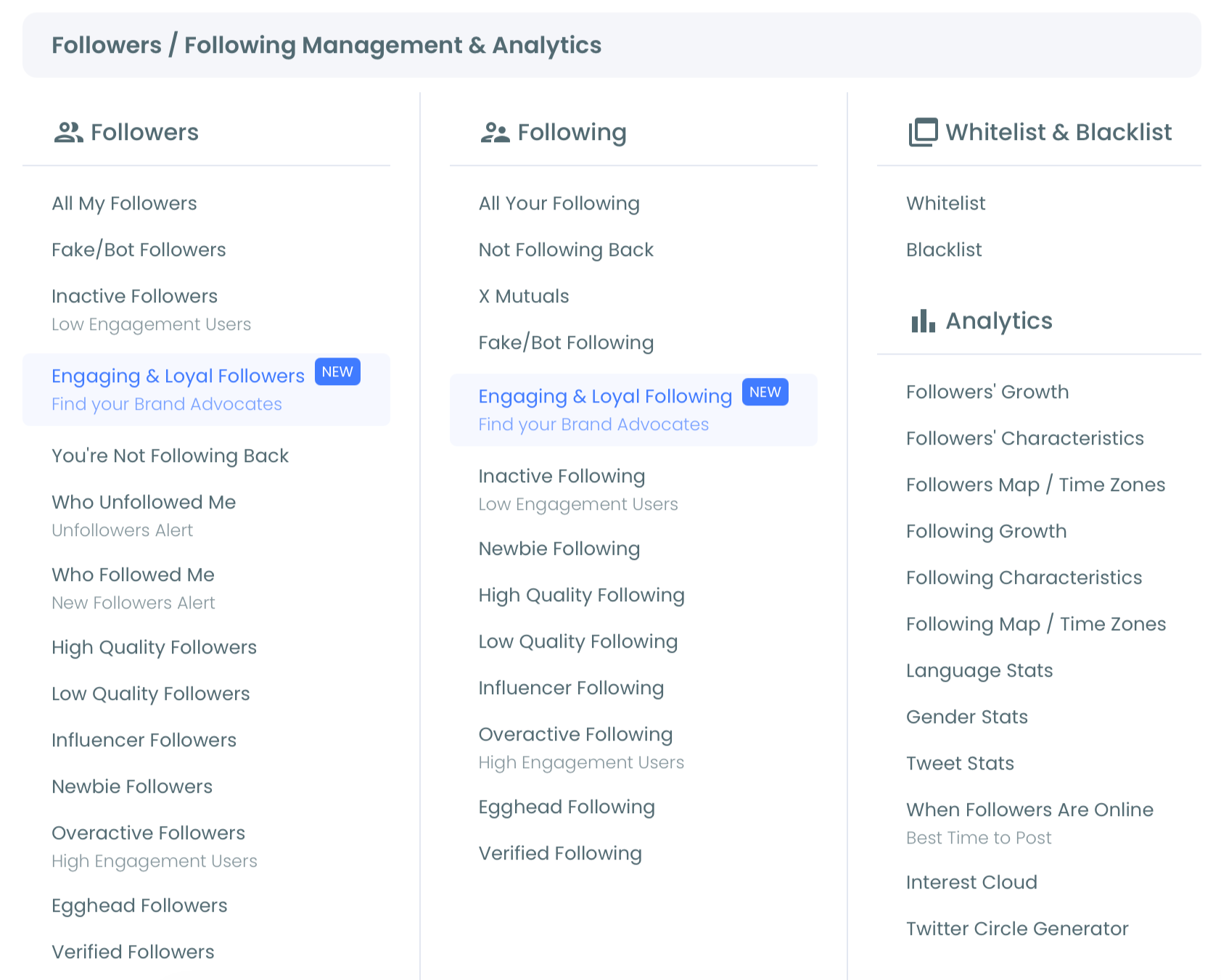
- Run the analytics export for the date range matching your campaign window. The output is a CSV with engagement, impressions, click-through rate, and follower-growth columns.
Pull the paid campaign data from X Ads Manager
- Open X Ads Manager in a separate tab and navigate to the campaigns dashboard.
- Select the campaign date range matching the Circleboom export and click Export to download the campaign CSV.
Merge the two for the full reporting view
- Open both CSVs in Sheets or Excel and join on the date column to produce a combined view of paid plus organic performance.
That sequence is what makes the reporting reproducible. Pulling only paid data leaves the organic baseline missing, which makes attribution impossible. Pulling only organic data leaves the paid spend invisible, which makes ROAS uncalculable. The merged view is what tells the operator what is actually working.
What the Combined Export Reveals
Operators running the merged view see three things their separate reports do not.
- Cross-pollination effect. Paid campaigns lift organic engagement by 15% to 30% during the campaign window because the boosted impressions train the algorithm that the account is active. The lift persists for two to four weeks after the campaign ends.
- Organic-baseline drift. Posting cadence and audience-quality changes (covered in the article on Twitter scarecrows that silently kill engagement) produce engagement-rate drift that paid-only reporting masks. The merged view exposes the drift directly.
- True ROAS. Calculated from paid spend divided by total conversions (paid plus organic-attributed), not just paid-attributed conversions. The number is typically 1.4x to 2x the paid-only ROAS, which changes campaign-budget decisions materially.
Common Mistakes Operators Make Exporting Ads Data
The mistake I see most often is pulling Ads Manager CSV alone and using it as the entire campaign report. The result is a report that misses the organic context the campaign created, which means the ROAS calculation is wrong and the campaign-extension decision is made on bad data. The fix is to add the Circleboom organic export to every reporting cycle.
The second mistake is treating the export as one-time. Reporting that runs once a quarter does not catch within-campaign optimization opportunities. Most operators benefit from weekly merged exports during active campaigns and monthly exports during quiet periods. The article on exporting tweets to Excel or CSV covers the cadence question for content-only exports.
The third mistake is ignoring follower-level data. Audience composition shifts during a campaign reveal whether the campaign attracted target-segment followers or low-quality follow-throughs. The follower-export side of the workflow (export your followers) catches this directly.
Why the Circleboom Side Matters Specifically
Circleboom's analytics export pulls from the same X Enterprise content API tier the platform itself uses internally, which means the data layer is current and complete. The article on finding your X Twitter account analytics covers the same data surface from the dashboard angle. The export takes the dashboard view and serializes it to CSV for downstream tooling.
The same export covers cases where Twitter Analytics Premium (the X-paid analytics tier) is unavailable or insufficient, including export by date range, export by tweet type, and export of follower-demographic snapshots. The article on Twitter analytics alternatives covers the substitution case directly.
The Bottom Line
Export Twitter Ads data in 2026 means running two exports and merging them. The paid side comes from X Ads Manager. The organic side comes from Circleboom. The merged view is the only report that tells the operator the actual story.
→ Export Twitter analytics now
Common Questions About Exporting Twitter Ads Data
Can I export Twitter Ads data without an active campaign?
Yes for organic-content and audience data through Circleboom; no for paid-campaign data through Ads Manager (campaign data only exists if a campaign ran). The organic export covers the entire account history regardless of paid spend.
How often does the data refresh?
Circleboom analytics refresh from X's official API typically within minutes of new engagement events. Ads Manager refreshes on a similar schedule for active campaigns. Both exports reflect data current to the last platform sync.
Can I export Twitter Ads data to Google Sheets directly?
Both exports produce CSV, which Google Sheets imports natively (File → Import). Operators who want a recurring connected feed typically set up a Sheets script to ingest the CSV on a scheduled basis.
Is the Circleboom export safe to run on large accounts?
Yes. The export runs through Circleboom's Enterprise-tier access on X with the rate-limit pacing those endpoints require, regardless of account size. Accounts with 100k followers or 10k tweets export the same way as smaller accounts.