Run a giveaway on Twitter and two things happen. Real people engage with it. Bots do too.
It doesn't matter whether you asked people to like, retweet, or reply. Automated accounts participate in all three formats, and they do it at a scale that can easily outnumber genuine entries on a high-engagement tweet. If your giveaway reaches a few thousand interactions, a meaningful portion of those interactions came from accounts that have never had a real person behind them.
Picking a winner from that pool without filtering means there's a real chance the account you announce as your winner is a bot, a spam profile, or an account created last week specifically to enter giveaways. That outcome damages your credibility with the real audience you were trying to reward.
Circleboom Twitter lets you filter fake and low-quality accounts out of your participant list before the draw runs. What's left is a clean pool of genuine entries. The winner you pick from that pool is a real person.
Can you remove fake accounts from Twitter giveaway participants?
Not through Twitter's native tools. Twitter gives you no way to filter giveaway participants by account quality before selecting a winner.
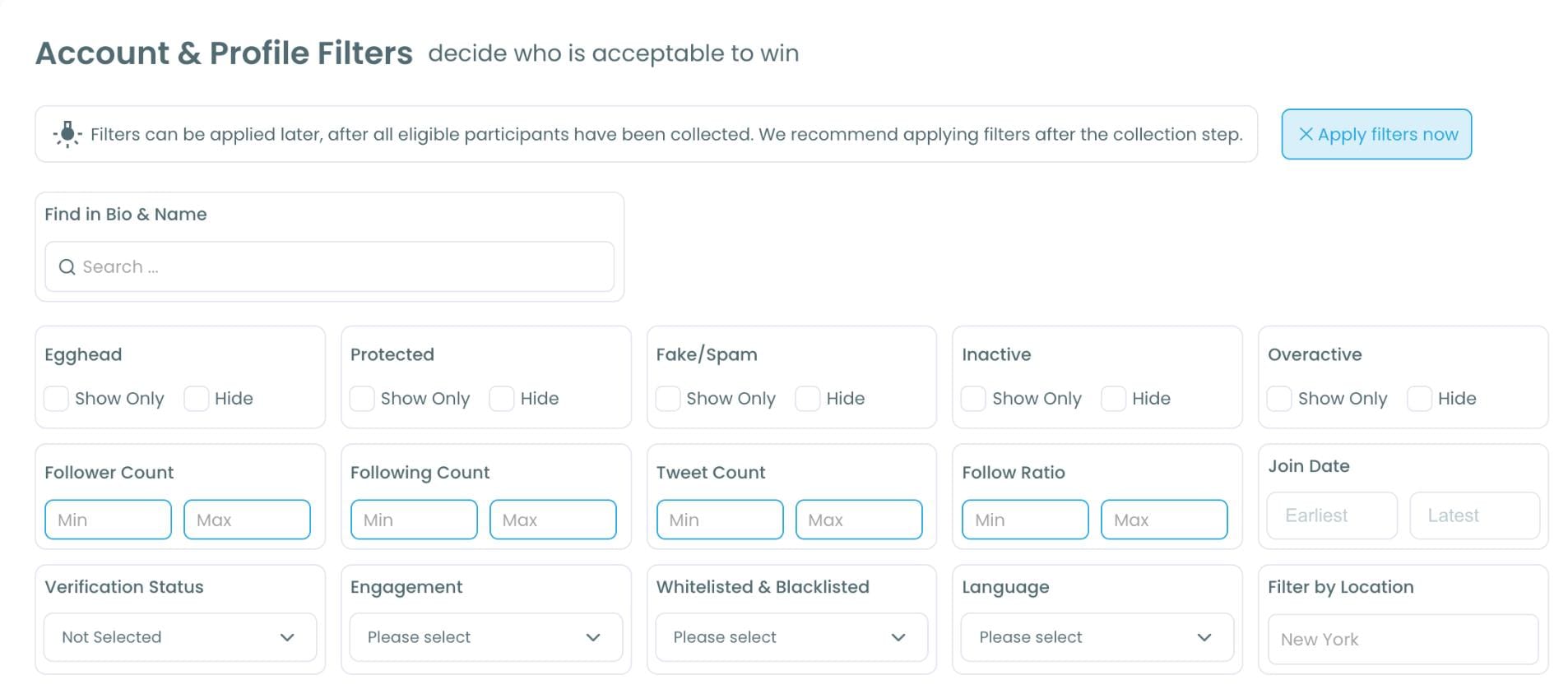
With Circleboom Twitter's Giveaway Picker, you retrieve the full participant list from likes, retweets, or replies and apply filters that remove fake, bot, and low-quality accounts before the random draw runs.


What Is Circleboom Twitter?
Circleboom is an Official X Enterprise Developer. All participant data is retrieved through X's official APIs, which means the list you're filtering is complete and accurate, not a partial view from the app interface.
- Retrieve the full participant list from likes, retweets, or replies for any public tweet
- Apply bot and fake account filters before the draw runs
- Set follower count thresholds and activity requirements for eligible entries
- Pick a random winner from the filtered pool and generate a shareable result image
How to Eliminate Fake Accounts from Twitter Giveaway Participants with Circleboom Twitter
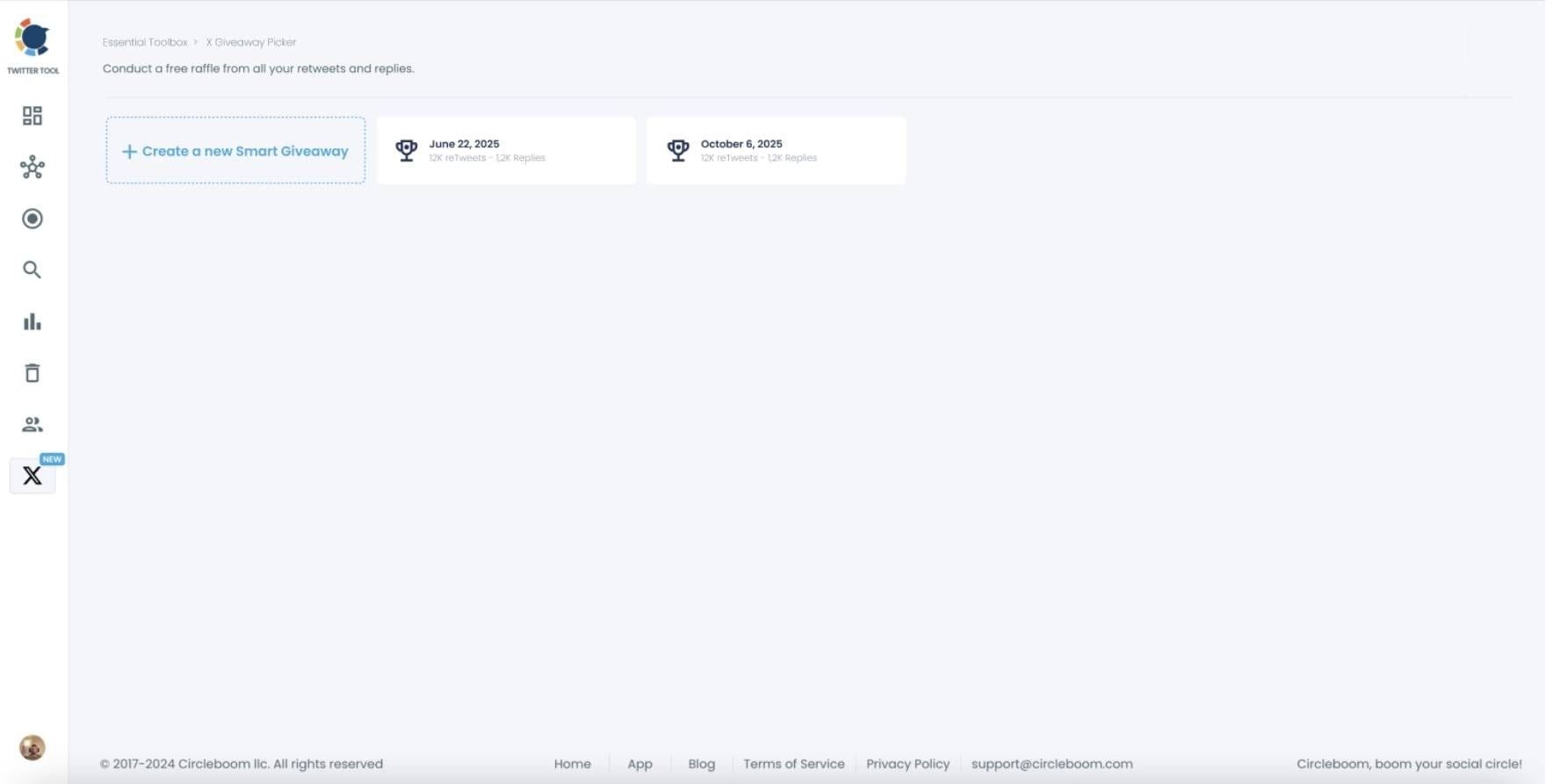
Step #1: Go to Circleboom and land in Twitter Giveaway Picker.
If you don’t have a Circleboom account yet, it is quite easy to get one.
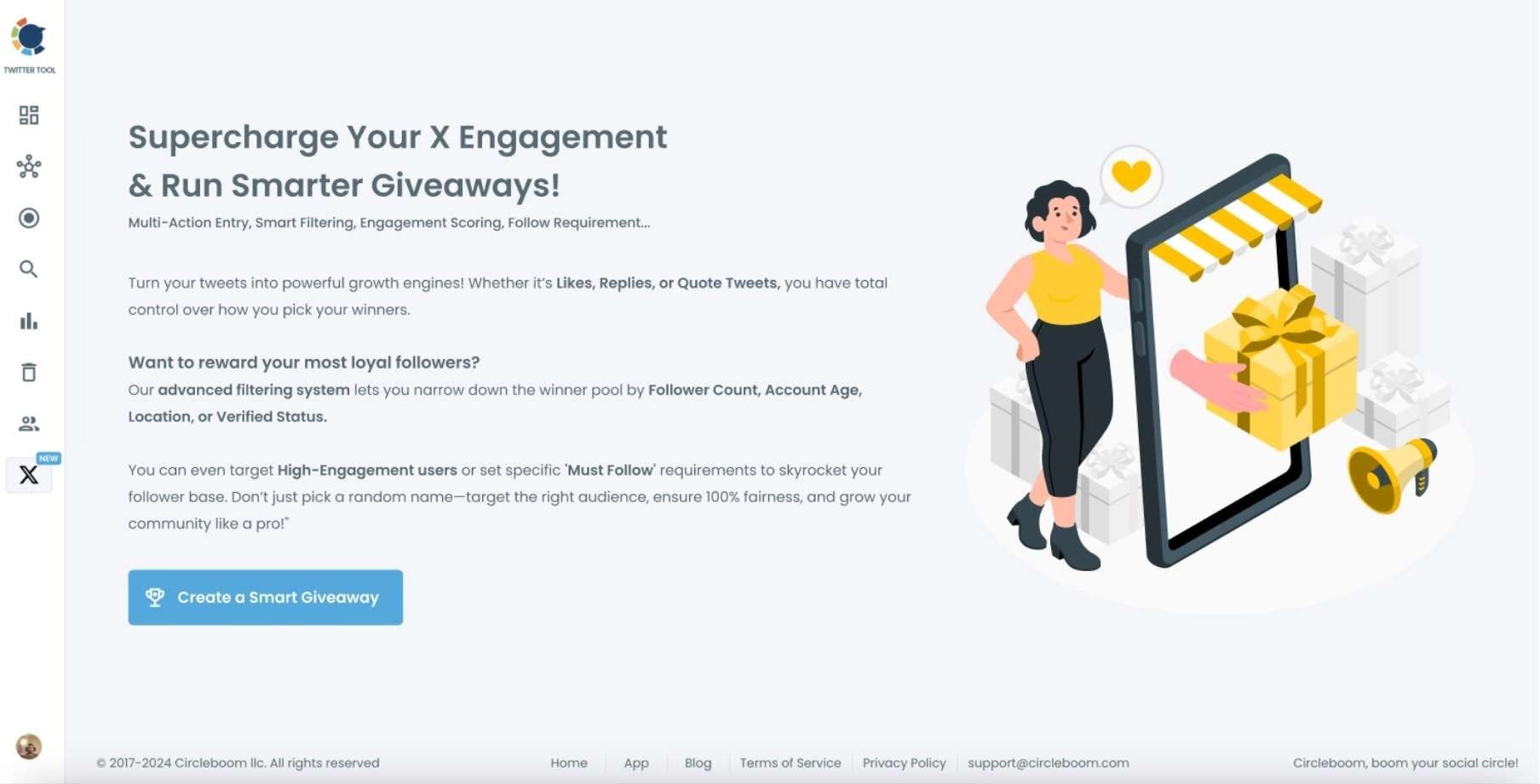
Step #2: You should create a new giveaway campaign.
You can view your old giveaways here as well.
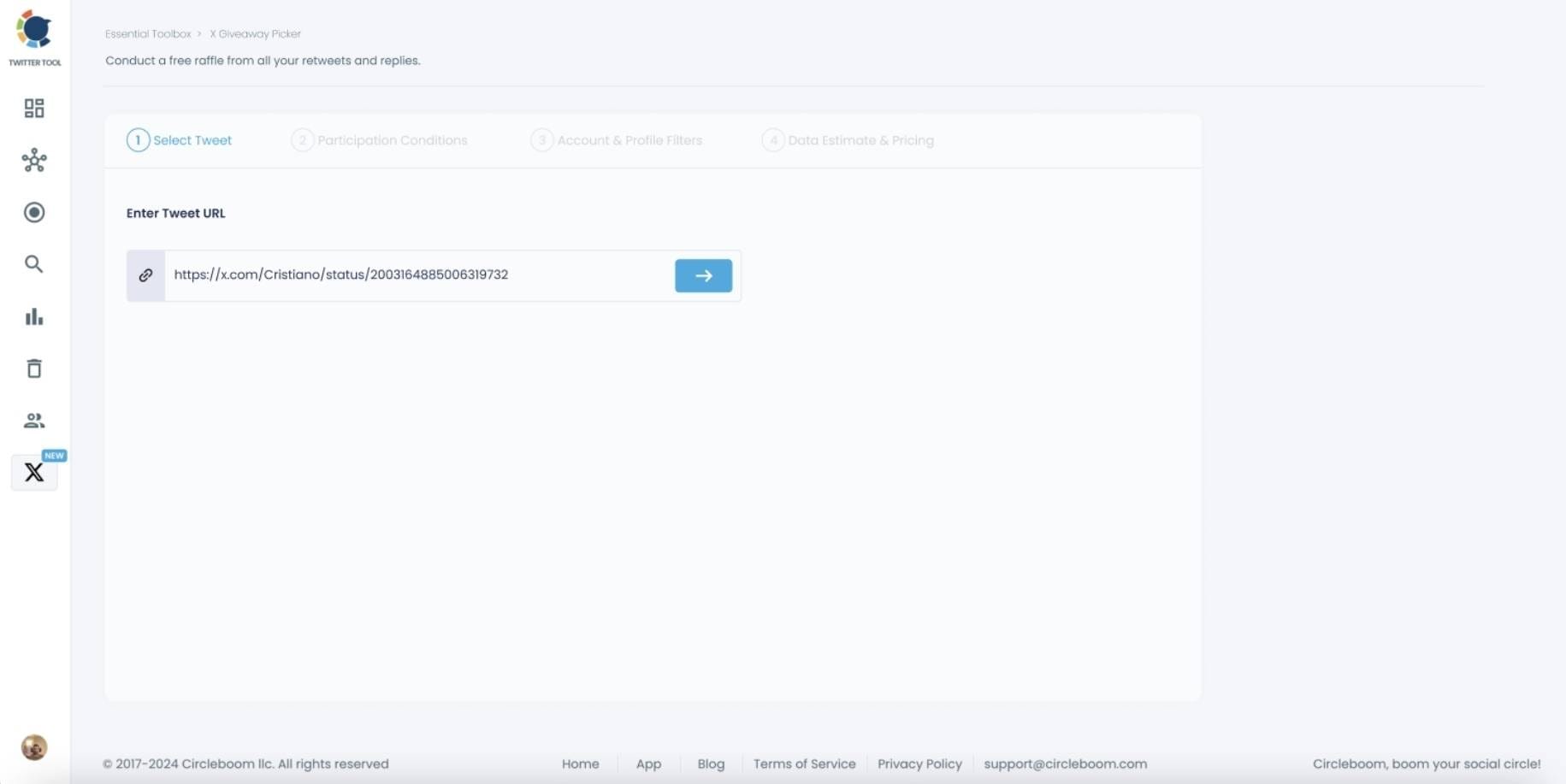
Step #3: Enter your tweet URL, where you will manage your giveaway.
You simply copy and paste the link of your tweet.
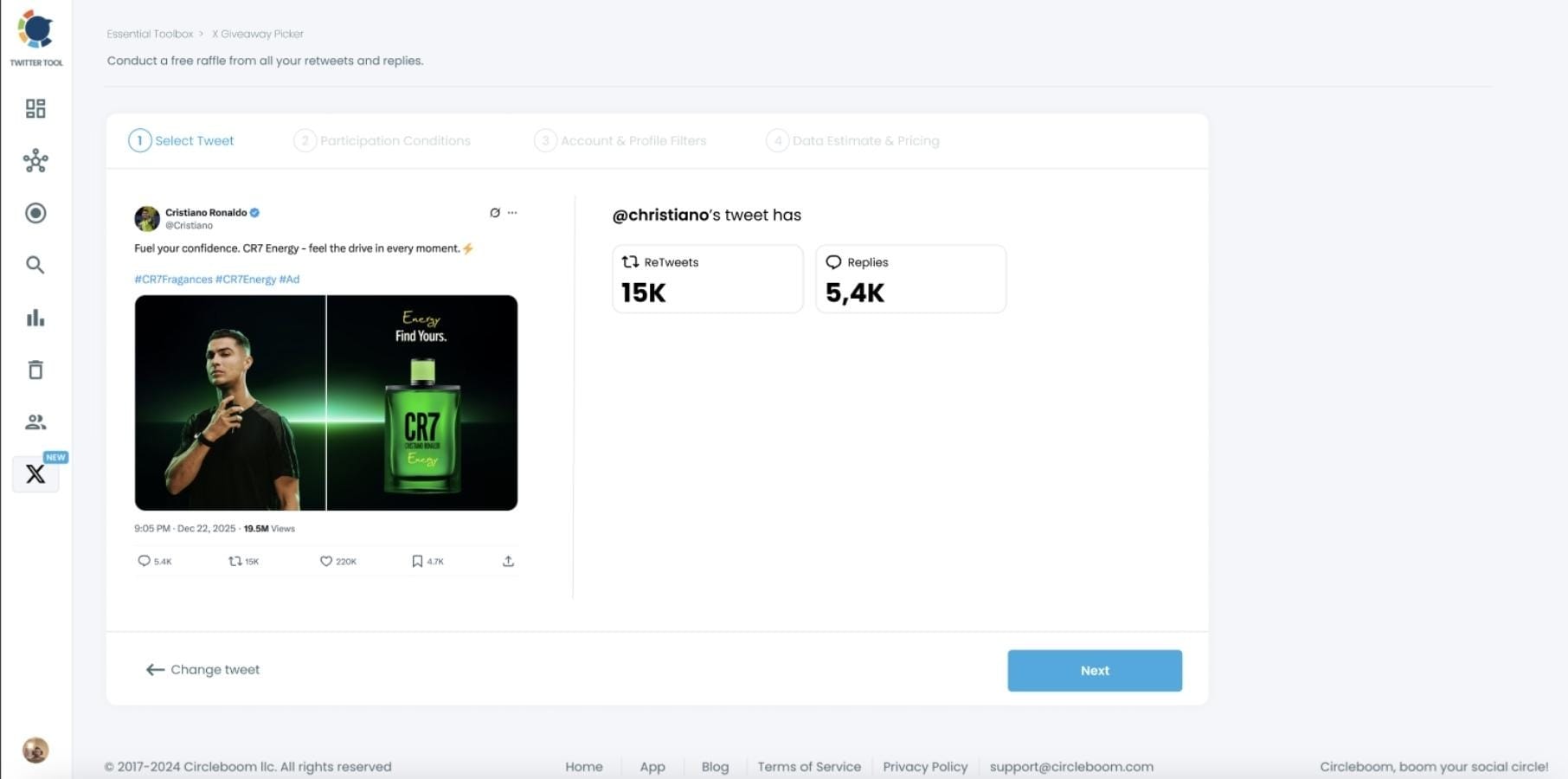
You will see the preview of your tweet on the next screen.
You will also see stats of this tweet: replies and retweets.
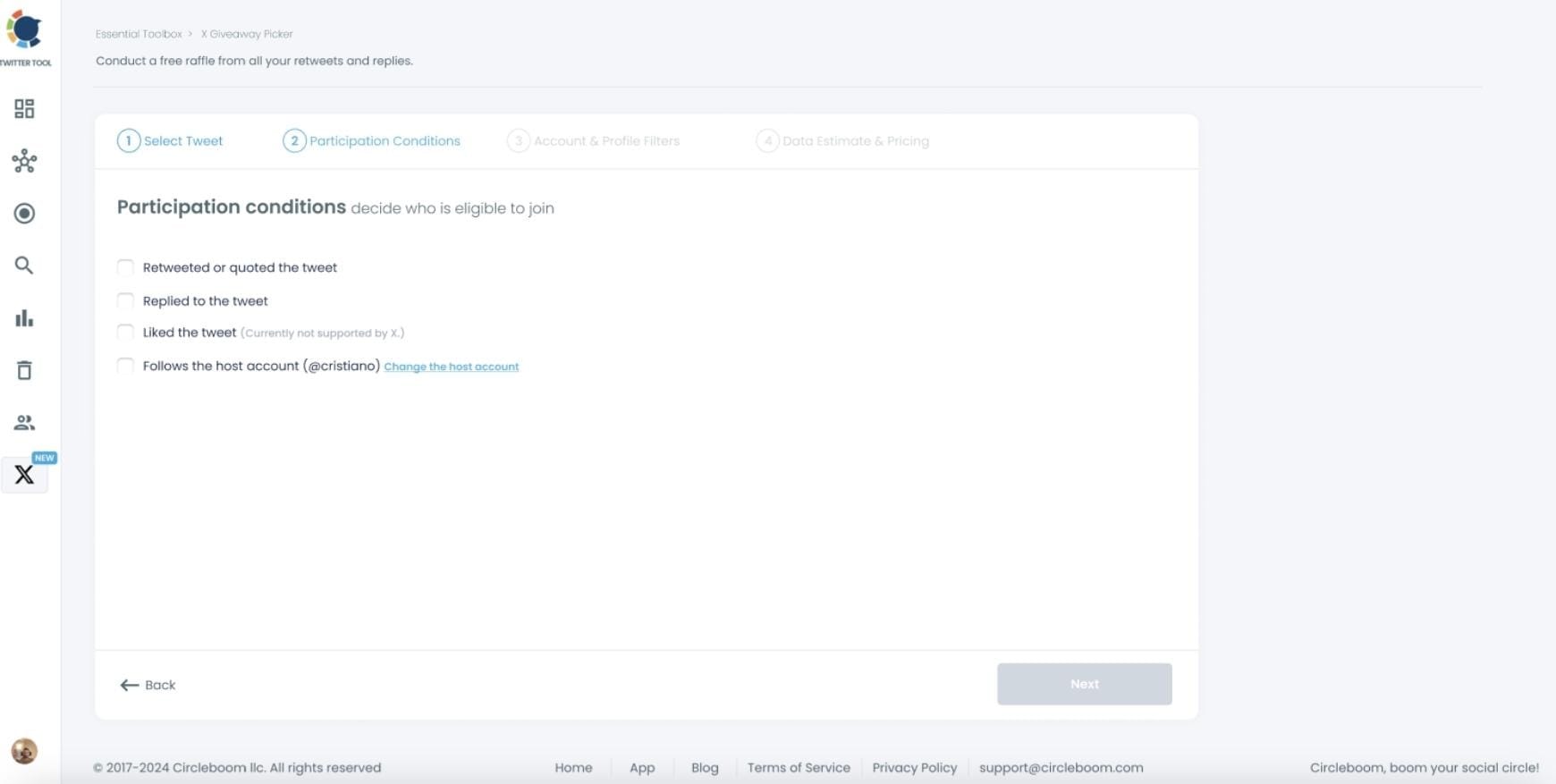
Step #4: The next step is participation conditions.
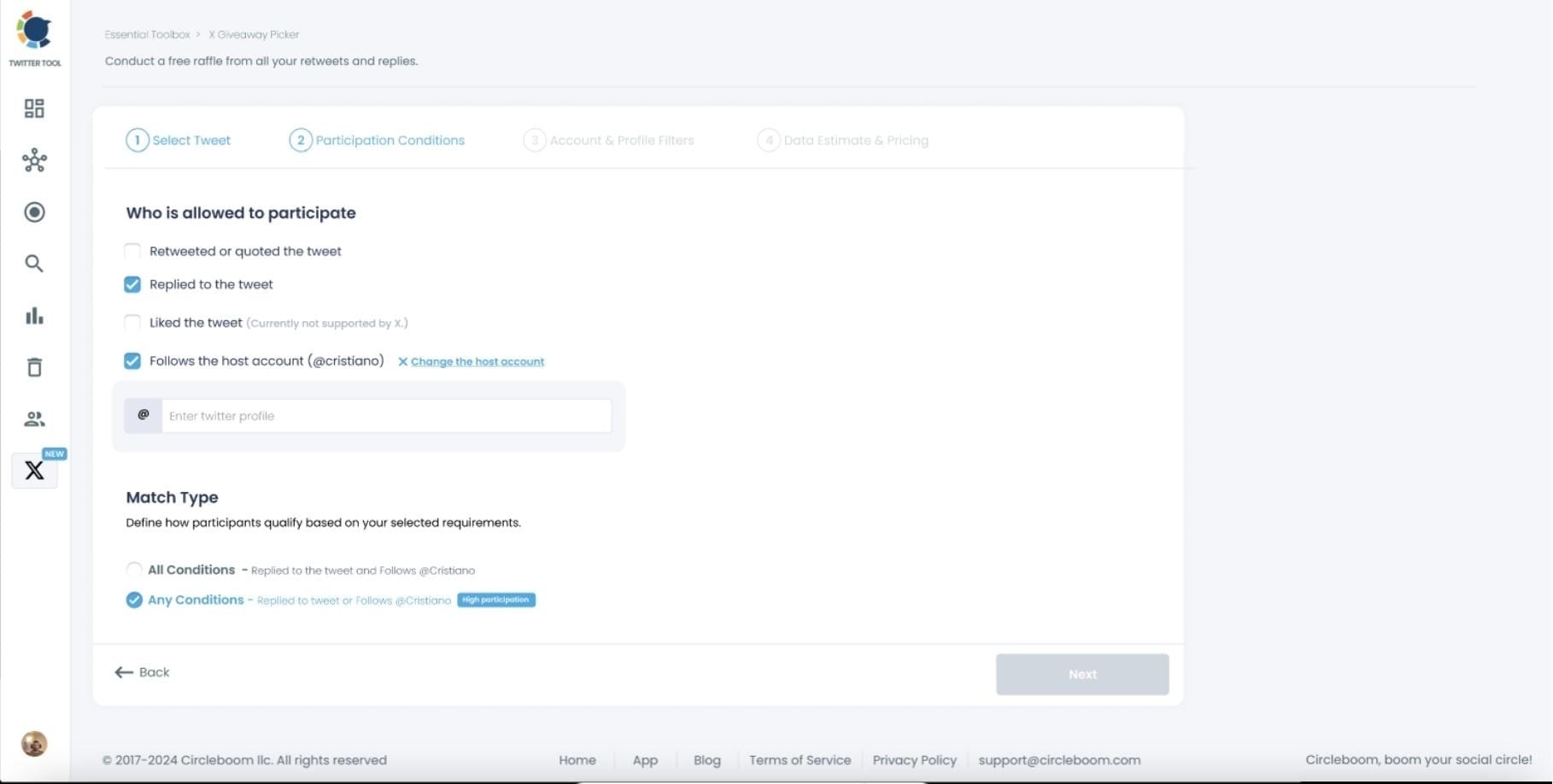
You will set the conditions for how other X users can participate in your giveaway campaign. Those who replied to your tweets, who reposted your tweet, liked your tweet AND/OR follow your or any X account.
You can set more details about participation conditions and match type.
Step #5: Now, you can apply filters to your giveaway results.
You may want to keep inactive, and bot accounts away from your draw. Or, you want accounts that have more than 5000, for example. There can be many filters you can apply to your giveaway sorting.
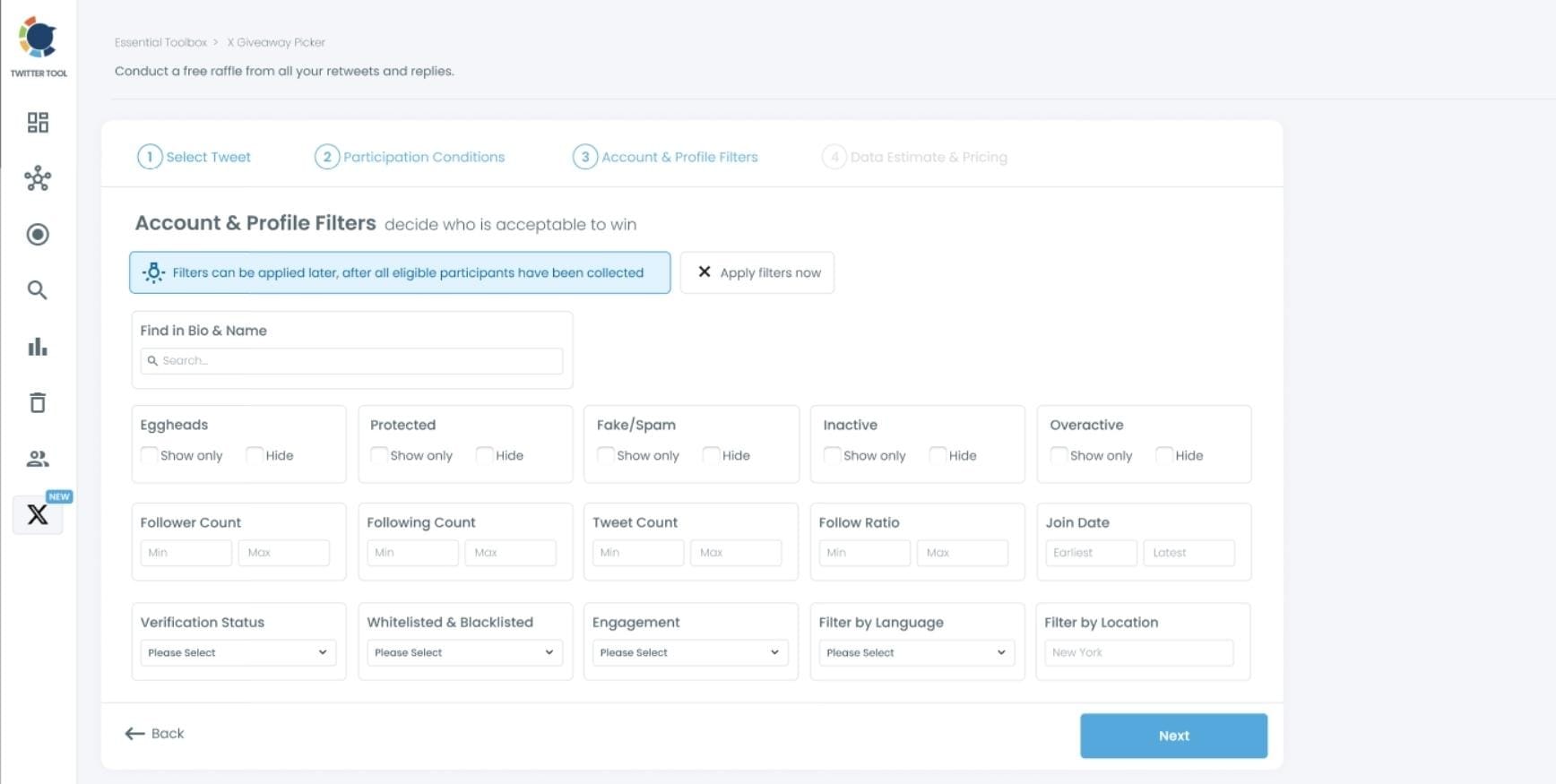
Step #6: It is time to start the giveaway draw.
Based on the participation conditions and filters, a calculation will be made by the algorithm and the token you should spend will be shown.
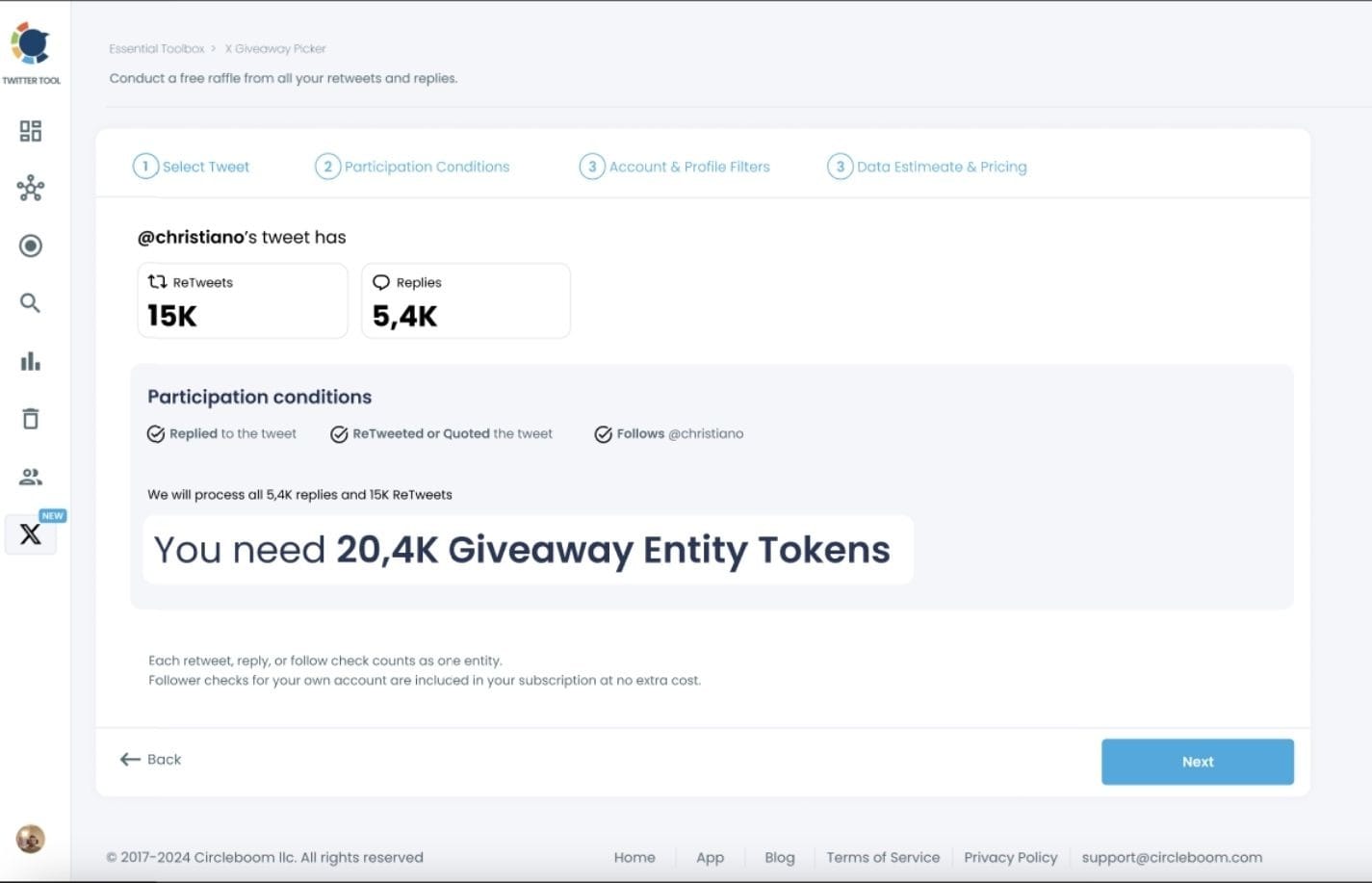
You will make the payment.
You can purchase any package that is suitable for your giveaway campaign.
Step#7: Circleboom will list all the X accounts that are eligible for your giveaway. Those who replies your tweet, and/or repost your tweet and/or follow the account.
When it is ready to pick up the winner, you can click the button at the bottom right. Circleboom will draw the winner automatically.
Do not forget that Circleboom is an official X Enterprise developer, so your raffle is totally automated and safe; you are privileged by the official API.
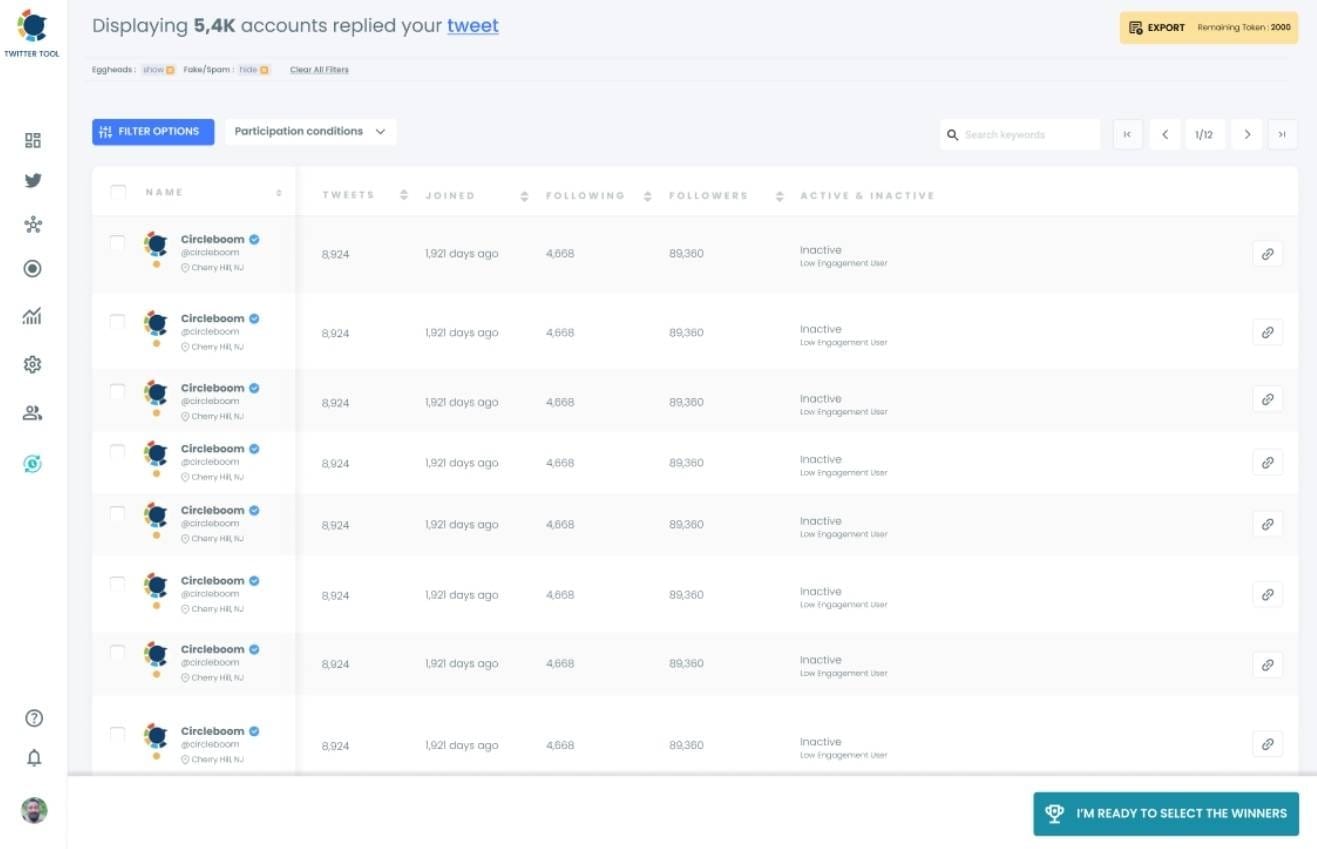
You can draw the winner and you can also pick a substitute winner.
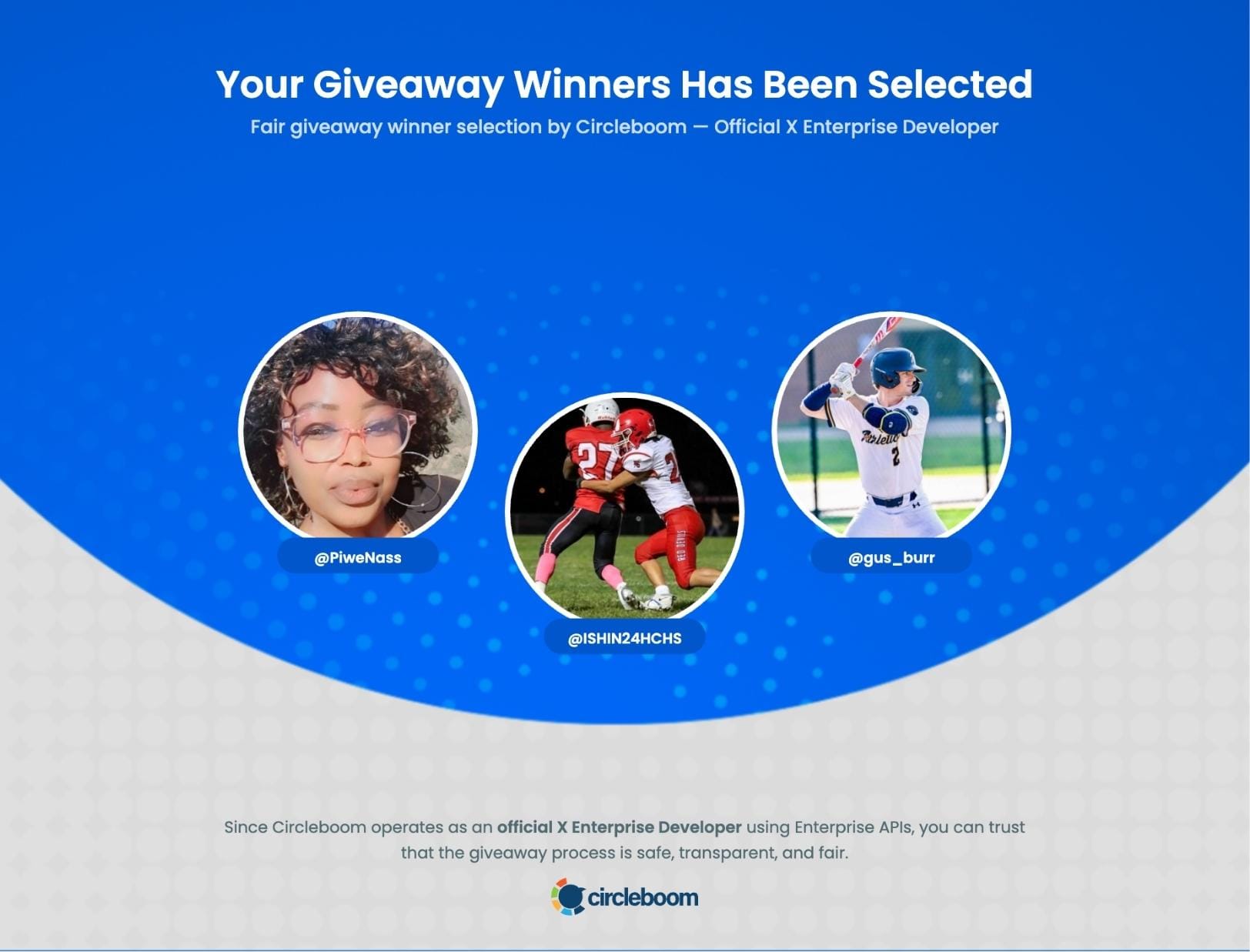
Many hosts post the result image generated by the tool to show that the winner was selected fairly. This transparency helps participants trust the outcome of the giveaway.
Why Fake Accounts Enter Giveaways
Bots are built to participate in engagement-based events. Giveaways that require liking, retweeting, or replying are exactly the kind of trigger that automated accounts are designed to respond to.
Like-based giveaways are the most vulnerable. Liking a tweet is a single automated action that costs nothing computationally. Bot networks sweep through giveaway-style tweets and like them in bulk without any human involvement.
Retweet-based giveaways attract a different kind of bot: accounts that auto-retweet any tweet containing specific keywords like "giveaway," "winner," or "prize." These accounts exist specifically to participate in retweet campaigns at scale.
Reply-based giveaways tend to attract spam accounts that post generic replies, often pulling from a template, to appear legitimate while gaming the entry condition.
📌 The problem isn't just that a bot might win. It's that your audience sees who won. If your followers click on the winning account and find a bot or a two-week-old profile with no activity, the credibility of the giveaway collapses, and so does the trust in any future giveaway you run.
What the Filters Actually Remove
Circleboom Twitter's Giveaway Picker applies quality filters to the participant list before the draw. Each filter targets a different type of low-quality entry.
Bot and fake account filter. This is the primary filter for giveaway cleanup. Circleboom analyzes behavioral and profile signals across every participant: follower to following ratio imbalances, tweet frequency, account age, and activity patterns. Accounts that match multiple bot-like signals are removed from the eligible pool before the draw runs.
Egghead filter. Accounts without a custom profile image are filtered out. Default avatars are strongly associated with bots, newly created throwaway accounts, and profiles that were never set up for genuine use. In a giveaway context, filtering eggheads removes a significant portion of the lowest-quality entries quickly.
Minimum follower count. Setting a minimum follower threshold removes brand new accounts and profiles with no real presence from the eligible pool. An account created last week with three followers that entered your giveaway is almost certainly not a genuine participant.
Followers-only filter. If your giveaway required participants to follow your account, this filter enforces that condition at the draw stage. Anyone who liked, retweeted, or replied without following is excluded automatically, so you're not just filtering bots but also entries that didn't meet the stated rules.
Account activity filter. Accounts with no recent activity are removed. A profile that hasn't posted or engaged with anything in months adds nothing to the quality of your participant pool and is unlikely to be a meaningful winner from your real audience's perspective.
⚠️ No filter combination guarantees a bot-free list with absolute certainty. Some real accounts look similar to bots on paper, especially newer accounts with low follower counts.
The goal of filtering is to make the pool significantly cleaner, not perfectly clean. Review the filtered list before running the draw if you want an extra layer of confidence.
Why It Matters Beyond Fairness
Your real audience is watching. The people who genuinely entered your giveaway are also watching who wins. A winner who looks like a bot or a spam account tells your audience that the giveaway wasn't really for them.
Repeat participation depends on trust. If followers believe a giveaway is gamed or poorly run, they don't enter the next one. The long-term value of a giveaway as a growth and engagement tool depends entirely on your audience believing it's worth participating in.
Brand deals and partnerships look at giveaway quality. If you run giveaways as part of a brand collaboration or sponsorship, the brands involved care whether the engagement is real. A giveaway with a clean, filtered participant list is a better deliverable than one where a significant portion of entries came from automated accounts.
It protects the winner too. Announcing a real winner, someone who actually engaged with your content and wanted to win, is a better outcome for everyone. That winner becomes a genuine advocate. A bot winning doesn't.
For ongoing audience quality management beyond giveaways, Circleboom Twitter's Fake and Bot Follower Checker applies the same quality signals to your full follower base so you can keep your audience clean between campaigns.
Frequently Asked Questions
Can you filter fake accounts from Twitter giveaway participants?
Not natively. Twitter provides no participant filtering tools for giveaways. Circleboom Twitter's Giveaway Picker retrieves the full participant list from any public tweet and applies quality filters to remove bot, fake, and low-quality accounts before the random draw runs.
Which giveaway formats are most affected by fake account entries?
All three main formats attract bots, but like-based giveaways tend to attract the highest volume of automated entries because liking a tweet is the simplest possible action for a bot to automate. Reply-based giveaways attract spam accounts with templated responses. Retweet-based giveaways pull in auto-retweeting bot networks.
What signals does Circleboom use to identify fake giveaway participants?
Circleboom analyzes follower to following ratio imbalances, tweet frequency relative to account age, default profile images, account creation dates, and activity levels. Accounts that match multiple low-quality signals across these dimensions are flagged and removed from the eligible participant pool.
Can I combine multiple filters before picking a winner?
Yes. You can stack filters simultaneously, for example applying the bot filter, the egghead filter, a minimum follower count, and the followers-only condition at the same time. The draw runs from the accounts that pass all applied filters.
Will the winner know they were selected through a filtered process?
No. The winner sees the same announcement as everyone else. The filtering happens on your side before the draw. The result image Circleboom generates shows the winner was selected randomly, which is what your audience needs to see.
What if the filtered list is very small?
If filters reduce the participant pool significantly, that itself is useful information about the quality of your giveaway's engagement. You can adjust filter thresholds if they're too aggressive, or run the draw from the filtered list knowing the entries that remain are the most legitimate ones.
Final Thoughts
A giveaway is only as good as the audience it rewards. Picking a winner from an unfiltered list that includes hundreds of bot entries doesn't serve your real followers and doesn't build the credibility that makes future giveaways worth running.
Circleboom Twitter's Giveaway Picker filters out fake and low-quality accounts before the draw runs, so the winner you announce is someone who actually wanted to win.
Eliminate fake accounts from your Twitter giveaway participants with Circleboom Twitter.