

A defensible Twitter event promotion in 2026 runs a four-phase timeline (pre-promotion, build, live, post) with cross-platform fan-out to LinkedIn, Threads, and Bluesky. The four phases together produce sustained registration flow rather than a single announcement spike.
The workflow runs from one Circleboom dashboard, takes 4-6 hours for the initial queue build, and produces the 30-60 minutes per week recurring cadence during the active campaign window.
What this guide gives you.The four phases that capture each audience-decision window.The cross-platform fan-out that doubles registration flow.The post-phase content that captures long-tail inbound for weeks after.
Built on Circleboom's verified Enterprise developer access on X. Start with the Cross-Post workspace.
Why Four Phases Beat a Single Sprint
The "promote an event on Twitter" framing collapses to "post a lot in the days before" for most operators. Three structural reasons explain why single-sprint promotion underperforms.
The first is the early-decision audience gap. About 20-30% of total registrations come from accounts that decide 4-6 weeks before the event. Two-week sprints miss them entirely.
The second is the post-phase audience gap. The week after the event is when long-tail content (recap threads, recording links, highlight clips) produces sustained inbound. Sprints that end on event day leave that audience uncaptured.
The article on how to promote a tweet covers a related promotion-side angle.
 Arif Akdogan
The third is the platform-isolation gap. Twitter-only campaigns miss the LinkedIn, Threads, Bluesky audiences that often produce 30-60% of registrations on cross-promoted events.
The Four Phases
These are the phases the workflow operates on.
- Pre-promotion (4-6 weeks out). Awareness building. 1-2 posts per week. Goal: capture early-decision audience.
- Build (1-3 weeks out). Conversion to registration. 4-6 posts per week. Goal: convert audience to registered.
- Live (event day). Real-time amplification. 8-15 posts during event hours. Goal: capture same-day audience.
- Post (week after). Long-tail asset capture. 4-6 posts in the week after. Goal: capture recap audience.
The four phases together produce sustained registration flow.
How to Promote the Event Step by Step
The setup runs from one Circleboom dashboard. Five phases match the timeline phases plus the cross-platform fan-out.
Hands-on demo: how to share tweets on Facebook automatically.
The flow, in order.
Phase 1: Connect
- Log in to Circleboom Twitter and connect your X account through the official OAuth handshake.
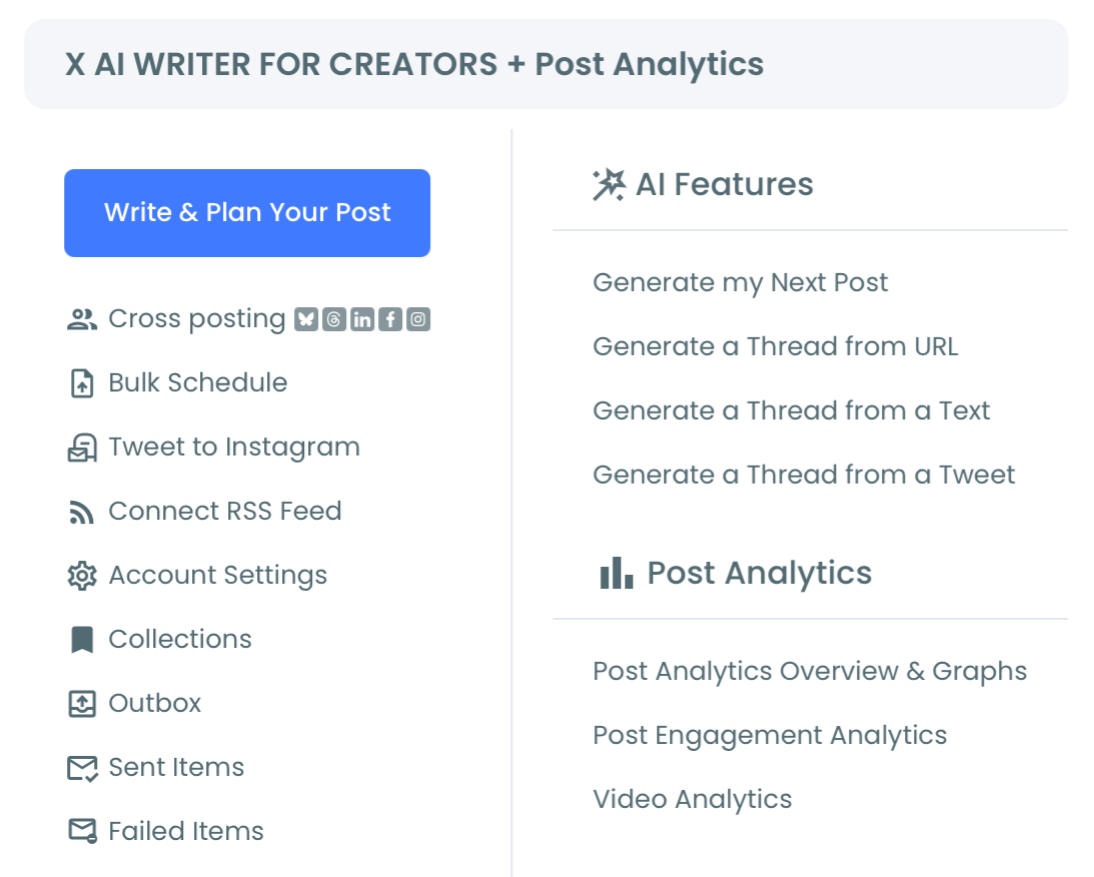
- Open the X Post Planner menu for the scheduling workspace.
Phase 2: Build the queue
- Build the pre-promotion queue (4-6 weeks out) with awareness posts at 1-2 per week.
- Build the build-phase queue (1-3 weeks out) with speaker, agenda, social-proof posts at 4-6 per week.
- Build the live-day thread template for real-time amplification.
Phase 3: Enable cross-posting
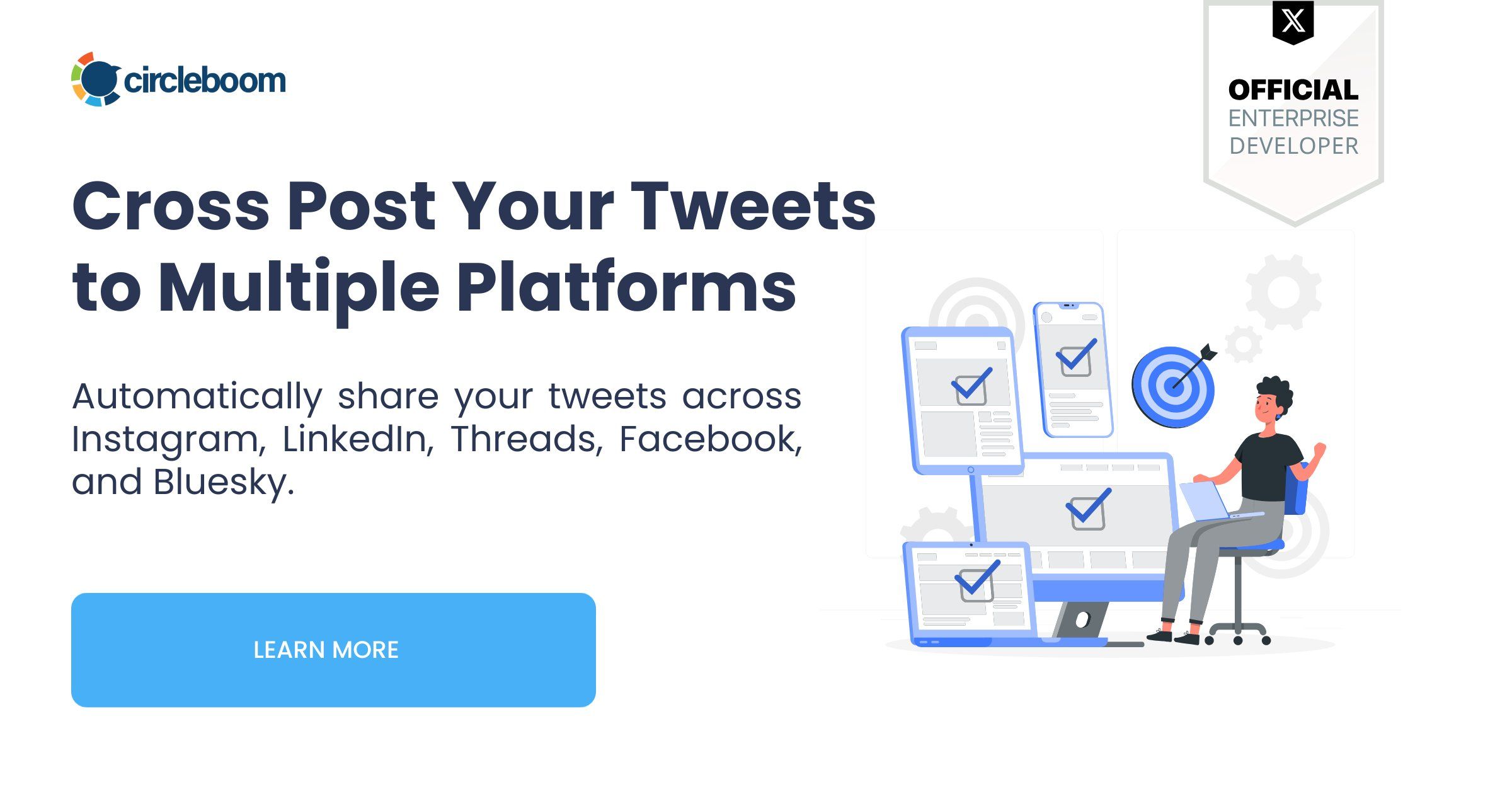
- Enable Cross-Posting to LinkedIn, Threads, Bluesky for every event-related post.
Phase 4: Run live-day amplification
- Live-tweet the event with attendee tagging and last-minute registration links.
Phase 5: Capture the post-phase
- Build the post-phase queue (week after) with recap thread, recording link, highlight clips.
That sequence produces sustained registration flow. Each phase removes a different gap: pre-promotion captures early-decision audience, build converts to registration, live captures same-day, post captures long-tail.
Quick recap:
- Connect through OAuth.
- Build all four phase queues.
- Enable cross-posting.
- Run live-day amplification.
- Capture the post-phase content.
What Each Phase Specifically Produces
Pre-promotion produces the calendar-save audience and the awareness baseline. About 20% of total registrations.
Build produces the bulk of registrations. About 55% of total.
Live produces same-day registrations and the engagement signal that compounds the post-phase reach. About 15% of total. The article on how to promote your YouTube channel covers a related cross-platform angle.
Post produces the long-tail asset and the recap audience. The week-after content typically generates 30-50% of the live-event reach over the next quarter as inbound DMs and registrations for the next event.
Common Mistakes Operators Make
The first mistake is single-sprint announcement. Two-week windows miss the early-decision and post-phase audiences entirely.
The second mistake is Twitter-only distribution. Misses the LinkedIn, Threads, Bluesky audiences that often produce 30-60% of registrations.
The third mistake is treating the post-phase as a thank-you tweet. The recap content is the long-tail asset; ending the campaign on event day leaves significant inbound on the table. The article on how to promote newsletter on social media covers a related cross-platform angle.
What to Do Next
The workflow is concrete: four phases, cross-platform fan-out, post-phase content.
- Step 1: Open Circleboom and walk through the Cross-Post workspace.
- Step 2: Build the pre-promotion queue.
- Step 3: Build the build-phase queue.
- Step 4: Build the live-day thread template.
- Step 5: Build the post-phase queue.
→ Open the Cross-Post workspace
What to Know Before You Start
How far in advance should the pre-promotion start?
4-6 weeks for most events. Larger conferences benefit from 8-12 weeks; smaller webinars can run 2-3 weeks of pre-promotion plus the build phase.
Should I run paid promotion alongside the organic campaign?
The organic campaign produces the baseline; paid can amplify during the build phase. Paid alone usually underperforms the four-phase organic approach. The article on how to promote your book on Twitter covers a related campaign-side angle.
Will the workflow scale to large multi-day conferences?
Yes. The four phases extend to longer pre-promotion, multi-day live amplification, and longer post-phase content for larger events.
Is the workflow safe under X's rules?
Yes. All layers run through Circleboom's Enterprise developer access. No scraping, no browser scripts, no automation outside platform policy.




)


