
On Twitter/X, timing is not a detail.
It’s a multiplier.
You can write the smartest tweet in the world, but if you post it when your audience is offline, it will disappear in minutes. This is exactly why searches for “Twitter timing” keep growing. People aren’t asking what to post anymore. They’re asking when to post so their content actually gets seen.
In this guide, we’ll break down:
- what Twitter timing really means
- how the X algorithm reacts to early engagement
- why timing affects impressions and engagement more than volume
- how creators extend tweet visibility beyond a single moment
- how timing becomes systematic instead of guesswork
What Does “Twitter Timing” Mean?
Twitter timing refers to publishing tweets at moments when your audience is most active and responsive.
It’s not about posting randomly throughout the day. It’s about aligning your tweets with:
- follower activity patterns
- engagement windows
- algorithmic distribution cycles
On X, visibility is front-loaded. That makes timing one of the most powerful levers you can control.
Why Timing Matters So Much on Twitter/X
Twitter’s timeline moves fast, and the algorithm reacts quickly.
Most tweets receive:
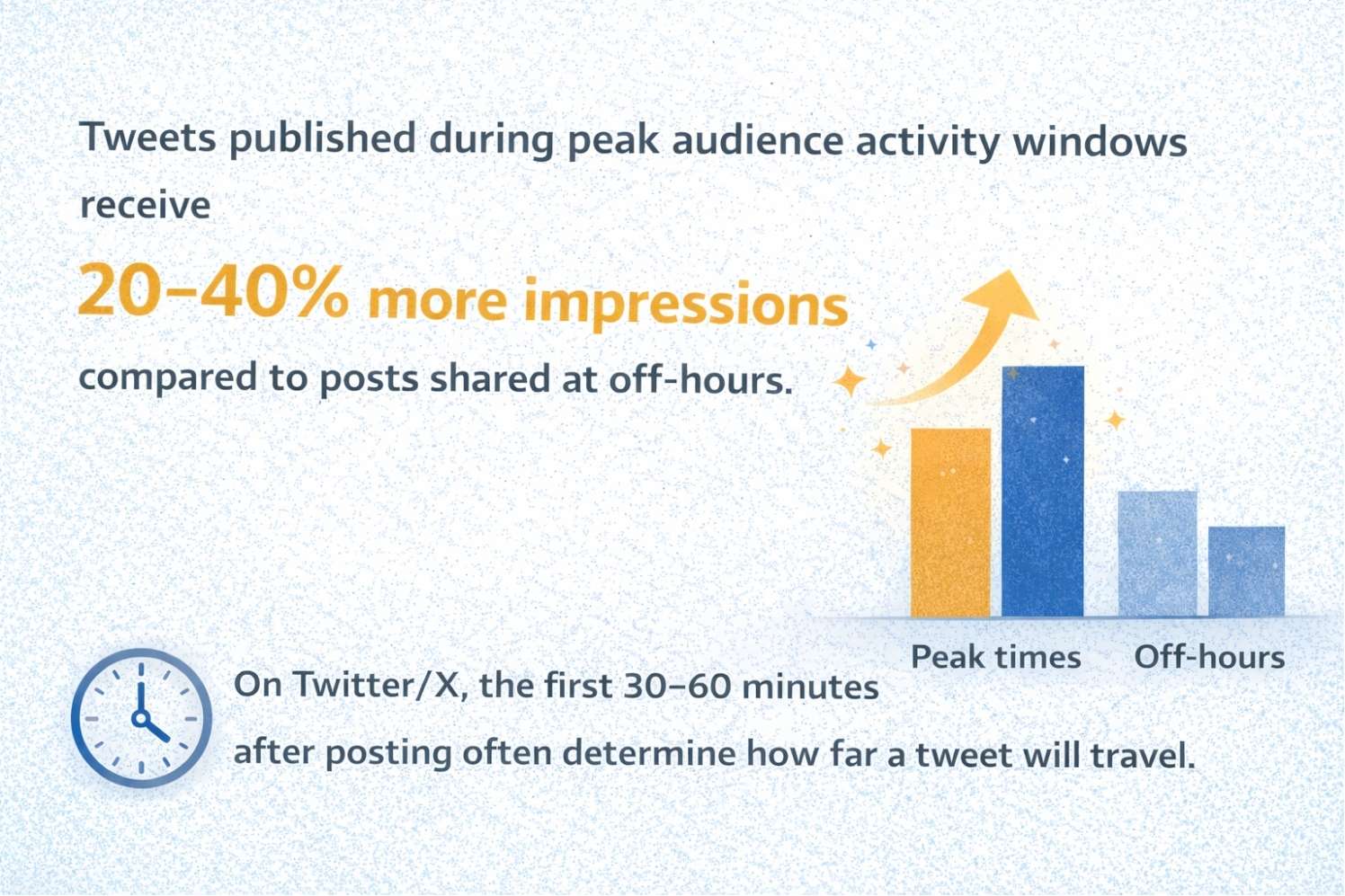
- 50–70% of their total impressions within the first 30–60 minutes
- a sharp drop in distribution if early engagement is weak
This means:
- strong early signals = extended reach
- weak early signals = stalled distribution
Posting at the wrong time often results in:
- fewer impressions
- lower engagement rates
- content that never reaches beyond existing followers
Good timing doesn’t guarantee success, but bad timing almost guarantees underperformance.
The Myth of “Universal Best Times”
You’ve probably seen generic advice like:
- “Post at 9 AM”
- “Post during lunch”
- “Post on weekdays only”
The problem?
There is no universal best time on Twitter.
Audience behavior varies by:
- geography
- niche
- account size
- content type
Two creators in the same industry can have completely different peak windows.
That’s why effective Twitter timing must be account-specific, not generic.
How Creators Identify Better Twitter Timing
Advanced creators stop guessing and start measuring.
They look at:
- which tweets get early engagement
- what hours generate higher impressions
- how engagement rate changes by time slot
Over time, patterns emerge.
Many creators discover that:
- posting just 1–2 hours earlier or later can change impressions by 20–40%
- consistent timing outperforms random posting, even with fewer tweets
This is where tools that analyze audience activity become critical.
Turning Twitter Timing Into a System
Once timing patterns are clear, the next challenge is execution.
Manually posting at exact times:
- is easy to miss
- doesn’t scale
- breaks consistency
This is where scheduling becomes more than convenience; it becomes strategy.
Using a platform like Circleboom, creators can:
- analyze follower activity to identify stronger posting windows (yes, you can know when they are online)
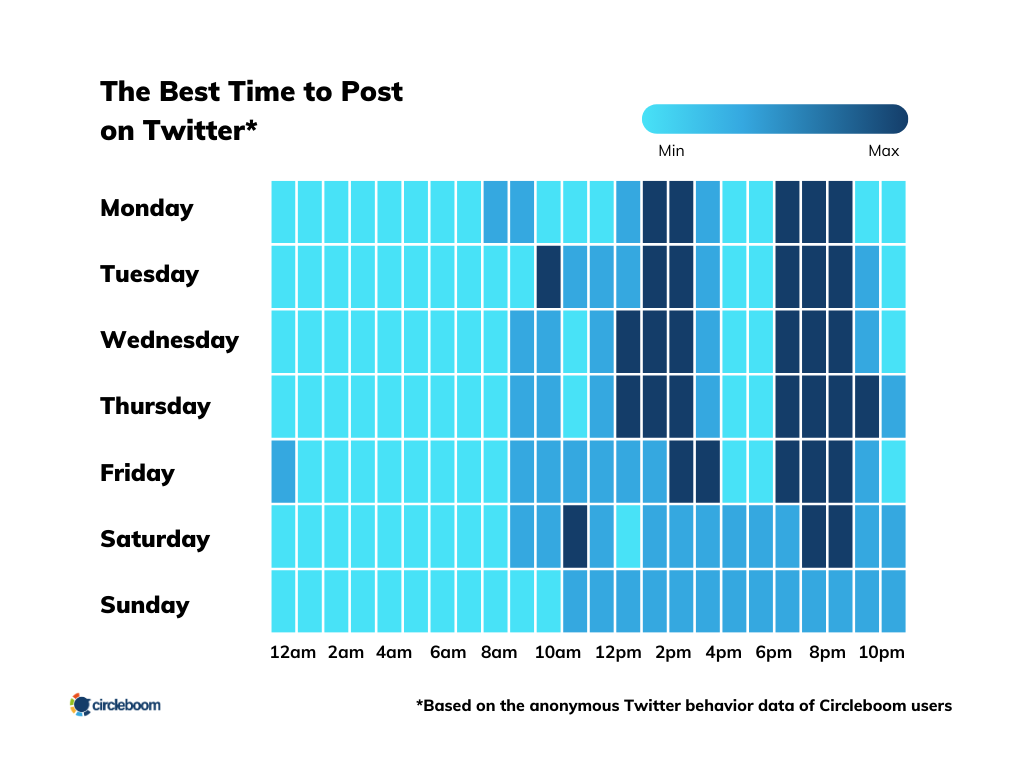
- schedule tweets for precise times ( "I scheduled all my tweets for the next month" this is a real sentence you can say if you are a Circleboomer.)
- maintain consistent timing across days or weeks
Instead of asking “When should I post today?”, timing becomes repeatable.
Why Scheduling Alone Isn’t Enough
Even with perfect timing, one tweet still has one major limitation:
Not all followers are online at the same time.
That’s why relying on a single posting moment leaves reach on the table.
This is where many experienced creators go one step further.
Extending Twitter Timing with Auto-Retweets
Auto-retweeting isn’t about repeating yourself.
It’s about extending a tweet’s lifespan.
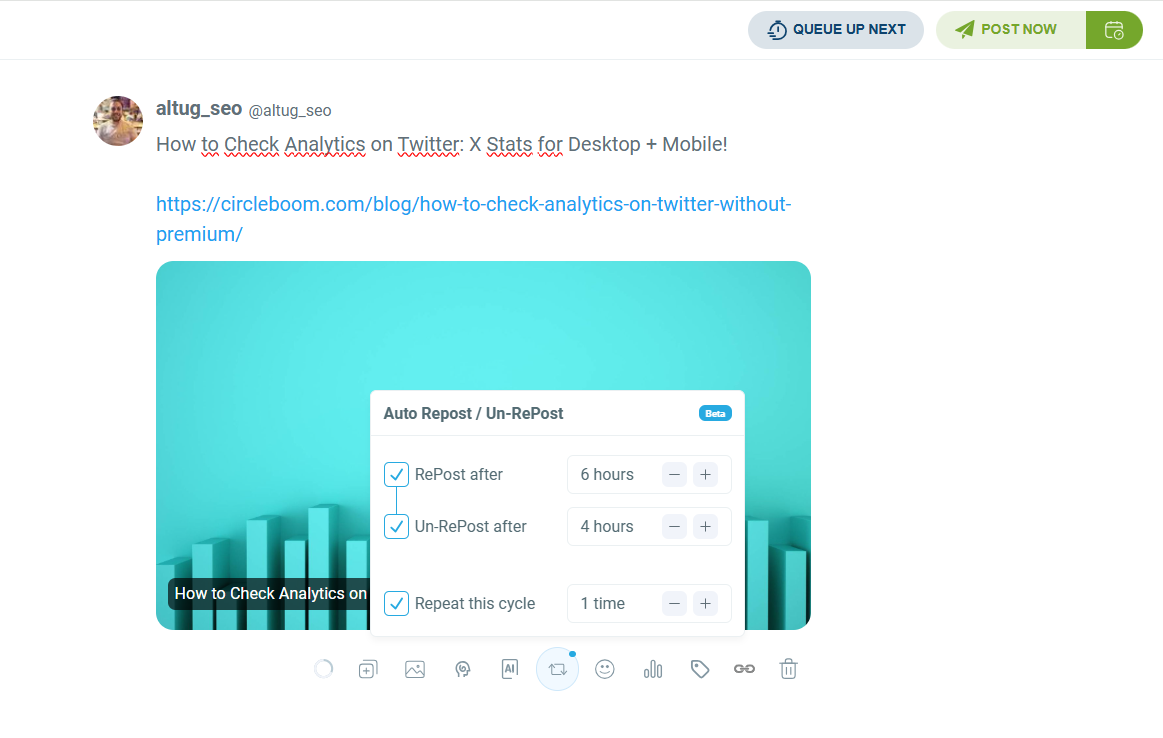
A strategically timed retweet:
- creates a second engagement window
- introduces the tweet to a different segment of followers
- gives the algorithm fresh interaction signals
In practice, many creators observe:
- 15–35% additional impressions from a single, well-spaced retweet
- no negative impact when retweets are spaced naturally
The key is restraint and timing, not volume.
When combined with scheduling, auto-retweets turn Twitter timing into a controlled distribution strategy instead of a one-shot attempt.
Twitter Timing for Different Use Cases
For Creators
- post when followers are most active
- resurface high-performing tweets later
- build consistent posting rhythms
For Brands
- align posts with audience time zones
- coordinate campaigns across days
- maintain brand visibility without overposting
For Global Audiences
- use multiple timing windows
- avoid forcing one schedule on all followers
Timing flexibility matters more as audiences grow.
Common Twitter Timing Mistakes
- posting only when convenient
- relying on generic “best time” advice
- posting too frequently without spacing
- never revisiting older high-quality tweets
Most timing issues aren’t content problems; they’re distribution problems.
Final Takeaway: Twitter Timing Is a Force Multiplier
Twitter timing doesn’t change what you say.
It changes how far your words travel.
When timing is intentional:
- impressions increase
- engagement improves
- content lives longer
- growth becomes predictable
And when scheduling and auto-retweets are used thoughtfully, timing stops being guesswork and starts being strategy.
On X, success isn’t just about showing up.
It’s about showing up at the right time, more than once.