The role of social media in education is becoming clearer as we approach 2026. What used to be considered as a distraction in class is now a useful tool that affects how students learn, work together, and interact with the topic.
Social media sites are no longer just places to hang out and have fun; they are becoming significant tools for learning that complement traditional methods.
In 2026, here is how social media will change the way pupils learn.
1. The ability to join many different learning communities
One of the main ways social media is changing education is by enabling students to join learning groups worldwide.
For a long time, people have been able to connect with professionals, thought leaders, and others from around the world on platforms such as Twitter, Reddit, and LinkedIn.
By 2026, this has expanded to include specialized study groups and forums where students can discuss their academic interests, share resources, and collaborate on projects in real time.
For example, students learning about AI can join a Discord server dedicated to AI-related interactions. They can ask questions, discuss research papers, and receive help from people who work in the field.
When students can see things from other perspectives, they learn more about their subjects and are more likely to continue learning outside of school.
 Altug Altug
2. Help from friends and feedback right away
Another transformation brought about by social media is the ability to receive real-time feedback and support.
In the past, students had to wait days or weeks for assignment feedback, but now they can receive immediate responses from peers or instructors via platforms such as Facebook Groups or Twitter threads.
These platforms also allow students to join live Q&A sessions, attend webinars, or watch live-streamed lectures, providing instant clarification of concepts.
As students continue to rely on digital tools for learning, they may occasionally need more focused support. For instance, if an assignment is particularly challenging or deadlines are approaching quickly, a student might choose to do my homework assignment to ensure the work is completed accurately and on time.
During periods of heavy workload, students often look for ways to manage their tasks more efficiently. In such cases, MySuperGeek can step in to provide the help needed, allowing students to better manage their workload while continuing to learn through collaboration on social media platforms.
This approach can help students keep their academic responsibilities on track without disrupting their overall learning routine.
3. Opportunities to learn together
People can collaborate effectively on social media platforms. Some of the most essential tools for digital classrooms are Google Classroom, Slack, and Microsoft Teams.
They help students collaborate on group projects, share information, and communicate with their teachers. As we get further into 2026, social media will continue to bring people together, even on a worldwide scale.
For instance, more people will use virtual study groups. Zoom and Skype make it easy for students from different countries to chat with each other in real time.
They can also discuss their notes and generate new ideas using Trello or Miro. This relationship makes the classroom more lively and friendly, enabling students to learn from one another, share cultural perspectives, and collaborate to solve problems.
4. Learning experiences that are hands-on and include the learner
Augmented reality (AR) and virtual reality (VR) are two emerging technologies that enhance social media for learning through greater immersion.
In 2026, children will undoubtedly be able to access virtual classrooms on platforms like Facebook's Horizon Workrooms or on YouTube videos that are fully immersive. This will enable students to do hands-on work that was previously only possible in real labs or on field trips.
A history student may walk around ancient Rome in their mind, and a biology student may view a 3D AR model of the human body. Ten years ago, these types of things would have been unimaginable, but now they are part of how we learn.
Social media sites are using these technologies, which help students study in ways that are interactive and immersive, which keeps them interested and engaged.
 Altug Altug
5. Every student learns in their own way.
As AI and machine learning get better, social networking sites can now customize lessons for each student based on their interests, learning styles, and progress.
YouTube, Twitter (X), Instagram, and TikTok were once primarily for entertainment, but now they offer educational accounts that use algorithms to suggest content aligned with a student's learning path.
 Arif Akdogan
This personalized approach has never been better than it is now, in 2026. TikTok and Instagram educational influencers might create their own study tips, courses, or study hacks for students to address specific school challenges.
Students can now learn in a way that works for them, with a wide range of materials to choose from and no longer required to use traditional textbooks.
6. More ways to get learning materials
By 2026, all social media platforms will have educational content built into their ecosystems.
Students can access a lot of information from this without leaving the site. Social media has enabled learning in many new ways. You can, for instance, take free online classes on YouTube or Facebook Watch, or you can get sponsored content and certificates on LinkedIn Learning.
Students can learn to code, engage in digital marketing, design, and more on these platforms without attending a traditional school.
Social media not only makes it easier for everyone to access education but also helps people from all walks of life learn new things.
7. Encouraging Digital Literacy and Analytical Thinking
As students spend more time on social media, they are learning vital skills including how to use technology and how to think critically. In 2026, children are learning more to navigate the complex digital world and assess whether the information they find online is reliable.
Through their interactions on social media, they learn to distinguish credible from unreliable sources, identify misinformation, and make well-informed arguments on a wide range of topics.
In a world where there is a lot of both real and false information online, this skill set is crucial. Social media is now a tool not only for learning but also for developing a generation of students who can manage the challenges of having too much information.
8. Supporting lifelong learning
Finally, social media is a key way to encourage people to keep studying for the rest of their lives.
People can quickly find educational resources, talk to experts, and join discussions. This makes them view learning as something that happens continuously and evolves.
Not only will students in 2026 be active learners while in school, but they will also continue learning and improving their skills after graduation. This is because social media is always filled with educational content.
Using Twitter as a Focused Learning Tool (and How Circleboom Helps)
Although Twitter is often seen as a distracting platform, its real strength lies in its structure. Because content is short, fast, and expert-driven, Twitter has become one of the richest sources of educational micro-learning, if it’s used correctly.
In almost every field, there are highly focused and knowledgeable accounts sharing daily insights: history threads, science explainers, literature discussions, economics breakdowns, coding tips, and more.
The challenge is organization.
Following hundreds of accounts on different topics quickly turns the timeline into noise. This is where Twitter Lists become essential for education. By grouping experts by topic (e.g., History, Science, AI, Literature), students can switch between focused learning feeds instead of scrolling endlessly.
To manage this efficiently, tools like Circleboom Twitter make a big difference.
With Circleboom Twitter’s List Manager, students can:
- Create Twitter lists in bulk based on specific topics or expertise
- Add or remove accounts easily as their interests evolve
- Manage multiple educational lists without manual effort
- Keep their main timeline clean while using lists as focused learning streams
For example, a student interested in science can search for expert science accounts, add them to a dedicated list, and use that list as a daily learning resource almost like a personalized textbook that updates itself in real time.
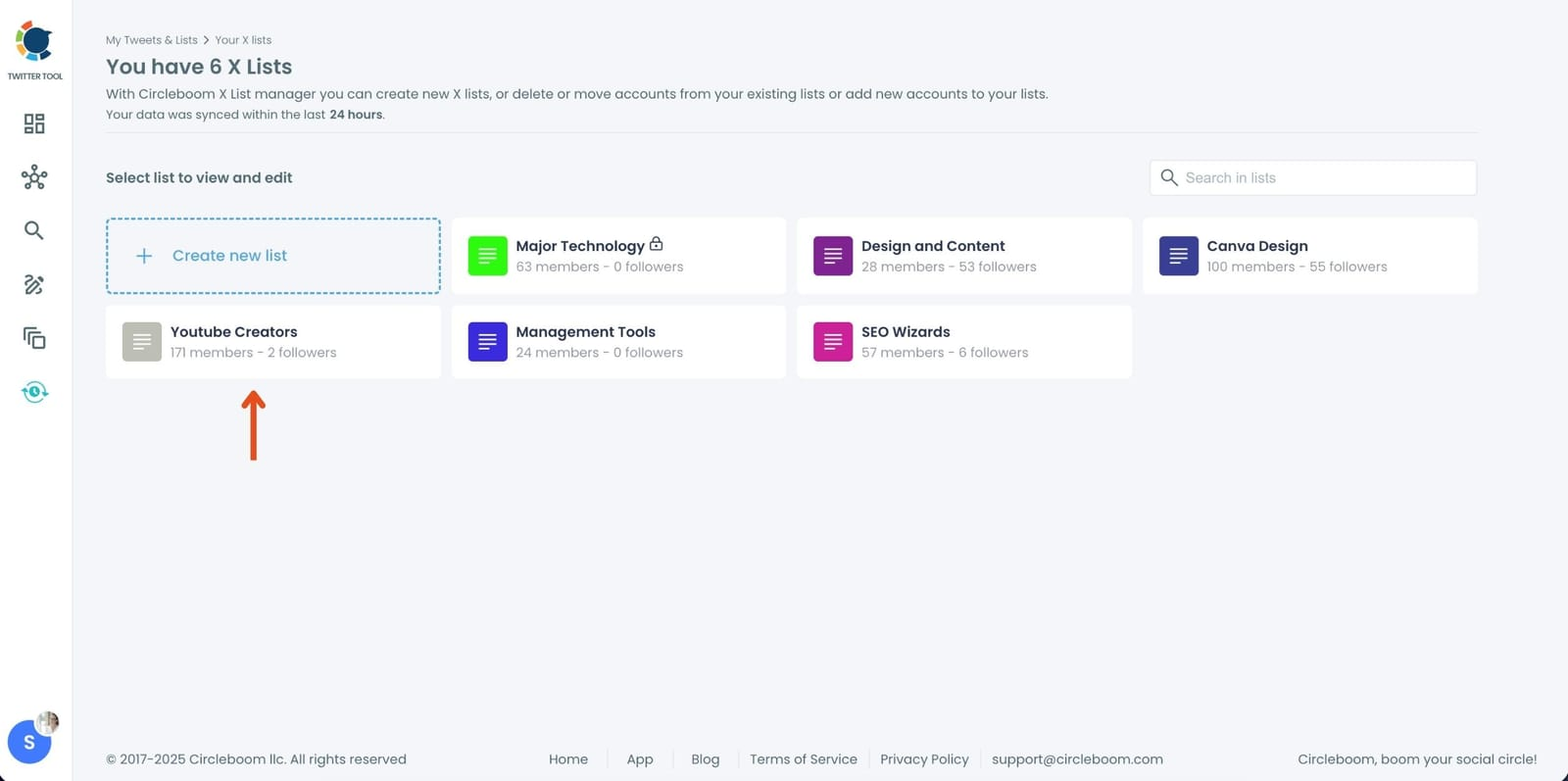
The same approach applies to history, literature, technology, economics, and any academic field.
Instead of fighting Twitter’s fast-paced nature, students who organize their learning environment turn it into a powerful educational advantage.
With the right structure and the right tools, Twitter becomes less of a distraction and more of a curated learning platform that supports modern education.
Last Thoughts
By 2026, social media will no longer be just a tool that kids use in the classroom; it will be a big part of how they learn.
A new era in education has begun, and social media is at its center. It helps build learning communities worldwide, lets students study in ways that work best for them, provides immediate feedback, and fosters hands-on learning.
As we move forward, it's clear that learning will be collaborative, dynamic, and continually changing. Social media will have a huge impact on how we learn.