
Some tweets deserve more than a few minutes of attention.
You write something useful, insightful, or genuinely valuable, hit post, and watch it get a small wave of engagement before it quietly disappears down the timeline. Not because the tweet wasn’t good, but because Twitter (X) moves fast—and most followers simply weren’t online at that moment.
That reality leads to a common question among creators and brands alike:
Can you retweet your own tweet more than once?
✅ The answer is yes, and when done strategically, it’s one of the simplest ways to make sure your best content actually reaches the people it was meant for.

How Retweeting Works on X (Twitter)
A retweet (or repost) doesn’t duplicate content in a harmful way.
What it actually does is reintroduce the same tweet into the timeline, giving it another chance to be seen by people who weren’t online the first time.
This matters because X timelines move incredibly fast. People log in at different hours, scroll briefly, and leave. Even your most engaged followers aren’t online all day.
Retweeting is not about spamming the same message over and over. It’s about distribution—making sure your content reaches different segments of your audience at different times.
 Arif Akdogan
Why Retweeting Your Own Tweet Is Important
A tweet’s effective lifespan is surprisingly short. On average, a tweet is visible for about 12–15 minutes before it gets pushed down by newer content.
That means:
- A large portion of your followers never see the original post
- Time zones work against you
- Engagement potential drops quickly
When you retweet your own tweet later—hours or days after posting—you’re not repeating yourself.
You’re simply giving the tweet a second (or third) chance to reach people who missed it the first time.
Used strategically, retweeting:
🟢 Increases impressions
🟢 Improves total engagement
🟢 Extends the life of your best content
🟢 Saves time compared to writing new tweets constantly
The Problem with Manual Retweeting
While retweeting works, doing it manually is harder than it sounds.
You have to:
- Remember to retweet at the right time
- Be online when your audience is active
- Keep track of how often you’ve already retweeted
- Avoid overdoing it
When you’re posting regularly, it’s easy to forget or skip retweets entirely. And without consistency, the strategy loses its impact.
That’s where automation becomes useful—when done correctly.
Automating Retweets the Right Way with Circleboom Twitter
To handle retweets properly, I use Circleboom Twitter.

Circleboom Twitter is an official X Enterprise Developer, which means it works within X’s official API limits and follows platform rules. That’s especially important when automating actions like retweets.
Circleboom Twitter isn’t just a scheduler—it’s a full X Post Planner that helps with both content creation and distribution.
Inside the post planner, you get:
➡️ A built-in AI writer to generate or improve tweets
➡️ Image curation tools to add visuals easily
➡️ A font styler for highlighting text
➡️ An Auto Retweeter that lets you set retweet cycles
The key advantage is that you can set up retweets while creating the tweet itself—and then forget about it.
How to Set Auto-Retweet Cycles While Creating a New Tweet
Here’s how the workflow looks:
Step 1: Go to Circleboom Twitter’s X Post Planner
Open Circleboom Twitter and click X Post Planner + AI Writer.
Then select Write & Plan Your Post to start creating your tweet.

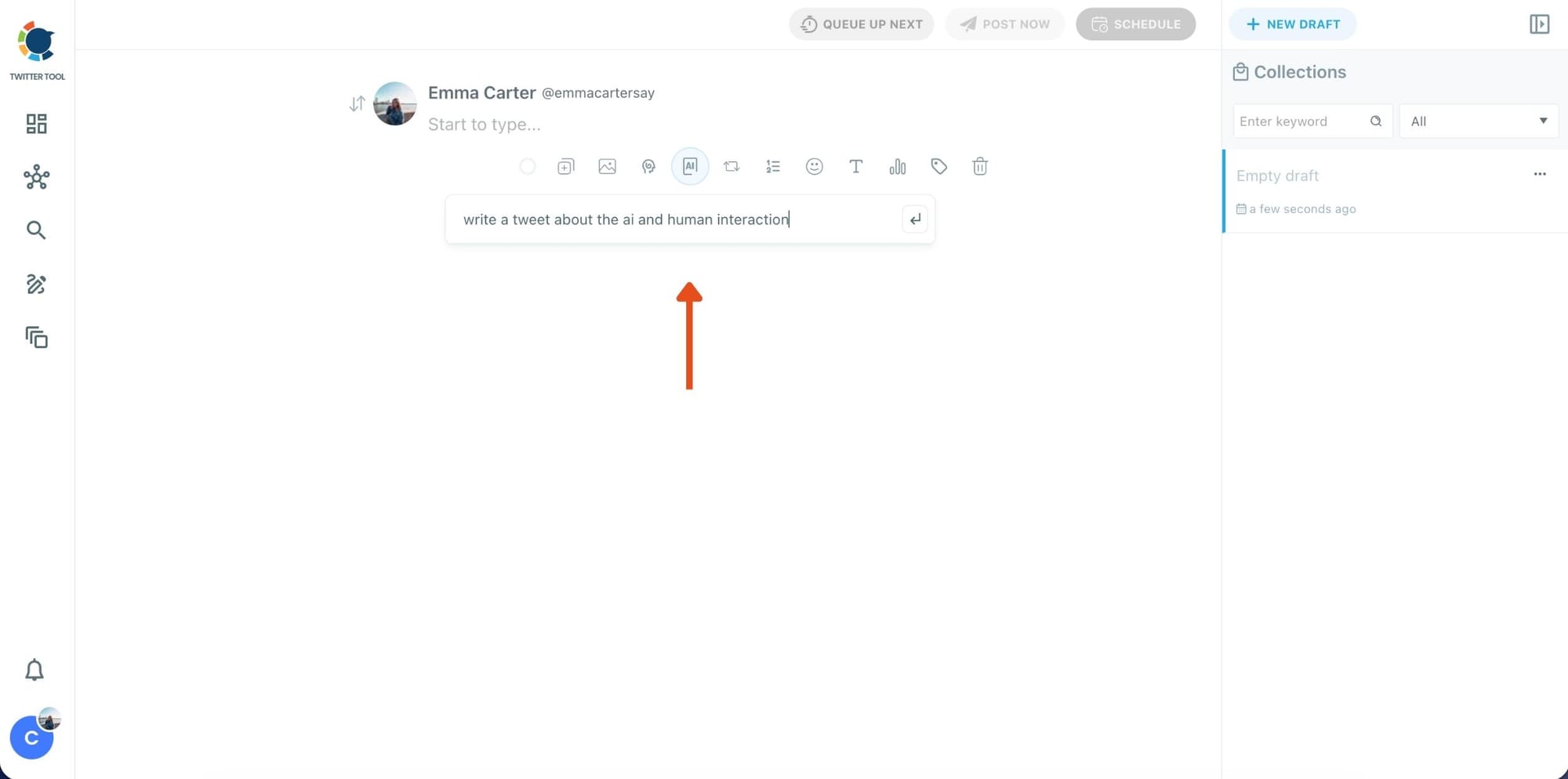
Step 2: Write your tweet (or generate one with AI)
You can type your tweet manually in the editor.
Or, if you want to move faster, click the AI option and let Circleboom generate a tweet idea for you based on your topic.
Step 3: Add an image to make the post more engaging
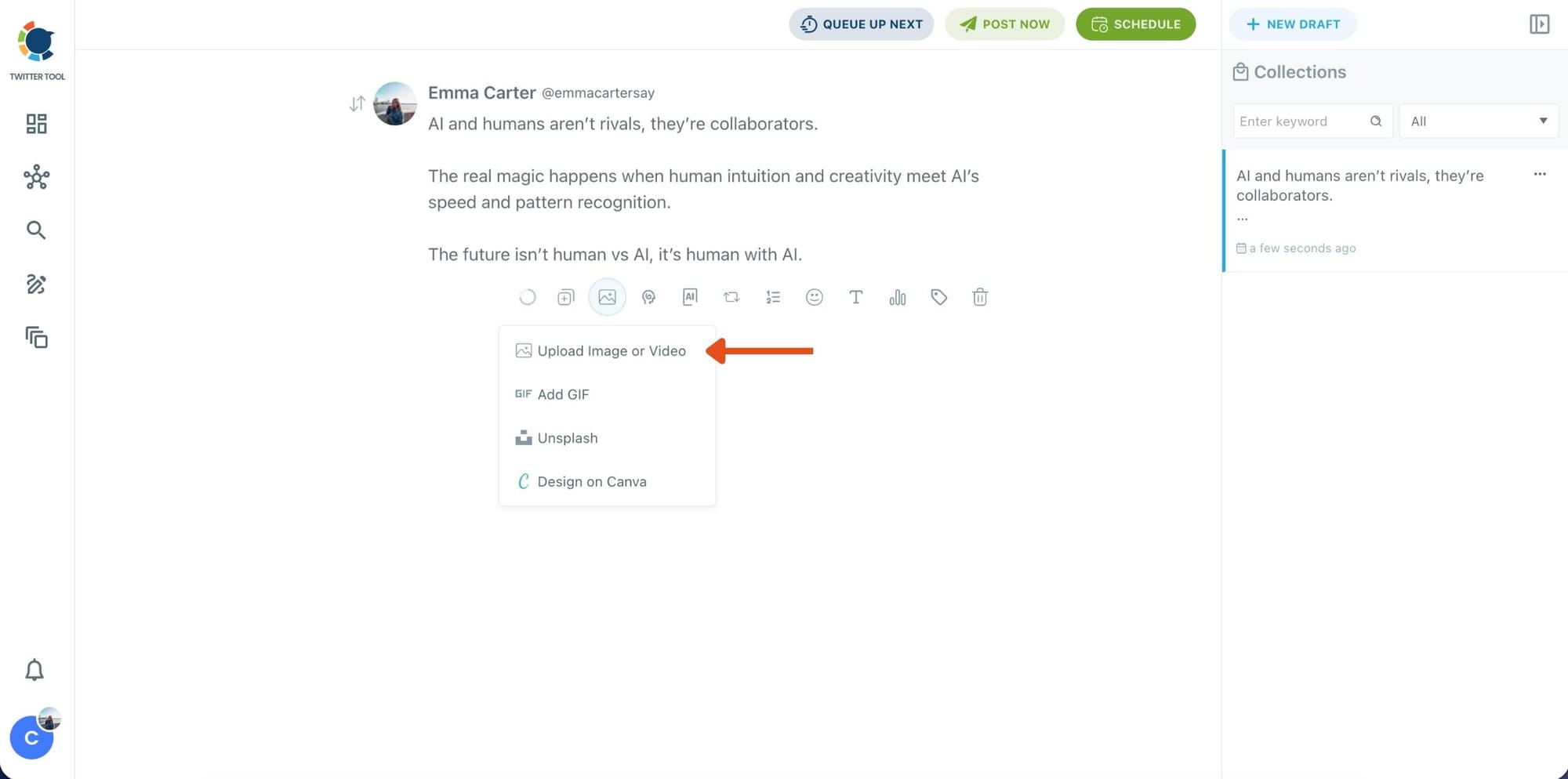
Once your text is ready, attach a visual to your tweet.
You can:
- Upload an image/video from your device
- Pick one from Unsplash
- Or design one instantly using Canva
Step 4: Style your tweet using Circleboom’s Font Generator
Now it’s time to make your tweet stand out visually.
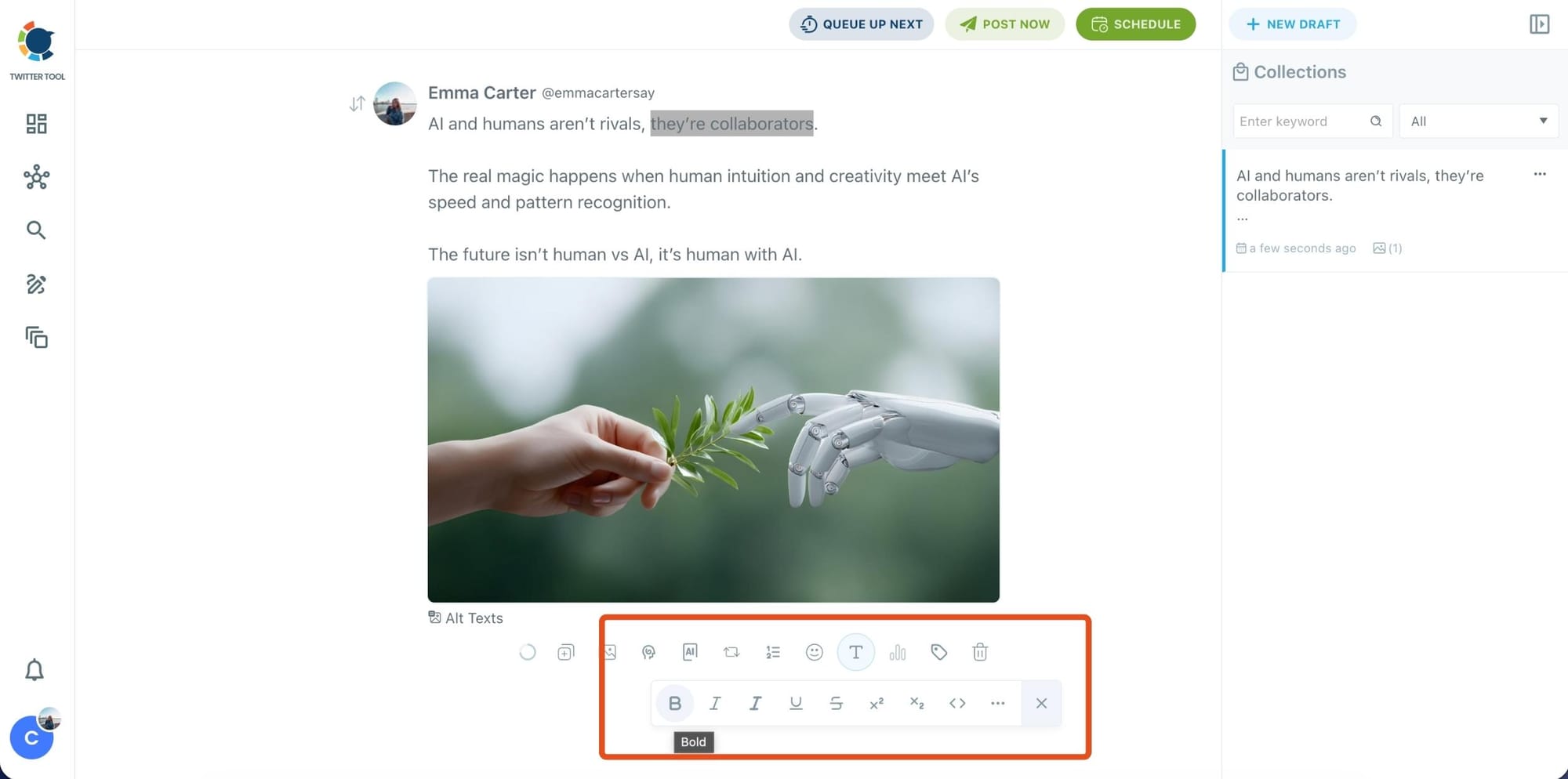
Select the part of your text you want to change, then open the Font Generator toolbar and apply styles like:
- Bold / Italic / Underline
- Different font variations
- Extra formatting options for a more “designed” look
This is perfect when you want key parts of your tweet to grab attention immediately.
Step 5: Set Auto Retweets to boost visibility
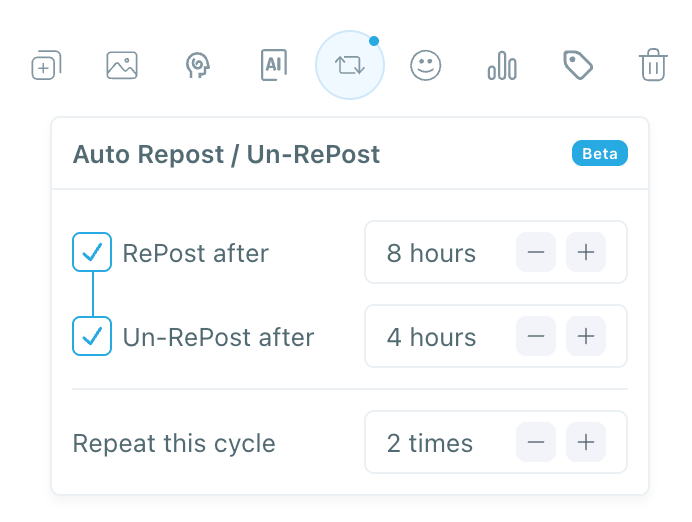
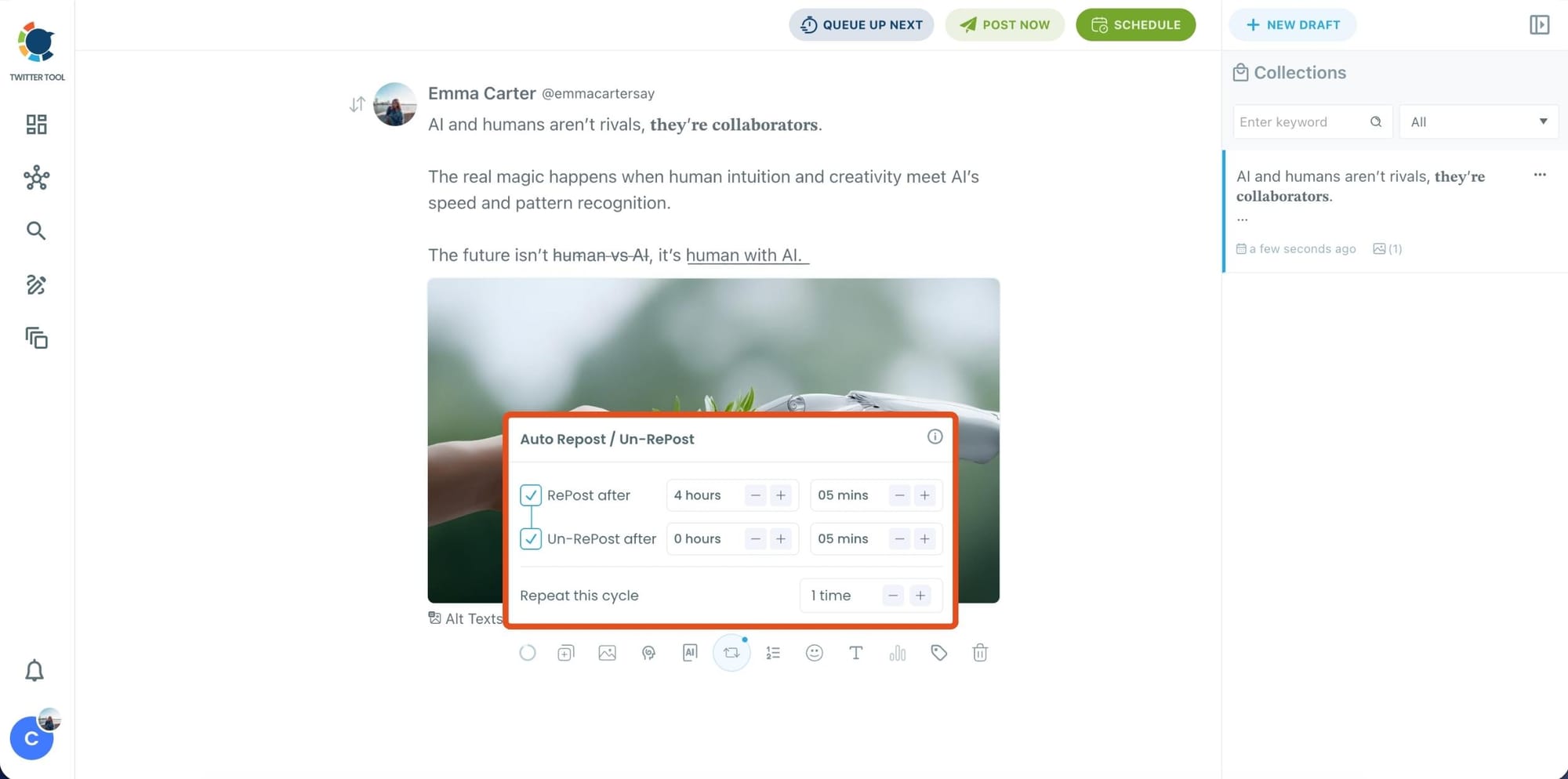
After styling your post, you can increase reach by enabling Auto Repost / Un-RePost settings.
This lets you automatically:
- Repost your tweet after a selected time
- Remove the repost later
- Repeat the cycle if you want more than one repost
It’s a smart way to bring your tweet back into the feed without manually reposting it.
Bonus Tip: Cross-post your tweet to other platforms automatically
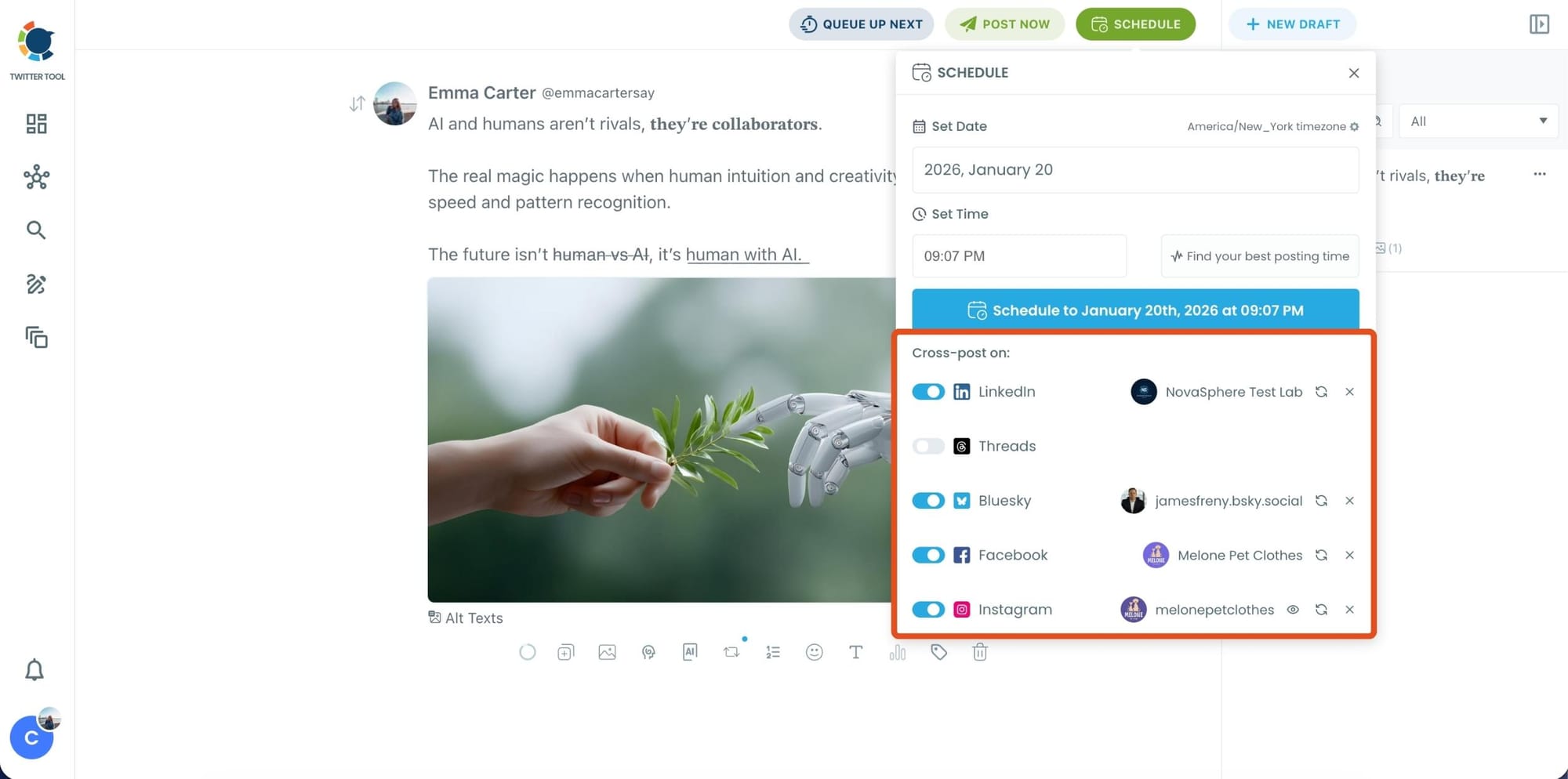
Before you publish, you can also enable Cross-Post to share the same tweet across multiple platforms in one go.
Circleboom lets you post your content to Instagram, Facebook, LinkedIn, Bluesky, and Threads automatically, so you don’t have to rewrite, re-upload, or repeat the same work on each platform.
Step 6: Schedule it for the best time to post
Finally, click Schedule and set your date and time.
You can also click Find your best posting time to see Circleboom’s suggested time slots based on follower activity.
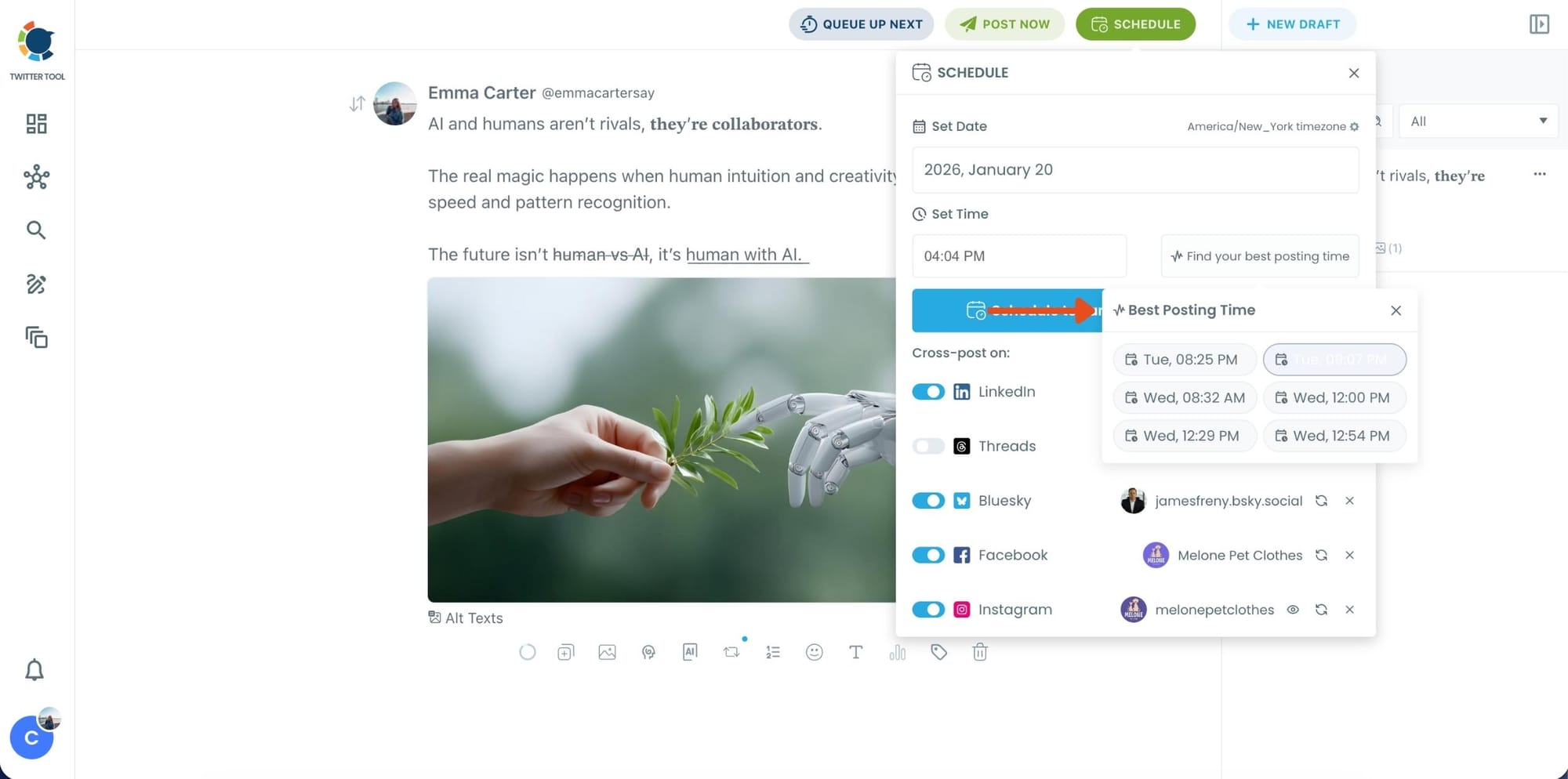
Once the tweet is published, Circleboom automatically handles the retweets according to the cycle you set. You don’t need to remember anything or manually repost later.
Auto-Retweeting Your Old Tweets (This Is Where It Gets Powerful)
Retweeting isn’t just useful for new tweets. In fact, some of the best candidates for retweets are old tweets.
These include:
➡️ Evergreen content
➡️ Tweets that performed well in the past
➡️ Announcements or campaigns
➡️ Threads people still find useful
Circleboom Twitter makes this easy because it shows detailed analytics for all your tweets. Instead of guessing which posts deserve another push, you can see the data.
You can review your posts, identify strong performers, and give them new visibility.
How to Set Auto-Retweet Cycles for Existing Tweets
Here’s how to do it step by step:
Step #1: Navigate to the Analytics Menu
From the left-hand menu, click on the "Post Management & Analytics" tab, then select "Post Analytics" from the dropdown.
Within Post Analytics, select the "Post Engagement Analytics" option.

Circleboom will display a detailed breakdown of your posts, including metrics like impressions, likes, retweets, replies, and more.
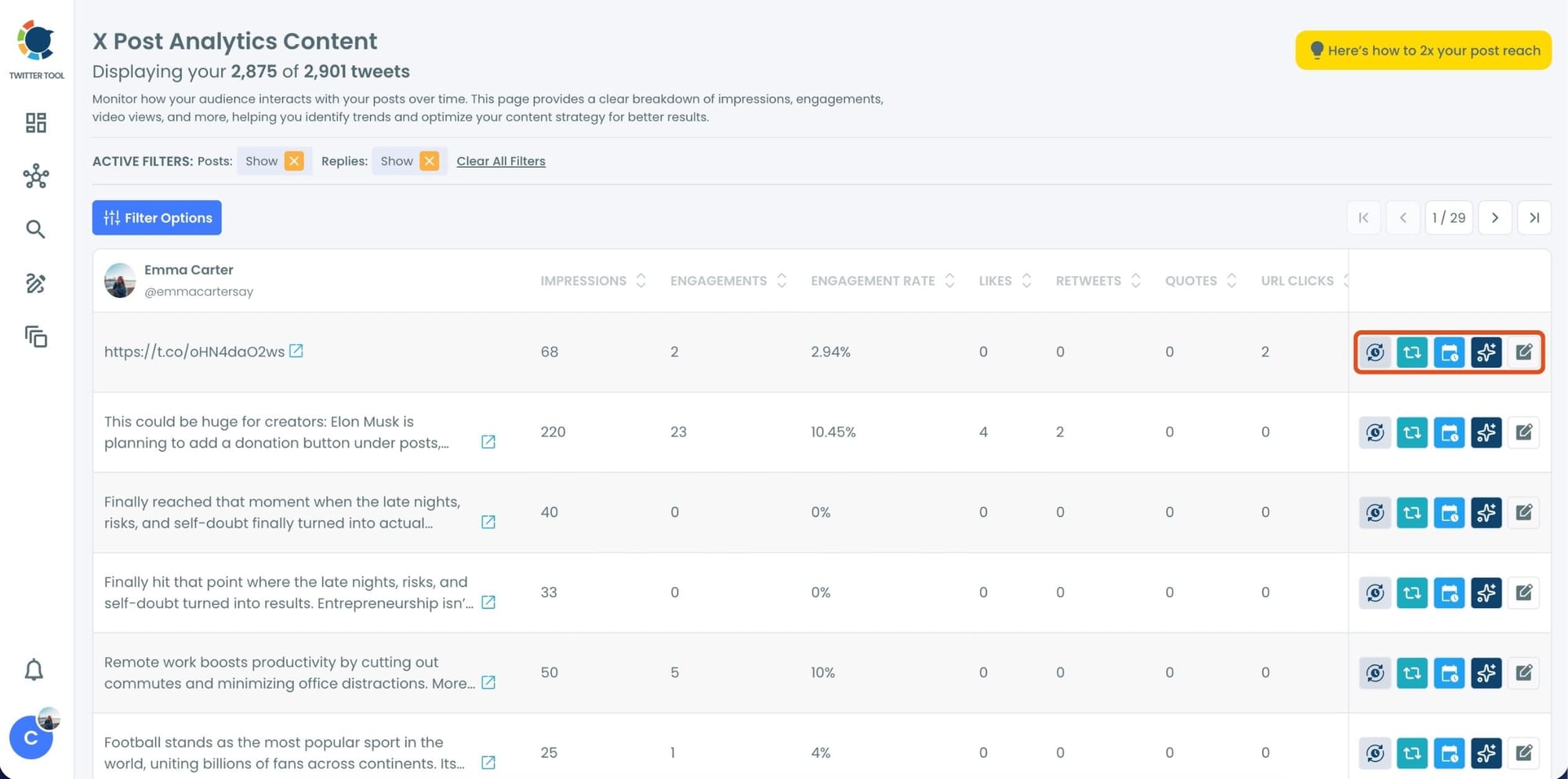
Step #2: Once you’ve found your old tweets, Circleboom offers several tools to make the most of them; choose which you want to use:

🟢 Reschedule Popular Tweets: Found a tweet that’s still relevant or hilarious but didn’t get the engagement it deserved? With Circleboom, you can reschedule it to repost it at a better time.
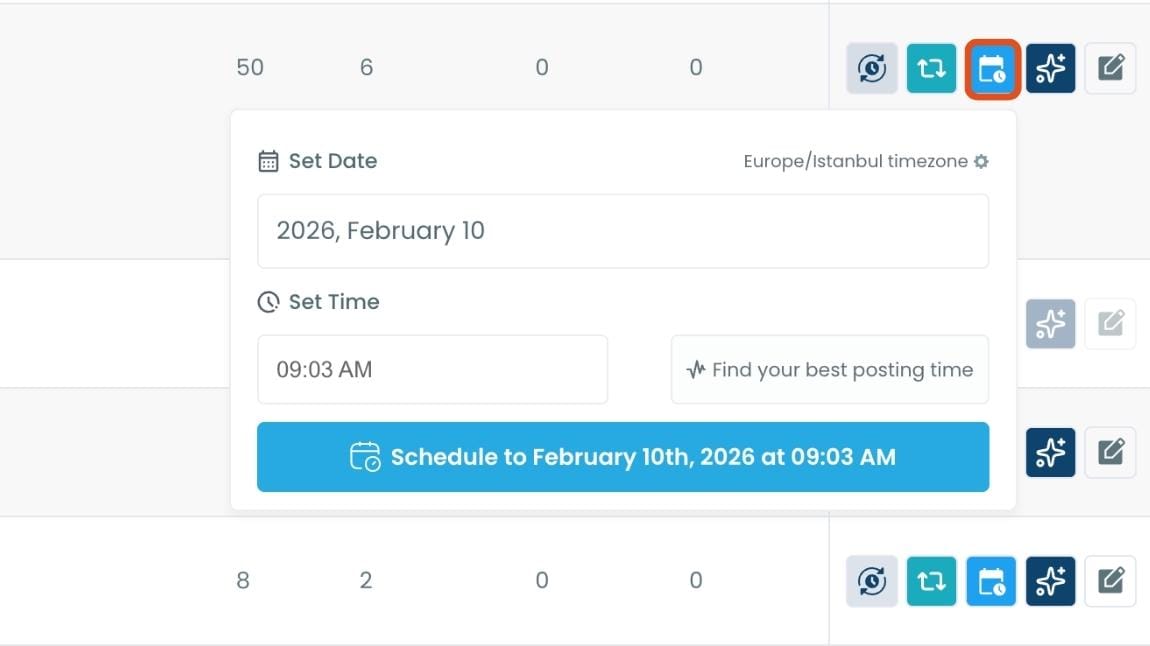
Maybe your audience wasn’t active when you first tweeted it, or perhaps it just got lost in the noise. Rescheduling ensures your best content gets a second chance to shine.
🔵 Refresh Content with AI: Some of your old tweets might feel outdated or could use a fresh twist. Circleboom’s AI-powered tweet generator can help you rewrite or improve them.
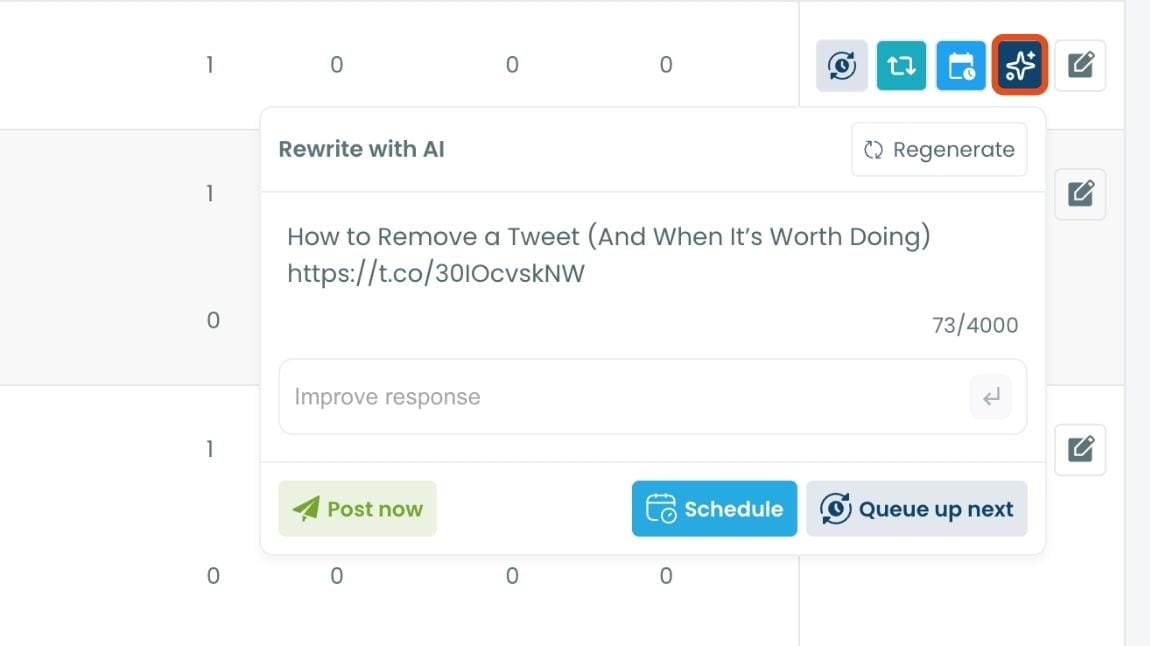
Whether you want to update the language, add a modern twist, or make it more engaging, the AI feature has got you covered.
🟡 Set Auto-Retweets: If you’ve got evergreen tweets that are still relevant, why not let them work for you on autopilot?
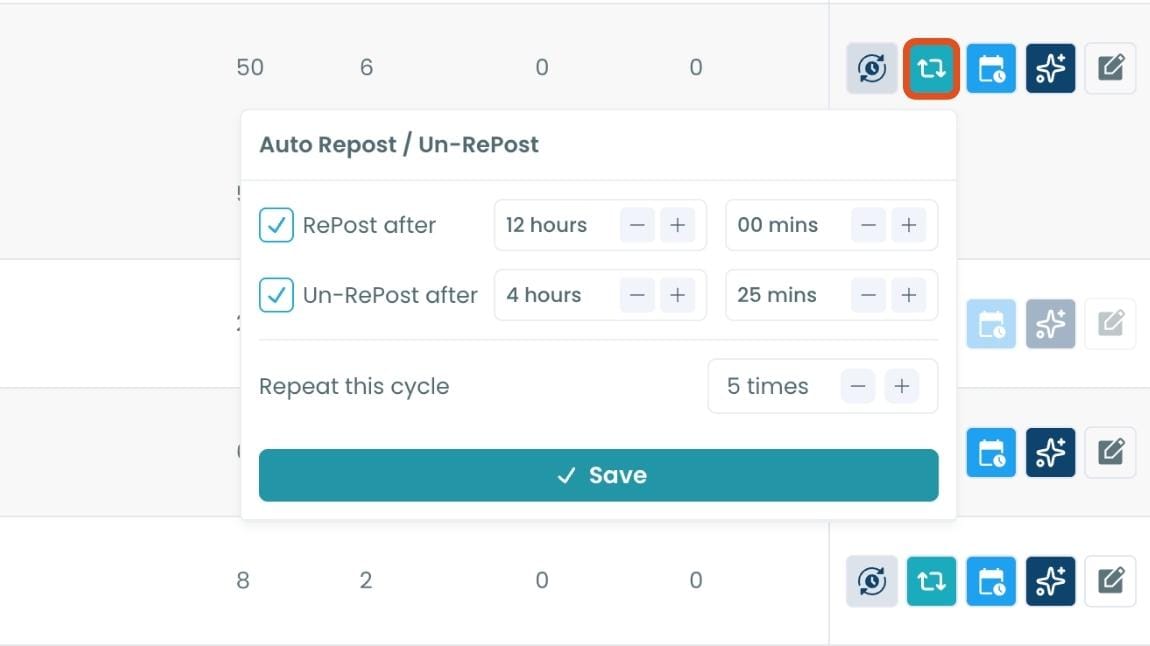
Circleboom’s auto-retweet feature allows you to automatically retweet your best-performing content at regular intervals. This is perfect for driving consistent engagement without lifting a finger.
Retweeting Isn’t Spam—It’s Smart Distribution
Retweeting your own tweet more than once is allowed, normal, and often necessary—especially given how short a tweet’s lifespan is.
The key isn’t how many times you retweet, but how strategically you do it. Automating retweets with clear cycles prevents overposting while ensuring your best content doesn’t disappear unnoticed.
With Circleboom Twitter, you move from random reposting to a repeatable system:
- Create once
- Distribute multiple times
- Let automation handle timing
- Focus on creating better content
In a fast-moving timeline, smart retweeting isn’t optional—it’s how your tweets actually get seen.