
A post on a mid-sized X account is typically seen by ten to fifteen percent of that account's own followers on first publication. The rest were asleep, in meetings, or scrolling a feed that had already moved past the minute you hit publish.
That gap is a distribution problem, not a writing problem. It is also the part of reach most people never try to fix.
Manual: you reshare a good post maybe twice a month, usually the wrong one, usually at the wrong hour. Circleboom: Circleboom reposts a chosen X post on a timer you set and clears the repost when its window closes, running the loop through official X Enterprise APIs rather than a browser script.
→ grow your Twitter reach with scheduled retweets
Everything below splits retweet reach into the half you control and the half you have to earn.
Why a good X post reaches only a slice of your own followers
X ranks a timeline by relevance and recency, and a post's competitive lifespan is measured in hours. After that window closes, the post is still on your profile but it has stopped fighting for placement in anyone's feed.
Two accounts can publish the same sentence and get different results based purely on who happened to be awake. That is uncomfortable, because it means quality is necessary but not sufficient.
The feed you are competing in is also crowded by a small, extremely active minority. Pew Research Center's study of U.S. adults on Twitter found that the most active 25 percent of users produced 97 percent of all posts in the sample period.
A single publication is one ticket in that lottery. A second publication is a second ticket, and it costs you nothing to write.
If your numbers on increasing Twitter impressions have flattened while your posting volume held steady, distribution timing is the first thing worth checking. Content strategy comes after.
Circleboom schedules that second publication for you on X and fires it at an hour you choose. That is how you grow Twitter reach with automatic retweets without adding a single new post to your calendar.
The two audiences a retweet reaches, and only one is yours to control
A retweet delivers your post to two structurally different audiences, and almost every guide on the topic addresses only one of them.
The borrowed audience is everyone who follows the person who reshared you. They do not follow you. Reaching them is genuinely how new followers arrive, and it is also the half you cannot schedule, buy, or plan. Someone else decides.
The missed audience is the part of your own following that never saw the post, because they were not on the app during the hours it was competing. They already chose you once. They simply were not in the room.
Reaching the missed audience needs no persuasion and no third party. It needs one thing: a second publication at an hour they are actually awake.
The math behind the two halves is not the same:
- Borrowed reach scales with your resharer's follower count, not yours.
- Missed reach is capped by your own follower count but converts far more reliably.
- Borrowed reach is a follower-acquisition channel; missed reach is an engagement-recovery channel.
- Only missed reach responds to a schedule.
Most advice about getting more retweets chases the audience you cannot control and ignores the one you can.
When followers stop resharing, the instinct is to blame the writing. Working through why your Twitter followers are not retweeting or liking your tweets usually turns up a timing answer well before a quality one.
Circleboom measures response post by post on X, and its Twitter engagement analytics separates two failures that look identical on a follower chart. One post was widely shown and widely ignored. Another was barely shown and did well with the few people who saw it.
The first is a content result and the second is a distribution result, and they need opposite fixes.
How to tell which posts deserve a second window
Rank your history by reposts, not by likes. That single change decides which posts you repost for the next quarter.
X's own analytics show per-post numbers when you open a post, plus a rolling recent summary. What X does not offer is a way to sort your full history by any one metric, which means "my best post" is usually a memory rather than a measurement.
Circleboom's Twitter analytics lists every accessible post as a sortable table. Impressions, likes, reposts, replies, bookmarks, profile clicks, and link clicks each become a column you can rank on.
Sort by reposts descending and you get a different top ten than sorting by likes. That difference is the entire point.
A like is a private reaction. A repost is a public one, and the post someone is willing to put in front of their own audience carries a social cost the like never did. The posts that clear that bar are the ones that travel.
Three sorts to run before you schedule anything
Each of the three answers a different question about the same history.
- Reposts descending, to find content that already proved it travels.
- Bookmarks descending, to find content people wanted to keep.
- Impressions ascending among high-engagement-rate posts, to find good work that went out at a bad hour.
That third sort is the one people skip, and it is where the easiest wins hide. Reading your most retweeted tweet and why it matters makes the pattern in that column much easier to name.
What counts as evergreen once the shortlist exists
Ranking gets you candidates. A second filter decides which candidates can survive a delay.
The test is whether the post still stands up for a reader who arrives with none of the context that surrounded it on publication day.
Explanations, definitions, resource lists, and worked examples pass almost every time. Reaction posts, anything answering a live argument, and anything with "today" in it do not.
One limit to plan around: the official X API returns up to 3,200 recent posts for standard account access, so the ranking covers your accessible history rather than your entire archive. For most accounts that is several years of material, which is more than enough to build a reshare queue from.
With the shortlist in hand, you can schedule retweets that grow your reach directly from the post editor.
Is it safe to repost your own posts automatically on X?
Worth settling before you configure anything. A scheduled repost is an ordinary account action, and X's own guidance on how to repost describes the same behaviour a manual reshare produces.
The constraints are real.
Every repost a scheduled cycle fires is a real repost on your account, so stacking enough of them across enough posts in a short span starts to look like the automated pattern X's rules were written to catch.
Two mechanical details are worth knowing before you set a cycle:
- Clearing a repost takes it off your timeline without touching the original or anything the original collected.
- A cycle skips its turn when the original post no longer exists at the moment the loop comes round.
Show the same followers the same sentence often enough and they stop responding to it. That softer ceiling arrives well before any platform limit, and it is the reason the removal rule and the repeat counter exist at all.
There is also an account-state condition people forget. The connected X account has to stay authenticated for scheduled cycles to fire, so revoking the app's permission or changing your password ends the schedule without ending anything you can see.
Check your active cycles once a month rather than assuming they are still running. Nothing in the interface announces a cycle that stopped.
Circleboom runs the whole loop inside X's sanctioned developer programme, which means the reposts move through approved API access rather than browser automation or a scraping workaround.
How to make retweets grow your Twitter reach, step by step
Video walkthrough: the repost and un-repost cycle being configured on one post inside the X Post Planner editor.
https://www.youtube.com/watch?v=WKq8zmwbDS0
The flow runs in two phases. Pick the post with evidence, then set the cycle that gives it a second window.
Pick the post with evidence, not with memory
- Log in to Circleboom Twitter and connect your X account.
- Open X Post Planner from the dashboard menu.
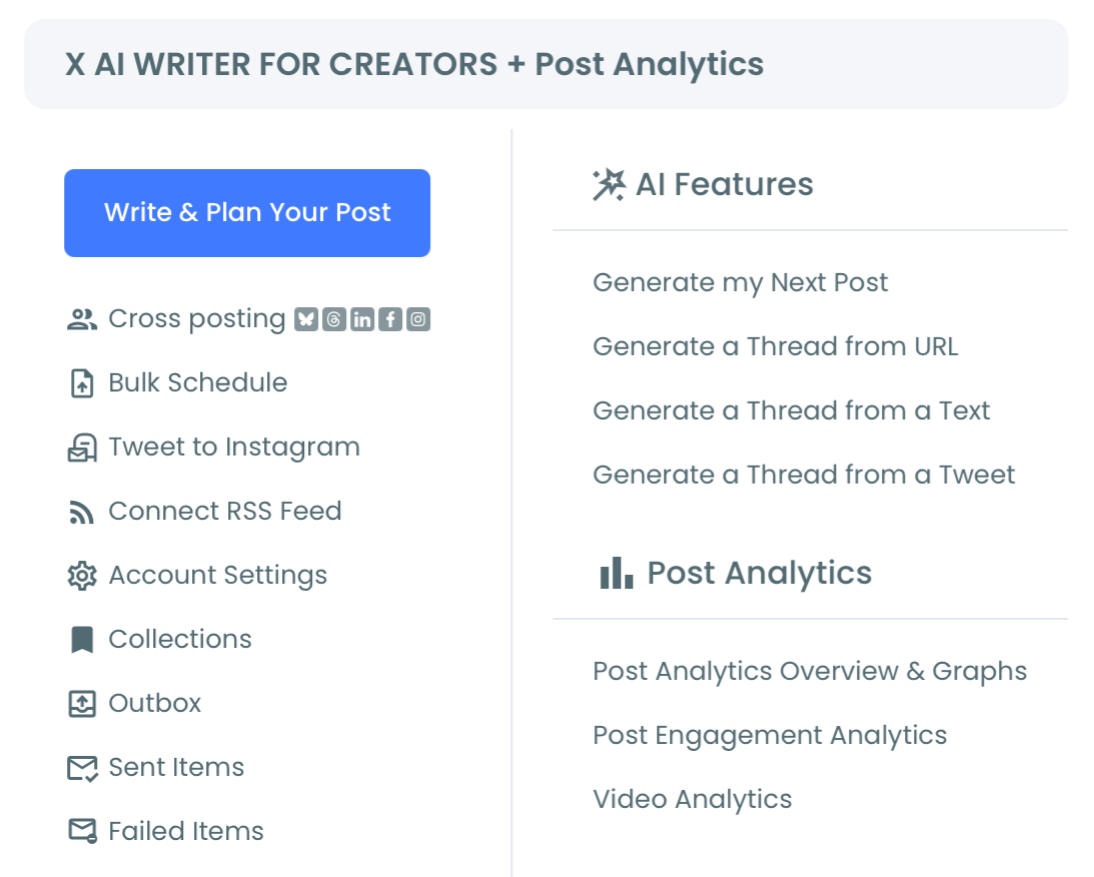
- Sort your post history by reposts and shortlist three to five evergreen posts that still read as true today.
Set the repost cycle and its removal rule
- Open the post in the editor and press the cycle-arrows icon on the toolbar. That opens the Auto Repost / Un-RePost panel.
- Enter a delay under RePost after, choosing hours and minutes on the steppers. Ten to twelve hours works as a first interval for an audience spread across time zones.
- Tick Un-RePost after and give it a delay if you want the repost pulled once its window closes. Leaving that checkbox clear keeps the repost on your profile.
- Enter a number under Repeat this cycle for the full repost-and-remove loops you want, then save the settings alongside the post.
That ordering holds up because there is one fewer guess at every stage.
The ranking replaces intuition about which post deserved a second run, the interval replaces a random reshare hour, and the removal rule keeps your profile from filling with duplicates of one sentence.
Skip the ranking and you will reliably repost the post you enjoyed writing rather than the post your audience carried.
Quick recap:
- Rank by reposts, not likes.
- Repost ten to twelve hours after the original.
- Remove the repost when its window closes.
- Repeat only while the second window still earns.
What a scheduled second window changes in your Twitter numbers
Impressions move before engagement rate does, and that order confuses people. A repost adds views from a segment that was never counted the first time, so your engagement rate can slip in the same week your total engagement rises.
Read your numbers against a baseline before you call a repost a failure. Knowing what a good engagement rate on Twitter looks like keeps a healthy second window from being misread as a flop.
The durable change is smaller and better than a spike. Your publishing volume stops being the only lever you have.
An account publishing five posts a week with a repost cycle on the best two is running seven distribution events, not five, from the same writing effort.
Over a quarter that difference compounds quietly, and it shows up in impressions long before it shows up in follower count.
You also get a cleaner read on content quality. When a post gets a second window at a good hour and still lands flat, the timing excuse is gone and you have learned something real about the topic.
One caution on reading the results. The second window rarely matches the first in raw numbers, and it is not supposed to.
The original catches the followers most likely to respond, and the repost catches the remainder, so a repost landing at half the original's impressions is a healthy result rather than a disappointing one.
Judge the cycle on total unique reach across both windows, not on whether window two beat window one. Accounts that measure it the wrong way switch the feature off just as it starts paying.
Where to start with retweet reach on X
Retweet reach has two halves. The borrowed audience someone else hands you brings new followers and cannot be scheduled. The missed audience you already own can be recovered on a timer, and that is the half most accounts leave on the table.
The workflow is short. Rank your history by reposts, then shortlist the posts that still stand up without their original context. Give the top two or three a delayed repost with removal attached, and keep the loop running only while the second window still earns its slot.
No new writing required.
→ retweets that grow your Twitter reach
FAQ
Does reposting my own post hurt my engagement rate?
A single well-timed repost usually raises total engagement while nudging engagement rate down slightly, because impressions grow faster than interactions in the second window. Repeated reposts of the same content to the same followers do eventually pull both numbers down, which is why the repeat counter should stay low.
How long should I wait before reposting a post?
Ten to twelve hours is the standard starting interval, because it lands the repost when time zones that missed the original are active. Accounts with a geographically tight audience often do better at four to six hours, when the same followers return to the app for a second session.
Will my followers see the same post twice?
Some will, and that is the trade-off you are accepting. Followers who were online for the original may see the repost in their timeline, which is exactly why the un-repost rule and a low repeat count matter more than the repost interval itself.



)