A campaign built on the wrong audience spends its whole budget proving the brief wrong. Timing, references and language all inherit that first assumption.
A short check of your Twitter target audience against your followers catches the mismatch while it still costs nothing to fix.
Guessing: a brief built on who you think follows you, corrected only after the campaign underperforms. Circleboom: location, language and gender reports on your X followers, in one place, through official Enterprise APIs.
→ Open the follower reports that test your Twitter target audience
Below: the order to run them, what each one leaves out, and what to do with each result.
Why a Twitter follower check comes before the campaign
A follower check tells you whether the market in your brief exists in your audience. Most briefs state a target and assume the account already reaches it.
X does not give you a practical view of where followers are, what language they use or how they split, so the assumption usually survives until the results come back.
The common mistake is to run these checks as a one-off curiosity. Run them as a gate instead, in a fixed order, with a written pass or fail for each.
Knowing the audience map matters when it changes a schedule, a language decision or a market choice.
Define the pass before you open anything. Write the market, the language and the audience from your brief in one line each, so the reports grade a stated plan and not a memory of one.
For example: market, Germany; language, German; audience split, roughly even. A Twitter target audience written that plainly either shows up in the reports or it does not.
Without that line, almost any chart can be read as good news.
Order matters because the checks fail differently. A location gap can often be fixed with scheduling. A language gap needs new content. A gender gap needs the most care, because the data is the softest of the three.
You can run the Twitter target audience check before any creative is written, which is when its answers are cheapest to use.
What three follower reports can and cannot prove on X
Circleboom Twitter retrieves your follower and following lists on X, reads public profile signals, and shows the result as percentages for the group.
Circleboom is an official X Enterprise developer, so you get this view without trusting your account to a scraping tool.
Each report answers one question and carries one limit:
| Report | Question it answers | Main limit |
|---|---|---|
| Followers' Map | Where are followers clustered? | Located followers only |
| Language Stats | Can followers read my posts? | Inferred from profile signals |
| Gender Stats | How does the group split? | Directional estimate only |
No report names a person, and none should be used to decide something about one. The percentages describe a crowd.
The bases also differ. Each report sets aside the accounts it cannot read, so the three sets of numbers describe slightly different groups, and you cannot combine them into one precise segment.
Read each result as a separate test of the brief.
When the report data is too thin to trust
When few followers have a usable location, or many accounts sit in the language "Other" slice, mark that test as weak, not as a pass.
The Twitter follower demographics reports show the shape of the data you have, and a thin base calls for checking engagement and customer data as well.
One more check sits outside the three: compare your own information diet. The reports also cover the accounts you follow, and Twitter friends demographics explains why that side can pull your planning away from your audience.
To explore Twitter follower analysis beyond these three reports, start there once the gate is done.
How to check your Twitter target audience against your followers
The check runs in four short stages and takes location first, because it is the cheapest gap to fix.
Connect your X account and open Analytics
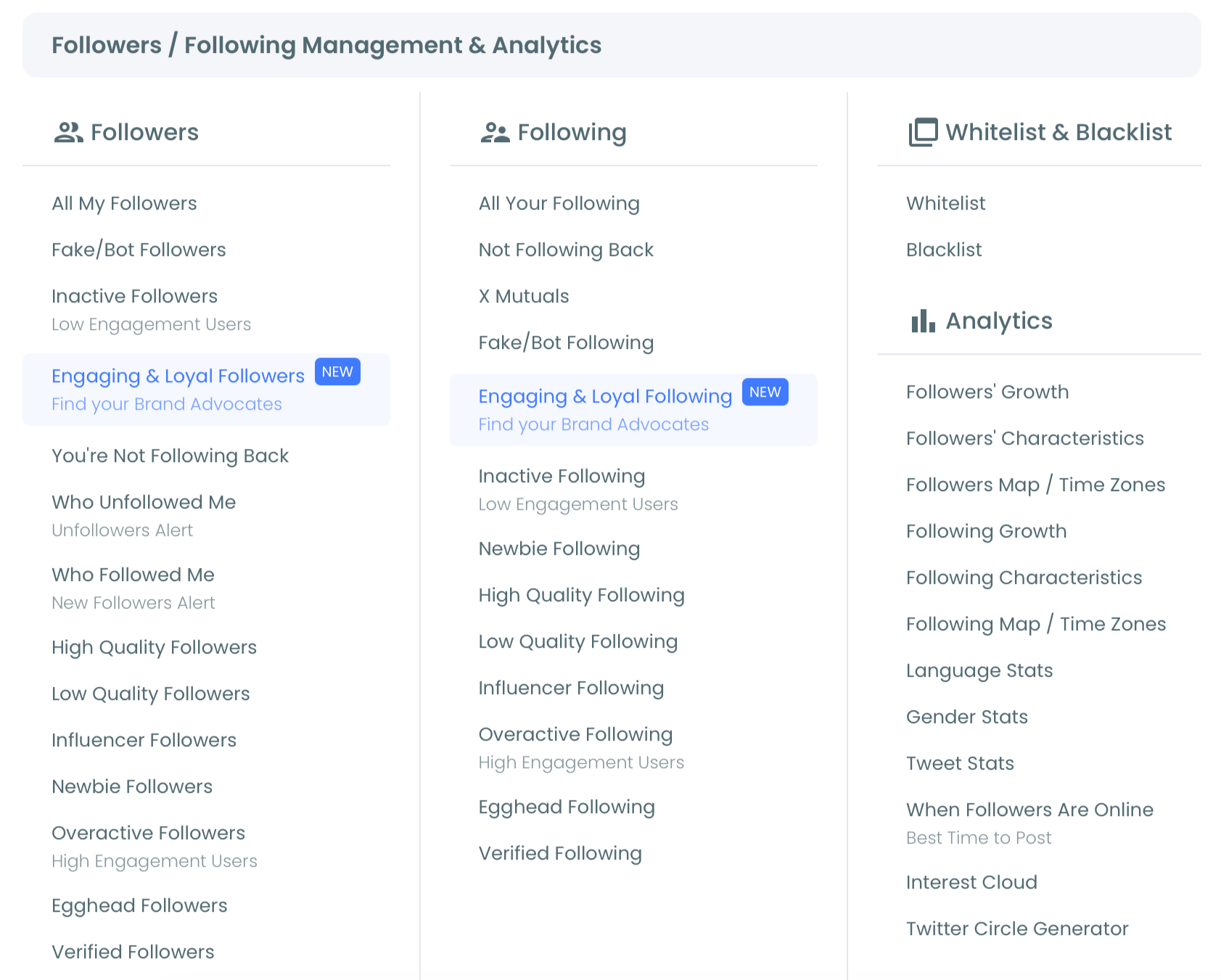
- Log in to Circleboom Twitter and connect the X account you plan to run the campaign from.
- Go to the Followers and Following menu and open its Analytics section.
Test location with the map and the time zone chart
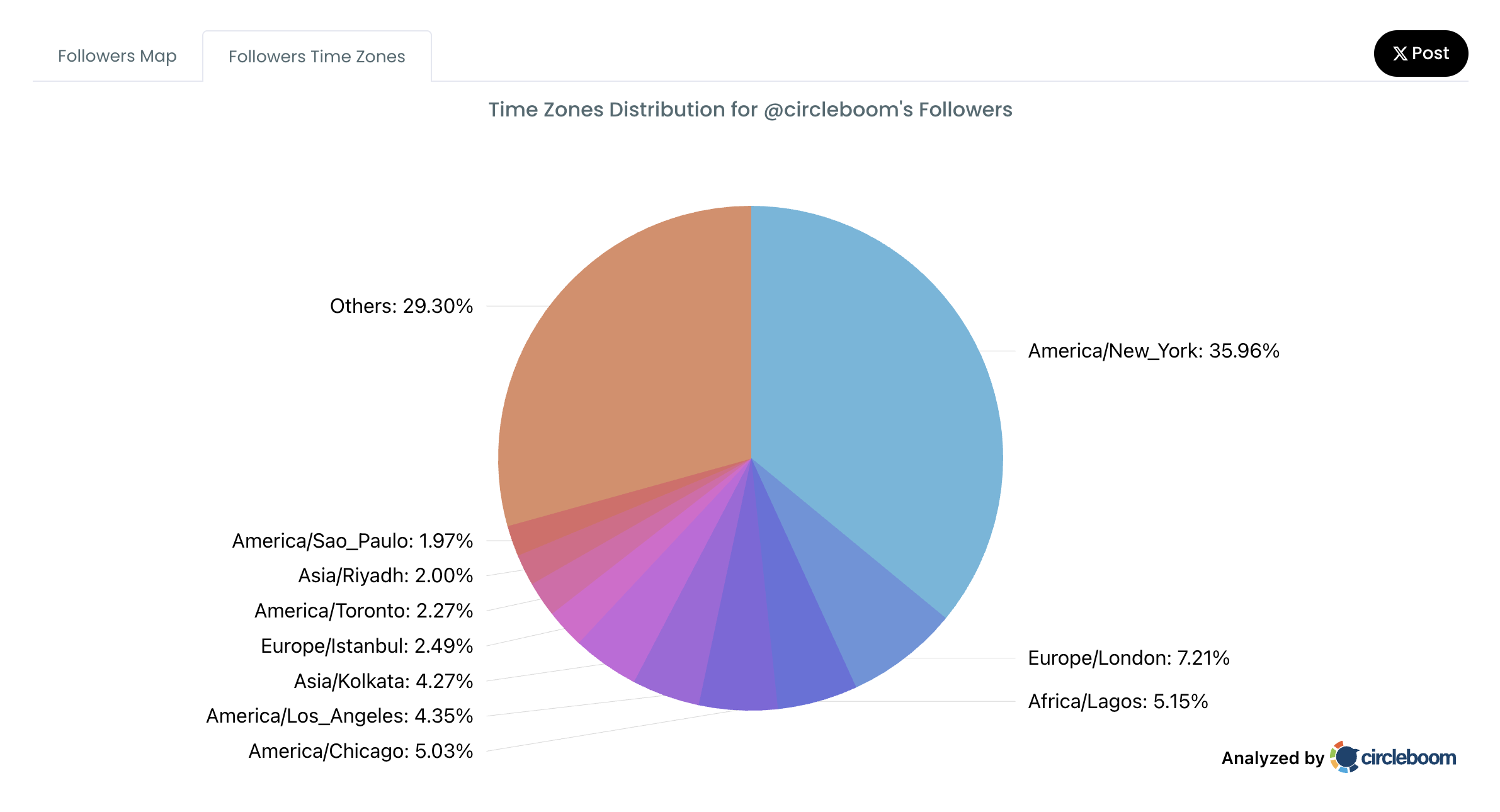
- Open Followers' Map and compare the largest bubbles with the markets in your brief. Write "pass" if your target market holds real weight.
- Switch to the Followers Time Zones tab and note the zones that hold the largest slices. Leave the X Post button alone during this review, because one click publishes the chart to your account with no confirmation step.
Test language on the Follower and Following tabs
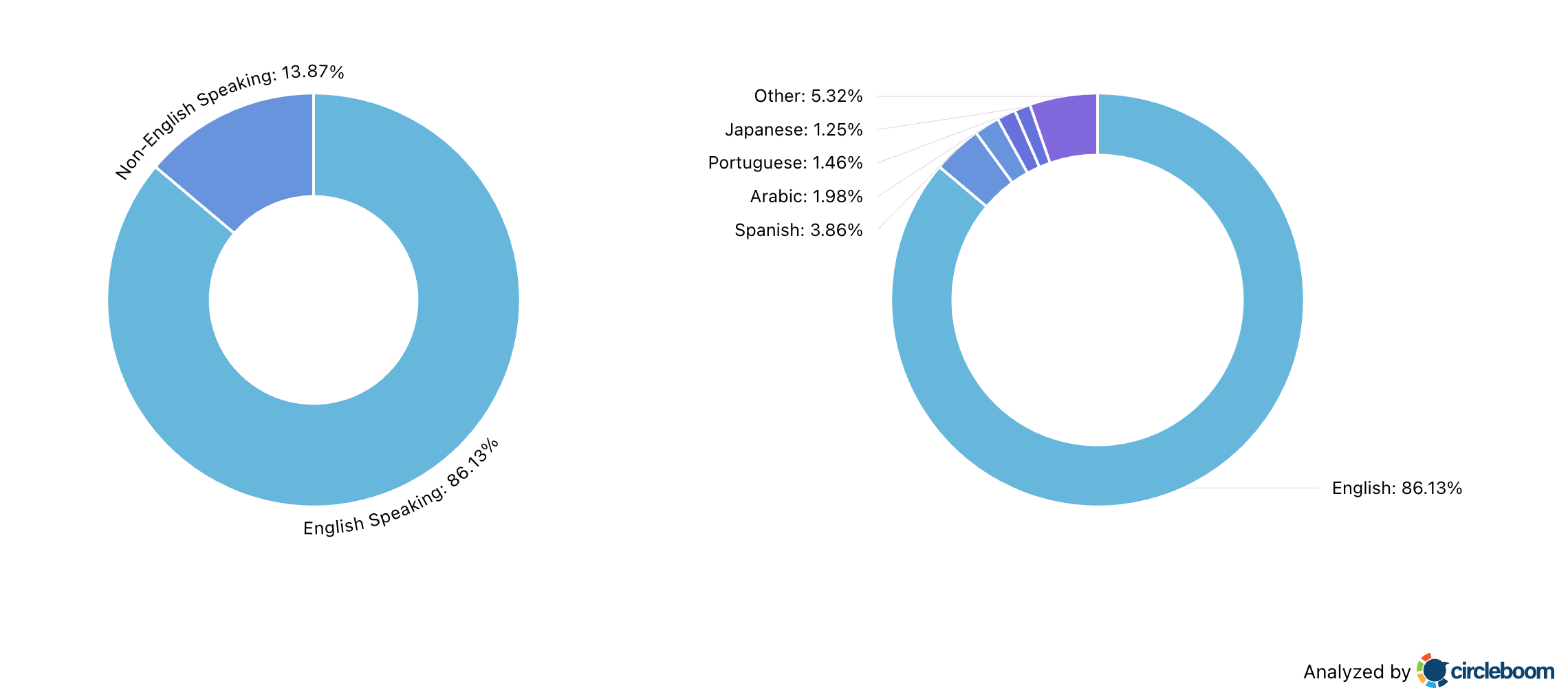
- Open Language Stats and read the Follower Language Stats tab. Compare the top languages with the language of your campaign, and mark any unserved group at 15% or more.
- Switch to the Following Language Stats tab to see whether your research sources match your audience.
Test gender last, as context
- Open Gender Stats and read the left panel against your brief. Note a mismatch only if the estimate clearly contradicts the audience you assumed.
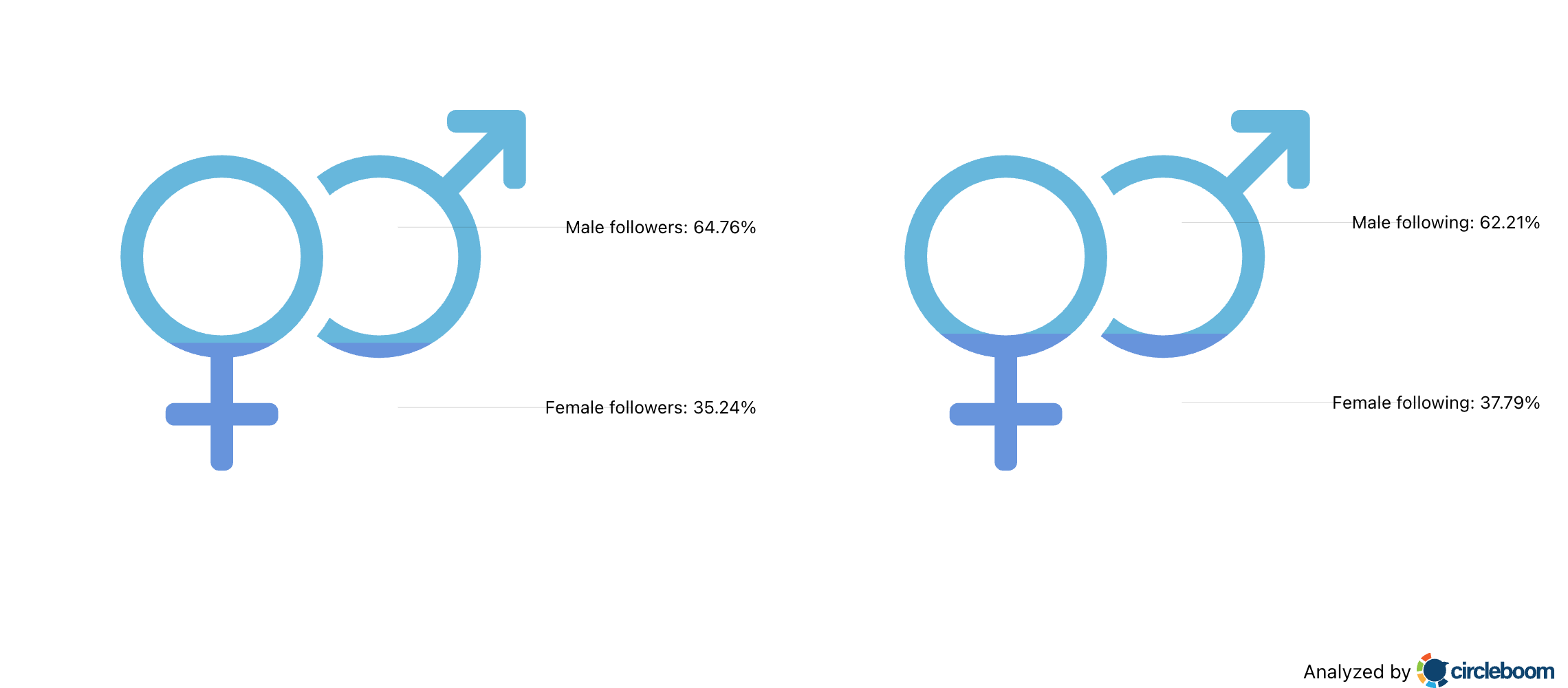
- Export what you need for the record. Gender Stats exports both panels in one file, while each Language Stats tab exports on its own from the three-dot menu.
This order holds up because each stage tells you what kind of fix you are looking at before you meet a softer signal. Reading location and language first keeps a rough gender estimate from steering the whole plan.
If the map matters for a client file, the Followers' Map exports as an image, ready to drop into a report.
The post on how to map your Twitter followers covers the map side in more depth.
Unlike a hand count of profiles, this check reads your whole follower list and returns proportions for the accounts each report can classify.
It also gives you a dated record: a written pass or fail for each test, plus exports you can drop into any of these:
- A media kit.
- A sponsor report.
- A client presentation.
A sponsor or partner will often ask these same questions. Having location and language answers ready, worded as estimates, is more credible than a follower count and a confident guess about your Twitter target audience.
If your Twitter followers sit in other time zones, when should you post?
Post in the active hours of your largest time zones, and give a strong second region its own window. A global audience cannot be served well from one region's working hours, and general posting advice averages across all X users, so it cannot tell you about yours.
Your pattern decides the plan:
- One region dominates: schedule around it and localize examples and offer timing.
- Several regions are strong: use Bulk Schedule or X Post Planner to cover each window separately.
- Your target market is small: fix the audience before you fix the schedule.
A second region does not always need a second post.
Take an illustrative account with 60% of followers in the US and 30% in Europe. It posts at 09:00 New York time and sets an Auto Retweet for the European evening, so both groups see one tweet.
Location also changes what you write, not only when you send it. If 25% of followers are in London, a local event or example gives that group something to reply to.
Plan that kind of localized reference only when a region has enough weight to justify it, and check its performance in Post Analytics afterward.
To move from zones to exact hours, pair the chart with When Followers Are Online and Best Time to Post on Twitter.
The chart tells you where. Those tools tell you when.
Should you start posting in a second language on X?
Start when an unserved language group is big enough to justify the work, and test before you commit. A group of about 15% to 25% of followers is the range where localized content starts to make sense; at 3%, the effort rarely matches the reach.
Size alone does not settle it for your Twitter target audience. For example, if 3,500 of 10,000 followers speak Spanish, that 35% clearly warrants attention, but the deciding evidence is whether posts in Spanish earn a response.
So test small:
- Plan a short series or a bilingual thread instead of translating the whole account.
- Use AI Tweet Generator to translate into the group's language while keeping your tone.
- Schedule for that group's hours, such as 20:00 Madrid time, not your usual US morning slot.
- Review the series in Post Analytics before you decide to continue.
Translation has a real cost in time, which is why this decision belongs after the check and not before it.
A following list in a different language from your followers is a separate finding: it means your research sources and your audience have drifted apart, so keep those two apart when you plan content.
Watch the "Other" slice as you decide. When many accounts are undetected, language conclusions are weak, so validate them with location and with post-level response first.
What if your followers are not your target audience on X?
Then your Twitter target audience is still ahead of you, and the campaign needs an audience-building step before localized creative. Follower reports describe who is here today, so a missing market will not appear because the copy improved.
Build the group first. Search Twitter Followers lets you look inside relevant audiences for accounts in priority markets. Language-specific keywords in Live X Account Search find more people in priority languages.
When topic fit matters more than geography, how to find people with the same interests on X is a useful starting point.
The reports can also expose the opposite issue: followers who clearly do not fit. A large group in an unrelated language may be irrelevant accounts or bots.
See how to identify and remove low-quality followers on X before you act.
Hold the localized budget until your X target audience shows up in the reports, since creative aimed at people who are not there has nobody to persuade.
Recheck after the growth push. If the campaign worked as planned, the language or region of your Twitter target audience should hold a larger share.
If the share did not move, you reached a different audience than you intended.
The next move on X for each report result
Your written results now fork into one of these paths:
- If location fails and language passes, change the schedule before you touch the creative.
- If language fails with a sizable group, run a small localized test and judge it in Post Analytics.
- If your target market is missing from both reports, build that audience first and delay localized spend.
- If only gender disagrees with the brief, revisit tone and examples, and do not exclude anyone.
- If everything passes, keep the plan and put your attention on the content itself.
Rerun the same check after any campaign, since each report is a snapshot from the moment it was retrieved.
Running it through an official X Enterprise Developer company also keeps the repeat safe for the account you depend on.
Your next campaign brief is the right test case.
→ Test your target audience on Twitter against your followers
Questions before you act on follower audience reports
How accurate is the gender estimate in Circleboom?
It is a directional estimate, not an exact count. X has no standard gender field, so Circleboom infers it from public signals, leaves out accounts with no readable signal, and does not show non-binary or undisclosed profiles as separate categories. Read it for the group only, and never use it to decide anything about one person.
How can I see what my followers care about too?
Use Twitter Interest Targeting in Circleboom to see the topics around your audience. The guide on using interest targeting to increase engagement on Twitter shows how to apply it.
What do the map percentages leave out?
They leave out every follower whose location is blank or cannot be resolved. If 40% of your followers have no identifiable location, the map percentages are shares of the other 60%, so check sparse results against language and engagement data.