
The right answer to which new Twitter followers to follow back is not "everyone" and not "no one." It is the accounts that pass a quick quality check on activity, follow ratio, and account age, done at the moment they arrive. Reciprocity by reflex fills your feed with bots and dead accounts; reciprocity by signal builds a following that actually reads you.
A follow-back decision should be a filter, not a habit. Circleboom shows every new follower in one enriched table, scores each account by engagement tier, follow ratio, and join date through the official X API, and lets you follow back the ones worth a feed slot in a single pass.
→ decide which new Twitter followers to follow back
Keep reading for the five signals that separate a keeper from a bot wave.
Most guides treat follow-back as a growth hack: mirror everyone, watch the number climb. That advice ignores what a follower actually costs you. Every account you follow back gets a slot in your feed and a vote in how X reads your audience. A wave of empty accounts after a viral post drags your engagement rate and teaches the algorithm to show you to more of the same. Deciding well at the entry point is cheaper than cleaning up later. That is why sorting out which new Twitter followers to follow back deserves a real method instead of a reflex.
Why Follow-Back Reciprocity Backfires Without a Filter
New followers are the clearest live signal of what your content is attracting right now, but X hands them to you as a bare list with no context. You can see that someone followed, but not whether they are a real, active, relevant account or part of a bot batch riding a trending topic. That gap is where blind reciprocity does damage.
The math is simple. If a viral post brings in 500 new followers and 40 percent are inactive or bot accounts, following them all back adds 200 dead weights to your own following list. Those accounts never engage, never click, and never see most of what you post. They also dilute the follower-to-following ratio that other users read as a credibility signal. It is the same problem covered in the sudden new followers breakdown of unexpected growth spikes.
X's own following FAQs confirm that following is a public relationship signal, not a private bookmark. Who you follow back is visible, and it shapes how both people and the ranking system read your account.
The Five Signals That Decide a Follow-Back
Reduce every new follower to five readable signals, and the decision stops being a guess.
- Activity tier. Active or high-engagement accounts are worth a slot; inactive or low-engagement ones rarely reciprocate attention.
- Follow ratio. A healthy follower-to-following ratio suggests a real account; a profile following 5,000 with 12 followers is usually noise.
- Account age. A join date from last week paired with no photo and no tweets is a classic bot pattern, the kind of profile the newly created accounts filter surfaces.
- Bio and niche relevance. Keywords in the bio tell you whether this account is in your world or a random mass-follower.
- Verification and quality flags. Verified, high-quality, or influencer classification pushes an account toward an easy yes, and the high-quality followers view isolates exactly those.
No signal is decisive alone, but together they sort a chaotic list into keepers, maybes, and a bot wave in seconds. That triage is exactly what a manual profile-by-profile check cannot do at scale, and it is where a purpose-built tool earns its place. If you want to understand the underlying quality bands first, the breakdown of engaging and loyal followers explains what a genuinely valuable follower looks like.
Circleboom is an official X Enterprise Developer company, so every one of those signals is pulled from full, authorized X data rather than a scraped partial snapshot. That matters when a follow-back decision hangs on whether a bot count or an activity tier is accurate.
Video walkthrough: how the Who Followed Me table detects bots, influencers, and real accounts among your newest followers in one view.
https://www.youtube.com/watch?v=14khvijuzDo
How to Decide Which New Twitter Followers to Follow Back with Circleboom
Here is the flow, in order, from login to a clean follow-back pass.
Open your new followers in one enriched view
- Log in to Circleboom Twitter and connect your X account with official OAuth.

- Open the Follower and Following menu, where Circleboom's audience-intelligence tools live.
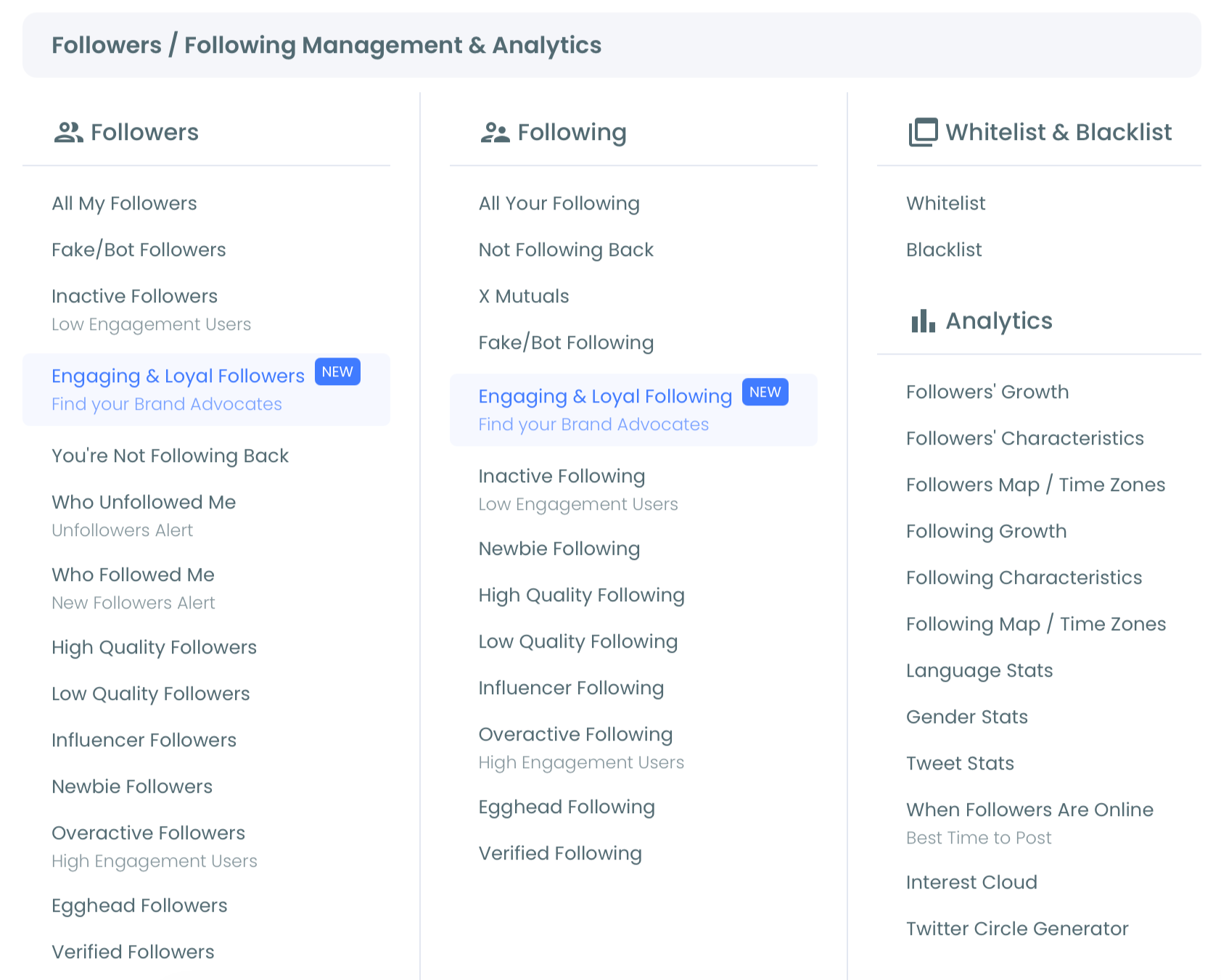
- Select Who Followed Me and set the time window to the period you want to review, from the last day up to the last year, so you see only the accounts that arrived in that window.
Score each new follower and act
- Open Filter Options and narrow by signal using engagement tier, follow ratio, join date, bio keywords, and verification status to separate real prospects from noise.
- Sort the passing accounts and follow back in bulk, selecting the keepers with the master checkbox and running the Follow action; Circleboom paces requests at 50 follows every 15 minutes, up to 400 per day, so the batch stays inside X's limits automatically.
- Whitelist high-value new followers and remove the bot cluster so your best arrivals are protected from future cleanups and suspicious accounts never age into your baseline.
That order works because each step narrows scope before you act: the time window isolates the wave, the filters score it, and the bulk action only touches accounts that already passed the check. Skip the filter step and you are back to blind reciprocity.
At a glance: connect, open Who Followed Me, set the window, filter by signal, follow back the keepers, whitelist and prune the rest.
What Deciding Well Changes for Your Account
A signal-based follow-back pass keeps your following list composed of accounts that actually engage, which protects the ratio and engagement rate other people read as proof you are worth following. Instead of a bloated number, you get a following list that feeds you relevant content and a follower base whose growth you can trust.
It also turns new-follower review into a repeatable habit. Run it within a few days of any campaign, mention, or viral post, and you catch high-value accounts while a follow-back still feels timely, and you spot bot waves while they are still clustered as a group. If a batch looks suspicious, the bot follower check workflow confirms how much of the wave is artificial before you commit to a single follow.
There is a mechanical layer to all of this once the judgment call is made. If you would rather compare the tools that automate the follow-and-unfollow motions instead of the scoring itself, the roundup of follow-back checker tools shows where a signal-first approach fits and where blind automation quietly works against you. The aim is never to hand the decision to a script; it is to make the manual review fast enough that you actually run it after every spike rather than skipping it once the notifications pile up.
Ready to stop mirroring everyone? You can sort your new followers by quality and follow back only the accounts that earn it.
The Bottom Line
Deciding which new Twitter followers to follow back comes down to reading five signals at the point of entry: activity, follow ratio, account age, niche relevance, and quality flags. Blanket reciprocity ignores all five and quietly costs you engagement; a filtered pass keeps your feed and your ratio clean. Circleboom turns that check into one enriched table with official-API accuracy, so the whole wave gets sorted in a single pass instead of a hundred profile visits.
→ start choosing which followers to follow back
Frequently Asked Questions
Should I follow back everyone who follows me on Twitter?
No. Following back every account fills your feed with bots and inactive profiles and drags the follower-to-following ratio others read as a credibility signal. Follow back accounts that pass a quick check on activity, ratio, and relevance instead.
How do I know if a new follower is a bot before following back?
Check the join date, follow ratio, tweet count, and whether the profile has a photo and bio. A brand-new account following thousands with almost no followers and no posts is a classic bot pattern. Circleboom flags these with a Fake/Spam quality filter so you can screen a whole wave at once.
Is it safe to follow back a large batch of new followers?
Yes, when the requests are paced. Circleboom processes 50 follows every 15 minutes, up to 400 per day, through official X APIs, so a bulk follow-back stays within platform rate limits and never looks aggressive to X.
How soon after a viral post should I review new followers?
Within a few days, while the wave is still identifiable as a distinct group. Reviewing early lets you follow back real prospects while the connection is fresh and remove bot clusters before they blend into your baseline audience.