
Some of your followers post constantly, dozens or hundreds of times a day, and that extreme volume tells you something. It might be a prolific journalist or a passionate community member, or it might be an automated account scripted to fire on machine speed.
From the outside, both look identical.
X gives you no way to find these high-frequency accounts in your audience. There is no filter for posting volume, no sort by tweet frequency, so the overactive accounts blend into a flat follower list with everyone else.
A dedicated tool isolates them, and then a few secondary signals let you tell the real power users from the automation. This guide walks through finding overactive followers and deciding what to do with each.
What this guide gives you.Why extreme posting volume is worth reviewing in your audience.A step-by-step way to find your overactive followers.How to tell genuine power users from automation before you act.
Built on Circleboom's Overactive Followers feature, delivered through official API access.
→ find overactive followers on Twitter
Why Overactivity Is Worth a Look
High posting volume is a double-edged signal, which is exactly why it deserves review rather than a snap reaction. The same metric, an enormous tweet count relative to account age, describes both your most engaged advocates and the bots that slipped past other checks.
That dual nature is the whole reason the segment matters. Some automation passes structural bot detection because it has aged into a non-zero tweet count and a balanced-looking ratio, but its inhuman posting frequency gives it away.
Meanwhile, real power users post at high volume because their role demands it. Knowing the difference between bots and automated accounts is the lens you bring to this view.
The first step is simply being able to find overactive followers on Twitter, which X will not let you do natively.
How Circleboom Isolates High-Frequency Accounts
Circleboom's Overactive Followers feature analyzes your follower list and flags accounts whose tweet frequency, total tweets relative to account age, runs far above normal. Each appears with the full data table: follow ratio, engagement classification, account age, and profile completeness.
Those extra columns are what make the view actionable, because volume alone cannot tell you intent. As an official X Enterprise Developer company, Circleboom reads this through sanctioned access and stays compliant.
It catches the noisy accounts that a fake-followers audit sometimes misses, because those audits lean on structure while this one leans on frequency.
Video walkthrough: segmenting your Twitter followers to review by behavior.
How to Find Overactive Followers on Twitter
The process, in order, grouped into two short phases.
Find the high-frequency accounts
- Log in to Circleboom Twitter and connect your X account with official OAuth.

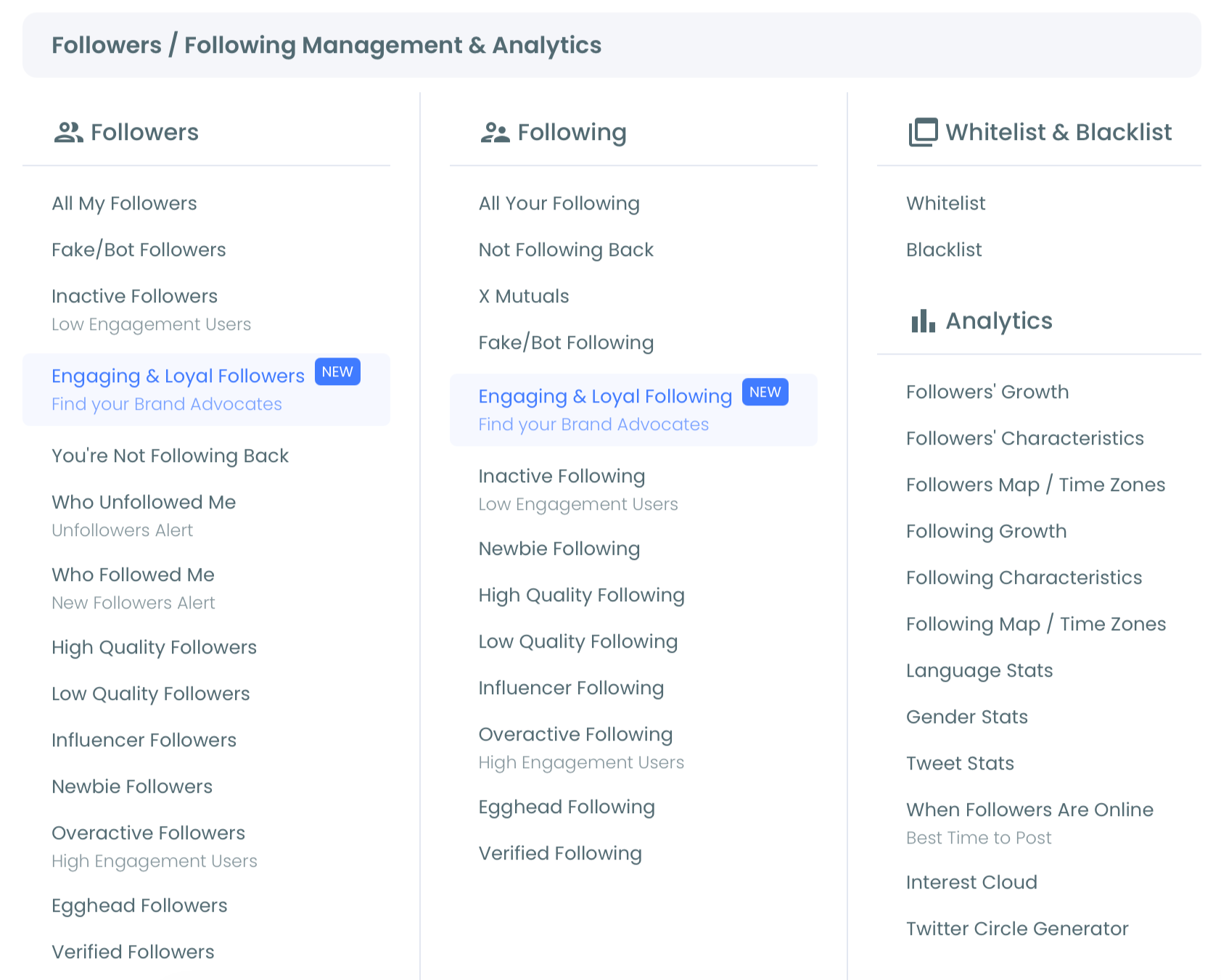
- Open the Follower & Following menu and select Overactive Followers to load the high-frequency accounts.
- Sort by tweet count descending so the most prolific accounts sit at the top for review.
Separate power users from automation
- Add the Inactive/Low Engagement and low follow-ratio filters to isolate high-volume accounts that nobody engages with, the strongest automation signal.
- Whitelist the genuine power users and remove or block the automation, with bulk actions paced through the official API and Chrome extension.
That order matters because volume is only the entry filter. You start from the high-frequency accounts, then layer engagement and ratio to separate the advocates worth keeping from the automation worth clearing.
Quick recap:
- Open Overactive Followers and sort by tweet count.
- Add low-engagement and low-ratio filters to find automation.
- Whitelist real power users; remove the rest.
The Intersection That Reveals Bots
The single most reliable signal in this view is a combination, not the volume itself. An account that posts hundreds of times a day but shows as Inactive/Low Engagement, meaning almost no one interacts with all that output, is almost certainly automated.
Real power users generate proportional engagement; their high volume earns replies, likes, and reshares. Automation produces noise that lands nowhere.
So the move is to filter the overactive list down to the low-engagement, low-ratio, no-photo accounts, which is where automation concentrates. That intersection catches the noisy accounts dragging on your metrics, the kind of silent engagement killers that quietly distort how your audience reads.
Finding that intersection is the difference between a thoughtful cleanup and accidentally removing a valuable advocate.
Don't Punish People for Being Active
The most important caution is the inverse of the cleanup instinct: do not remove an account just because it posts a lot. High frequency alone is not a problem, and some of your most valuable followers are your most active ones.
Journalists, live-event commentators, community managers, and prolific creators all post heavily because that is their function, and they often amplify your content to real audiences. Removing them over a high tweet count is a genuine relationship cost.
That is why the workflow leads with whitelisting, protecting the real power users before any bulk action, so a future quality cleanup never catches them. Treat the overactive flag as a prompt to review, never a verdict, the same care you would apply before deciding how to improve your engagement rates by pruning anyone.
What You Gain From the Review
Cleaning the automation out of your overactive segment has two payoffs. It cuts notification noise, and it sharpens your engagement data.
Automated high-volume accounts can interact with your content in low-quality, repetitive ways that distort your metrics, so removing them makes your engagement numbers reflect real people. The quieter benefit is signal clarity: with the noise gone, your analytics and your feed both get cleaner.
Pair the review with a broader follower quality check and use remove-follower tools for the confirmed automation, and your audience picture gets measurably more honest.
Your Next Move
Pick the path that fits your situation:
- If you suspect hidden bots, filter overactive plus low engagement plus low ratio to isolate the strongest automation candidates.
- If you have real power users, whitelist them first so no cleanup ever catches them over their tweet count.
- If your feed feels noisy, review the overactive accounts you follow and mute or unfollow the ones adding only volume.
Each path starts from the same high-frequency list, so you choose the goal and the secondary filters do the sorting.
→ Find your overactive followers now
What to Know Before You Act on Overactive Followers
Does overactive mean the account is a bot?
Not necessarily. Overactive measures posting frequency, not intent. The flag includes both prolific real users and automation, so cross-check engagement and follow ratio before deciding.
What is the strongest sign of automation here?
High posting volume combined with Inactive/Low Engagement and a very low follow ratio. An account that posts constantly but gets no engagement is almost always automated.
Should I remove every overactive follower?
No. Many are genuine power users who amplify your content. Whitelist the real ones and act only on the accounts that also show automation signals.
Will removing them block them?
No. Removing a follower takes them out of your audience without blocking. For abusive or spam-like overactive accounts, a mass block is the stronger option.
How is this different from bot detection?
Bot detection leans on structural signals like ratio and profile completeness; the overactive view leans on posting frequency. Some automation passes structural checks but is caught by its inhuman volume here.
Can I just monitor borderline accounts instead of removing them?
Yes. Add borderline overactive accounts to a Twitter List and watch them for a while before deciding. That gives you a monitoring window rather than forcing an immediate, irreversible call based on volume alone.
Does high activity hurt my own engagement metrics?
It can, when the high-volume accounts are automated and interact in repetitive, low-quality ways. Removing that automation makes your engagement numbers reflect genuine people rather than scripted noise.