
X never tells you when a follow relationship ends, so the only way to know if someone unfollowed you on Twitter is to compare your follower list against a stored copy of itself. The comparison is the answer, and the shape of what it returns tells you far more than the count ever did.
How do you know if someone unfollowed you on Twitter?
Compare a dated snapshot of your follower list against the previous one. Every account present before and missing now is an unfollow event. Circleboom automates that comparison on your Twitter follower list and returns the departed accounts as a dated, filterable table tagged with profile age, follow ratio, posting volume, and engagement level, through official X API access.
→ how to know if someone unfollowed you on Twitter
What X tells you when a follower leaves
X tells you nothing. There is no notification, no log, no tab, and no setting that reveals a departed follower.
The platform's own help with common following issues page covers count fluctuations and follow limits. It never offers a path to the identity of an account that left, because X does not keep that relationship history in a form you can query.
What you get instead is a number that moved. That number is ambiguous by construction, and acting on an ambiguous number is how accounts end up rewriting a content strategy that was working fine.
The fix is to hold a baseline. Circleboom holds that baseline for you, saving a dated copy of your Twitter follower list on every sync so the comparison is already finished by the time you open the page.
Once those copies exist, you can see who unfollowed you on Twitter as a list of named accounts rather than a delta. A broader comparison of the tracking approaches people try first is laid out in monitoring Twitter unfollowers.
One thing to settle before going further: this record starts when you start it. Snapshot comparison has no way to reach backward into a period nobody was recording, so a drop that happened last month cannot be reconstructed today by any tool. Tracking is insurance, not forensics.
The four reasons a Twitter follower count drops
Almost every article on this topic stops at showing you the list. The harder and more useful question is what the list means once you have it, because a drop of two hundred has four distinct causes and each calls for a different response.
Each cause leaves a different fingerprint in the unfollower table's own columns, which means you can identify the cause without leaving the page. No cross-referencing, no timeline archaeology, no guessing from the count.
Read the join dates, read the ratios, check whether the departures bunch in time, and the diagnosis usually resolves in under two minutes.
X removed inauthentic accounts
Platform-level spam sweeps remove large numbers of fake and automated accounts at once, and every real account that those bots followed loses followers on the same day.
The fingerprint is unmistakable. The departed accounts cluster on a recent join date, carry very low follow ratios, show minimal tweet counts, and often have no profile photo. They also leave in a single tight block rather than spread across the window.
This is the one cause that requires no response at all. Your audience did not shrink; your audience count got more honest.
Ratio farmers hit their timer
A large group of accounts follow you specifically to earn a follow-back, then unfollow days later to keep their own follower-to-following ratio flattering.
The fingerprint here is timing plus reciprocity. These accounts followed recently, you followed back, and they left inside a short, predictable window.
Their follow ratio sits close to one because they are actively managing it. The behaviour is common enough to be a recognised pattern, unpacked in why people follow then unfollow you on Twitter.
Response: unfollow back when you would rather your own following list stayed tidy, and blacklist repeat offenders so they are excluded from future follow-back workflows.
The same population usually shows up one step earlier as well. Accounts that followed, were followed back, and never engaged sit in the Not Following Back view long before they leave. Reading that list occasionally shows the churn forming instead of explaining it afterwards.
A content shift lost part of the audience
This is the only cause that carries real strategic information, and it is the one the raw count buries.
The fingerprint is age and engagement. The departed accounts have been following for a long time, post regularly, and sit squarely in your subject area. They also left in a burst, usually inside roughly forty-eight hours of a specific post, a topic pivot, a rebrand, or a change in posting frequency.
When old, active, on-topic accounts leave together, something you published moved them. That is worth a conversation. Nothing else on this list is.
The data has not synced yet
Follower data refreshes from the X API on a daily cycle, so the list you are reading reflects the last sync rather than the last hour.
Circleboom also flags on the feature itself that X sometimes returns follower data which disagrees with itself between fetches, so a row can appear for an account that never went anywhere. Those rows usually clear on the next day's pull.
The fingerprint is a small number of scattered accounts with no shared characteristics that quietly disappear from the list a day later. Response: wait one cycle before acting on anything that looks isolated.
How Circleboom shows who unfollowed you on Twitter
Circleboom stores follower list snapshots for the connected account and reports the difference between them, converting Twitter follower churn into a sortable table you can filter, export, and act on.
Those reads run through official API access. Circleboom is a verified Enterprise partner of X, which is what allows a tool to query a live follower graph at this depth without stepping outside the platform's rules.
Every row carries seven fields: the account name and handle with its location, lifetime post count, the date it joined, how many accounts it follows, how many follow it, the ratio between those two, and an activity classification.
A time period selector sits above the list and drives everything. It spans a single day at one end and a full year at the other, opening on the last day. Switching windows re-filters the list to unfollows inside that range.
The filter panel then narrows within the window:
- Follower quality flags for eggheads, protected, fake or spam, inactive, and overactive accounts.
- Follower, following, and tweet count ranges, plus follow ratio minimum and maximum.
- Join date range, which is what isolates a bot wave.
- Engagement tier, language, and location.
- Bio and name text search, plus whitelist and blacklist status.
Which filters change the Twitter unfollower read
The time window and the join date filter together are what turn a raw departure list into a diagnosis. Set the window to four weeks, filter to a join date older than two years, and read only what survives, because that segment is the one carrying a message.
That is also the practical reason to open the Who Unfollowed Me on Twitter view rather than eyeballing your follower list. The filtering is the product; the list is just the input.
See it live: how the time period selector reshapes the unfollower list from a single day to a full quarter.
Can you tell exactly when someone unfollowed you on X?
You can tell which day, not which minute. The dating comes from the snapshot cycle, so an unfollow is stamped to the sync that caught it rather than to the second it happened on the platform.
For most purposes day-level precision is enough, because the question you are actually answering is whether departures cluster around a specific post or spread evenly across a month.
A cluster is a signal. An even spread is background churn.
Where the lag does matter is the same-day check. An unfollow from two hours ago will usually appear after the next daily sync rather than immediately, which is worth knowing before you conclude that a specific person is still following you.
Readers who monitor from a phone rather than a desktop will find the mobile path covered in how to track Twitter unfollowers on iPhone.
Dating also only means something against a trend line. The Twitter Follower Tracker sets departures beside arrivals over the same window. That comparison separates a genuinely shrinking account from healthy turnover, where new followers land faster than old ones leave.
Alerts remove the checking habit entirely. Rather than opening the dashboard to see whether anything changed, you can have a summary of new unfollowers emailed on a schedule, which is the setup most people settle on after the first month.
How to know if someone unfollowed you on Twitter, step by step
To find out who unfollowed you on Twitter, connect the account so snapshots begin accumulating. Open the unfollower view, set the time window to the period you want to examine, and filter by account age and quality before reading any names. The six steps below run that loop in three phases: start the record, narrow the window, then decide.
Start the record so there is something to compare against
- Log in to Circleboom Twitter and connect the X account you want a follower history for.
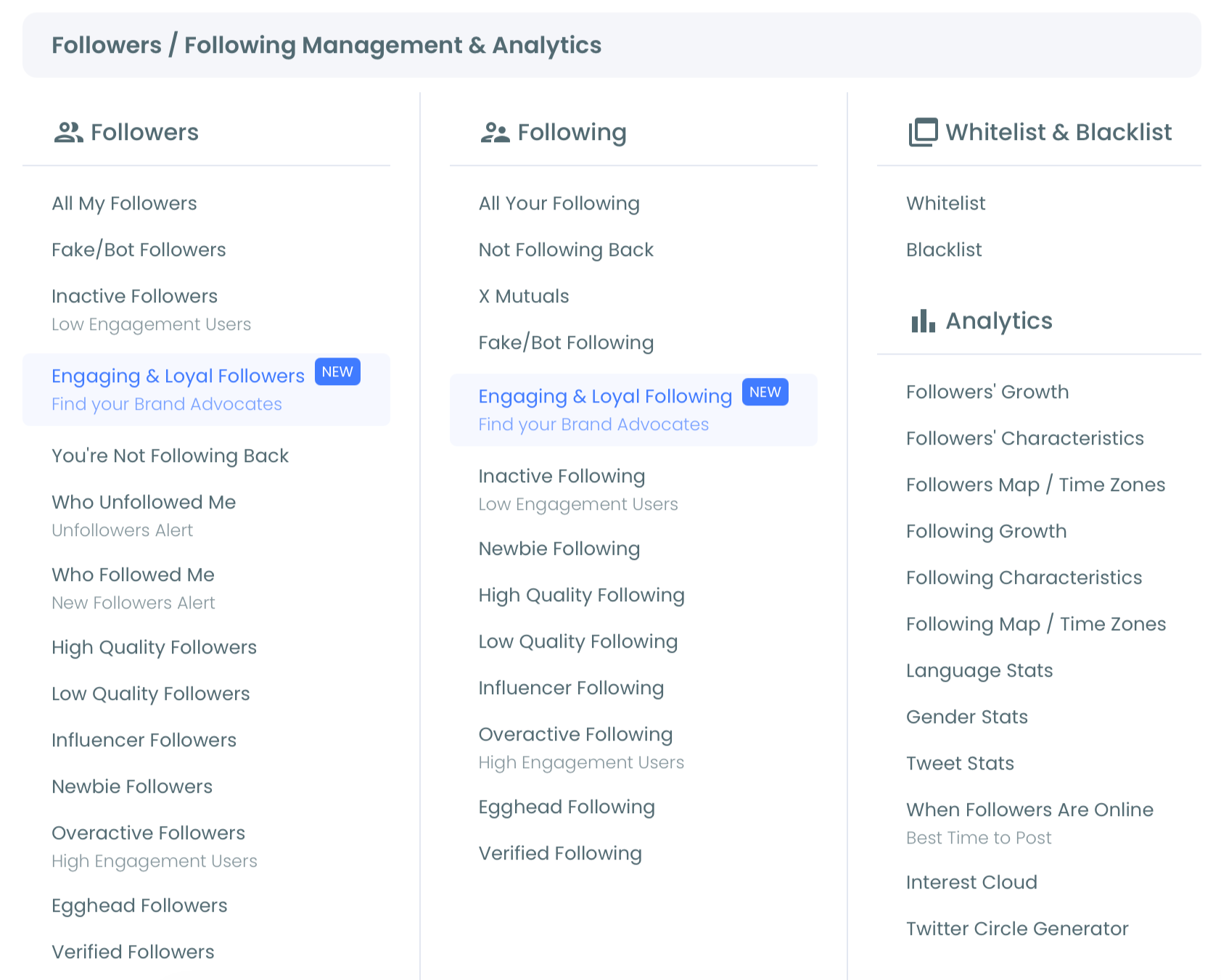
- Go to Follower & Following in the left menu and select Who Unfollowed Me under audience insights.
Narrow the window before you read any names
- Set the time period selector to the range you want to examine. The default is the last day; widen it to two or four weeks when a pattern matters more than a single account.
- Open Filter Options and set a join date range to separate recently created accounts from long-standing followers. This one filter splits bot-wave churn from audience churn faster than any other control on the page.
Turn the read into a decision
- Sort by Follow Ratio, then by Joined to group the departed accounts by network shape and age, so clusters become visible rather than scattered down the page.
- Export the segment as CSV before taking any action, so you keep a record of the window you are about to act on. Export runs on a token balance, and the remaining count sits next to the button.
That ordering is what keeps the conclusion defensible. Recording first means a baseline exists, narrowing before reading stops one prominent username from being mistaken for the pattern, and exporting before acting means the segment survives whatever you decide to do next.
At a glance: connect, open the unfollower view, choose your window, filter by join date, sort, export.
The same six steps run fine from a phone browser. For the mobile-first version of the routine, how to see who unfollowed me on Twitter from my iPhone walks through it screen by screen.
Why a named Twitter unfollower list beats a moving count
Without a follower history, every count drop is a guess, and guesses get resolved in the most self-critical direction available. People rewrite working content strategies because a number moved for reasons that had nothing to do with what they published.
With a dated list, the same drop resolves in about ninety seconds: check the join dates, check the ratios, check whether the departures cluster in time. Three of the four causes need no response, and the fourth is the only genuine audience feedback X will ever hand you.
That is the difference between reacting and reading.
→ check who unfollowed you on X
Questions creators ask
Does X notify you when someone unfollows you?
No. X sends no notification and exposes no unfollow log, in either direction, which is why every unfollower list on the market is built by storing follower snapshots and comparing them over time.
Can I recover unfollows that happened before I connected my account?
No. Snapshot comparison needs a previous snapshot, and none exists for any period before your first sync, so the record begins the day you connect and only runs forward from there.
Why does an account show as an unfollower when it still follows me?
Because the daily read is not always consistent, a row can surface for an account that is still following you. Circleboom notes this on the feature, and the entry normally disappears once the next sync completes. Wait that one cycle out before selecting anything for a bulk action.
Where does reading this data usually go wrong?
Treating a single unfollow as a verdict. One departure is close to unreadable on its own: it can be a dormant account caught in a platform sweep, a ratio farmer hitting a timer, or a sync artefact that reverses itself tomorrow. The useful reading only appears at the level of clusters, where accounts leave together, share characteristics, and share timing.