
Searching a competitor's followers on Twitter is the fastest way to build a list of people who already care about your niche. They followed a relevant account, so they have proven their interest.
The catch is that X shows you that list as an endless scroll with no filters, so the people worth reaching stay buried.
This guide walks through the full process: pull a rival's complete follower list, filter it down to the accounts that fit your target, and turn the result into a follow or outreach list. Every step runs on official API access, so nothing is scraped.
Here is the short version.Load any public competitor's full follower list as a structured table.Filter it by bio keyword, location, follower count, and engagement.Keep only the high-value subset, then follow or export it.Treat it as audience research, not poaching.
→ search competitor followers on Twitter

Why Start From a Competitor's Followers
Before the steps, it helps to know why this beats searching from scratch. A keyword search returns accounts that mentioned a term once, which can include people who used the word in passing and never cared about the topic again.
A competitor's follower list returns accounts that chose to follow a relevant account and stayed there, week after week, which is a much steadier signal of real interest.
That difference in intent is the reason this works. You are reaching people who have already self-selected into your category, which beats a single keyword match.
It is the same logic behind learning to follow all the people one account is following on Twitter, only pointed at a rival's audience.
How to Search Competitor Followers on Twitter
The process breaks into two phases: pull and filter the list, then act on the subset.
Pull and load the competitor's follower list
- Log in to Circleboom Twitter and connect your X account with official OAuth.
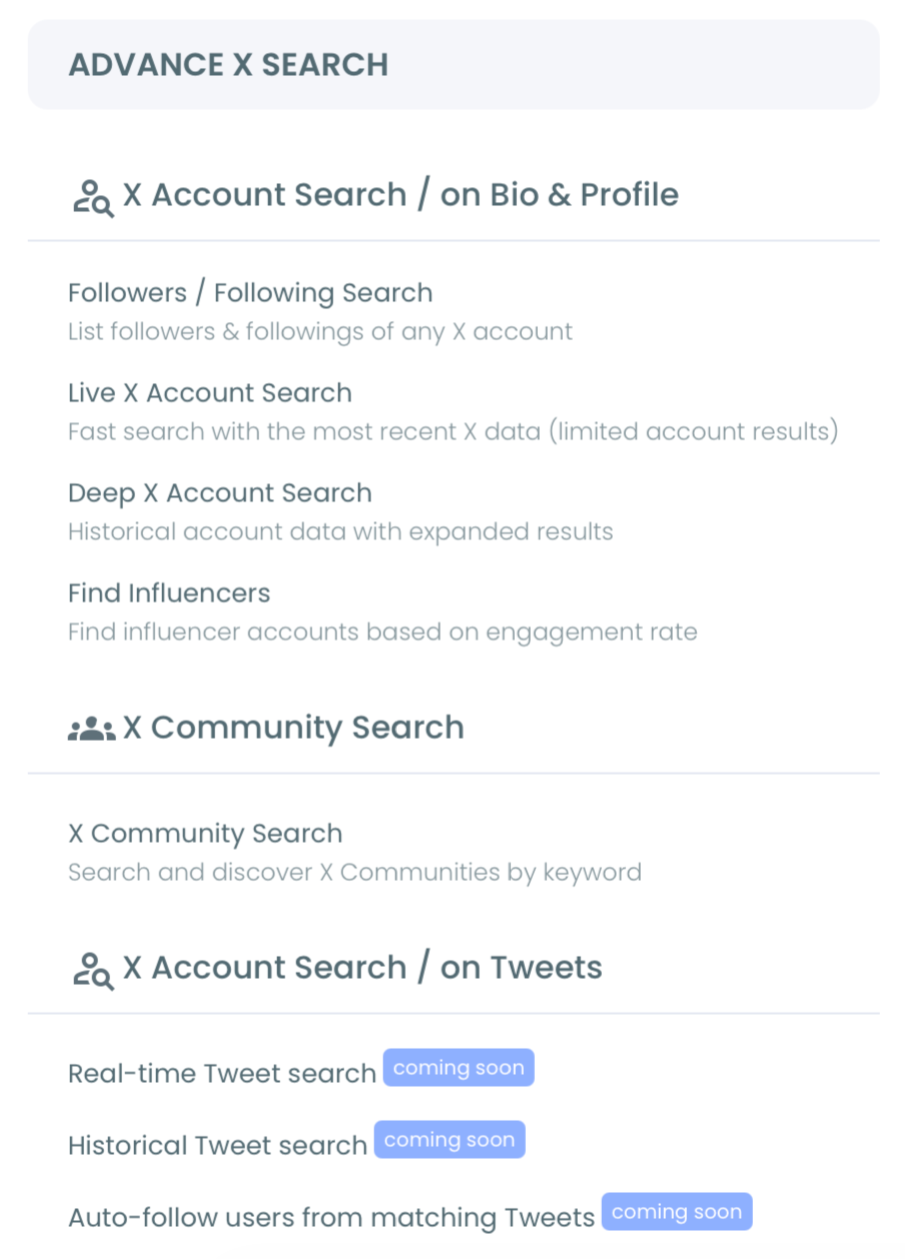
- Open the Advanced X Search menu and choose Followers / Following Search, then enter the competitor's username and select Followers.
- Let the full list load as a structured table with tweet count, join date, follow ratio, follower count, and an engagement label on every row.
Filter, narrow, and act on the subset
- Apply filters for bio keyword, location, minimum follower count, and engagement tier, excluding inactive and low-quality accounts so only relevant profiles remain.
- Follow the strongest accounts selectively, add the rest to a Twitter List, or export the subset as a CSV for outreach.
That order matters. The full list is too noisy to act on directly, so the filtering step is what makes the difference between targeted research and spray-and-pray.
You pull everything, narrow to the slice that matches you, and only then act, which keeps your follow actions both relevant and well inside platform limits.
Quick recap:
- Open Followers / Following Search and enter the rival's username.
- Load the full list, then filter by bio, location, count, and engagement.
- Follow, list, or export the narrowed subset.
Video walkthrough: get a full following list from any account on X.
How to Filter Down to the Accounts Worth Reaching
A rival with 30,000 followers does not hand you 30,000 prospects. The work is narrowing fast to the few hundred that fit. Start with the filter that scopes hardest for your offer.
A bio keyword usually cuts the deepest. If you sell to marketers, filter for "marketer" or "growth" in the bio and name, and the field collapses to people who describe themselves the way your customers do.
Layer location when your offer is geographic, set a minimum follower count if reach matters, and exclude inactive accounts so dormant profiles drop out. What remains is dense and relevant rather than huge and noisy, the same quality lift you get from any serious followers analyzer for Twitter.
The narrower your filters, the smaller and stronger the list. That is the goal: a shortlist, not a crowd.
It is fine to run the same competitor twice with different filter sets, one pass for high-reach accounts and one for active everyday users, since each pass surfaces a different kind of prospect worth keeping separate.
How to Act Without Looking Like Spam
Once the subset is in front of you, restraint protects your account. Follow the strongest accounts selectively, because a curated round of follows reads as genuine interest. Mass-following a rival's entire audience reads as spam and can flag you.
If you would rather watch before you reach out, add the segment to a Twitter List with the Twitter List Manager and monitor it over time. If you are running outreach at scale, export the filtered set with the export Twitter accounts tool and move it into your CRM.
Either way you are acting on a few hundred relevant people, not blasting thousands. That is the safe, gradual approach that keeps you within X's rate limits.
If you do plan to follow in volume, read up first on how to bulk follow Twitter X accounts safely.
Research, Not Poaching
This is worth naming clearly. You are not stealing followers, because following is not a transfer. A person can follow a competitor and you at once, and most engaged people in a niche already follow several accounts in it.
What you are doing is reading where interest already lives and meeting it with something useful. As an official X Enterprise Developer company, Circleboom pulls these public lists through sanctioned access, so the data is compliant rather than scraped.
The accounts you reach are free to ignore you, and the ones who follow back do so because your content earns it. That is ordinary audience research, the same instinct behind a free guide to find Twitter influencers step by step.
When to Re-Run a Competitor Search
A follower list is a snapshot, not a fixed asset. Audiences shift as rivals post, grow, and lose people, so the segment you pull today will look different in a few months. Re-running the search keeps your shortlist current.
The best moments to re-run are after a competitor posts something that clearly drew new followers, or when you are about to start a fresh outreach push. A recent pull catches the accounts that just entered the niche, which are often the most active and the most open to discovering someone new.
Filtering each fresh list the same way keeps your standards consistent from one run to the next.
What People Ask About Competitor Follower Search
Do I need the competitor's password or permission?
No. You only need their public username. Circleboom reads any public account's follower list through official API access, so you never touch their account or need any permission.
How many followers can I see?
The table displays up to 2,500 accounts at a time, and sort options let you reach beyond that. For most prospecting, filtering down to a few hundred relevant accounts matters more than seeing every name.
Can I save the list and act on it later?
Yes. Add the filtered subset to a Twitter List for ongoing monitoring, or export it as a CSV for outreach and CRM import whenever you are ready.
Will following from the list get my account flagged?
Only if you do it recklessly. Follow a small, relevant subset rather than the whole audience, and keep within platform limits. Selective, gradual follows are safe.
What makes a good seed competitor to search?
Pick the rival whose audience overlaps most cleanly with your target customer. A tightly focused account gives a cleaner, more relevant follower list than a broad or celebrity-like one.
Start With One Competitor and Filter Hard
Choose the rival closest to your niche, load their followers, and narrow the list to the slice that matches your target. The cleaner your seed account and the tighter your filters, the stronger the shortlist you walk away with.