
Crypto markets are not driven only by charts, indicators, or technical patterns. Very often, the strongest and fastest price movements start with information, not structure.
A single announcement, a short statement, or even a subtle signal can be enough to shift sentiment and trigger aggressive buying or selling across the market.
 Altug Altug
This is exactly where news trading comes into play.
And when it comes to crypto news, there is one platform that consistently delivers information faster than anywhere else: Twitter (X).
If you want to trade crypto based on news, Twitter is not optional. It is the place where news appears first, reactions happen instantly, and narratives start forming before they are visible on price charts.
Why Twitter (X) Is the Core Platform for Crypto News Trading
Crypto is fundamentally different from traditional financial markets. There is no opening bell, no closing session, and no centralized news release schedule. Information spreads continuously, and price reacts immediately, regardless of time or day.
What makes Twitter especially important is that most key players in crypto communicate directly with the public.
Exchange announcements, founder updates, regulatory reactions, and early research insights are often shared first — and sometimes only — on Twitter.
There is one signal, very basic and also undervalued: following. You must notice that big accounts have many followers but they have a very tiny following. They follow only who they care! So, if you can track big crypto accounts and VCs and monitor their following actions daily, you can make an educated guess about the next big project, merger, giveaway or new token. As I said, it is a very simple but neglected metric.
 Altug Altug
This means that by the time a news website publishes an article or a YouTube video breaks down the event, the market has often already reacted. In many cases, the first meaningful price move is already over.
For a news trader, Twitter should not be treated as a place to scroll casually. It should be treated as a live information terminal, where speed, context, and credibility matter far more than opinions or engagement numbers.
What News Trading Actually Means in Crypto
News trading does not mean buying every piece of news that looks positive or shorting everything that sounds negative. That approach usually leads to late entries, emotional decisions, and unnecessary losses.
In crypto, news trading means identifying information that changes market expectations, and then deciding whether that information is strong enough to justify a trade.
Typical crypto news that can move markets includes:
- Exchange listings or delistings, which directly affect liquidity and accessibility
- ETF-related decisions, which influence institutional participation
- Regulatory statements that change risk perception
- Hacks, exploits, or network outages that affect trust
- Partnerships, integrations, or funding rounds that alter project credibility
- Statements from founders or core team members that change narrative direction
What makes this difficult is that not all news is equal. Some news sounds important but has no real impact, while other updates look small but completely shift market sentiment.
This is why news trading is less about reacting emotionally and more about understanding context, timing, and market psychology.
Step 1: Follow the Right Accounts (This Is the Foundation)
Everything starts with who you follow.
If you follow the wrong accounts, no tool, list, or alert will save you. Your feed will be full of reactions, opinions, and recycled information instead of original signals.
 Kevin Frank
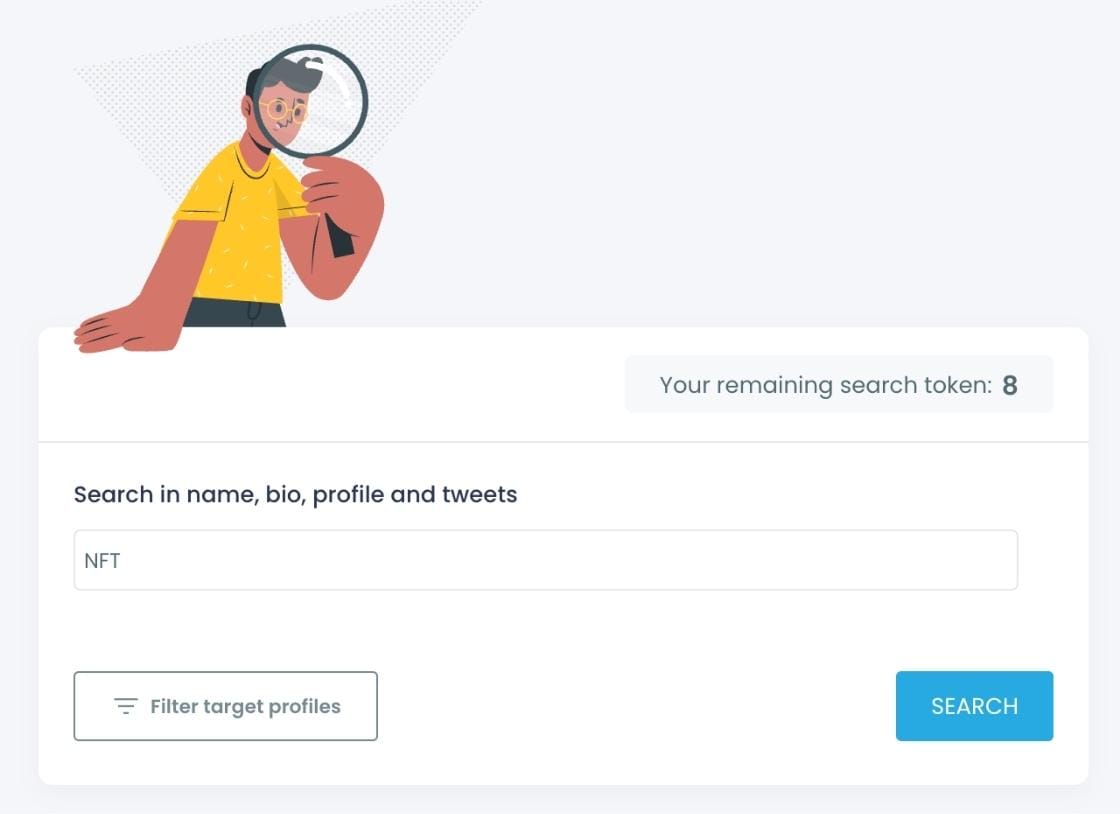
For crypto news trading, you should focus on accounts that create information, not accounts that summarize it later.
These usually include:
- Major crypto exchanges (for listings, delistings, maintenance, policy changes)
- Project founders and core developers
- On-chain analysts who publish original data
- Journalists who break news early
- Macro and regulation-focused accounts
Following fewer but higher-quality accounts improves reaction speed and decision-making far more than following hundreds of low-signal profiles.
Step 2: Turn On Notifications for Truly Market-Moving Accounts
Once you follow the right accounts, the next logical step is to make sure you don’t miss their tweets.
Twitter allows you to turn on notifications for specific users, which means you receive an alert every time they post. This is extremely useful for accounts whose tweets can cause immediate market reactions.

For example, tweets from figures like Elon Musk have historically moved crypto markets within minutes, sometimes even seconds. In these cases, scrolling your timeline is simply too slow.
However, notifications should be used carefully.
If you enable notifications for too many accounts, you lose focus and create distraction. The goal is not constant alerts, but instant awareness for a very small number of critical accounts.
A good rule is:
- Enable notifications only for accounts where a single tweet can change market sentiment
- Keep this list very small and review it regularly
Used correctly, notifications act like an early-warning system rather than noise.
Step 3: Use Twitter Lists to Keep Your Monitoring Clean
Even with the right follows and notifications, your main timeline is not designed for trading. Replies, unrelated content, and algorithmic suggestions constantly interrupt focus.
This is where Twitter Lists become essential.
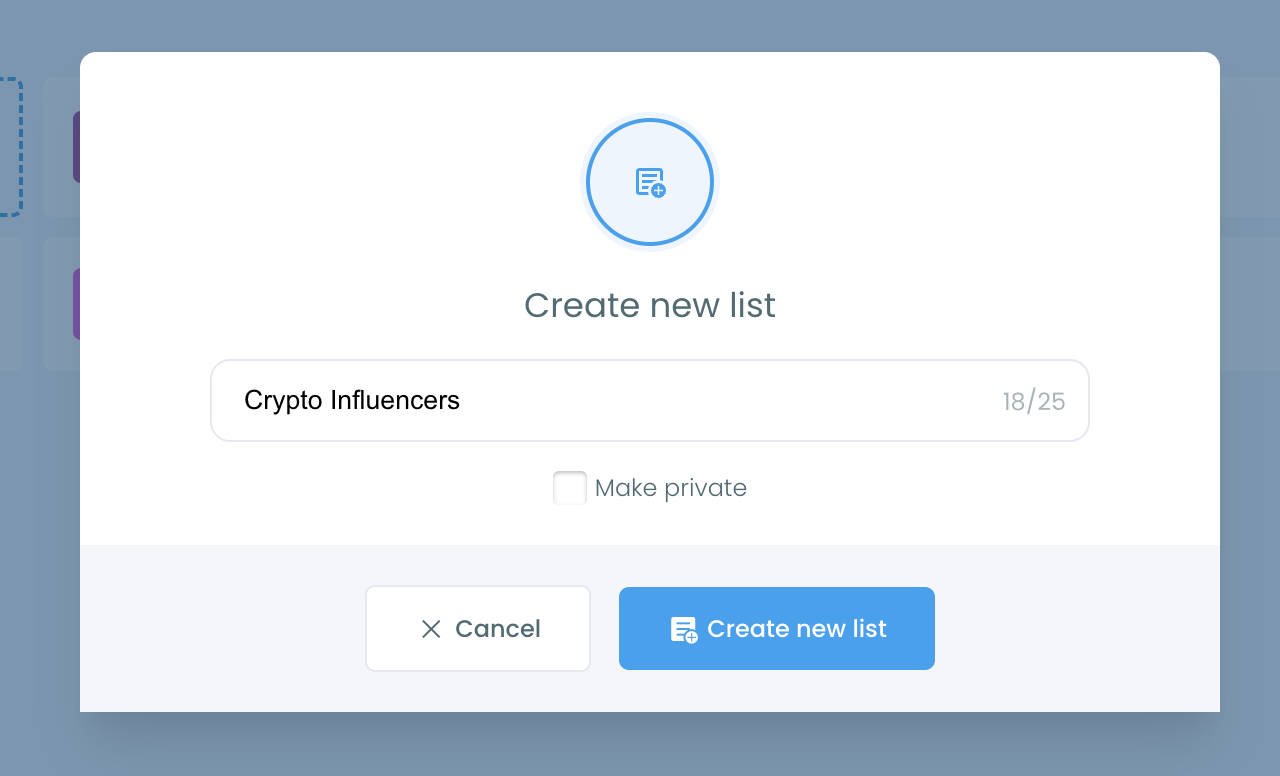
Lists allow you to group selected accounts into focused feeds, so you can monitor important information without distractions. Instead of scrolling endlessly, you open a list and immediately see only relevant tweets.
 Altug Altug
For example, you might create lists such as:
- Breaking crypto news
- Exchange announcements
- Founders and core teams
- On-chain analysts
- Macro and regulatory signals
Lists help you stay organized, reduce noise, and react faster during volatile market conditions.
Step 4: Don’t Just Read Tweets. Analyze Them Over Time.
Most traders read tweets in isolation. They see one tweet, react emotionally, and move on.
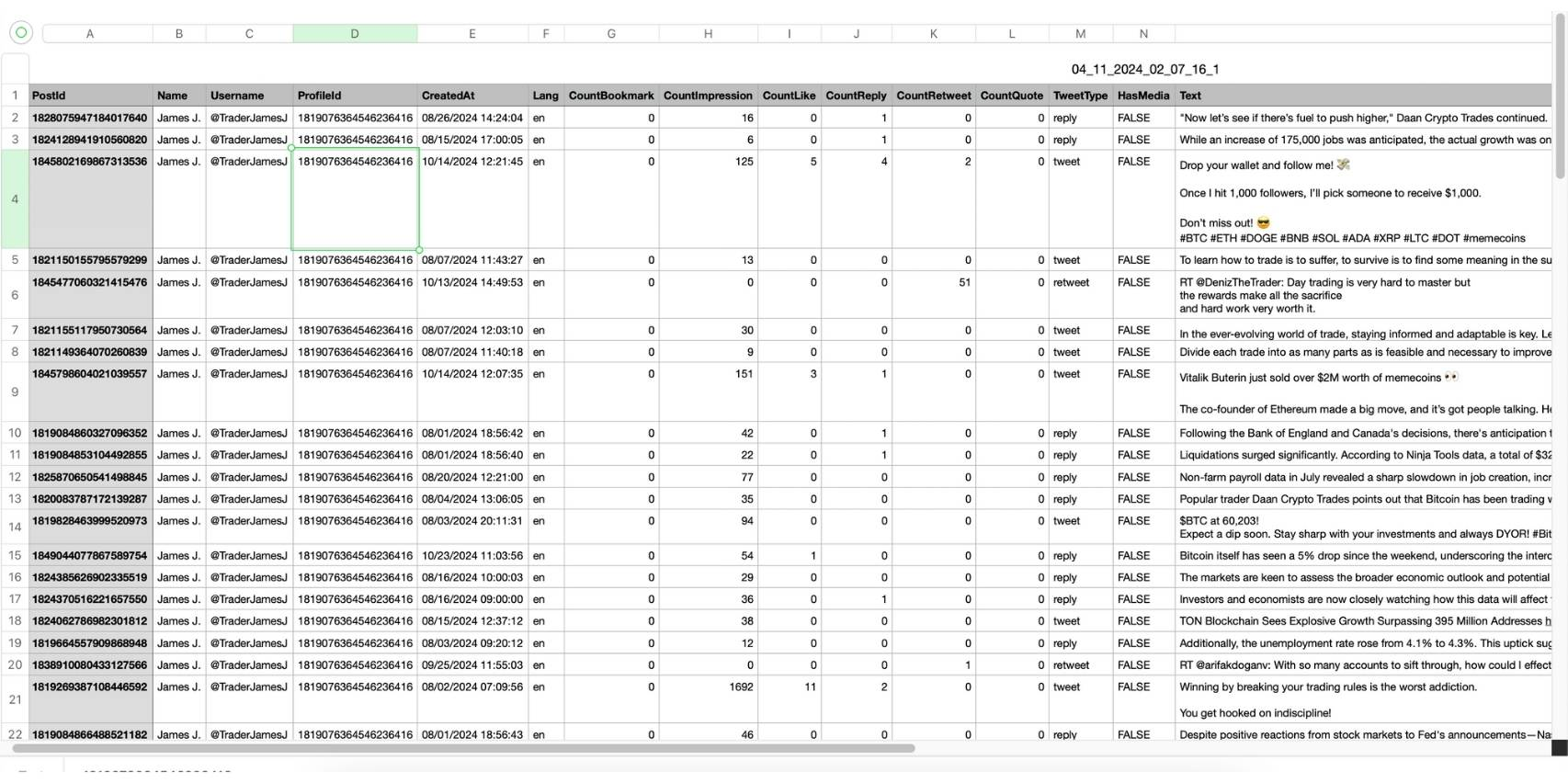
A much stronger approach is to analyze tweets over time and look for patterns.
 infocircleboom.com
Influential accounts rarely tweet randomly. Even if their style looks casual, their tweets often follow recurring themes, timing habits, or topic clusters. Understanding these patterns helps you separate meaningful signals from random commentary.
For example, instead of reacting to a single tweet from Elon Musk, a more advanced approach is to analyze:
- What topics he tweets about repeatedly
- How the market reacts to those topics historically
- Whether certain words, themes, or timing patterns correlate with stronger reactions
 Arif Akdogan
This is exactly why exporting tweets and reviewing them as a dataset can be valuable. By analyzing past tweets, you start to see which types of messages actually mattered and which ones were just noise.
Over time, this turns Twitter from a reactive tool into a predictive context source.
Step 5: Hidden Signals Are Often in Followers and Followings
One of the most overlooked sources of early information on Twitter is follow activity.
Not all news is announced publicly. Sometimes the earliest signals appear when influential figures start following new accounts. This can indicate early interest, internal awareness, upcoming research, or a shift in focus before anything is officially announced.
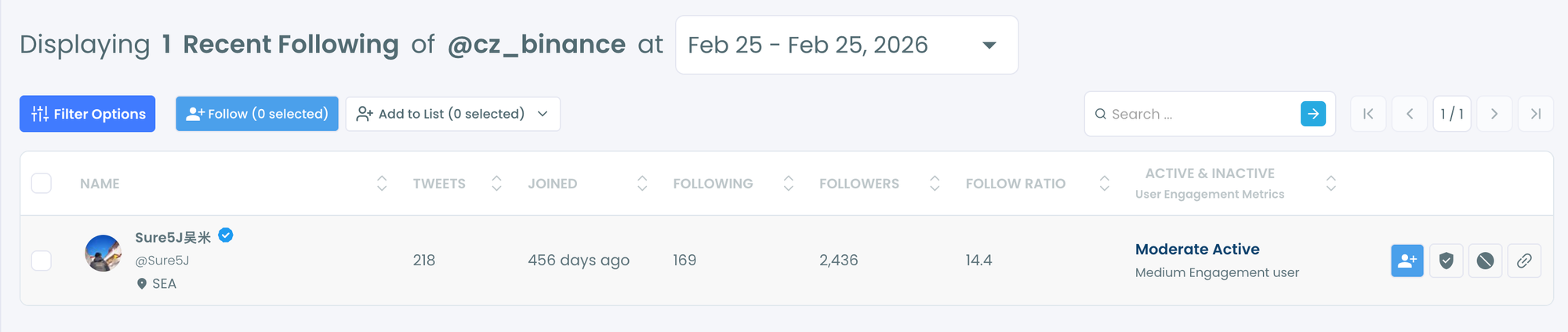
For example, when someone like Changpeng Zhao (@cz_binance) follows a new project or founder, the market often notices quickly. In some cases, the price reacts before any official statement is released.
 Arif Akdogan
This does not mean every follow is a trade signal. Many follows are exploratory or irrelevant. But when the follow activity aligns with other signals, it can serve as an early watchlist trigger.
The key is to treat follow signals as early hints, not confirmations.
Why Tracking Follow Activity Manually Does Not Work
Twitter does not notify you when someone follows a new account or when a key figure gains a specific follower. Monitoring this manually would require constant profile checks, which is unrealistic and inefficient.
This is where automation and structured tracking become valuable.
How I Track These Signals With Circleboom Twitter
To monitor these hidden signals properly, I use Circleboom Twitter, which is an official X Enterprise Developer.

This matters because it means the tool operates within X’s official systems and API limits, providing reliable access to account activity data.
 infocircleboom.com
With Circleboom Twitter, it is possible to track:
✅ When a specific account follows new users
✅ When a specific account gains new followers
✅ Ongoing account activity through alerts
Instead of guessing or relying on screenshots, you receive structured updates that allow you to notice patterns early.
Step-by-Step: Tracking Follow Signals With Circleboom Twitter
With Circleboom's Track Someone’s Most Recent X Followers and Following feature, you can track and analyze someone’s most recent X followers and following with detailed reports!
Here is how:
Step #1: Select any username you want to track on X.
You will track their recently followed audience.
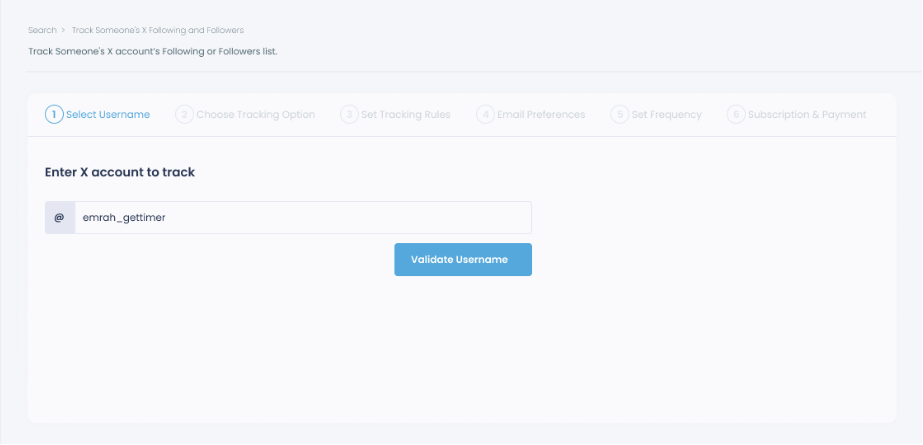
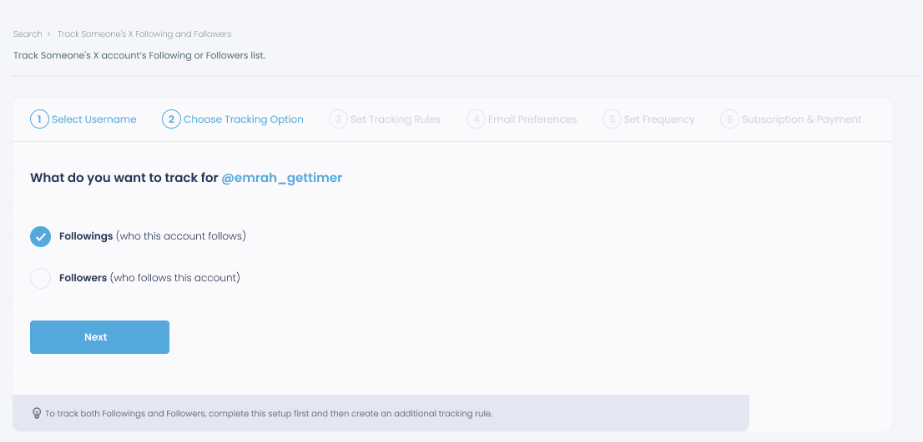
Step #2: Next, you will choose "Followings" or "Followers".
You should select one of the tracking options.
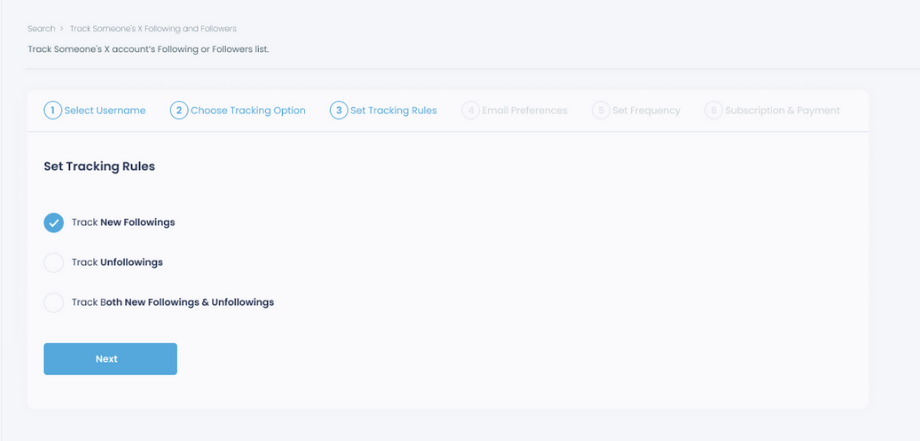
Step #3: Regarding the followings, you can track new, recent followings and unfollowings.
You can track both at the same time!
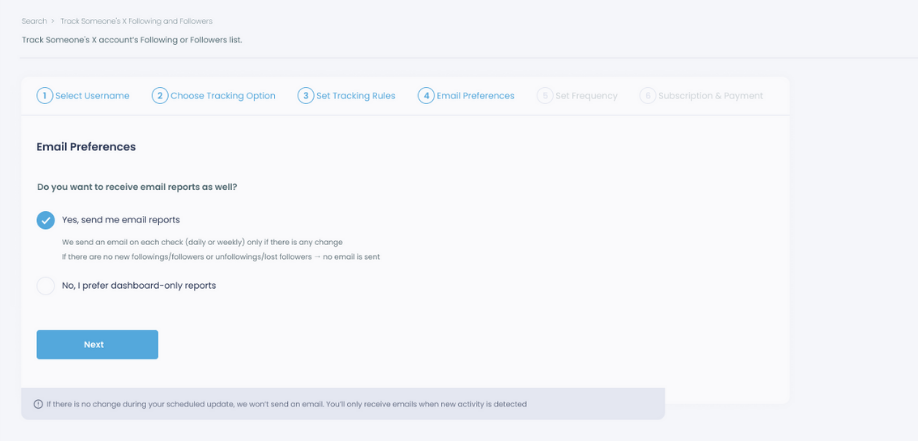
Step #4: For your tracking operations, you can receive email updates for each check.
You can still track new followings or followers without email notifications. You can monitor the following or followers with dashboard-only reports.
Step #5: Now, you should set the frequency.
You can get "Daily Tracking" or "Weekly Tracking".
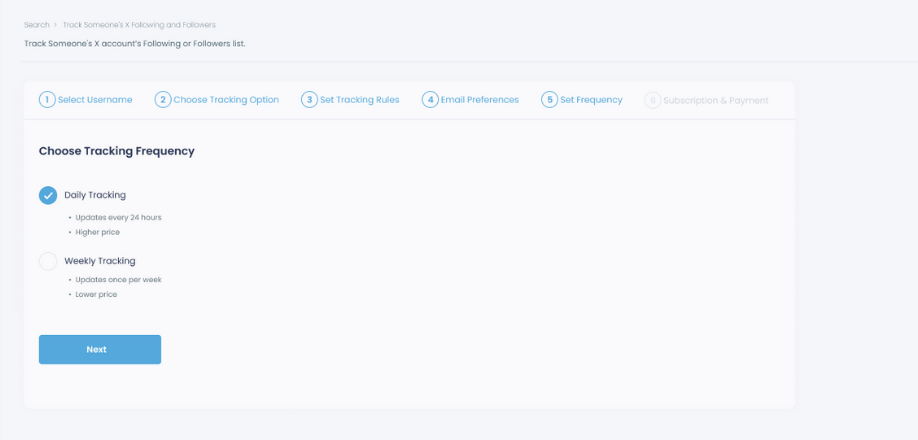
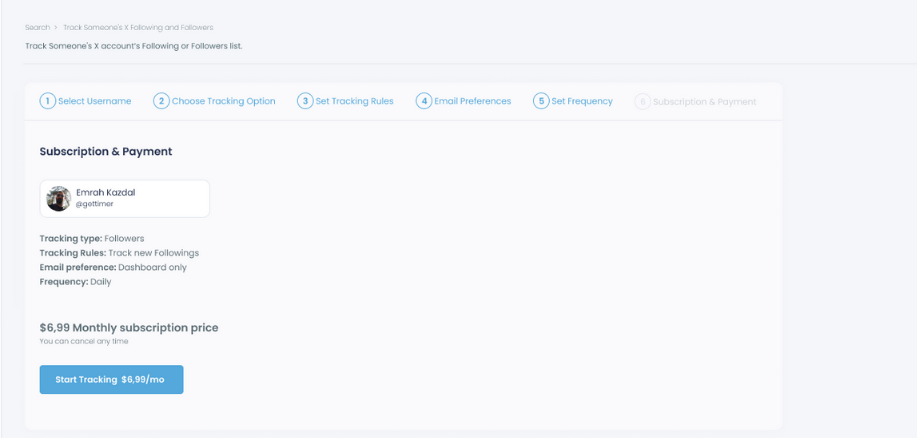
Step #6: The next step is subscription.
After checking the rules, you can start tracking.
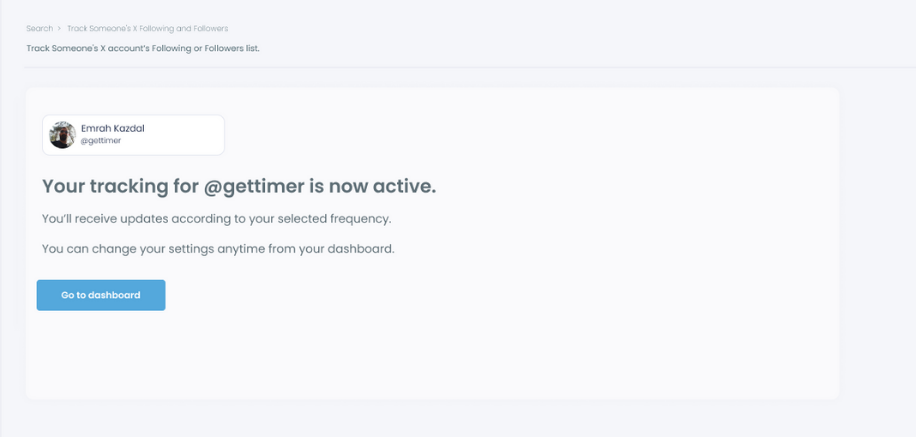
Tracking is now active.
That's it! Now you can monitor newly followings and followers of anyone on X with Circleboom!
Final Thoughts
Twitter (X) is one of the most powerful tools available for crypto news trading, but only when used with discipline and structure.
The goal is not to chase every headline or react emotionally to every tweet. The goal is to build a system where information reaches you early, noise is filtered out, and decisions are made with context and risk management in mind.
When combined with charts, proper account tracking, and tools like Circleboom Twitter, Twitter stops being just a social platform and becomes a serious trading resource.
%20for%20Crypto%20News%20Trading%3A%20A%20Detailed%20and%20Practical%20Guide)