
A random retweet picker collects every account that reposted your giveaway tweet, removes the entries that should not qualify, and draws a winner at random from the pool that remains. The reason to use one is not speed alone. It is proof.
Manual pick: you scroll the reposts, screenshot a few handles, and hope nobody accuses you of favoritism. A random retweet picker: Circleboom pulls every eligible reposter through the official X API, screens out bots and duplicate accounts, and draws a verified winner at random.
→ Pick your winner with the random retweet picker
The draw is reproducible, and the result card is built to be shared as public proof.
Why the native repost view cannot give you a fair draw
X shows you a preview of who reposted a tweet, not the full list. The preview is unordered, capped at what loads on screen, and it shifts every time the page refreshes. On some posts X stops showing the reposter list at all, which is why creators keep asking why they cannot see who retweeted their tweet anymore.
You cannot sort it, filter it, or confirm that each account met your entry rules. That gap is where disputes start.
If you pick from a partial list, you are picking from a sample, not the pool. A reposter who entered legitimately but never surfaced in your scroll had no real chance of winning. The draw looks random, but the input was biased before you clicked anything.
The fix is to retrieve the complete reposter set first, then draw. Circleboom pulls the full list through the official X API rather than the on-screen preview, so the draw runs against everyone who actually qualified.
You can inspect that list yourself. View a full list of retweets from any post to see who is in scope before a winner is chosen.
You can also export the accounts who reposted a tweet as a spreadsheet. That gives you a dated record of the eligible pool before anyone is selected, which is the single most useful piece of evidence if a result is ever questioned.
Run the random retweet winner picker once that record is saved, and the evidence and the outcome come from the same source.
A random retweet winner picker is only as fair as the list it draws from. Get the list right and the rest is arithmetic.
The rule most winner guides skip: X's own promotion policy
Most "how to pick a winner" walkthroughs stop at "paste the link, click draw." They ignore the layer that actually protects your account: the platform's rules for running the giveaway in the first place.
X publishes guidelines for running promotions on X that shape who should be eligible. Two rules matter directly for a repost draw:
- Anyone found using multiple accounts to enter should be ruled ineligible.
- You should not reward "whoever reposts the most," because duplicate posting breaks the X Rules.
A random draw does not satisfy those rules on its own. Filtering does.
When your picker removes bot signals and duplicate-looking accounts before the draw, the winner it returns is one X's own policy would accept. That compliance layer, not the randomness, is what makes the result defensible. A clean random draw on a dirty pool is still a dirty draw.
This is the gap between a toy picker and a random retweet picker you can build a repeat program on. The toy shuffles names. The real tool proves the names deserved to be in the shuffle.
X's guidelines also note that entrants should not be asked to post duplicate updates and that multiple entries in a single day should not count. A picker that dedupes accounts and filters spam signals enforces those expectations for you, so you are not left policing entries by hand after the tweet goes out.
Set the entry conditions before you draw
The condition you choose defines the pool, so set it before anything else. A repost draw usually runs on the reposted-or-quoted condition, but Circleboom lets you combine rules when your giveaway asked for more than one action.
Match Type controls how those rules stack:
- All Conditions requires every action you selected, which suits high-engagement giveaways that asked people to repost and follow.
- Any Conditions qualifies anyone who met at least one action, which widens the pool for lighter campaigns.
If your rules required following the host account, enable that condition too. Circleboom verifies the follow against the connected account, so a reposter who never followed is filtered out automatically instead of slipping into the draw.
Getting this step right is what stops the "but they didn't even follow me" complaint after you announce a winner. The condition is the contract, and the picker enforces it for you.
How Circleboom runs the draw on official data
Circleboom is an official X Enterprise Developer, which is why the participant pool reflects real platform engagement instead of a scraped or partial guess. The distinction is practical, not cosmetic.
The tool reads retweet, reply, and like data as structured records with account-level fields: display name, handle, follower count, join date, tweet count, and engagement status. Every quality filter has something concrete to evaluate.
Before the draw, Circleboom screens the pool for fake and spam signals, locked or suspended accounts, and any account that fails your entry conditions. What reaches the draw is a verified-eligible set.
You can double-check a suspicious entrant against a dedicated Twitter bot follower check. If a single account still looks off, run a broader Twitter follower checker on it before the draw.
One honest caveat sits inside this data advantage. For most giveaway-scale tweets, the full reposter list is retrievable. For viral posts with engagement in the hundreds of thousands, X's API has practical retrieval caps, so the participant count reflects the accessible portion rather than an absolute total.
That is worth telling your audience up front, because a picker that quietly draws from a truncated pool and calls it complete is doing the same thing the native preview does. Circleboom shows the count it actually retrieved, which keeps the draw honest even at scale.
The Twitter giveaway picker then selects winners with no manual intervention. You set how many winners and how many substitutes you want, and Circleboom draws from the filtered pool at random. Open the Twitter giveaway picker and the whole flow takes minutes rather than an afternoon of scrolling.
Video walkthrough: how the giveaway picker turns a repost tweet into a fair, filtered winner draw.
How to run a random retweet picker on Twitter
To choose a winner from your reposts, load the giveaway tweet, set the repost condition, filter the pool for quality, then draw. The five steps below split into two phases: build the eligible pool first, then draw and document the result.
Load the giveaway tweet and set who qualifies
- Log in to Circleboom Twitter and connect your X account with official OAuth.
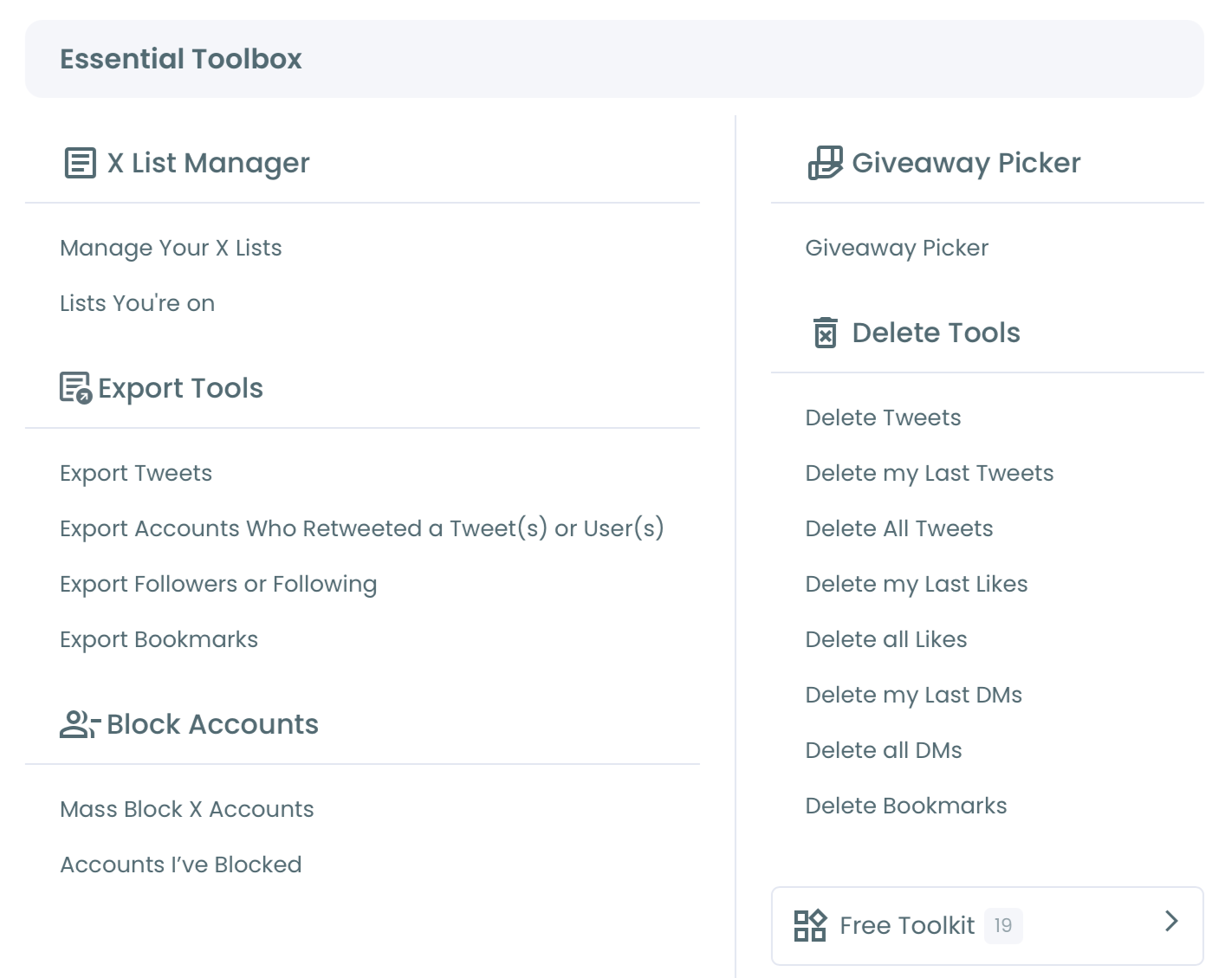
- Open the Essential Toolbox menu and start a new Smart Giveaway.
- Paste the giveaway tweet URL and set the participation condition to reposted or quoted, adding a follow requirement if your rules called for one.
Filter the pool, then draw and share the winner
- Apply account and profile filters to hide fake and spam accounts, eggheads, and any profile outside your follower or join-date range, so only valid reposters stay in the pool.
- Draw the winner by setting the number of winners and substitutes, then download the branded result card as proof.
That order is what makes the draw hold up. The login earns official-API access, the repost condition scopes the pool to real entrants, the filters enforce X's eligibility rules, and only then does the random selection run against a clean set.
When you are documenting the eligible pool for your records, it helps to safely download the tweet data so the evidence survives beyond the campaign.
At a glance: connect, load the tweet, filter, draw, download the proof. Substitutes cover you if a winner turns out to be unreachable, so you never have to reopen the draw and re-explain the process.
How many winners and substitutes should you draw?
Draw at least one substitute for every prize. Winners go quiet, delete accounts, or turn out to live outside your shipping region, and a substitute lets you move to the next verified name without running a second draw that looks like a do-over.
For a single-prize giveaway, one winner and one or two substitutes is a sensible default. For multi-prize rounds, scale the substitutes with the prize count so a couple of unreachable winners never stall the announcement.
The point is continuity. A random retweet picker that already holds ranked substitutes keeps the campaign credible even when a winner disappears, because the backups came from the same filtered, official-data pool as the primary pick.
There is a practical limit worth knowing. Once winners are drawn and the result card is generated, the draw cannot be re-run inside the same campaign with different filters. If the pool needs refiltering, you recreate the campaign from the same tweet URL and draw again. Holding substitutes from the first clean draw is almost always the faster, more defensible path than reopening the whole selection.
What the shared winner card actually proves
The result of the draw is not just a name. Circleboom generates a branded card that shows the selected accounts alongside the conditions and filters you applied, and that card is designed to be posted publicly.
Sharing it closes the trust loop. Participants can see who won, which entry rules were enforced, and that the selection ran through an official developer tool rather than a private screenshot. The announcement becomes evidence, not a claim.
The card carries four things worth reading before you post it:
- The winning accounts, with their profile photos and handles.
- The participation conditions that defined eligibility.
- The account and profile filters that cleaned the pool.
- A statement that the draw was random, with no manual intervention.
For accounts that run giveaways on a schedule, this card is the compounding asset. Each clean announcement makes the next campaign easier to promote, because the audience has already watched a random retweet picker produce a result they could verify. Trust earned once carries into every round that follows.
The bottom line
A fair repost draw is not about clicking a random button. It is about drawing from the complete, filtered pool that X's own promotion rules would recognize as eligible.
Circleboom builds that pool from official X data, screens out the entries that should not win, and hands you a shareable card that proves how the winner was chosen. Repeat giveaways compound this trust, which is exactly why a documented, verifiable process pays off across campaigns.
The same discipline that runs a fair draw also runs a stronger Twitter contest overall. Participation climbs each round when your audience has already watched a clean selection happen.
→ Start your next draw with the random retweet winner selector
Common questions about random retweet draws
Does a random retweet picker include quote tweets as reposts?
Yes, if you set the condition that way. The participation rules let you count reposts and quote posts together, so a quote tweet with commentary counts as an eligible repost when you enable it.
What happens to reposts that come in after the draw?
They stay out of the draw. Circleboom freezes the participant list at the moment you collect, so any repost that lands afterward falls outside that snapshot. Set a clear cutoff in your giveaway rules, and if a later surge is worth rewarding, run it as its own separate campaign.
Can I stop a bot from winning my Twitter giveaway?
Yes. Before any winner is drawn, the quality filters strip out fake, spam, locked, and suspended accounts, so an automated or throwaway entry never reaches the selection. The prize can only land on an account that already passed those checks.
How do I prove the draw was fair?
Circleboom generates a branded winner card showing the selected accounts and the conditions applied. You can download it or post it directly on X, which lets participants verify the outcome against the rules you set.