
Sometimes, but not always. An account that posts at an unusually high frequency can be a bot scripted to tweet around the clock, or it can be a newsroom, a prolific creator, or a community manager doing their job. High posting volume looks identical for both, so overactivity on its own is a flag to investigate, not proof of automation. The bot answer comes from the signals that sit alongside the volume.
Overactive Twitter accounts are sometimes bots and sometimes legitimate power users. The reliable bot signal is high posting volume combined with low engagement, a poor follow ratio, and an incomplete profile. Circleboom's Overactive Followers flags your highest-frequency followers and shows those signals together, so you can tell automation from genuine activity.
→ overactive accounts in your followers
Here is how to read the difference.
Why High Activity Looks the Same for Bots and Power Users
Posting frequency alone cannot tell a bot from a human, because the most engaged real accounts and the most aggressive automated ones both post constantly. A breaking-news account, a live-tweeting commentator, and a scripted spam bot can all show tens of thousands of tweets and dozens of posts a day. The volume metric treats them as one group.
That is the core problem the overactive signal creates. It flags a mixed set, and acting on volume alone means either removing valuable power users or keeping obvious bots. Neither is the goal. The work is separating the two, the same challenge you face when you try to distinguish fake accounts from real ones using more than a single number.
The reason this matters for your account is noise and measurement. Automated overactive followers inflate your notification volume and can distort how you read engagement, while genuine power users are exactly the people who spread your content to a wider audience. Treating both as bots costs you reach; treating both as real leaves the automation in place.
The Signals That Actually Indicate a Bot
A bot reveals itself when high volume pairs with signals that no genuine power user shows. Read these together with the posting frequency, never in isolation.
- Low engagement despite high volume. A real power user who posts constantly draws proportional interaction. An account that posts hundreds of times a day into silence is almost certainly automated.
- Poor follow ratio. Following thousands while followed by very few is a mass-follow pattern, not the profile of a credible high-volume account.
- Incomplete profile. No photo, a generic handle, and an empty bio under a huge tweet count point to a scripted account.
- Repetitive content. Identical replies, recycled links, and template posts are automation fingerprints.
The single most reliable combination is overactivity plus an inactive engagement classification. An account posting at machine speed that nobody engages with is the clearest automation signal in the entire follower base, far stronger than volume alone. That intersection is what tells a bot apart from the genuinely engaged followers worth keeping.
How to Check Whether Overactive Followers Are Bots
Circleboom's Overactive Followers analyzes your follower base through official X access, flags the accounts posting at unusually high frequency, and attaches the engagement, ratio, and profile signals that separate automation from real activity. Because Circleboom is an official X Enterprise Developer, the analysis and any action run through sanctioned API access, so your account stays safe.
The process takes four steps.
Log in and connect your X account
Log in to Circleboom Twitter and authorize your account through official OAuth. The connection grants the Enterprise-API access that reads your follower base.

Open the Follower & Following menu
Go to the Follower & Following management menu and select Overactive Followers to load the highest-frequency accounts following you, each with its metrics.
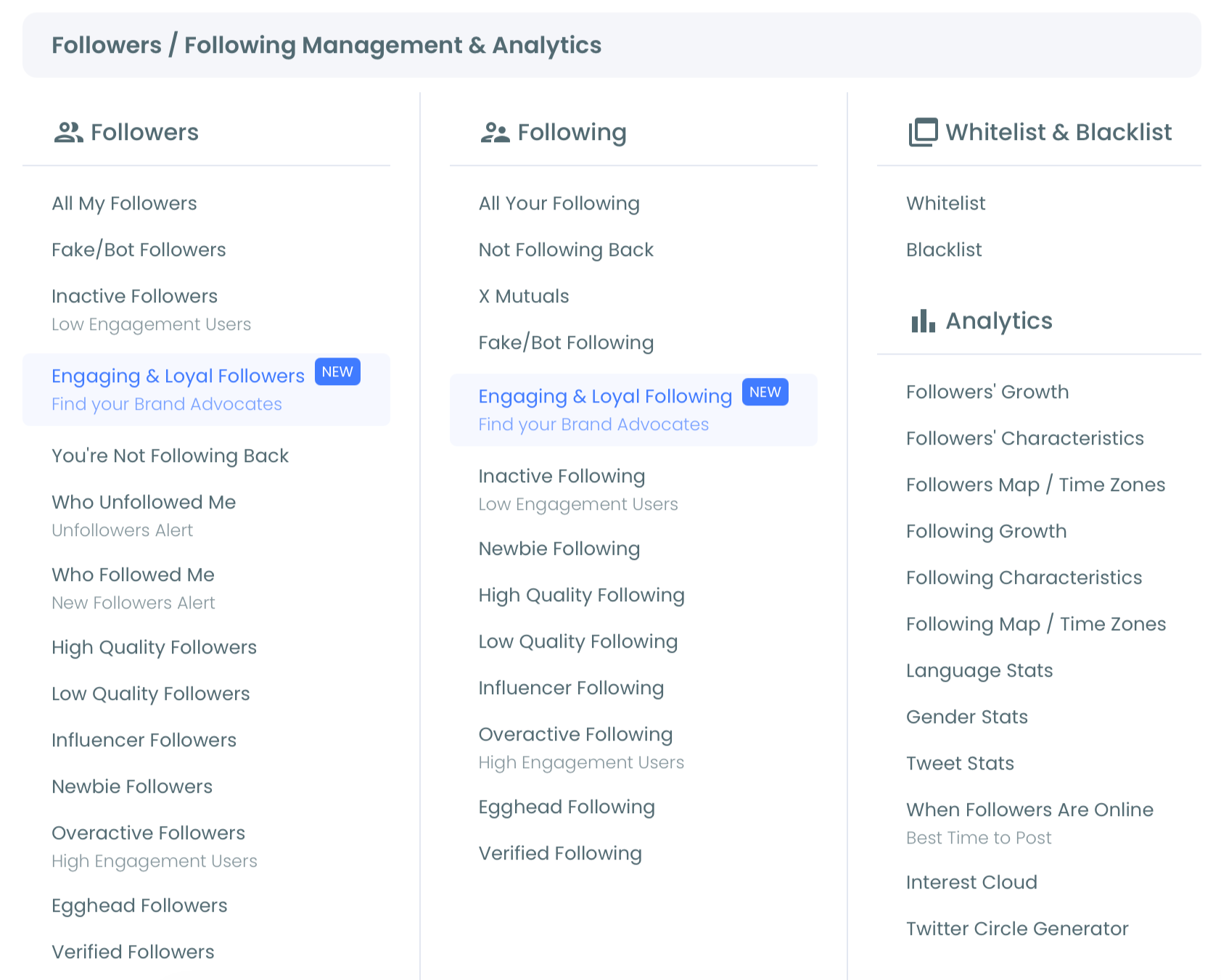
Add the engagement and ratio filters
Sort by tweet count, then add the Inactive/Low Engagement filter and a low follow-ratio filter. The accounts that post constantly yet draw no engagement and follow far more than they are followed are the automation candidates.
Whitelist power users, action the bots
Whitelist the genuine high-volume accounts, such as journalists and active creators, then remove or block the accounts that fail the bot signals, depending on whether they are merely noisy or actively harmful.
That order works because volume alone is ambiguous. The login secures access, the menu scopes the high-frequency segment, the engagement and ratio filters resolve the ambiguity, and whitelisting protects the real power users before any removal runs. Unlike judging an account by its tweet count alone, the filtered view shows you whether the volume comes with the silence and lopsided ratio that mark a bot, the same way a careful bot analysis reads behavior rather than a single number.
Why You Should Not Just Mute Everything Loud
The lazy response to overactive accounts is a blanket mute, and it quietly costs you. Muting silences the noise without telling you anything, so the bots stay in your follower base distorting your numbers, and the power users you muted keep amplifying your work to an audience you have now stopped paying attention to.
The better move is to sort before you silence. A genuine high-volume account is worth watching, not hiding, because its reach can work in your favor. An automated one is worth removing, not muting, because muting leaves it counted in your audience while doing nothing about the distortion. Treating both with the same blunt action throws away the information that separates them.
This is why the engagement read matters so much. It is the one signal that tells you whether the volume in front of you is a resource or a problem, and it is the signal a blanket mute ignores entirely. Confirming whether an account is genuinely active and engaged is the difference between managing your follower base and just hiding from it.
What You Gain From Telling Bots From Power Users
Separating automated overactive accounts from genuine power users does two things at once. It cleans the automation that distorts your notifications and engagement data, and it protects the high-volume real accounts that actually extend your reach. Treating the two groups differently is what makes the cleanup worth running.
The clearer benefit is measurement you can trust. Automated accounts that interact in scripted ways skew your engagement numbers in one direction, so removing them gives you a truer read of how your content actually performs. That matters even more when you are trying to understand whether organic reach has dropped for small and mid-size accounts or whether bot noise is hiding your real signal.
Done on a regular cadence, this keeps your follower base honest and your power-user relationships intact. It pairs naturally with a periodic bot check across your wider audience and with watching whether the same automation patterns show up among accounts that keep following you in waves.
Frequently Asked Questions
Does posting a lot mean an account is a bot?
No. High posting volume alone is not proof of automation. Many real power users, journalists, and community managers post constantly. An account becomes a likely bot only when high volume pairs with low engagement, a poor follow ratio, and an incomplete profile.
What is the strongest bot signal among overactive accounts?
High volume combined with an inactive engagement classification. An account that posts at machine speed but draws no interaction is almost certainly automated, because genuine high-volume accounts generate proportional engagement.
Should I block or just remove overactive bots?
Remove the ones that are merely noisy, and block the ones that are abusive, scam-like, or part of coordinated spam. Blocking is the stronger action and should be reserved for harmful accounts rather than every automated follower.
The Bottom Line
Overactive Twitter accounts are sometimes bots and sometimes your most valuable followers, and posting frequency alone cannot tell you which. The reliable read comes from the signals around the volume: low engagement, a poor ratio, an empty profile, and repetitive content mark automation, while proportional engagement marks a real power user. Flag the high-frequency segment, apply those filters, protect the genuine accounts, and action the bots.