
Let me start with something most creators don’t realize.
Professional social media managers spend a surprising amount of time removing followers.
Not gaining them.
Why?
Because follower quality determines revenue, reach, and brand credibility.
If you look inside the workflow of agencies managing large accounts, you will see something very different from the “growth hacks” people talk about online.
They regularly remove Twitter followers who damage engagement signals.
And they do it systematically.
 Altug Altug
The Hidden Enemy: Spam Followers
Spam followers behave like silent parasites.
They inflate follower counts but destroy performance.
They typically:
follow thousands of accounts
have no profile photos
have posted zero tweets
or are part of bot farms.
When these accounts follow you, they do not interact with your tweets.
Which creates a problem.
The algorithm sees thousands of followers ignoring your tweets and assumes your content is weak.
So your reach shrinks.
Many professional managers estimate that removing inactive followers can increase engagement by 20–35%.
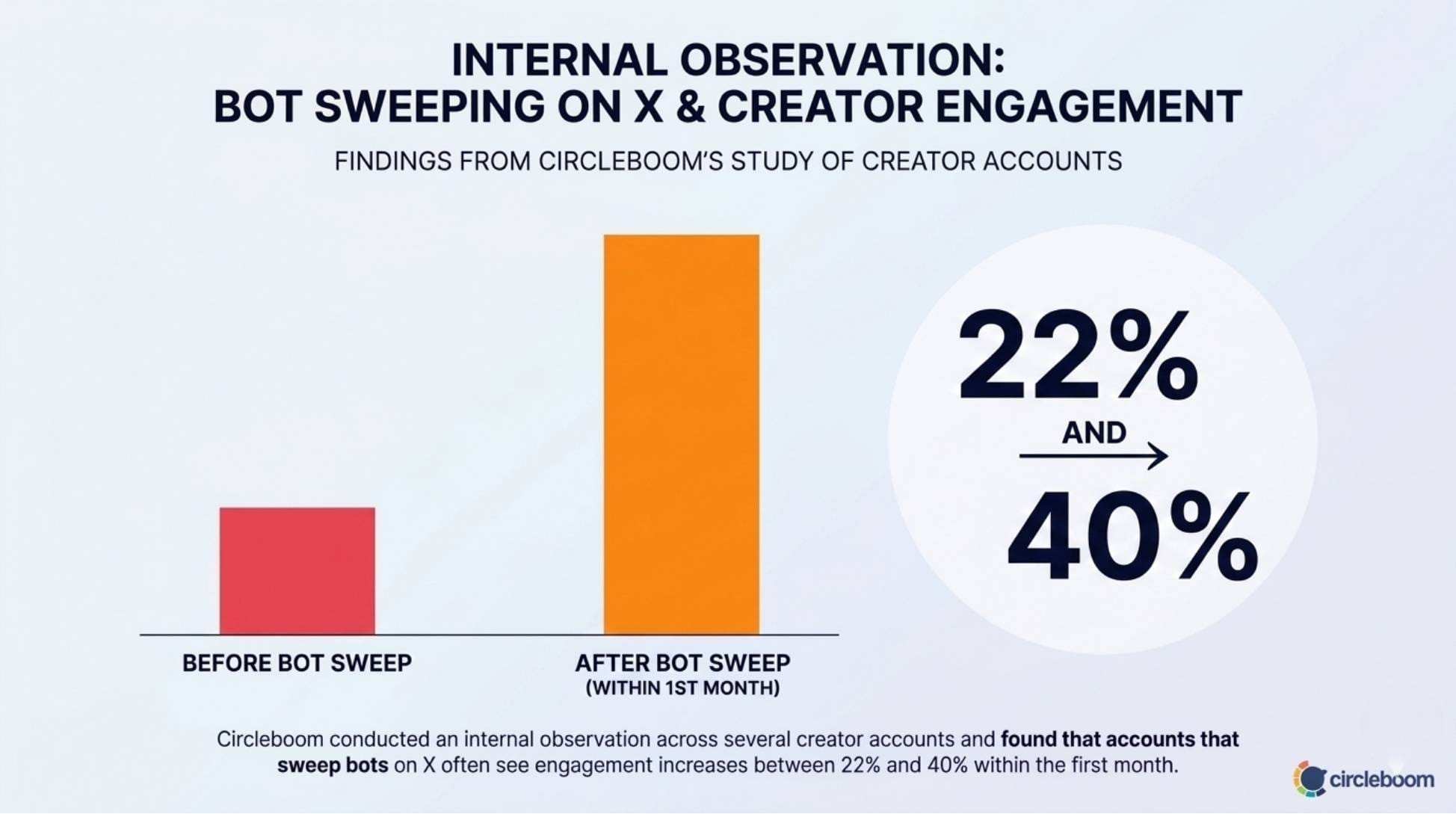
A Real Case: The Influencer With 200,000 Followers
One influencer contacted a marketing agency because her engagement suddenly collapsed.
She had:
200,000 followers
but only 300 likes per tweet.
The agency ran a diagnostic.
They discovered that almost 80,000 followers were ghost accounts.
 Arif Akdogan
Over the next 10 days they systematically remove Twitter followers who were inactive.
Results after one month:
engagement increased 41%
reply rate doubled
brand partnership offers increased.
Why?
Because brands don’t just look at follower counts anymore.
They look at engagement ratios.
If you are a creator on X and want to know about the latest developments regarding the algorithm changes, engagement strategies, payout boosts, etc., you can join Circleboom's X Creator Growth Lab Community and enjoy a free space to learn from and contribute to!
 Arif Akdogan
How Professionals Remove Twitter Followers at Scale
Agencies never do it manually.
Instead they use automated filters to remove Twitter followers who match suspicious patterns.
Typical filters include:
accounts with no tweets
accounts inactive for 3+ years
accounts following thousands of users
accounts with no profile images.
Bulk actions allow managers to clean thousands of accounts safely.
Without these tools, cleaning a 100k account could take months.
Why Security Matters When Removing Followers
Here is something most creators don’t know.
Many free tools that claim to remove twitter followers rely on scraping.
Scraping means the tool pretends to be a browser and collects data unofficially.
This can trigger platform warnings or security issues.
Professional managers always prefer tools connected through official APIs.
Circleboom operates through official X Enterprise API access, which means it can analyze follower data safely and perform bulk follower management without unstable automation.
Keep in mind that the API provides a more accurate real-time data stream than the X interface itself. While the platform UI may experience lag, the API captures and reflects new developments instantaneously.
Circleboom has the official Enterprise API, we don't scrape data from X!

For agencies managing dozens of accounts, that level of safety is critical.
The Monthly “Audience Hygiene” Routine
Professional teams follow a simple routine.
Week 1
Analyze follower activity.
Week 2
remove Twitter followers who match bot patterns.
Week 3
monitor engagement improvement.
Week 4
adjust posting strategy.
This routine keeps accounts healthy and ensures the algorithm continues promoting their tweets.
FAQ: What Managers Usually Ask
Should I remove followers even if my follower count drops?
Yes.
A smaller but active audience almost always performs better than a large inactive one.
How often should follower cleaning happen?
Large accounts should clean followers every 1–2 months.
Smaller accounts can do it quarterly.
Cleaning your audience is not cosmetic.
It is performance optimization.
When you remove Twitter followers who never interact with your content, you give the algorithm a clearer signal about who your real audience is.
And that clarity often turns into reach.