

X gives you no button that says "block everyone from this country." You can block one account at a time, and that is the entire toolkit the platform hands you. So when a spam cluster, a scam ring, or a coordinated wave all trace back to one region, you are left clicking block, block, block across hundreds or thousands of profiles by hand.
There is a realistic way to do this at scale, and it starts with one honest fact: there is no true "block by country" switch anywhere, because X does not expose a verified country for any account. What you can filter is the self-reported location field on each profile, then act on that segment in bulk.
Manual: open every profile, read its location, click block, repeat for hours. Circleboom: filter X accounts by their profile location field, review the segment, then run a safe paced mass block through secure, compliant access.
→ block Twitter accounts by location
One caveat up front: "location" means what the user typed in their bio, not their real GPS country.
Why X Has No Block-by-Country Button
X moderation is built for one-account-at-a-time decisions. The block action exists per profile, and nothing in the native interface lets you define a group first and act on it second. X's own help documentation on blocking describes a single-account control: you visit a profile, you block it, and that prevents that one account from following you, messaging you, or engaging with your posts.
The platform does have a country-level capability, but it works in the opposite direction from what you want. Back in 2012, Twitter announced it could withhold content on a per-country basis to comply with local laws. That hides a post in one country while leaving it visible everywhere else. It is X deciding what its users in a region can see, not you deciding which accounts from a region can reach you.
So the gap is real. If you want to keep a regional spam network or scam cluster off your account, the platform offers nothing structured. This is where a tool that segments first and acts second changes the whole workflow. You can block Twitter accounts by region by working from a reviewed list instead of hunting profiles one by one.
The honest version of "block by country" is "block by self-reported location field, after you review the list." That distinction is the whole article, and any tool that promises true country-level blocking is overselling what the data allows.
What the Location Field Actually Is (and Isn't)
The location on an X profile is free text the account holder typed in themselves. It is not verified, not GPS-derived, and not a real country signal. Someone in one country can write "London" or "Worldwide" or leave it blank, and X will not correct them.
That matters for two reasons. First, your filter will only catch accounts that wrote a location matching your search term, so a regional network that hides its location slips through. Second, a legitimate account that happens to list a city you are filtering on can land in your segment by accident. Both are why the review step is not optional.
Circleboom treats this field for exactly what it is: a searchable text attribute, not a verified geotag. As a verified Enterprise partner of X, Circleboom retrieves this profile data through official, authorized access rather than scraping, so the location text you filter on is the real value from the public profile. The filter is honest, and the human review is what makes it safe.
Want to see this distribution before you block anyone? The Twitter Followers and Friends Map plots where your audience self-reports its location. That is a useful sanity check on how reliable the field is for your specific account.
How to Block Twitter Accounts from a Specific Country or Region
Here is the flow, in order. The whole approach is search and filter by location, review the segment, then run the block through the Chrome extension that paces every request to stay safe.
Set up your account and find the source list
- Log in to Circleboom Twitter and connect your X account with official OAuth.
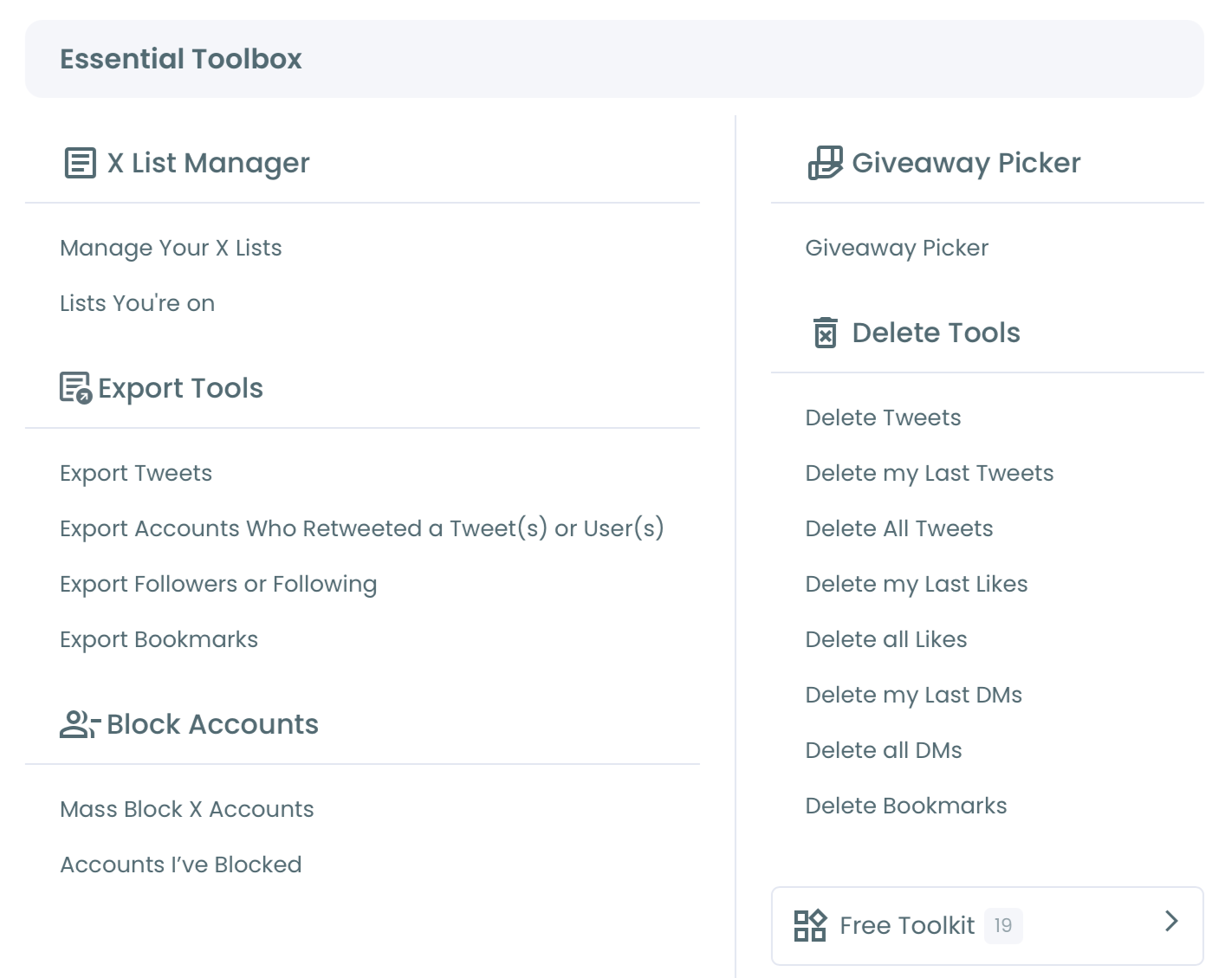
- Open the Mass Block feature in the Essential Toolbox menu.
- Enter a public account whose audience you want to screen, or paste a tweet URL to pull its retweeters. The followers or following of a known regional spam source make a strong starting set, and retweeters of a coordinated post capture an active amplification network.
Filter by location and block safely
- Open Filter Options and use Filter by Location, typing the country, region, or city as it tends to appear in profiles ("Lagos," "Brazil," "UK"). Combine it with quality filters like Fake/Spam, no profile photo, or a very low follow ratio to tighten the match.
- Review the filtered table and remove any legitimate accounts before you act. Sort by join date or follow ratio to surface the most suspicious profiles, and whitelist anything you recognize.
- Select the accounts and click Add to Mass Block List, then open the Twitter X Mass Blocker Chrome extension and click Start. The extension blocks each account one by one inside your browser, pausing automatically when X's rate limit is reached.
That sequence holds up because each stage earns the next: the login authorizes official API access, the location filter narrows scope to the region you care about, the review removes false positives, and the extension paces the blocks so X never reads the run as aggressive. Skip the review and you risk blocking real people; skip the extension and the blocks cannot run at scale at all.
Why a Chrome extension and not a one-click button: X's API does not support blocking accounts in bulk, so no tool can mass block purely through the API. Circleboom uses the Twitter X Mass Blocker extension to perform each block as a normal browser action, the same click you would make manually, which is the only compliant way to do this at volume. This is architectural, not a missing feature, and it is what keeps the whole operation inside X's rules.
See it live: how a location-filtered segment becomes a paced mass block in one Circleboom run.
Targeting a city rather than a whole country uses the same filter logic. Circleboom's guide on finding Twitter users by location walks through tightening the search term to a single metro area.
Why This Beats Blocking One Account at a Time
Manual blocking does not scale against a regional problem, and the math shows why. If a scam network has 800 accounts all listing the same country, blocking them by hand at five seconds each is over an hour of clicking, and you will lose your place, miss accounts, and have nothing to show a teammate afterward.
Filtering first turns that hour into a reviewable list. When you mass block X accounts by their location, you see the whole segment in one table, you cut the false positives in a single pass, and the extension does the repetitive work while pacing itself to protect your account. The result is a cleaner interaction space without the relationship damage that careless bulk blocking causes.
There is a deeper benefit most people miss. A reviewed block list is auditable. Because Circleboom shows you the exact accounts before anything happens, you can export the segment as a record, which matters when a team or a brand needs to justify a moderation decision later. That separation of decision from execution is what makes blocking at scale defensible instead of reckless.
Circleboom can block X accounts filtered by their profile location through authorized, policy-compliant access, so the data you act on is accurate and the action itself stays within bounds. As an official X Enterprise Developer company, Circleboom operates inside X's rules rather than around them, which means a large block run never puts your account at risk of suspension.
For related cleanup, you can also view the location of Twitter followers to understand your own audience before screening anyone else's. The broader walkthrough on mass blocking followers on Twitter covers the same engine applied to your direct followers.
What to Do Next
Your move depends on the shape of your problem. If the threat is one regional spam source whose followers keep reaching you, pull that account's followers, filter by location, and block the segment. If the threat is a coordinated campaign tied to specific posts, pull the retweeters of those tweets and filter the same way. And if you only want to understand your regional exposure first, map your audience before you block anything.
Whichever path fits, the discipline is identical: filter, review, then block safely at scale. You can reference the step-by-step on blocking multiple Twitter accounts for the full walkthrough. Screen candidates with Search Twitter by Location before committing to the block.
When you are ready to act on a region instead of one profile at a time, this is where to do it.
→ block Twitter accounts from a specific region
Common Questions About Blocking by Location
Can I really block Twitter accounts by country?
Not by true country, because X never verifies or exposes an account's real country. You can filter accounts by the location text they typed into their own profile and block that segment in bulk, which is the closest honest equivalent.
Is the profile location field accurate?
It is whatever the user wrote, so treat it as a hint, not a fact. Some accounts list a fake location and some leave it blank, which is exactly why Circleboom keeps a manual review step before any block runs.
Why do I need a Chrome extension to mass block?
X's API does not allow bulk blocking, so the Twitter X Mass Blocker extension performs each block as a normal browser action instead. This keeps the operation compliant with X's rules and is the only way to block accounts at scale safely.
Can I undo a mass block if I catch a mistake?
There is no single bulk-undo, but you can reverse blocks from your Accounts I've Blocked list using the separate Mass Unblock extension. Reviewing and whitelisting before you run the block is the better safeguard against false positives.






%20Followers%20-%20The%20Fastest%20Way%20to%20Clean%20Your%20Account)
