
Most content calendars are built on a guess. You decide what to post based on what you think your followers want, fill a grid with themes, and hope the engagement follows.
When it does not, the calendar gets blamed when the real problem was the assumption underneath it.
A better calendar starts from evidence. Instead of guessing what your audience cares about, you read it directly from what they already post and talk about, then plan around those themes.
Circleboom builds a Twitter content calendar around audience interests by analyzing what your followers actually discuss, surfacing their top topics as a word cloud, then letting you turn those topics into planned, scheduled posts. The calendar reflects real audience data, not assumptions.
→ build a Twitter content calendar around audience interests
Below: how to extract your audience's real interests and map them to a weekly plan.
Why Most Twitter Content Calendars Underperform
The flaw in a typical content calendar is that topic selection happens before audience research. You pick content pillars from intuition, industry trends, or what competitors post, then schedule against them. None of those inputs is your actual audience.
Topic relevance and content quality are separate variables. A well-written post about a topic your followers do not care about will lose to a mediocre post about a topic they are deeply interested in.
That gap, between what you publish and what your audience wants, is the most common reason a calendar quietly fails. If you have ever asked whether your tweets are reaching the right audience, the mismatch usually starts at the planning stage.
The fix is to invert the order. Research the audience first, then build the calendar around what you find.
You can plan a Twitter content calendar around audience interests once you have real topic data instead of a hunch.
Where the Topic Data Comes From
Circleboom's Interest Cloud is the research layer that makes an audience-led calendar possible. It analyzes the public tweets, bios, and recurring keywords of your followers, then visualizes the most frequent topics as a word cloud where bubble size reflects how often a topic appears across your audience.
The output is an audience-derived content brief. Larger bubbles are the themes your followers discuss most, which makes them the strongest candidates for high-resonance content.
Because Circleboom is an official X Enterprise Developer company, it reads that follower activity through sanctioned access, so the interest data is complete and your account stays compliant. This is the same evidence base behind checking interests on Twitter before you commit to a single theme.
Video walkthrough: how the follower interest cloud turns raw audience activity into named content topics.
How to Build a Twitter Content Calendar Around Audience Interests
Here is the flow, from research to scheduled posts.
- Log in to Circleboom Twitter and connect your X account with official OAuth.

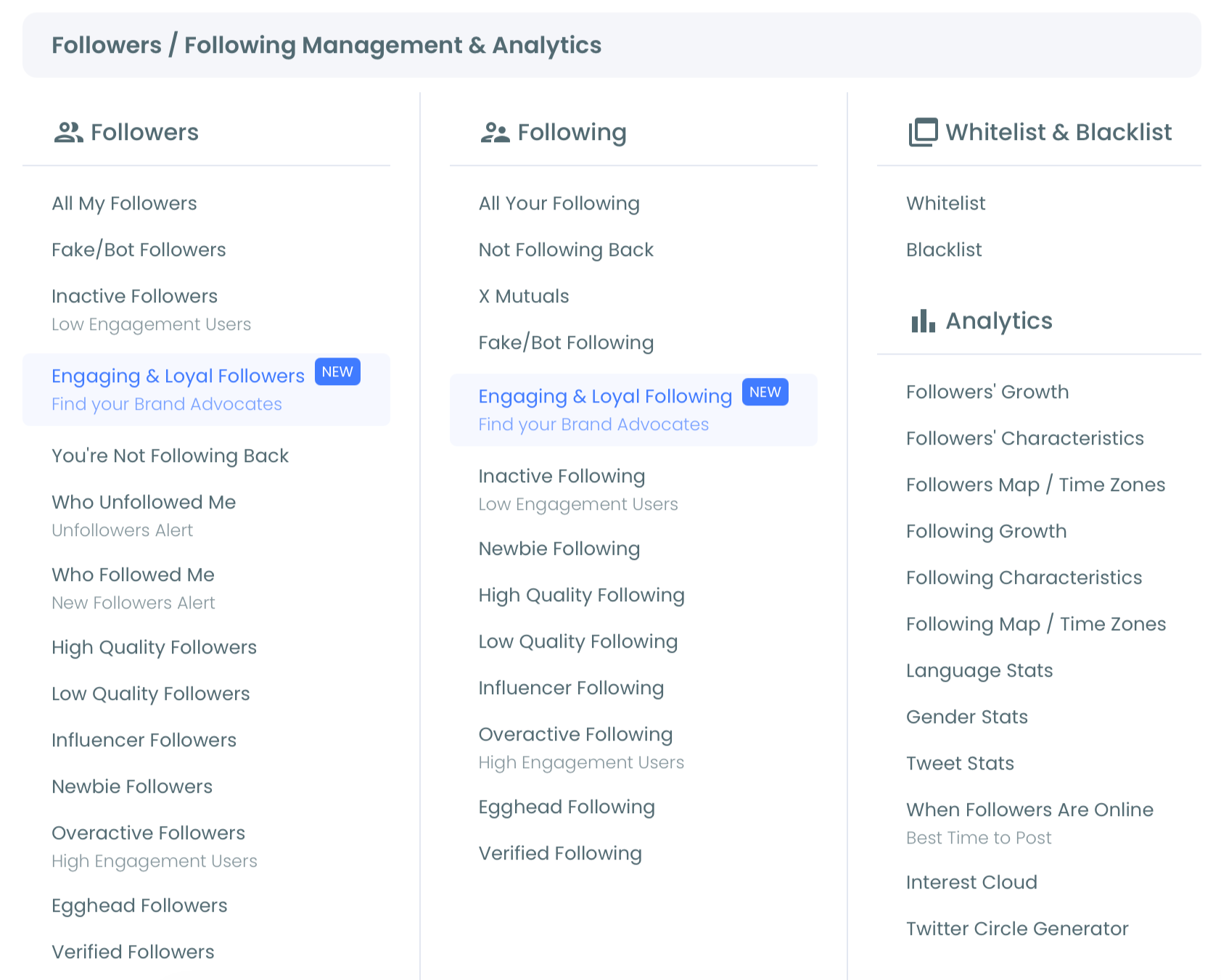
- Open the Follower & Following menu and run the Interest Cloud to load your audience's most-discussed topics.
- Read the cloud for content pillars by noting the largest bubbles first, then the specific niche terms (tools, communities, roles) that signal precise angles.
- Turn the top topics into a weekly grid by assigning each pillar to a recurring slot, then drafting and scheduling those posts inside the X Post Planner.
That order works because research comes before planning: the cloud tells you which themes already have audience demand, and the planner turns those themes into a consistent posting rhythm instead of a one-off burst.
Turn Interest Themes Into Calendar Slots
A list of audience topics is not a calendar yet. The step that makes it usable is mapping each pillar to a repeatable rhythm so your week has a predictable shape.
A simple structure works well: assign three to five interest-derived pillars to fixed days, then rotate formats inside each. If the cloud shows your audience cares about, say, productivity, AI tools, and remote work, those become recurring themes rather than random one-offs.
The point is consistency against proven interest, which is what separates a calendar from a queue. When you are ready to execute, the X Post Planner holds the drafts, schedules them, and keeps the rhythm running.
Pair the topic mix with timing. Knowing the best time to post on Twitter for your specific audience means the right topic also lands at the right hour, which compounds the relevance advantage.
The Adjacency Insight Most Calendars Miss
Here is the part that changes how you plan. The Interest Cloud does not just confirm what you already cover. It often reveals topics your audience cares about that you have never addressed.
A productivity account might find its followers are also heavily into personal finance. A design account might find a cluster around accessibility.
Those adjacencies are expansion lanes: content that would resonate because the interest already exists, without drifting off-brand. Building one or two adjacent pillars into the calendar is often where the biggest engagement gains come from, because you are meeting demand no competitor in your niche is serving.
It is a more reliable path than chasing engagement farming on Twitter, which borrows attention without building real relevance.
What You Gain From an Audience-Led Calendar
An interest-led calendar changes the baseline. Instead of hoping a theme works, you start from themes with proven audience demand, which raises the floor on every post you schedule.
The compounding effect is what matters. Higher relevance lifts your Twitter engagement rates, and stronger engagement teaches the algorithm to show your posts to more of the right people.
Validate the loop with analytics: check which interest-derived pillars actually perform, then weight the calendar toward the winners. That is how a calendar stops being a static grid and becomes a system that gets sharper every cycle, grounded in what to tweet based on past post analytics.
A Quick Example of the Mapping
It helps to see the translation from cloud to calendar in concrete terms. Say your Interest Cloud surfaces three dominant themes and two specific niche terms across your followers.
You would assign the three broad themes to anchor slots: one early in the week, one midweek, one on a high-traffic day. The two niche terms become rotating angles inside those slots, so a broad pillar like "productivity" gets sharpened by a specific tool or community your audience already names.
That is the difference between posting about a topic and posting about the exact version of it your audience discusses.
The grid that results is not bigger than a guessed calendar. It is the same shape, filled with proven themes instead of hopeful ones. That single swap, evidence for assumption, is what moves the engagement.
The Bottom Line
A content calendar is only as good as the assumptions it rests on. Build it on intuition and you are gambling; build it on your audience's real interests and you are planning.
Circleboom closes that gap by turning follower activity into a topic map, then into a schedule you can run every week.
Research first, plan second, and let your audience's actual interests decide what fills the grid.
→ Start your audience-interest content calendar
Common Questions About Audience-Interest Content Planning
How do I find what my Twitter audience is actually interested in?
Run Circleboom's Interest Cloud. It analyzes your followers' public tweets and bios and shows their most-discussed topics as a word cloud, so you can see real interests instead of guessing.
How many content pillars should a Twitter calendar have?
Three to five works for most accounts. Enough to stay varied, few enough to stay consistent. Pick them from the largest, most relevant bubbles in your Interest Cloud.
How often should I update my content calendar?
Rerun the Interest Cloud after major follower growth, a cleanup, or a campaign that changed your audience. Interest data from an old audience composition no longer reflects who you are posting for now.
Can I schedule the posts once I know the topics?
Yes. Once your interest-based pillars are set, the X Post Planner lets you draft, queue, and auto-publish them on a recurring schedule, turning the topic map into a running calendar.