

Account age is one of the quickest credibility checks on X, and the platform makes it frustratingly vague. A profile shows "joined March 2024," which spans an entire month and tells you nothing about whether an account is genuinely established or freshly created for a campaign. When you are deciding whether to trust someone, that gap matters.
The fix is a checker that returns the exact creation date instead of the rounded month. With the precise day in hand, account age stops being a guess and becomes a real signal you can act on.
What a join date check gives you.The exact creation date of any public account, not the rounded month.The day of the week, for precise records.A fast credibility signal for vetting unfamiliar accounts.
Built on Circleboom's Twitter Join Date Checker through official, approved X API access.
→ check when a Twitter account was created
Why the Exact Date Beats the Month
The month-and-year display is too coarse for any serious check. Thirty-one days is a wide window, and the difference between the start and end of a month can be the difference between a believable account and a suspicious one. For vetting, precision is the whole point.
The exact date also reveals patterns the month hides. When several accounts share a near-identical creation date, that clustering is a strong signal of coordination, and only the precise day exposes it. To know when a Twitter account was created at that resolution, you need the real record, which is the same precision that helps you spot AI-made fake profiles before they skew your view.
What the Creation Date Reveals
A creation date answers several vetting questions at once, which is why it belongs in any quick account check.
It reveals authority mismatches, when an account claims long experience but turns out to be new. It exposes coordinated batches, when accounts share creation windows. And it serves as one input into overall legitimacy, alongside tweet history and follower structure. The date is hard to fake, which is what makes it valuable, the same reason a fake-followers audit leans on signals that cannot be staged.
How to Check a Twitter Account's Join Date
Here is the flow, in order. It takes under a minute.
1. Open the Twitter Join Date Checker in your browser.

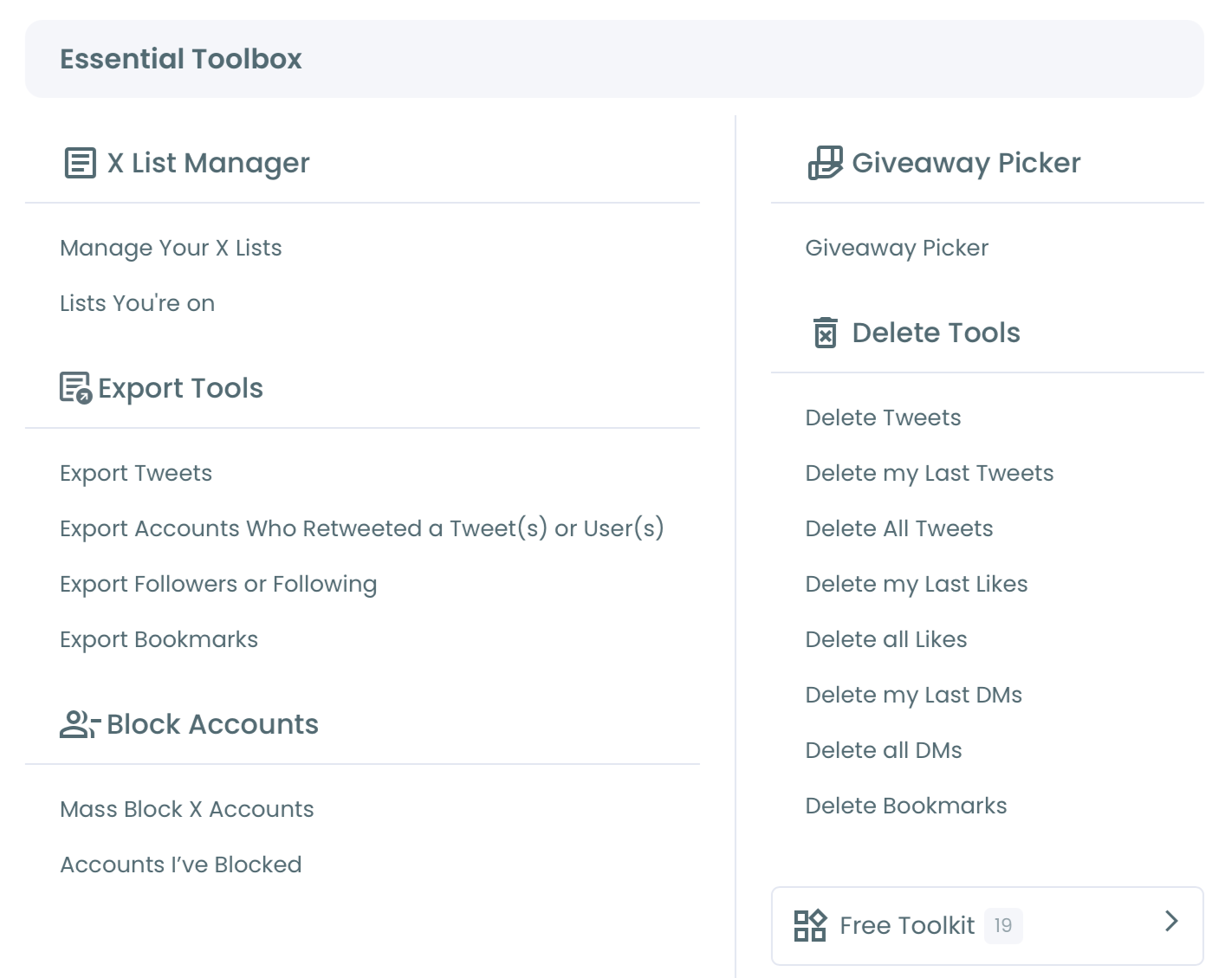
2. Connect your X account through official authorization. Inside Circleboom, the checker sits under the Essential Toolbox menu.
3. Enter the username you want to check.
4. Read the result, which shows the exact creation date including the day of the week.
That sequence works because each step builds on the last: opening the tool scopes the task, connecting authorizes the lookup, the username targets the account, and the result returns the precise date. Because Circleboom is an official X Enterprise Developer, the connection uses official OAuth and never asks for your password, so checking other accounts is safe for yours.
How to Read the Result
Once you have the exact date, read it as one signal among several rather than a final judgment. A recent date is a reason to look closer, not proof of anything on its own.
Pair the date with three quick reads: does the tweet history match the claimed age, does the follower structure look earned or inflated, and does the account's behavior fit its stated identity. When the date and the claims disagree, trust the date, because it is the one fact that cannot be staged. Knowing how to find someone on Twitter reliably is the first half of this; reading their account age is the second.
The date is especially useful for the accounts that look most legitimate, because those are the ones built to pass a casual glance. A polished profile with a creation date that contradicts its claims is exactly the kind of mismatch a quick check catches and a scroll misses, much like how persistent bot follows often trace back to very new accounts.
Common Mistakes When Checking Account Age
A few habits weaken account-age checks, and all are easy to avoid.
- Treating new as fake. A recent date is a flag to investigate, not a verdict. Many legitimate accounts are new.
- Treating old as safe. Dormant old accounts get bought and repurposed, so age alone does not equal trust.
- Reading the date in isolation. Combine it with tweet history, followers, and behavior for a real read.
- Settling for the month. The rounded native date is too coarse for vetting; use the exact day.
The biggest mistake is skipping the check entirely because X makes it inconvenient. The precise date is cheap to pull and catches mismatches that surface profiles are designed to hide, so building it into your routine pays off the first time it saves you from a bad account. Confirming a verified account's status alongside the date adds another layer of confidence.
How the Date Fits a Quick Vetting Routine
The creation date works best as the first step in a short, repeatable routine rather than a check you run in isolation. A good routine takes under two minutes and catches most of what a casual glance misses.
Start with the date, because it is fast and hard to fake. If the account is new, raise your guard for everything that follows. Next, read the tweet history against the age: an account claiming years of presence with only weeks of posts is a contradiction. Then look at the follower structure, since inflated or lopsided followers often accompany a freshly built account. Finally, check whether the behavior fits the stated identity.
Run in that order, the date sets the sensitivity for the rest. A clean, established date lets you move quickly through the other checks; a suspicious one tells you to slow down and read closely. That calibration is the real value, because it tells you how much scrutiny an account deserves before you have spent much time on it.
The routine scales. For a single account you are about to trust, run all four checks. For a wave of accounts around a topic, the date alone often tells you what you need, because a shared creation window across many accounts is a strong signal on its own. Matching the depth of the check to the stakes keeps vetting fast without making it sloppy.
The habit pays off most on accounts engineered to look legitimate, since those are built to pass the casual glance that skips the date entirely. The accounts that most want you to skip the check are exactly the ones the check is for.
What to Know Before You Start
Do I need to connect my account to check a date?
Yes. The checker asks you to connect your X account once through official authorization. It uses OAuth and never requests your password, so connecting is safe and lets the tool run lookups on public accounts.
Can I check accounts other than my own?
Yes. You can look up the exact creation date of any public account by entering its username, which is what makes the tool useful for vetting partners, competitors, and suspicious accounts.
How precise is the result?
The result gives the exact calendar date and the day of the week, rather than the month-and-year approximation X shows on profiles. That precision is what makes it useful for spotting coordinated clusters and authority mismatches.
Is account age a reliable fraud signal on its own?
No. Account age is one useful input, but not a standalone verdict. Read it together with tweet history, follower structure, and behavior for a dependable assessment.
Your Next Move
Run it as a short checklist:
- Open the checker and connect your account once.
- Enter the username you want to vet.
- Read the exact date and weekday.
- Compare the age against the account's claims and behavior.
Once the exact date is part of your routine, vetting an unfamiliar account takes seconds instead of guesswork, and the mismatches that fool a casual glance start showing up clearly. You can run your join date check now and make account age a standard part of who you trust.






)
)