
Follow ratio is the single fastest signal for telling a real account apart from a follow-collector or a bot. To filter Twitter accounts by follow ratio, you pull a target account's follower or following list into a structured table, then set a min and max ratio (Followers ÷ Following) to isolate the accounts you care about. A ratio above 1 usually means an account others choose to follow; a ratio near 0.1 means an account that follows thousands and earns almost nothing back.
Follow ratio is Followers divided by Following, and it sorts an audience into real influence versus noise in one pass. Circleboom lets you filter Twitter accounts by follow ratio inside any public account's follower or following list, scoring every account through sanctioned, policy-compliant X access.
→ Filter Twitter accounts by follow ratio
Keep reading for the exact ratio bands that separate influencers from bots, and where the signal lies to you.
The number itself is simple. The skill is knowing which band means what, and when to stop trusting the ratio and reach for a second signal.
Why Follow Ratio Beats Raw Follower Count
A follower count tells you size. A follow ratio tells you whether that size was earned. That difference matters the moment you stop looking at one profile and start triaging a list of thousands.
Picture a competitor with 15,000 followers. X shows you an unsorted, partial scroll of those accounts with no way to rank them. Inside that list sit genuine niche customers, dormant accounts, and follow-for-follow farms that pad the number without adding reach. The ratio is what separates them. The accounts worth your attention almost never look the same as the accounts padding the count.
That is also where most guides stop short. They define the ratio as a vanity metric for your own profile and move on. The real value shows up when you treat it as a filter you apply to other people's audiences at scale, not a score you check on yourself monthly. You can filter Twitter accounts by follow ratio across an entire follower list, not just glance at one bio.
The bands break down cleanly:
- High ratio (well above 1): many followers, follows few. An influence or authority signal.
- Balanced ratio (near 1): mutual, community-style accounts. Often your strongest engagers.
- Low ratio (below 0.5): follows many, earns little back. A follower-collector pattern.
- Extreme low (near 0.1 with thousands followed): classic bot or spam silhouette.
The ratio is a triage filter, not a verdict. It tells you where to look first, not who to trust completely.
How Circleboom Reads the Ratio
Circleboom turns any public X account into a structured, filterable dataset and calculates Followers ÷ Following for every account in the list automatically. It pulls follower and following lists through official X Enterprise APIs, which means the data is complete and policy-compliant rather than scraped or partial. Every account you analyze comes from sanctioned access, not a workaround.
Each row in the results table carries the follow ratio with decimal precision next to tweet count, join date, follower count, and an engagement classification. You set a minimum and maximum on the ratio, and the table narrows to exactly the band you asked for.
Pair the ratio filter with a join-date floor and a verification status, and a 2,500-account list collapses to a clean shortlist in seconds. That is the whole promise of being able to sort accounts by their follower-to-following ratio: one input replaces hours of manual review.
Detect bots, influencers, and more from a single follower list in this walkthrough.
To run the ratio filter end to end, follow this four-step flow.
Connect your X account and open the search
- Log in to Circleboom Twitter and connect your X account with official OAuth.

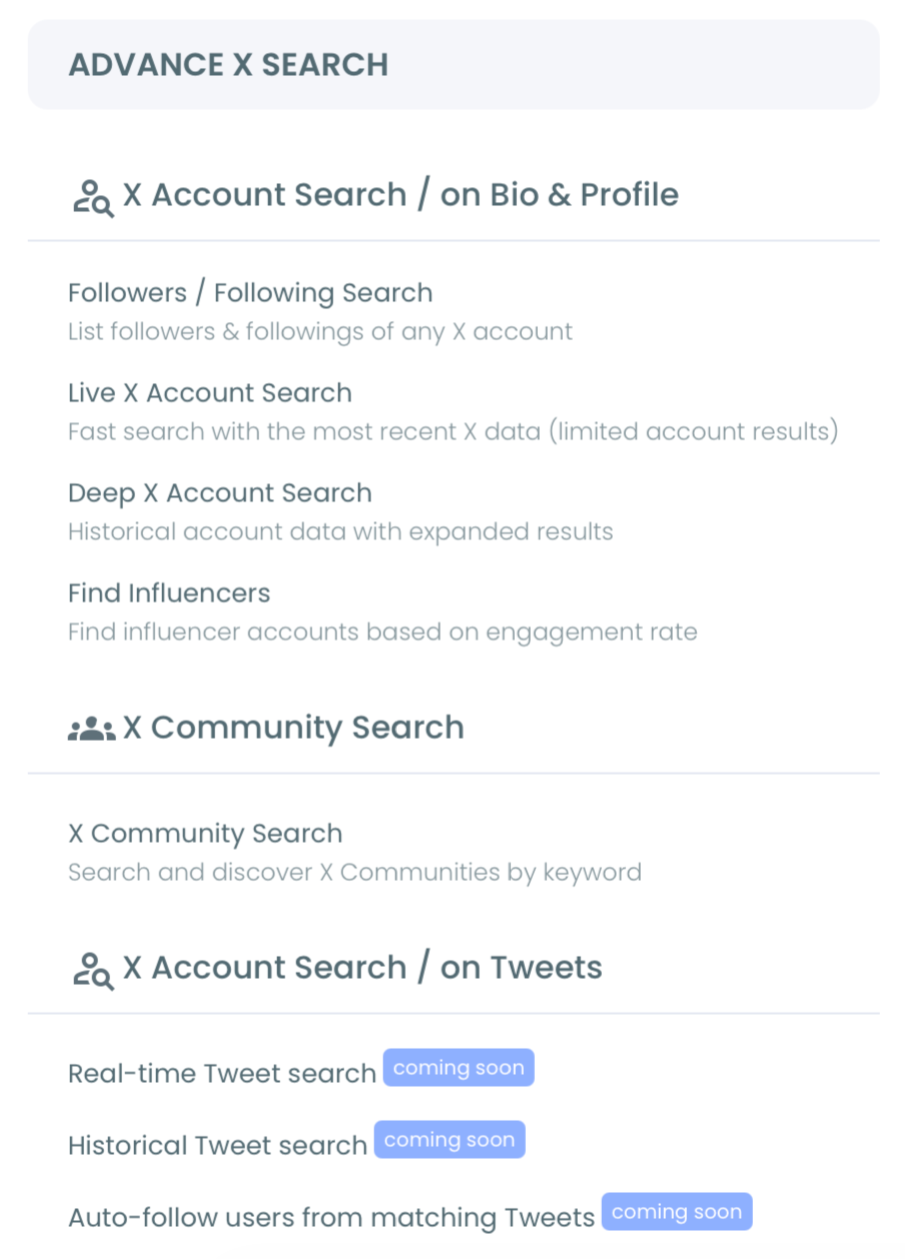
- Open the Advanced X Search menu and choose Followers / Following Search.
Pull the list and apply the ratio filter
- Enter the target username and pick Followers or Following. Circleboom returns the list as a structured table with a follow ratio column for every account.
- Open Filter Options and set the Follow Ratio min and max. Add a join-date floor and a quality filter to remove eggheads and spam patterns, then act on the shortlist or export it.
That order works because the login earns official-API access first, the search loads the full enriched list, and the ratio filter does the narrowing before you spend any attention on individual profiles. Skip the filter and you are back to scrolling a raw list by hand.
Stacking the Ratio With Other Filters
The ratio rarely works alone. Circleboom applies every active filter with AND logic, so each one you add narrows the list further rather than widening it. That is what turns a blunt ratio cut into a precise targeting tool.
A worked example shows the difference. Say you pull a competitor's 8,000 followers and want genuine niche prospects, not bots or dormant accounts. Set the follow ratio minimum to 1 to keep accounts with earned standing. Add a join-date floor of at least one year to drop throwaway accounts. Add a "Find in Bio" keyword that matches your niche, like "founder" or "marketer." Exclude eggheads and spam in the quality filter.
What started as 8,000 raw accounts becomes a few hundred real, on-topic, established profiles, ranked by the ratio inside that set. Each filter you stack should answer a real question about the audience:
- Follow ratio: is this account a contributor or a collector?
- Join date: does it have a track record, or is it brand new?
- Bio keyword: does it actually sit in your niche?
- Quality exclusion: is it a real account or obvious spam?
The ratio decides the order; the other filters decide who makes the list. Run them together and the shortlist is both ranked and clean.
What the Ratio Hides (And the Second Signal That Catches It)
Follow ratio is fast, but it is not honest in every case. A brand-new account with 12 followers and 8 following shows a ratio near 1 and looks healthy, even though it has no track record. A purchased-follower account can show a high ratio while its audience is hollow.
That is the insight most ratio guides miss: a clean ratio can sit on top of a fake audience. The fix is to layer a second signal.
When you find a high-ratio account that still feels off, check whether its followers are real with a dedicated Twitter Bot Checker. When you want to confirm reach before treating an account as an influencer, run Find Twitter Influencers. The ratio points; the second tool confirms.
For context on how false positives sneak through, the older field notes in how to spot fake Twitter followers still hold up. A quick read of how many of your X followers are bots shows how fast a hollow audience inflates a count.
To skip straight to the influence end of the spectrum, the free step-by-step influencer search walks the high-ratio path. A broader account follower analysis frames where the ratio fits among other signals.
A Quick Read on the Math
The arithmetic is worth seeing in plain numbers, because the ratio's meaning is not always intuitive. An account with 10,000 followers and 200 following has a ratio of 50, a strong authority signal. An account with 10,000 followers and 9,500 following has a ratio near 1.05, which reads as a balanced, mutual account despite the identical follower count.
The same 10,000-follower headline hides two completely different accounts. One earned its audience and follows back almost no one; the other reciprocates heavily and lives in conversation. Without the ratio you would treat them as equals. With it, you route the first into an influence list and the second into an engagement list, in one sort.
That is the practical lesson most ratio coverage skips. The follower count is a single axis, but the ratio adds a second axis that tells you how the count was built. Two accounts can share a count and sit in opposite bands, and only the ratio reveals it before you click into a single profile.
What You Gain From Filtering by Ratio
A ratio filter changes the unit of work from "scroll the list" to "act on the shortlist." Instead of evaluating thousands of profiles one at a time, you set a band and work the accounts that match. For competitor-audience prospecting, that means reaching the real, influential members of a niche instead of the farms padding it.
The qualitative payoff is sharper targeting. A filtered list of high-ratio accounts in your space is a better outreach pool than any keyword search, because these accounts have demonstrated standing in the niche rather than just mentioning a topic once. Run the filter, and your follow, list-building, or export work starts from quality rather than ending in cleanup.
The Bottom Line
Follow ratio is the cheapest, fastest first filter you can apply to a Twitter audience, and it separates real influence from follow-collectors before you spend a minute on individual profiles. Treat it as triage, layer a bot or influence check when a ratio looks too clean, and you turn a raw 2,500-account list into a ranked shortlist you can actually act on.
→ Start filtering Twitter accounts by follow ratio
Common Questions About Follow Ratio Filtering
What is a good follow ratio on Twitter?
A ratio above 1 means an account has more followers than accounts it follows, which usually signals earned influence. A ratio near or below 0.5 means the account follows far more than it earns back, a common follow-collector pattern.
Can I filter someone else's followers by ratio, not just my own?
Yes. Circleboom's Followers / Following Search pulls any public account's follower or following list and lets you set a min and max follow ratio across it. Private accounts cannot be analyzed.
Does a high follow ratio guarantee a real account?
No. A high ratio can sit on a purchased or hollow audience. Treat the ratio as a first filter, then confirm with a bot check or an influence check before you act on the account.
How many accounts can I filter at once?
Circleboom displays up to 2,500 accounts from a list in the table view, and sort options let you surface results beyond that default display while you apply ratio and quality filters.
)