Where does X keep the numeric ID that sits behind every handle? Nowhere you can click on the profile or in settings, which is inconvenient, because that number is the only identifier an account never loses.
How do you find a Twitter account's numeric ID from its handle?
Enter the handle into a free ID lookup and read the number off the result card. Circleboom pulls the stable numeric ID behind any public handle on X through official X API access and returns it beside the account's profile image and display name, so you confirm the match before you copy anything.
→ Find any Twitter account's numeric ID
Why Handles Break and Numeric IDs Do Not
Every X account carries two identity layers. The username is the label people recognize and type, while the numeric ID is the identifier the platform assigns underneath it when the account is created.
Only one of those layers holds still. X publishes its own instructions to change your X username or handle, and accounts use them constantly through rebrands and renames.
The follower graph moves with the account, but every external record keyed to the old handle goes stale that same day.
Profile links rot the same way, since the address is only the handle with a domain in front. The answer to what is my Twitter URL changes the moment the username does, while the numeric ID underneath keeps pointing at the same account through every rename.
The ID also survives display-name edits and profile-photo swaps, so no cosmetic change on the profile can shake it loose.
The recycled-handle problem
A dropped handle does not stay empty either. A different account can register it later, so a record keyed to a username may eventually describe a stranger.
The number is what your records should hold, and getting it takes one search. Circleboom converts any public X handle into its permanent numeric ID with a free lookup that runs in the browser.
You can find a Twitter account's numeric ID faster than you can explain why you need it. Pull the numeric ID behind any Twitter handle before your next report locks its account column, then store it beside the username.
The Free Lookup That Does the Conversion
Twitter ID Finder is a free Circleboom Toolkit page that returns the numeric ID of any public X account from a username search. There is no dashboard to learn and nothing to upload; the whole page is a single search field and the card that answers it.
Circleboom is an official X Enterprise Developer company, so the card reads account data directly from the platform rather than scraping a rendered profile. That access is the reason the number it returns is solid enough to build records on.
The same search also settles what is my Twitter ID when the account you need to anchor is your own. Your handle goes into the same field, and your own permanent number comes back.
Make the lookup a reflex rather than a rescue. Look up any Twitter account's numeric ID the day an account enters your tracking sheet, and the rename that would have broken the sheet becomes a non-event.
Watch the conversion run: a handle goes into the free finder and the account's numeric ID lands on the result card within seconds.
https://www.youtube.com/watch?v=DQ_R8AJGocQ
How to Find a Twitter Account's Numeric ID, Step by Step
To find a Twitter account's numeric ID, search the account's handle in a lookup that reads the platform through official X API access, confirm the returned profile matches the account you meant, and record the number. The run takes under a minute and needs no account of your own.
Six steps, two phases: get the search right, then verify before anything enters your records.
Get the search in front of you
- Open the Twitter ID Finder page in any browser. The public tool needs no login and no password, and nothing connects to your own X account.
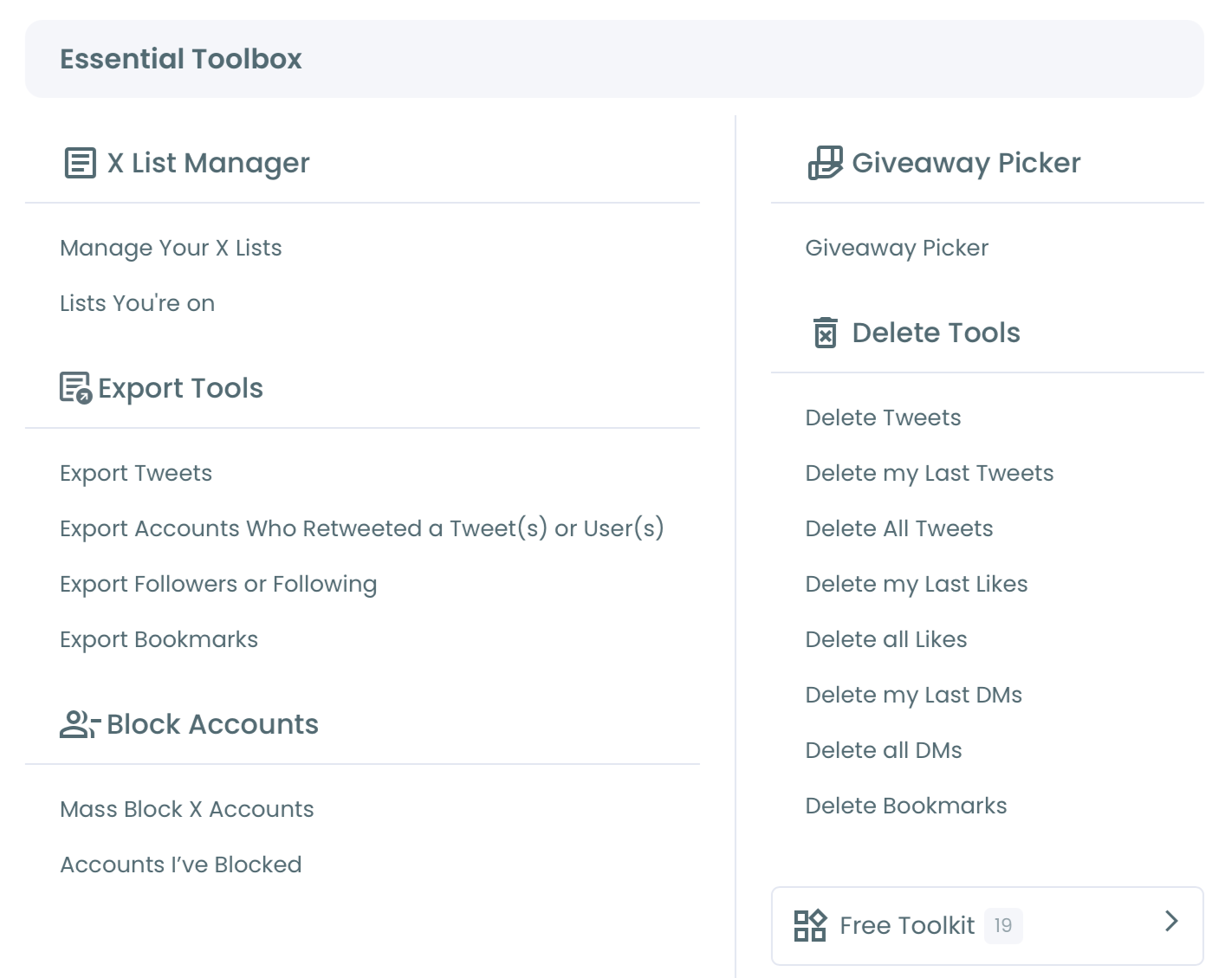
- Reach the same utility from inside Circleboom if you prefer working logged in: it sits in the Essential Toolbox menu of the dashboard, and both routes return identical results.
- Type the username into the search field. The input already shows the @ prefix, so enter the handle itself rather than the profile URL or the display name.
Verify the identity, then record the ID
- Click Search and let the result card load.
- Check the card's profile image and display name against the account you meant to resolve. A lookalike handle or a one-letter typo fails this check visibly, before a wrong ID reaches your records. Searching @elonmusk returns 44196397 beside the familiar photo and name.
- Copy the numeric ID from the highlighted field into your report or API call, stored next to the handle it belongs to.
That verify-then-record order is what makes the workflow trustworthy: the card proves you resolved the right account while the evidence is still on screen, so every ID entering your records arrives checked rather than assumed.
At a glance: open the page → enter the handle → search → match the card → copy the number.
What Does the Result Card Show Before You Copy the ID?
The result card returns the numeric ID together with the account's profile image and display name, which turns a plain handle-to-number conversion into an identity check. Each element on the card does a separate job:
- The profile image confirms at a glance that you resolved the account you intended.
- The display name catches lookalike usernames and mistyped handles that a photo alone might miss.
- The numeric ID sits in a highlighted field, ready to copy once the two checks above pass.
A bare converter hands you a number; this card hands you a number you have already verified.
The difference matters most around high-profile accounts, where convincing copies sit one character away from the real handle. The card adds a second signal beyond the username.
Still unsure? Take the time to understand if a Twitter X account is authentic before the ID enters a record.
The page keeps working after the ID appears, too. Documented next-step cards under the result offer to export the searched account's followers and following lists or to download its tweets.
A lookup that started as one question opens straight into a fuller audit of the account you just confirmed, a workflow no bare converter teaches.
Where the Numeric ID Earns Its Keep
Developer work is the most direct case. X's User Lookup endpoints resolve accounts through this identifier, and many API workflows key on the number rather than the handle.
Resolving an ID in the finder first means your code starts from a verified reference instead of a guess, and you skip the extra conversion call a username-based flow would spend at runtime.
Data work comes next. When you find Twitter datasets for download and join them against your own exports, matching rows on the numeric ID survives every rename between the two collection dates.
Handle-matched joins drop those rows without telling you.
Reports gain the same durability. A quarterly review that stores IDs beside usernames still reconciles cleanly after a rebrand, because the ID column proves the old handle and the new one belong to a single account history.
The username column stays readable for people; the ID column does the matching.
When You Have a Name, or an ID, but Not the Full Picture
The lookup slots into a wider research kit on both sides. When the number confirms two records match and you want the context behind them, Twitter Account Lookup shows the fuller public profile behind the handle you feed it.
Working the opposite direction, Twitter Account Finder turns names and keywords into candidate accounts when you know the brand but not the handle. Each candidate can then go straight through the ID lookup for a permanent reference.
The habit worth building sits at intake. I record the ID the first time an account enters anything I track, and retroactive repair disappears from the job; a few seconds at entry replace an afternoon of reconciliation later.
The Cost of Matching by Handle Alone
The cost of skipping the ID rarely arrives the day you skip it. It arrives at the next rename, when a tracked account changes its handle and every record keyed to the old name quietly detaches from the account it described.
Recover from that with hours of cross-referencing, or prevent it with a search that takes seconds.
If what you lack is the handle itself, start one step earlier. The walkthrough on how do you find someone on Twitter covers locating an account from a name or a topic.
The ID search then turns whatever you find into a reference that outlives its next rename.
Without the ID on file, every rename is a small data loss. With it, a rename is a footnote.
Handles are written for people. Records deserve the identifier that cannot change.
→ Find the numeric ID behind any Twitter account
Still Wondering?
Can I find a Twitter account's numeric ID without a tool?
Yes, but both routes are technical. You can query X's developer endpoints with an authenticated app, or dig the ID out of a profile page's source code by hand.
Each works, and each demands setup that a one-field search does not, which is the point of the lookup: people who need the number without a developer project get it in seconds.
Can two Twitter accounts end up with the same numeric ID?
No. Each account gets its own numeric ID, which is exactly why the number works for deduplication: two rows carrying the same ID describe the same account, whatever handles they were collected under.
Two different IDs mean two different accounts, even when the display names look identical. That one-to-one mapping is the property every join, audit, and continuity check above leans on.