

Identifying which Twitter followers actually follow you back in 2026 takes one Circleboom segmentation pass.
The mutual segment surfaces in real time; the conversion-target segment (one-direction-inbound followers most likely to convert) surfaces alongside it; the one-direction-outbound segment (accounts you follow who do not follow back) surfaces for cleanup.
The full workflow runs in 90 minutes for setup and 30 minutes per recurring weekly cadence.
What this guide gives you.The three follower-direction segments that map the full mutual-relationship space.The conversion-target subset that produces 8-12 new mutuals per week.The retention loop that catches mutual-segment drift before it becomes loss.
Built on Circleboom's verified Enterprise developer access on X. Start with the not-following-back workspace.
Why the Mutual Segment Is the Right Optimization Target
The "how many followers do I have" framing collapses to "make the count go up" for most operators. Three structural reasons explain why the count framing falls short.
The first is that mutual followers engage at 4x to 8x the rate of non-mutuals. The mutual segment carries roughly 60-80% of an account's engagement signal even when it is only 8-15% of the base.
The article on find your brand advocates and increase Twitter engagement covers the engagement-side mechanics.
 Altug Altug
The second is that mutual followers convert at 5x to 10x the rate of non-mutuals on inbound DMs, newsletter signups, and business outcomes. The conversion gap is wider than the engagement gap because mutuals already carry a relationship signal.
The third is that mutual followers churn at 0.5% per quarter compared to 4-8% for non-mutuals. The retention gap compounds; a 600-mutual base produces more sustained value than a 5,000-non-mutual base.
The Three Follower-Direction Segments
These are the segments the mutual workflow operates on.
- Mutual followers (X Mutuals). Accounts that follow you and that you follow back. The high-signal segment.
- Followers I don't follow back (one-direction inbound). Accounts following you that you do not follow. The conversion-target segment.
- Following but not following back (one-direction outbound). Accounts you follow that do not follow you back. Often industry contacts; not always a problem.
A typical follower base has 8-15% mutuals, 60-80% one-direction-inbound, and 5-15% one-direction-outbound. The article on check my unfollowers fake spam and inactive followers covers the diagnostic side.
How to Run the Mutual Workflow Step by Step
The setup runs from one Circleboom dashboard. Five phases: connect, segment, identify, prioritize, monitor.
Hands-on demo: how to see who does and doesn't follow you back on Twitter.
The flow, in order.
Phase 1: Connect
- Log in to Circleboom Twitter and connect your X account through the official OAuth handshake.

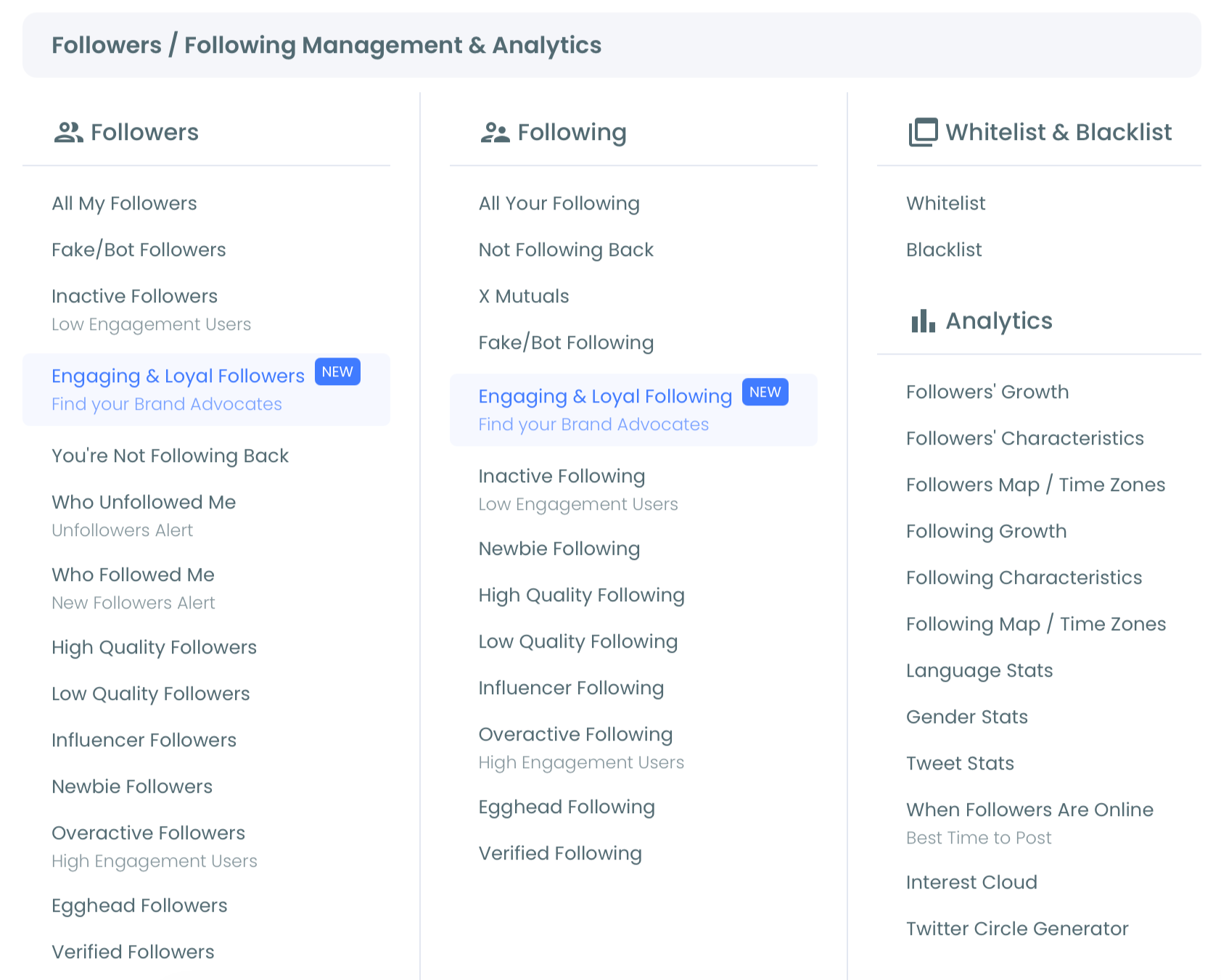
- Open the Followers / Following Management menu for the segmentation workspace.
Phase 2: Segment
- Run the Followers segmentation pass to surface the three direction segments.
Phase 3: Identify
- Open the X Mutuals view to baseline the mutual segment.
- Open the Followers I Don't Follow Back segment and filter for high-engagement accounts that have been following for over 60 days.
Phase 4: Prioritize
- Reply to and acknowledge top conversion-target accounts publicly.
- Audit the Not Following Back segment and unfollow only persistent inactive accounts.
Phase 5: Monitor
- Track mutual-segment percentage weekly in the Followers Growth dashboard.
That sequence produces compounding mutual-segment growth. Each phase removes a different bottleneck: segmentation removes the visibility gap, identification removes the targeting gap, prioritization removes the engagement gap, monitoring removes the drift-detection gap.
Quick recap:
- Connect through OAuth.
- Run the segmentation pass.
- Identify the conversion-target subset.
- Reply differentially.
- Track mutual percentage weekly.
What Each Segment Specifically Produces
The mutual segment is the engagement-rate carrier. Most accounts find that 60-80% of their engagement signal comes from the mutual segment.
The one-direction-inbound segment is the conversion-target pool. The high-engagement subset (accounts that have been following over 60 days and engage with most posts) is the highest-leverage conversion target.
The one-direction-outbound segment is the cleanup pool. Industry contacts and news sources are usually worth keeping; reciprocity-farmer accounts and inactive accounts are the cleaner unfollow targets. The article on Twitter scarecrows that silently kill engagement covers a related compression angle.
Common Mistakes Operators Make
The first mistake is treating the count metric as the primary KPI. Total follower count masks the composition; mutual percentage is the metric that drives engagement and conversion.
The second mistake is mass follow-for-follow campaigns. Reciprocity-farmer accounts follow back briefly and unfollow within 7 days, producing engagement-rate compression with no mutual-segment lift.
The third mistake is aggressive non-mutual unfollows without auditing. Industry contacts and news sources are worth keeping even when the relationship is one-directional. The article on Twitter follower scraper covers a related export angle.
What to Do Next
The workflow is concrete: segment, identify, prioritize, monitor.
- Step 1: Open Circleboom and run the segmentation pass.
- Step 2: Baseline the mutual percentage.
- Step 3: Identify high-engagement conversion targets.
- Step 4: Reply differentially.
- Step 5: Track mutual percentage weekly.
→ Open the mutual-follower workspace
What to Know Before You Start
How long until the workflow produces visible results?
Initial mutual-segment growth in 2 to 4 weeks; meaningful percentage shift at 90 days. Differential engagement compounds slowly but durably.
How can I identify the highest-conversion-target accounts?
Filter the one-direction-inbound segment for accounts that have been following over 60 days and engage with most of your posts. The article on increase Twitter engagement by deleting inactive followers covers a related filter angle.
Will follower count drop during the audit?
Slightly. The one-direction-outbound audit usually surfaces inactive accounts worth unfollowing. The mutual-segment growth more than offsets the count drop within a quarter.
Is the workflow safe under X's rules?
Yes. All segments run through Circleboom's Enterprise developer access. No scraping, no browser scripts, no automation outside platform policy.




)


