There was a time when the internet felt alive.
In the early years of social media, timelines were chaotic but vibrant. People argued, laughed, shared discoveries, and built communities in real time. If you posted something interesting, someone replied. If you asked a question, someone answered. Platforms like X felt like global cafés where strangers could suddenly become collaborators, critics, or friends.
Today the architecture of those platforms still exists. The timelines still scroll. Notifications still appear. Follower counts continue to grow.
But something fundamental has changed.
Many creators now feel they are speaking into a crowd that barely reacts. Accounts with tens of thousands of followers sometimes struggle to generate even a handful of replies. The platforms look crowded, yet conversations feel strangely hollow.
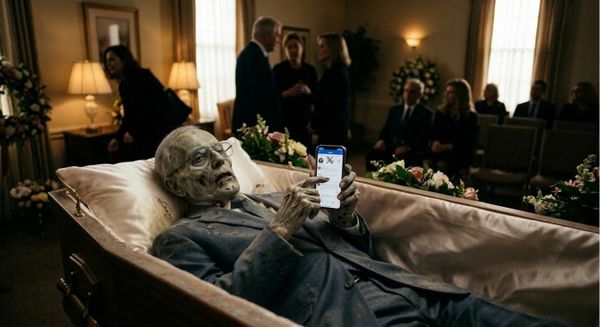
Increasingly, social media seems populated by what we might call the scrolling dead.
These are accounts that remain present in timelines and follower lists but rarely participate in the living exchange of ideas. Some are inactive. Some are automated. Some are bots. Some are experimental AI profiles. They scroll endlessly through the network, leaving traces of activity without creating real engagement.
For many creators on X, the painful realization comes slowly: they are not building an active audience.
They are expanding a graveyard.

A Theory That Refuses to Die
In recent years a curious idea has circulated across online communities. It is known as the Dead Internet Theory.
The theory proposes that a large portion of today’s internet traffic is no longer generated by real humans but by automated systems. Bots post content. Algorithms generate comments. AI tools simulate personalities. Entire conversations unfold without a human ever touching the keyboard.
 Arif Akdogan
At first glance, the theory sounds conspiratorial. Yet certain developments have made it harder to dismiss entirely.
Artificial intelligence can now produce convincing social media posts in seconds. Automated scripts can operate thousands of accounts simultaneously. Marketing campaigns sometimes rely on bot networks to amplify messages. Meanwhile, millions of human users abandon accounts without deleting them, leaving silent profiles scattered across platforms.
The result is a strange digital environment where activity continues even as genuine participation declines. The internet does not die, exactly, but parts of it become eerily lifeless.
The timelines keep moving.
But the people behind them slowly disappear.
X and the Architecture of Inactivity
X offers one of the clearest examples of this phenomenon.
The platform has existed long enough to accumulate layers of digital history. Accounts created fifteen years ago still exist. Old marketing experiments still linger in follower lists. Early bot networks left traces that remain embedded in the system.
Over time, this produces a curious effect.
Follower counts grow steadily, but the proportion of active participants shrinks. Many accounts that once interacted regularly eventually fall silent. Some users move to other platforms. Others simply lose interest. Some forget their passwords entirely.
Yet their accounts remain permanently attached to the networks they once joined.
For creators, this means that an audience of fifty thousand followers may include thousands of users who no longer even open the platform.
From the outside, the account appears powerful.
From the inside, it feels like speaking in an empty room.
The Algorithm’s Silent Test
Part of the problem lies in how platforms measure content quality.
When a tweet is published on X, the algorithm initially distributes it to a portion of the creator’s followers. It observes how those users react. If engagement arrives quickly—likes, replies, reposts—the system assumes the content is valuable and expands its reach.
If engagement does not appear, the system interprets silence as disinterest.
Inactive followers, therefore, create a dangerous distortion. When thousands of dormant accounts fail to interact with a tweet, the algorithm interprets that silence as negative feedback. The post is quietly suppressed before active users ever have the chance to see it. This is called "early engagement seed" and your inactive followers may kill your signals.
It is all about engagement seed. Your engagement seed group is different in each of publishing attempts. In your first try, the group was probably more of inactive people.
— Sarah Andrew (@saraharew) March 12, 2026
Some happens on X. For example, you have 1066 inactive followers. If they are in early seed, they kill it. pic.twitter.com/knMEuvxNry
From the creator’s perspective the experience is frustrating and confusing. A tweet that feels insightful or entertaining disappears almost instantly.
The problem may not be the content.
The problem may be the audience.
The Machine Voices
While inactivity explains part of the scrolling dead phenomenon, automation explains another.
Bots have existed on social media for years. They were originally used for simple tasks such as reposting promotional content or amplifying political messages. But the newest generation of automated accounts is dramatically more sophisticated.
AI-driven profiles can now write tweets, react to news, generate memes, and even simulate ongoing conversations with other automated accounts. Some operate as novelty projects. Others function as marketing tools or data experiments.
A few even cultivate audiences of real human followers.
Yet beneath the surface, these accounts rarely contribute authentic human perspective. They create the appearance of participation without the unpredictability, emotion, or curiosity that defines genuine conversation.
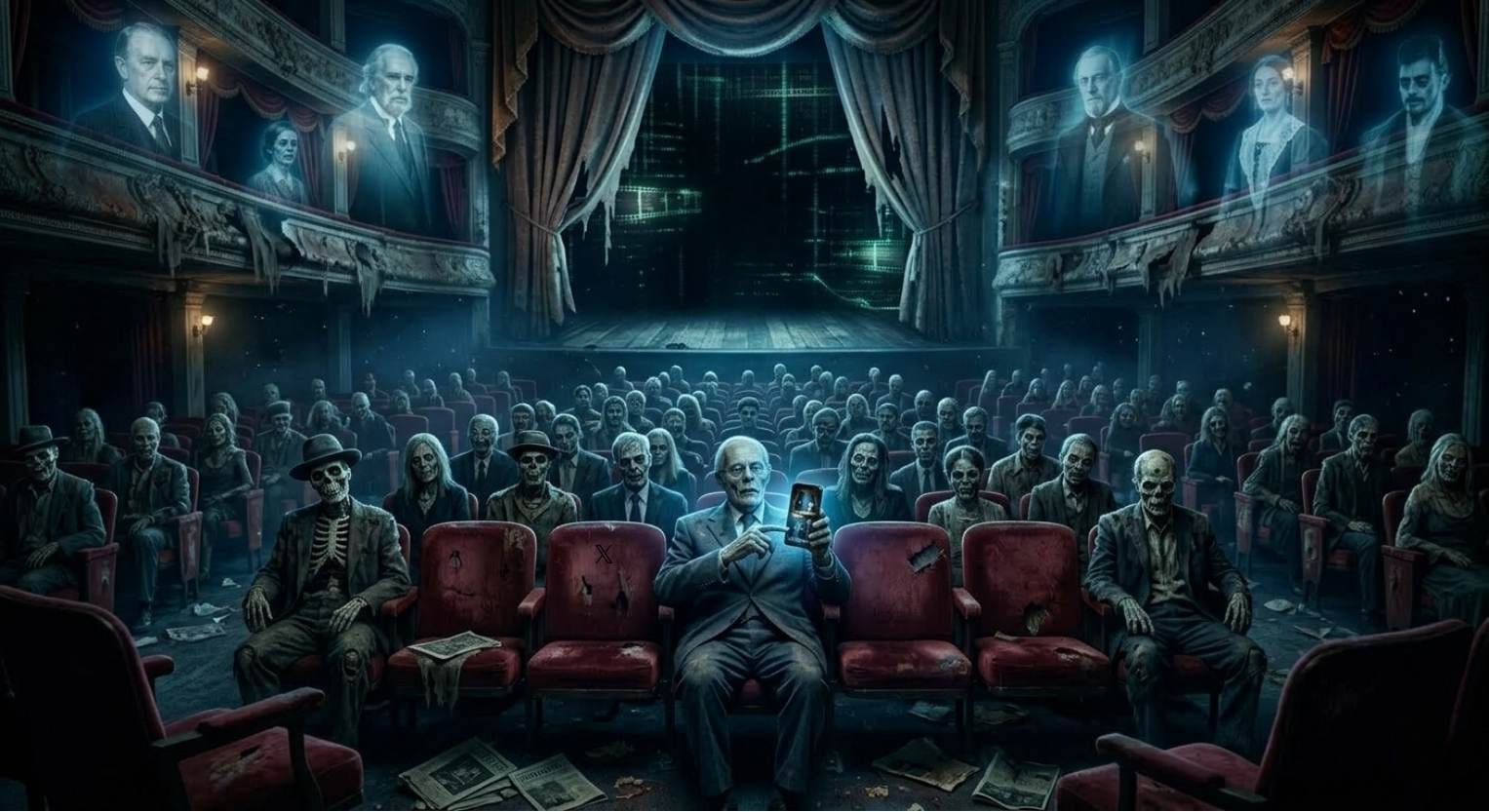
The internet begins to resemble a theater in which some of the actors are not alive.
A Warning From Literature
Long before social media existed, writers had already begun to worry about the strange isolation that modern communication technologies could produce.
The novelist Ray Bradbury once wrote:
“We have everything we need to be happy, but we aren’t happy. Something’s missing.”
His words described a technological society surrounded by information but starved for meaning. In many ways the modern timeline feels like the digital equivalent of that condition. Content flows endlessly across the network, yet meaningful dialogue becomes harder to find.
Even popular music captured this unease decades earlier. In Bohemian Rhapsody, Freddie Mercury sang the haunting line:
“I see a little silhouetto of a man.”
On today’s social media platforms, millions of those silhouettes exist—profiles without presence, accounts without voices, shadows moving silently through the feed.
How Creators Build Their Own Graveyards
Ironically, creators often contribute to the problem themselves.
The social media economy places enormous emphasis on follower counts. Milestones are celebrated publicly. Brands often evaluate partnerships based on audience size. Platforms reward visible growth with algorithmic boosts.
This environment encourages aggressive expansion strategies. Creators participate in follow-for-follow campaigns, automated growth tools, or viral bait tactics designed to inflate follower numbers quickly.
 Altug Altug
These methods work.
But they come with a hidden cost.
The followers gained through rapid growth tactics often have little genuine interest in the content being shared. Some are inactive users. Some are bots. Some are casual observers who never engage again.
Over time, the audience grows larger but quieter.
The account becomes impressive on paper yet eerily silent in practice.
The Strange Value of Losing Followers
Some of the most experienced social media managers now understand a counterintuitive truth: sometimes the best way to grow engagement is to lose followers.
Removing inactive or suspicious accounts can dramatically improve the health of a creator’s audience. When silent profiles disappear from follower lists, tweets reach a smaller but more responsive group of people. Engagement arrives earlier, signaling to the algorithm that the content deserves wider distribution.
The numbers may shrink.
But the community becomes more alive.
 Altug Altug
How Circleboom Helps Bring Audiences Back to Life
Identifying inactive followers manually is nearly impossible for large accounts. A creator with fifty thousand followers would need to inspect thousands of profiles individually to detect dormant accounts.
Circleboom simplifies this process by analyzing follower activity patterns and highlighting accounts that appear inactive or suspicious. Profiles that have not posted for years, accounts with no tweets at all, or followers exhibiting bot-like behavior can be detected quickly.
Instead of spending weeks scrolling through follower lists, creators can identify the scrolling dead within minutes.
Removing these accounts helps restore a healthier ecosystem around the profile. Tweets reach active users, engagement signals improve, and the timeline begins to feel alive again.
The Internet Is Still Alive. But Only If We Keep It That Way.
The Dead Internet Theory suggests that the web may be drifting toward automation and synthetic participation. Whether or not the theory proves entirely accurate, one thing is clear: genuine human interaction has become a precious resource online.
In a network crowded with automated content, inactive profiles, and algorithmic noise, authentic voices stand out more than ever.
Creators who focus on building real communities rather than chasing follower counts will shape the future of social media.
Because the goal of social media was never simply to gather numbers.
The goal was conversation.
And conversations, unlike follower counts, only exist when someone is truly there to listen.