

What do we actually mean when we talk about "search," and have you ever stopped to think about how much power it holds? We live in an era where "I don't know" has almost disappeared from daily life, because the answer is always one search away. That habit doesn't stop at Google. It shapes how people find brands, products, and conversations everywhere they go online.
📢 See who's already searching and posting around your keywords on X. Start a search with Circleboom's Advanced X Search and find the accounts behind them in minutes.
Using effective search methods is critical, not just for individuals but for organizations and brands. Imagine you run a brand and need to grow its visibility. How do you compete when hundreds of other brands are climbing the same rankings, fighting for the same attention?
Most searches still happen on engines like Google, Bing, and Yahoo. But as platforms like Facebook, Instagram, and X (formerly Twitter) have become part of daily life, people increasingly search inside those platforms too, using their own internal search tools to find people, topics, and conversations. That shift adds a whole additional dimension to how brands need to think about visibility.
📢 How to Get More Visibility and Responses on Twitter
SEO optimization for your website and brand has long been proven essential. Getting real results from that effort takes a deliberate plan, and increasingly, that plan has to extend past your website and into the platforms where your audience is already searching.
Hashtags Are Twitter's Keywords
On X, hashtags function the same way keywords function on a search engine. A hashtag groups posts around a topic, and it's how people who don't already follow you can still find what you're saying, as long as you're using the right one.
If you want your posts to show up in relevant X searches, current and future, the discipline is the same one you'd apply to your website: identify the keywords your audience actually searches for, and use the hashtag equivalents consistently in your posts. Posting without that discipline means your content only reaches people who already follow you, which defeats a large part of the point.
Before any of that works, you need to know who you're actually trying to reach. Combine what you know about your audience's online habits with what you know about where they already spend time, and use that to decide which social environments are worth showing up in and how. People generally search for the answer to something specific, so a post built around a real, specific answer earns more attention than one that isn't.
Strong content on your website is necessary but not sufficient. Your brand also has to be findable, and that means the same deliberate use of keywords carries over to X, where hashtags do the keyword's job.
Before building that out, ask two questions:
- What audience are you actually trying to reach?
- What search terms, and by extension what hashtags, does that audience already use?
Answering this well sometimes means working backward: study how your target audience already searches and talks, rather than guessing at the terms you'd prefer they used.
Building a Search Strategy That Includes X
It's a common mistake to treat SEO as something that only lives on your website. It's just as tied to how discoverable you are on X, which means a real strategy has to be multi-platform, not website-only, if it's going to hold up long-term.
Finding your target audience on X takes a deliberate search process, not a guess. Circleboom's Advanced X Search is built for exactly this: locating the right accounts through structured, filterable search rather than scrolling and hoping.
Live X Account Search and Deep X Account Search let you search accounts by bio, name, and profile data. Live X Account Search returns the most recently active matching accounts, which is the right choice when you want to see who's currently engaged in a space. Deep X Account Search goes further back and returns a broader, more comprehensive result set, including accounts that aren't posting constantly but are still relevant to the topic. Both let you filter results by follower count, following count, tweet count, follow ratio, account join date, and location, and let you exclude eggheads, inactive accounts, and protected accounts, so you're not sorting through irrelevant profiles by hand.
Historical Tweet Search and Real-time Tweet Search search by what people have actually posted, not just who they say they are in their bio. This is where hashtag search lives. Use the Hashtags filter to search for a specific tag directly, along with keyword, language, and engagement filters, and you'll get two views of the results: the matching posts themselves, and the deduplicated accounts behind them. Real-time Tweet Search is the right tool when you're tracking a hashtag tied to something happening now, a live event, a breaking topic, or a fast-moving conversation getting hundreds of posts. Historical Tweet Search is the right tool when you want to look back at how a hashtag or keyword has performed over a defined date range, rather than just what's happening today.
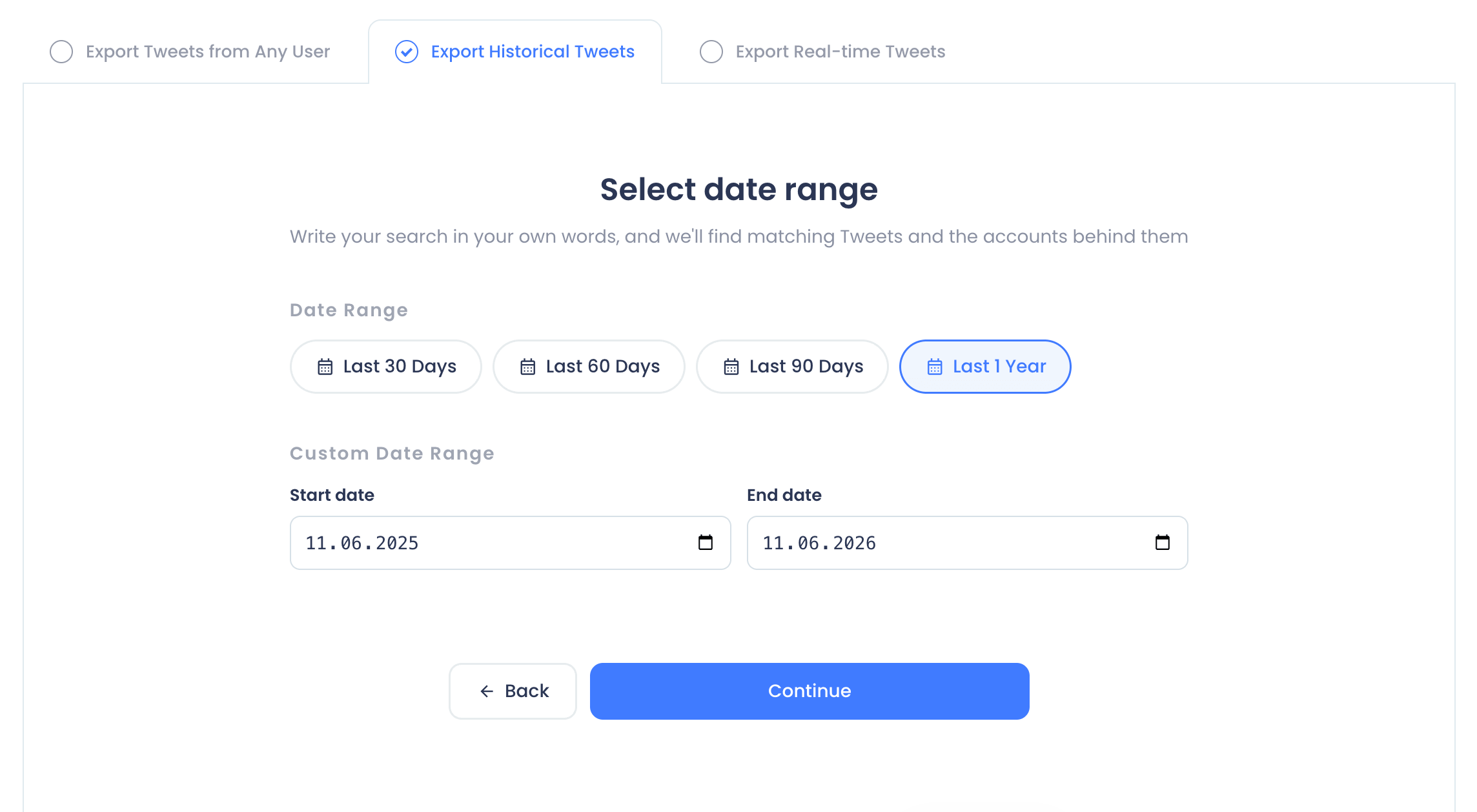
Both tools let you sort and filter the accounts you find, follow them directly, add them to a Twitter List, or export the results, so a search doesn't just show you an audience, it lets you act on it.
Geography and Language Matter Too
A keyword strategy that ignores geography and language is incomplete. Circleboom's search tools account for this directly: bio and profile searches can be filtered by location, and tweet-based searches can be filtered by language, so you can build a search strategy around the specific regions and languages your audience actually uses instead of assuming a single global approach fits everyone.
Last Words
Facebook, X, and Instagram are massive, distinct platforms for building visibility, but none of them are closed off from the search engines that also shape how people find you. Google and other engines actively pull in data from these platforms, which means the way you show up in social search still feeds into the bigger picture of how discoverable you are overall. Circleboom accesses X's search data through the official X Enterprise API as an official X Enterprise Developer, so the searches you run are grounded in current, policy-compliant platform data rather than guesswork.
Using specific, well-researched keywords and hashtags that both your audience and the platforms recognize is what ties this together. Do it deliberately, on your website and on X, and you're building visibility instead of hoping for it.






%20do!)