
A contest winner is only as trustworthy as the method that chose them. If your audience cannot see how the pick happened, a genuine random draw and a rigged one look identical from the outside.
A fair Twitter contest picker collects the complete list of accounts that entered your giveaway tweet, removes the ones that never qualified, and draws the winner at random with no human hand on the scale. Circleboom runs that whole sequence on X through official API access, so the pick is reproducible and you can show your audience exactly how it happened.
→ Twitter contest picker
The gap between a fair draw and a disputed one sits in the part most tools skip: who was allowed into the pool.
Most guides on a Twitter contest picker stop at the button. Paste a tweet, click draw, announce a name. That mechanical step is the easy 10 percent. The hard 90 percent is proving the pool was complete and the entrant was eligible, and that is where a casual pick falls apart under scrutiny.
Circleboom pulls every eligible entry from your giveaway tweet on X and draws from a verified pool, so the contest winner picker can answer three questions in public: who entered, who qualified, and how the winner was chosen.
What makes a contest pick actually fair
Fairness is not one thing. It is four conditions that all have to hold at the same time, and a random-name spinner only delivers the last one.
- The pool is complete: every eligible entrant is counted, not just the ones visible in the app.
- Eligibility is verified: each entrant actually met the rules you set, whether retweet, reply, or follow.
- Selection is random: no manual override, no favorite, no re-rolls until you like the name.
- The process is documented: the participant count, filters, and outcome can be shared as proof.
Circleboom evaluates all four on X data pulled through its position as an official X Enterprise Developer, so the participant list reflects real platform engagement rather than a partial screen capture.
There is a legal reason to take fairness seriously too. A promotion that combines a prize, an element of chance, and consideration is, in most places, a lottery, and running a private lottery is usually illegal. Structuring your giveaway as a sweepstakes, with a free way to enter and a random draw, keeps it clean.
Actions like following, liking, or tagging a friend are widely treated as de minimis rather than consideration. The FTC's endorsement guidance is worth reading before your first draw, because a documented random selection is exactly what a fair sweepstakes is supposed to produce.
If you are still planning the contest mechanics themselves, it pairs well with a walkthrough on how to run a successful Twitter contest end to end.
The pool problem most pickers ignore
Fairness starts before the draw, with the list you draw from. This is the condition that separates a serious contest picker from a spinner, and it is the one X's own interface cannot satisfy.
X shows you a partial, unordered preview of who retweeted or liked a post. It is not the full list, it is not sorted, and it changes as the page refreshes. A picker that scrapes that visible preview is drawing from a subset, not the real pool, so the result is unfair before a single name is chosen. Circleboom retrieves the complete participant set through authorized access to X, then presents it as a structured grid with account-level fields you can actually filter on.
That completeness has a second payoff: it tells you what your engagement is really made of. A giveaway that pulls in thousands of entries but almost no genuine interaction is worth reading as a signal. It is the same thread behind why your Twitter followers are not retweeting or liking your tweets.
If you plan to document the full amplification list separately, Circleboom's Export Retweeters tool downloads everyone who spread the post as a clean file.
Why a random draw alone is not enough
Here is the failure mode nobody screenshots. You run a clean random draw on a viral giveaway, and the tool hands you a bot as the winner.
Any large contest pulls in some percentage of spam and fake accounts, especially when the prize has real value. If your picker selects from an unfiltered pool, a random draw treats a three-day-old egghead account exactly like a loyal follower who has engaged for years. Announcing a bot as the winner is awkward to walk back, and it quietly tells everyone watching that you did not check.
Prizes with real value also attract accounts built only to farm rewards, the same low-effort pattern behind engagement farming on Twitter, and a plain spinner has no way to tell them apart from a real fan.
The fix is to filter before you draw, not after. Circleboom applies account-quality filters to the entrant pool so the draw runs on a verified-eligible set. If you want to understand how much of your own audience is genuine before a campaign, it helps to check whether an account's followers are fake or real first.
→ Open the fair giveaway winner picker
This is the information most contest-picker articles leave out, and it is the difference between a draw that survives public scrutiny and one that invites it. A fair result is not a random name alone. It is a random name from a pool you have already cleaned.
The filters that decide who can win
The filter panel is where a fair pool is built. Before the draw, you decide who counts as an entrant and who counts as acceptable to win, and both controls matter.
Participation conditions define entry. You can require that an account retweeted or quoted, replied, liked, or tagged friends, then set a Match Type: All Conditions for a strict, high-engagement bar where every rule must be met, or Any Conditions for broader reach where one rule is enough. An optional setting requires the entrant to follow the host account.
Account and profile filters then decide quality. The controls fall into a few clear groups:
- Quality flags: show or hide Egghead, Protected, Fake or Spam, Inactive, and Overactive accounts.
- Numeric ranges: set minimums and maximums on follower count, following count, tweet count, follow ratio, and join date.
- Profile filters: screen by verification status, language, location, or text in the bio and name.
Applied together, these turn a raw engagement pile into a pool of real, qualified accounts. Reading the pool this way is a small analytics exercise in itself, close to what Circleboom's Twitter account analytics surfaces about an audience, and it is why a filtered draw feels categorically different from a spin.
If the goal is genuine reach, knowing what a good engagement rate on Twitter looks like helps you judge whether your entrants are the audience you actually want.
How to pick a fair contest winner on Twitter, step by step
See it live: how the fair random draw runs from a giveaway tweet to a shareable winner card.
The flow below runs the whole loop, from connecting your account to producing a result you can post as proof. It falls into three phases: connect, define the fair pool, then draw and document.
Connect your X account and open the giveaway tool
- Log in to Circleboom Twitter and connect your X account with official OAuth.
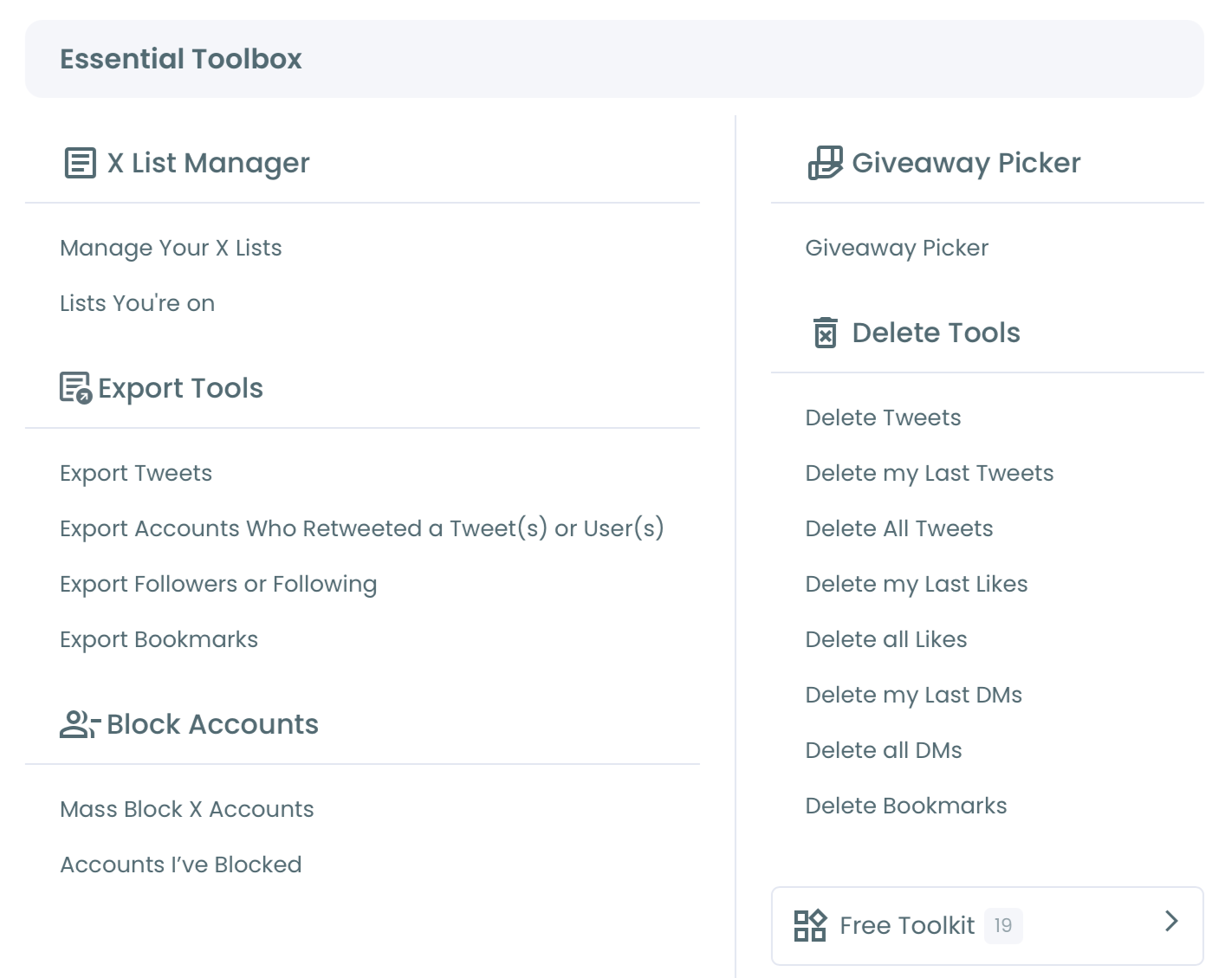
- Open the Essential Toolbox menu, where the giveaway and contest tools live for logged-in users.
- Paste your giveaway tweet URL and confirm the preview shows the right post, with its retweet, reply, and like counts.
Define who counts as a fair entrant
- Set your participation conditions. Choose retweeted or quoted, replied, liked, or tag-a-friend, and pick a Match Type: All Conditions for a strict bar, or Any Conditions for broader reach.
- Apply account and profile filters before the draw. Hide Fake and Spam accounts, screen Eggheads, and add range filters on follower count, follow ratio, or join date so a bot cannot win.
Draw the winner and share the proof
- Open the draw modal, set your number of winners and substitutes, and run the random selection. Circleboom picks from the eligible pool with no manual intervention, then generates a branded winner card with each winner's profile and handle that you can download and post on X.
That order is what makes the result defensible. Connecting first earns authorized access to the complete entrant list, filtering narrows the pool to real qualified accounts before any name is drawn, and the shareable card turns a private click into public evidence. Skip the filter step and you are back to a random name that nobody can verify.
What the winner card actually proves
The output of a fair pick is not just a name. It is a record.
When the draw finishes, Circleboom generates a branded winner card showing the selected accounts, their profiles, and their handles, marked as a fair random selection. You can download that image and post it straight to X, which closes the loop with the people who entered. They see who won, and they see that the result came from a tool rather than a private decision.
That single image does the work a paragraph of reassurance never could. A screenshot of a spinner proves nothing, because anyone can screenshot a spinner showing any name. A card generated from the verified pool, tied to the source tweet and the conditions you set, is evidence that the draw ran on real engagement.
Before you draw, you can also export the full participant grid as a file, which gives you a dated record of exactly who qualified at selection time. If a result is ever questioned, you have the original eligible list to show. That combination, a documented pool plus a public card, is what turns one giveaway into a reputation for fairness that makes every future contest easier to promote.
The bottom line
A fair pick is a complete pool, verified eligibility, a genuine random draw, and a record you can show. A spinner gives you one of those four; a real contest tool gives you all four. Because Circleboom reads engagement through authorized access to X rather than scraping, the participant list holds up when someone asks how the winner was chosen, and the branded card answers before they finish asking.
The trust compounds, too. An audience that has watched one transparent draw enters the next one faster, which is the quiet growth engine behind running giveaways on a schedule. Run your next draw where the fairness is built into the process, not promised after it.
→ Pull a fair contest winner picker
Common questions about fair winner selection
How does the contest picker choose a winner?
It draws at random from the pool of eligible entrants you defined, with no manual override. Because the selection runs on the filtered, verified list rather than a partial preview, the result reflects your actual rules and can be reproduced.
Can I stop a bot from winning my giveaway?
Yes. Apply the Fake and Spam, Egghead, and Inactive filters, plus follower-count or join-date ranges, before you draw. Filtering the pool first means the random selection can only land on an account that already passed your quality checks.
Is it safe to run a contest through a third-party tool?
Yes, when the tool uses authorized access. Circleboom collects participation data as a verified Enterprise partner of X, so nothing about the draw relies on scraping or workarounds that could put your account at risk.
Do I need to track entrants myself?
No. The tool collects every eligible participant from the tweet automatically, so you never scroll through retweets or copy handles by hand. You set the rules once, and the pool is built for you before the draw.
Can I pick several winners at once?
Yes. You set both the number of winners and the number of substitutes before the draw, and all of them are selected from the same filtered pool in one run. Substitutes give you a clean backup if a primary winner is unreachable, with no second draw needed.