
A Twitter raffle generator collects everyone who entered your giveaway tweet, drops the fake and ineligible accounts, then picks a winner at random you can prove. X shows you likes and retweets, but it never hands you the full, clean entrant list or a random draw.
That gap is where most giveaways quietly turn unfair.
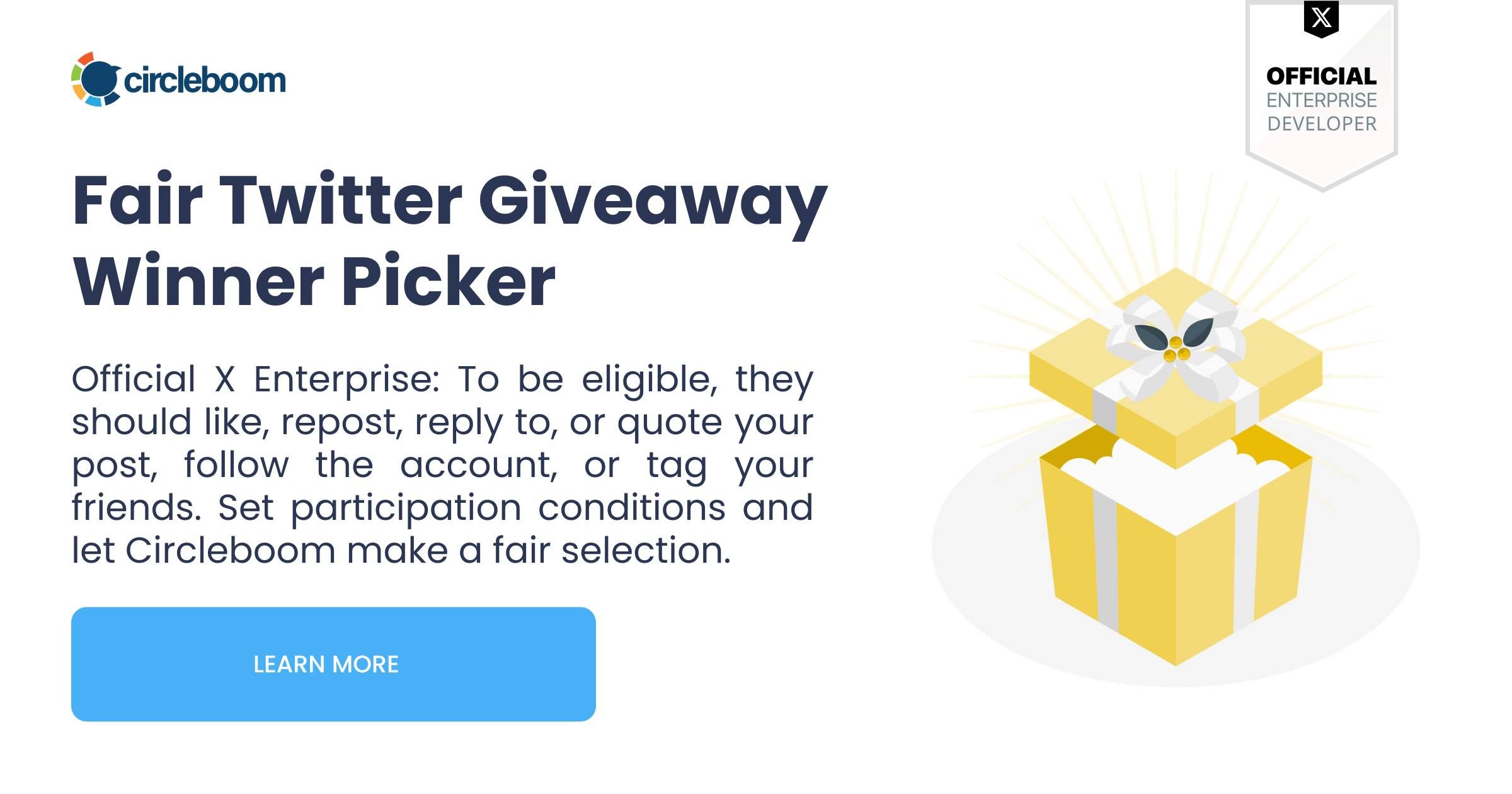
Circleboom is a Twitter raffle generator that reads your giveaway tweet on X, collects the complete entrant pool through the X Enterprise API, filters out bots and ineligible accounts, then draws winners and substitutes at random. You get a branded winner card as public proof, so no one can accuse you of hand-picking a friend.
→ Run a fair giveaway on X
What a Twitter raffle generator actually does
A raffle generator turns a noisy giveaway tweet into a clean, random draw. It reads the post, gathers every account that met your entry rules, and selects a winner without you touching the list.
The manual version of this, scrolling the likers and copying names into a spreadsheet, breaks the moment your post gets popular. Once you use a Twitter raffle generator instead, the size of the giveaway stops mattering.
Ten entrants or ten thousand, the process is the same.
The other half of the job is collection. Before you can draw, you need the entrant list, and that is harder than it looks.
Circleboom can export retweeters and likers from the source tweet, then treat that pool as the raffle pool.
The draw is only as fair as the list feeding it.
The manual draw, and where it breaks
Plenty of hosts still pick winners by hand, and for a tiny giveaway it works. You screenshot the likes, number the names, and run them through a random number picker.
The trouble starts with scale and with trust. Past a few dozen entrants, copying names is slow and easy to fumble, and every name you miss is an entrant you silently disqualified.
Past a few hundred, X stops showing you the full list at all, so your spreadsheet is built from a sample without you realizing it. Then there is the trust problem.
Even if your manual draw was honest, you cannot prove it. A screenshot of a random number means nothing to someone who suspects you picked a friend.
A raffle generator removes both failure points: it reads the complete list no matter the size, and it produces a record of the draw that stands on its own.
Why X's native likes and retweets list can't run a fair raffle
Here is the part most hosts miss. When you open the retweet or like list on X, you are not looking at all of it.
X shows a partial, unordered preview, and it stops loading long before you reach the bottom on a viral post. If you want to see the full retweet list on X, the native interface simply will not give it to you.
A fair raffle needs three things X does not provide on its own:
- True randomness, not "whoever I happened to scroll to."
- The complete participant list, every entrant, not a truncated sample.
- Proof, so entrants trust the result.
Circleboom closes all three gaps: it pulls the whole pool through the X Enterprise API, removes bots and ineligible accounts before the draw, and prints a shareable card as evidence.
The unordered part matters as much as the truncation. Even the entries X does show you arrive in no fixed sequence, which means "I picked the third one" is not a defensible method.
Random selection has to run across the full set at once, and that only works when the full set is actually in hand.
Watch the Giveaway Picker collect entrants and draw a winner from a live tweet:
How to run a fair giveaway on X with Circleboom
The Giveaway Picker is a six-step wizard, and the flow below groups those steps into two jobs: set up the draw, then run it.
Set the tweet and entry conditions
- Log in to Circleboom and connect the X account hosting your giveaway. If you are new, log in to Circleboom and link your profile first.
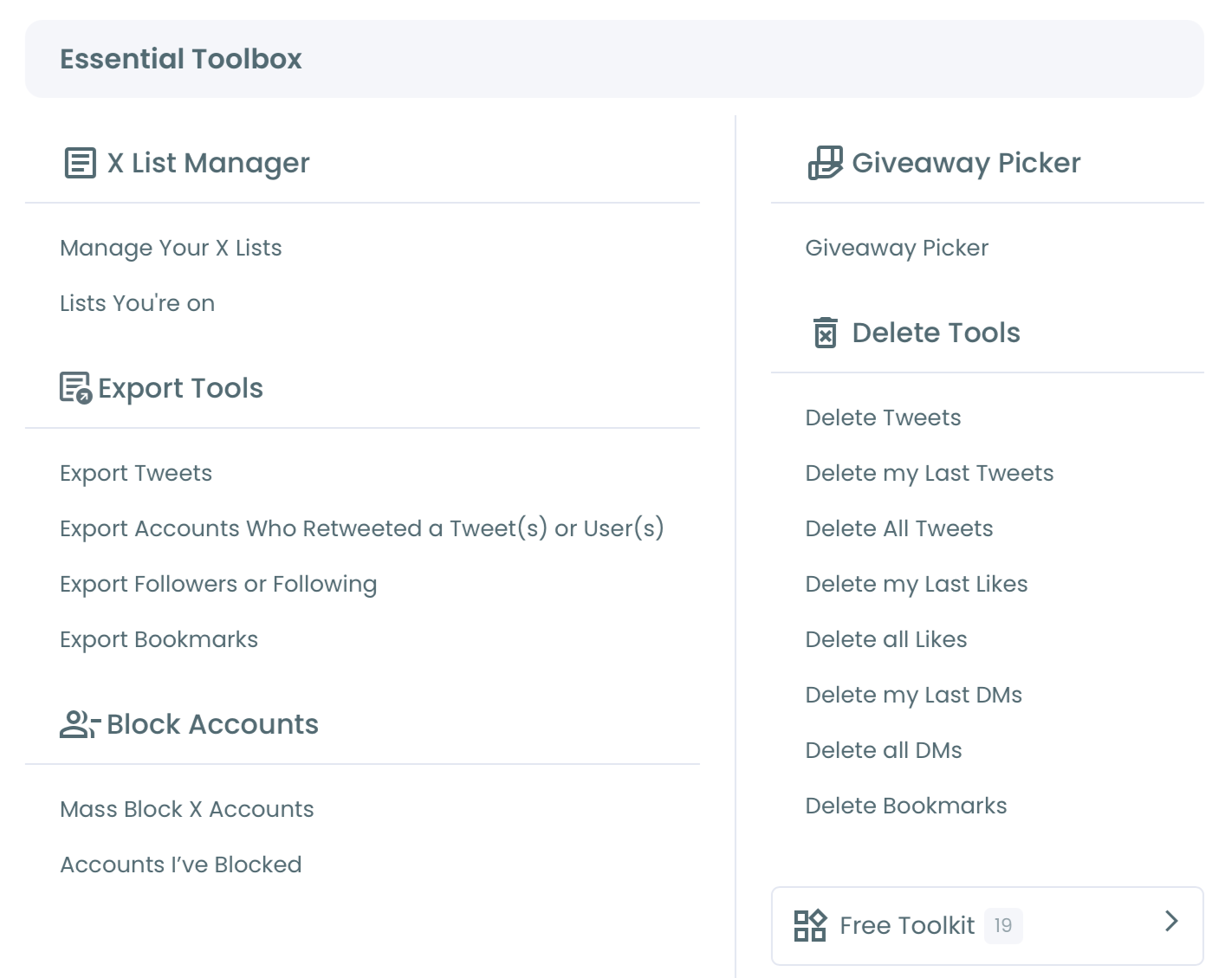
- Open the Giveaway Picker inside the Essential Toolbox menu.
- Paste your giveaway tweet URL and choose the entry conditions: retweeted or quoted, replied, liked, or tagged a friend.
Combine them with All Conditions for AND logic or Any Conditions for OR logic, and switch on "follows the host account" if that is one of your rules.
Filter the pool and draw the winners
- Apply the account and profile filters to remove fake or spam accounts, inactive profiles, and egghead accounts, then narrow by follower count, location, or language if your prize is region-locked.
- Draw your winners plus a few substitutes in one click, then download the branded winner card as public proof.
Because Circleboom pulls the entrant list through the X Enterprise API before it filters and draws, the winner comes from every real participant, not the slice X happened to show you.
Set entry conditions that match your rules
The conditions panel is where "fair" gets defined. If your rules said retweet and follow, then a like alone should not qualify anyone, and the AND logic enforces exactly that.
If you ran a looser campaign where any engagement counts, Any Conditions opens the pool wider. Getting this right before you draw your winner at random is what stops disputes later.
The "follows the host account" toggle deserves its own note. Follow-to-enter is one of the most common giveaway rules on X, and it is also the easiest to fake or miss by hand.
Letting the tool check it against the live pool means every listed winner genuinely met the rule you advertised.
A quick example makes the logic concrete. Say your post reads "retweet and follow to win." With All Conditions on, an account that retweeted but never followed is dropped, and so is a follower who never retweeted.
Only accounts that did both survive into the draw. Switch to Any Conditions and either action qualifies, which suits a softer "engage however you like" campaign.
Same tweet, same tool, two very different pools, and you decide which one your rules actually promised.
Filters that keep the draw honest
Bots enter giveaways at scale. A prize tweet is exactly the kind of post that attracts spam and throwaway accounts, and if one of them wins, you either ship a prize into a void or restart the draw and look disorganized.
Filtering fake, inactive, and egghead accounts before the draw removes that risk up front.
The follower, location, and language filters handle the practical rules. A region-locked prize should only reach entrants in that region, and a language filter keeps the pool relevant for local campaigns.
If you want the winner to come from people who genuinely engage with you, pairing the raffle with a look at your most engaging followers on Twitter tells you who those accounts are. You can also review your engaging followers and following to understand the audience the giveaway is pulling from.
Mistakes that make a giveaway look rigged
A few habits quietly damage trust even when the host means well. Drawing before the deadline is the most common one, because entrants who joined in the final hours never made it into the pool.
Announcing a winner with no proof is another, since a bare name invites the question of how it was chosen.
Picking from the visible retweet list is the subtle mistake, because it feels complete and never is. Leaving bot accounts in the pool creates a different problem: a winner nobody can reach, followed by an awkward re-draw.
The fix for all four is the same. Wait for the deadline, collect the whole list once, filter the accounts that should not qualify, and publish the result with a card.
None of these steps are hard, and skipping any one of them is what turns a fair giveaway into an argument.
The winner card is your public proof
The output is not just a name. Circleboom generates a branded winner card you can post as a reply to the original giveaway.
That card is the difference between asking people to trust you and showing them the receipt. It is signed with a fair-selection stamp, and Circleboom backs that stamp as an official X Enterprise Developer.
The draw runs on compliant, official data rather than scraped guesses. For a public contest where money or reputation is on the line, that provenance matters.
Substitutes make the card practical. If your first winner never claims the prize or turns out to be ineligible, you already have the next name drawn under the same random process, no re-run required.
Giveaway ideas that pull real entrants
A raffle tool fixes the draw, but the giveaway still has to be worth entering. Clear rules, a prize your audience actually wants, and a deadline do most of the work.
If you are planning the campaign itself, the mechanics of how to run a successful Twitter contest go deeper than any single draw.
They cover prize choice, timing, and entry design.
Match the entry conditions to the goal. If you want reach, weight retweets. If you want replies and conversation, weight comments. The condition logic in the Giveaway Picker lets the same tool serve very different campaign goals without changing tools.
Keep the momentum after you pick a winner
A giveaway spikes attention, and the spike fades fast if you do nothing with it. The accounts that entered just told you they want what you offer, which makes the days after the draw a strong window to keep talking to them.
Working on your Twitter engagement rates in that window turns one-time entrants into a following that sticks around for the next giveaway.
Announce the winner publicly with the card, thank everyone who entered, and tease the next one. Fair draws build a reputation, and a reputation for fair draws is why people enter the second time.
When a raffle generator is not the answer
A raffle tool solves selection, not strategy. If your giveaway drew ten entrants because the prize interested no one, a fair draw among ten is still a small draw.
Fix the offer first. The tool also assumes a public tweet with clear entry rules, so a private or ambiguous contest gives it nothing consistent to read.
If you need to verify something the entry conditions cannot see, like whether a winner already won last month, that judgment stays with you. What the generator guarantees is narrow and worth having: once the rules and the pool are set, the selection itself is random, complete, and provable.
It does not decide whether the giveaway was worth running. A good prize and clear rules settle that long before anyone draws a name.
Run your next giveaway the fair way
A fair giveaway on X is not about trusting yourself to be honest.
It is about running a process nobody can question.
Pull the complete entrant list, filter out the accounts that should not qualify, draw at random, and publish the proof. That sequence is the whole job, and it is exactly what the Giveaway Picker automates from a single tweet URL.
When you are ready to launch your giveaway, the setup takes minutes and the result defends itself.
Frequently asked questions
Does the raffle generator see everyone who entered, or only the accounts X shows?
It sees everyone. Circleboom collects the complete entrant pool through the X Enterprise API, which is the full list rather than the partial, unordered preview the native retweet and like views display.
That is the whole point of using a raffle tool instead of scrolling by hand.
Can I require people to follow me and retweet to qualify?
Yes. Set both conditions and combine them with All Conditions, which applies AND logic so only accounts that did both are eligible.
You can add "follows the host account" as a separate check, and any entrant who missed a rule is filtered out before the draw.
How do I prove the winner was chosen fairly?
Circleboom generates a branded winner card labeled as a fair selection, and you post it as a reply to your giveaway tweet. Because the draw is random with no manual step and the card carries Circleboom's Enterprise-developer stamp, entrants can see the result was not hand-picked.