
What to tweet about on Twitter starts with three or four content pillars: the durable subjects you return to week after week so your feed reads as one clear voice instead of a scattered stream. Pick pillars your audience already engages with, mix a few formats inside each, and let real engagement data tell you which ones are landing.
That is the whole discipline behind a feed people follow: a small set of themes, posted consistently, refined by evidence.
What should you actually tweet about on Twitter over time?
Choose three or four content pillars tied to your niche, then rotate posts across them so your account stays focused instead of random. Circleboom surfaces high-engagement posts in your topic areas on X through official, sanctioned API access, so you can see which pillars resonate before you commit a month of posts to them.
→ what to tweet about on Twitter
Most guides answer this question with a list of 50 tweet types and stop. The gap they leave is the strategic part: which handful of subjects should YOU own, and how do you know they will hold an audience before you spend weeks proving it.
A one-off tweet idea solves today. Content pillars solve the next hundred posts, because they give every future tweet a home and give your reader a reason to expect the same value again tomorrow.
Circleboom closes that gap by showing what is already performing inside your specific topic areas, so you validate a pillar with evidence instead of a hunch.
Why Random Tweeting Never Builds an Audience
A feed with no pillars reads as noise, and noise does not compound. When one day is a hot take, the next is a personal update, and the third is a link with no context, a new visitor has no idea what following you gets them.
People follow accounts that promise a repeatable value, not accounts that surprise them differently every day.
Pillars fix this by turning your account into a small, predictable set of themes. A fitness coach might run three: training mechanics, client transformations, and myth-busting. A SaaS founder might run building-in-public updates, one hard-won lesson per week, and a sharp take on industry news.
The subjects differ, but the structure is identical: a few durable lanes, posted on rotation, each one deep enough to keep returning to.
There is a discovery reason pillars matter too. When your posts cluster around consistent topics, the timeline learns what your account is about and shows it to people who care about those topics. A scattered feed gives the algorithm no signal to work with, which is a big part of why beginners stall. The same dynamic runs underneath most Twitter marketing tips for beginners worth following.
Real Content Pillar Examples Across a Few Niches
Here are concrete pillar sets you can adapt, so the idea stops being abstract. Notice each niche lands on three or four lanes, not fifteen.
- Fitness coach. Training mechanics (form, programming), client wins, and myth-busting common gym advice.
- B2B SaaS founder. Build-in-public metrics, one operator lesson a week, and a sharp reaction to industry news.
- Freelance designer. Before-and-after redesigns, pricing and client-management insight, and quick craft tips.
- Local restaurant. Behind-the-kitchen moments, dish spotlights, and community or event posts.
Inside each pillar, vary the format so the lane never goes stale. A single pillar can carry a plain text insight one day, a thread the next, a poll after that, and a quote-post reacting to someone else's take. The subject stays constant; the shape rotates.
Pillars decide what you talk about. Formats decide how you keep it fresh.
That format variety is easier when you can generate different shapes fast. Circleboom's AI Tweet Generator can spin the same pillar into a one-liner, a listicle, or a hook-and-bridge. One theme feeds a week of posts.
When a pillar earns a long-form moment, you can also auto-generate a Twitter thread from any text and keep the lane deep without starting from scratch.
How to Choose What to Tweet About with Circleboom
To decide what to tweet about on Twitter, start from evidence: look at which posts are already performing in your topic areas, group them into three or four durable pillars, then generate and schedule against those lanes on a rotation. Circleboom's Inspiration feed runs this loop inside the X Post Planner, so discovery, drafting, and scheduling live in one place.
Circleboom pulls this trending content as an official X Enterprise Developer, so every post you evaluate arrives through approved, policy-compliant access instead of scraping.
Short demo: how the Inspiration feed turns topic-area trends into pillars you can commit a month of posts to.
Here is the flow, in order.
Connect your X account to Circleboom
Log in to Circleboom Twitter and connect your X account with official OAuth. This is the same secure entry point whether you are starting a feed or reshaping an existing one.
Open the X Post Planner and set your interest topics
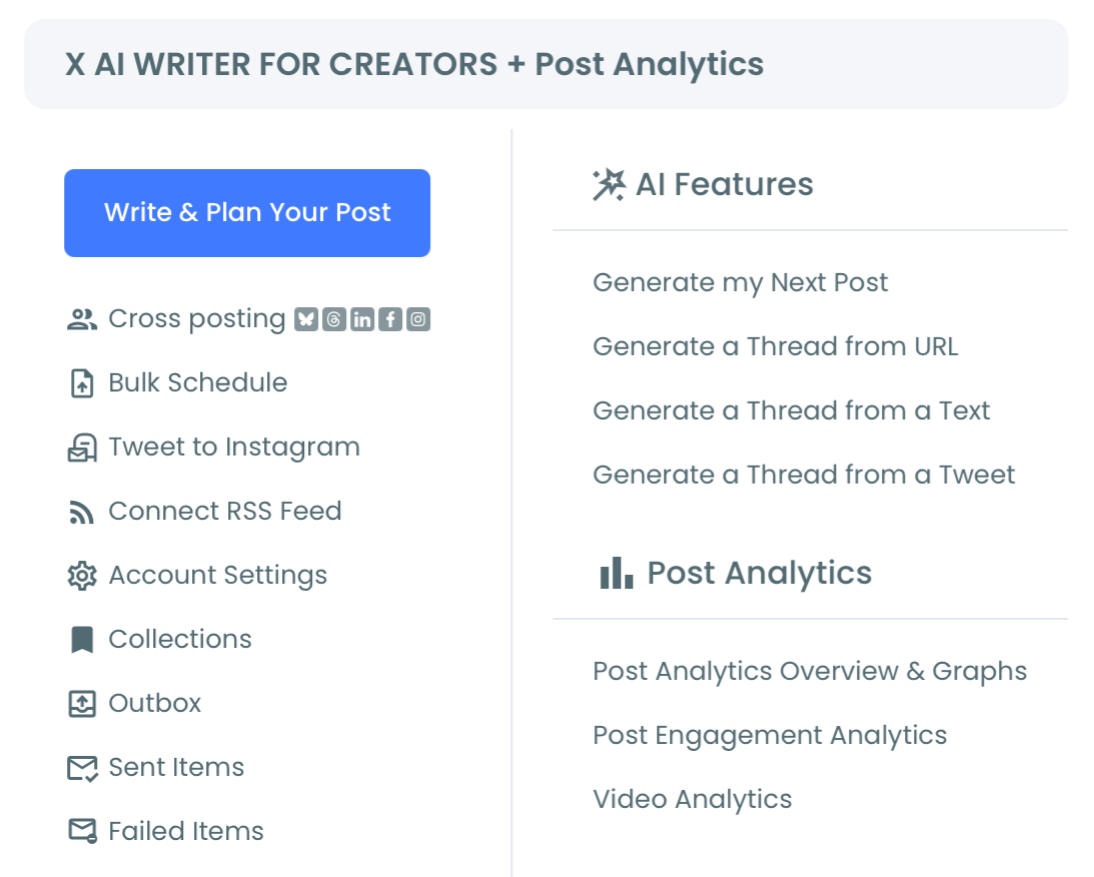
Go to the X Post Planner menu and confirm your content interest topics so the Inspiration feed reflects your niche, not platform-wide noise. These topics are the raw material your pillars come from.
Read the engagement metrics to spot your pillars
Scan each card's metrics, views, replies, reposts, likes, and bookmarks, and notice which subjects keep landing. The themes that repeat across high-performing posts are your candidate pillars, chosen by evidence rather than guesswork.
Generate against each pillar and schedule the rotation
Hover a card and pick Rewrite for an original post on that pillar, AI Reply to join a live conversation, or AI Quote to add your view. Refine with "Describe and improve tweet," then schedule so your pillars rotate across the week instead of clumping.
That order works because it validates before it commits: you confirm a subject resonates, then invest a month of posts in it, rather than betting your calendar on an untested theme. Skip the evidence step and you are back to random tweeting on a schedule.
At a glance: connect, set topics, read the metrics, generate per pillar, schedule the rotation. The feed does the "what is working" research so your energy goes into the angle.
Unlike opening a blank composer and hoping a subject sticks, choosing what to tweet about becomes a decision backed by real engagement. That is the difference between a feed that drifts and one that reads as a clear, followable voice.
What a Pillar-Based Feed Gets You
A feed built on validated pillars does more than fill your calendar. It gives new visitors an instant read on what your account is for, so the people who land on your profile understand why to follow within a few scrolls.
It also compounds. Because each pillar is a lane you keep returning to, every post deepens a theme instead of resetting it, and the audience you build around one pillar primes the reach of the next.
Once your pillars are set, the next lever is timing and cadence. Posting your strongest pillar when your audience is actually online multiplies its reach. It pays to determine your best time to post on Twitter alongside the topic work.
Pillars also make consistency survivable. When you never have to invent a subject from scratch, the blank-page problem stops eating your week. A steady cadence built on pillars is what actually grows Twitter followers organically over months.
The deeper payoff is clarity of positioning. When someone can describe your account in one sentence, "the person who posts sharp SaaS building lessons," your pillars have done their job. That sentence is worth more than any single viral post, because it is what turns a reader into a follower and a follower into an advocate.
The Bottom Line
You do not need a content genius or a 50-item idea list to know what to tweet about on Twitter. You need three or four subjects your audience already cares about, posted on rotation, and refined by what the data shows is landing.
Content pillars are how a scattered feed becomes a followable one, and evidence is how you pick the right pillars before you commit months to them. When you are ready, plan what to tweet about around proven topics instead of guesswork.
→ Build your Twitter content pillars with Circleboom
Common Questions About Choosing Twitter Topics
How many content pillars should I have on Twitter?
Three or four is the durable range for most accounts. Fewer than three and your feed reads thin; more than five and you dilute your positioning, so a reader can no longer describe what your account is about in one sentence.
How do I know if a topic will hold an audience before I commit to it?
Check what is already performing in that topic area first. Circleboom's Inspiration feed shows trending posts in your niche ranked by real engagement, so you can see whether a subject earns views and replies before you build a month of posts around it.
Should every tweet fit inside a pillar?
Most should, but not all. Keep roughly eighty percent of your posts inside your pillars so your positioning stays clear, and leave room for the occasional off-topic human moment that reminds people there is a person behind the account.