
CTR is one of the most misunderstood metrics on TikTok.
It’s often judged using benchmarks borrowed from Google Ads or Instagram, even though TikTok operates on an entirely different logic. On TikTok, a low CTR doesn’t automatically mean a video failed, and a high CTR doesn’t guarantee long-term distribution either.
Understanding what a “good” CTR actually means requires understanding how TikTok tests videos, how attention flows in the feed, and when clicks are even possible.
 Arif Akdogan
Why CTR on TikTok Works Differently
TikTok is built around immersion, not navigation.
Users don’t scroll TikTok looking for links. They scroll to be entertained, informed, or surprised. Every video takes over the entire screen, and leaving that experience to click a link requires a clear reason.
Because of this, TikTok’s algorithm is heavily biased toward in-app behavior:
- How long people watch
- Whether they finish the video
- Whether they rewatch parts
- How quickly engagement happens
CTR exists in this system, but it’s evaluated after these signals. A video that generates early clicks but loses attention often stops spreading. A video that keeps people watching, even with moderate CTR, can continue to scale.
That’s why CTR on TikTok should be read as a confirmation signal, not a primary goal.
What CTR Actually Represents on TikTok
CTR still follows the same formula:
CTR = Clicks ÷ Impressions
What’s different is what a click represents.
On TikTok, a click means the viewer was interested enough to:
- Break the scroll habit
- Leave the feed
- Trust that the destination is worth their time
That makes TikTok clicks high-friction but high-intent. Even when CTR is low, the quality of traffic can be strong.
Clicks usually happen through:
- Profile visits
- Link-in-bio actions
- Website or product links (mostly ads)
And they rarely happen instantly. Most clicks come after the viewer understands the context.
 Arif Akdogan
What’s a “Good” CTR on TikTok in Practice
There is no universal benchmark but there are realistic expectations.
For organic TikTok content, CTR tends to land in these ranges:
⚪ Below 0.5% often means the intent or next step isn’t clear
⚪ 0.5%–1% is healthy and common
🟢 1%–2% is strong for organic distribution
🟢 2%+ usually signals very targeted or problem-aware content
For TikTok ads, CTR is naturally higher because viewers expect an action:
⚪ 0.8%–1.2% is average
🟢 1.5%–2% is strong
🟢 2%+ is excellent, especially for Spark Ads
Comparing these numbers to Meta or Google is misleading. TikTok is a discovery engine, not a search engine.
Why Organic CTR Is Often Lower Than Expected
One major factor that holds organic CTR down is how TikTok distributes content in the first place.
TikTok doesn’t push your video to everyone immediately. Instead, it runs a test.
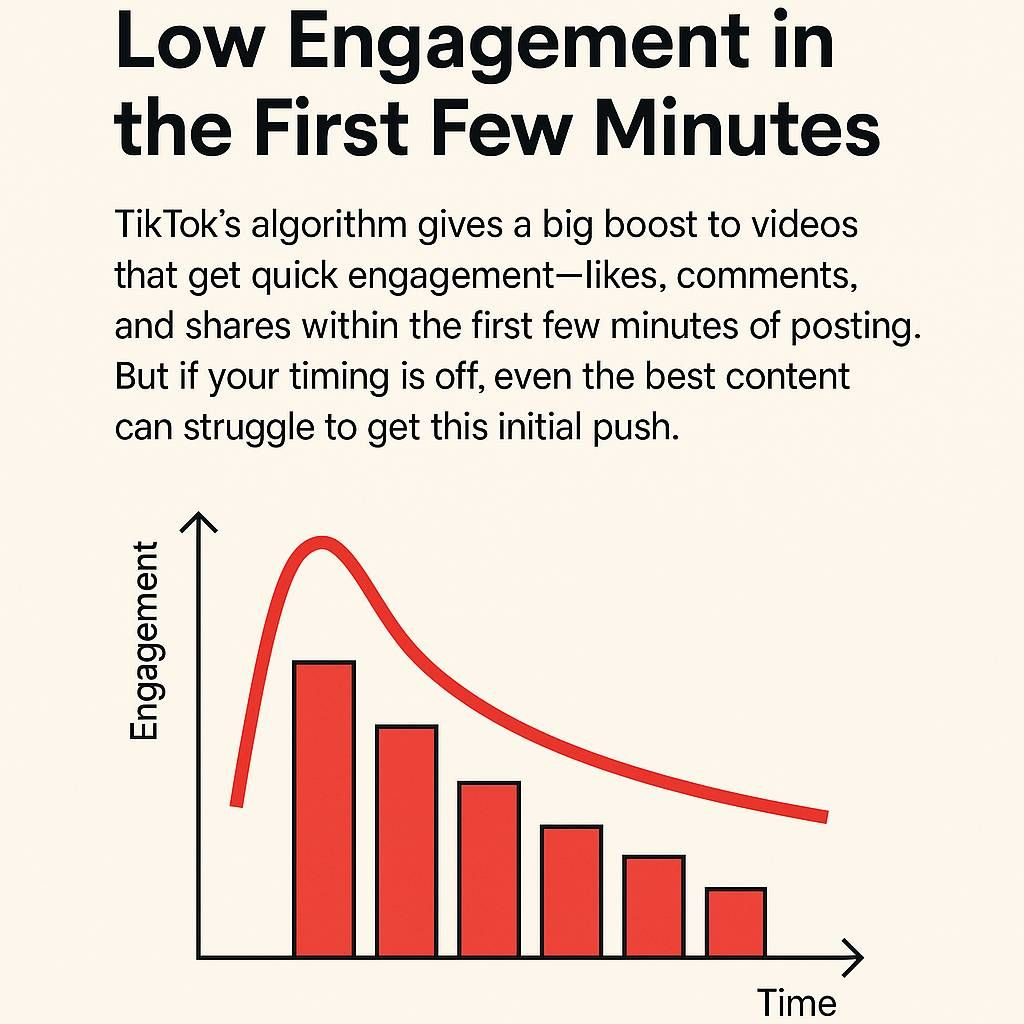
In the first 10–15 minutes, your video is shown primarily to your followers. TikTok watches closely:
- Do they watch past the hook?
- Do they like or comment?
- Does engagement happen quickly?
If there’s little response, TikTok assumes the content isn’t resonating and limits further reach. When that happens, the video never reaches non-followers in meaningful numbers and CTR stays low, not because the content is weak, but because distribution stopped early.
This is why many creators struggle with organic CTR even when the message is solid.
Why Posting Time Is One of the Biggest Organic CTR Levers
CTR doesn’t start with the call to action. It starts with early engagement velocity.
When a video goes live while your followers are online:
- Likes and comments arrive faster
- Watch time builds early
- TikTok gains confidence in the content
- Distribution expands beyond followers
Once non-followers see the video, CTR has room to grow.
When the same video is posted while your audience is offline, it often fails silently. No early engagement means no expansion. No expansion means no clicks.
This is why posting time has a direct, compounding effect on organic CTR.
How I Use Circleboom Publish to Improve Organic CTR
To remove guesswork, I use Circleboom Publish, a social media management tool that allows you to create, schedule, and publish posts across multiple platforms from a single dashboard.
With Circleboom Publish, you can:
✅ Create and schedule TikTok posts
✅ Share the same video on Instagram and YouTube Shorts
✅ Manage multiple social media accounts without switching platforms
This makes it much easier to stay consistent across short-form video platforms while keeping full control over timing and distribution.
Beyond scheduling, what makes Circleboom Publish especially useful for organic growth is how it handles posting time.
Circleboom Publish analyzes real follower activity, including:
➡️ When your followers like content
➡️ When they comment
➡️ When they are actively posting themselves
Based on these patterns, it generates best time to post suggestions specifically for TikTok. These aren’t generic recommendations—they’re built around how your audience actually behaves.
Instead of posting randomly, videos are scheduled for moments when followers are already online and likely to engage. This increases early likes, comments, and watch time during the critical first 10–15 minutes. When early engagement is strong, TikTok is far more likely to push the video to a wider audience.
Once reach improves, CTR follows naturally.
The content stayed the same.
The timing—and distribution—changed.
Step-by-Step: How to Schedule TikTok Videos with Circleboom Publish
Step #1: Login to Circleboom Publish.
Is it your first time there? Then you can create a new account in just a few seconds.

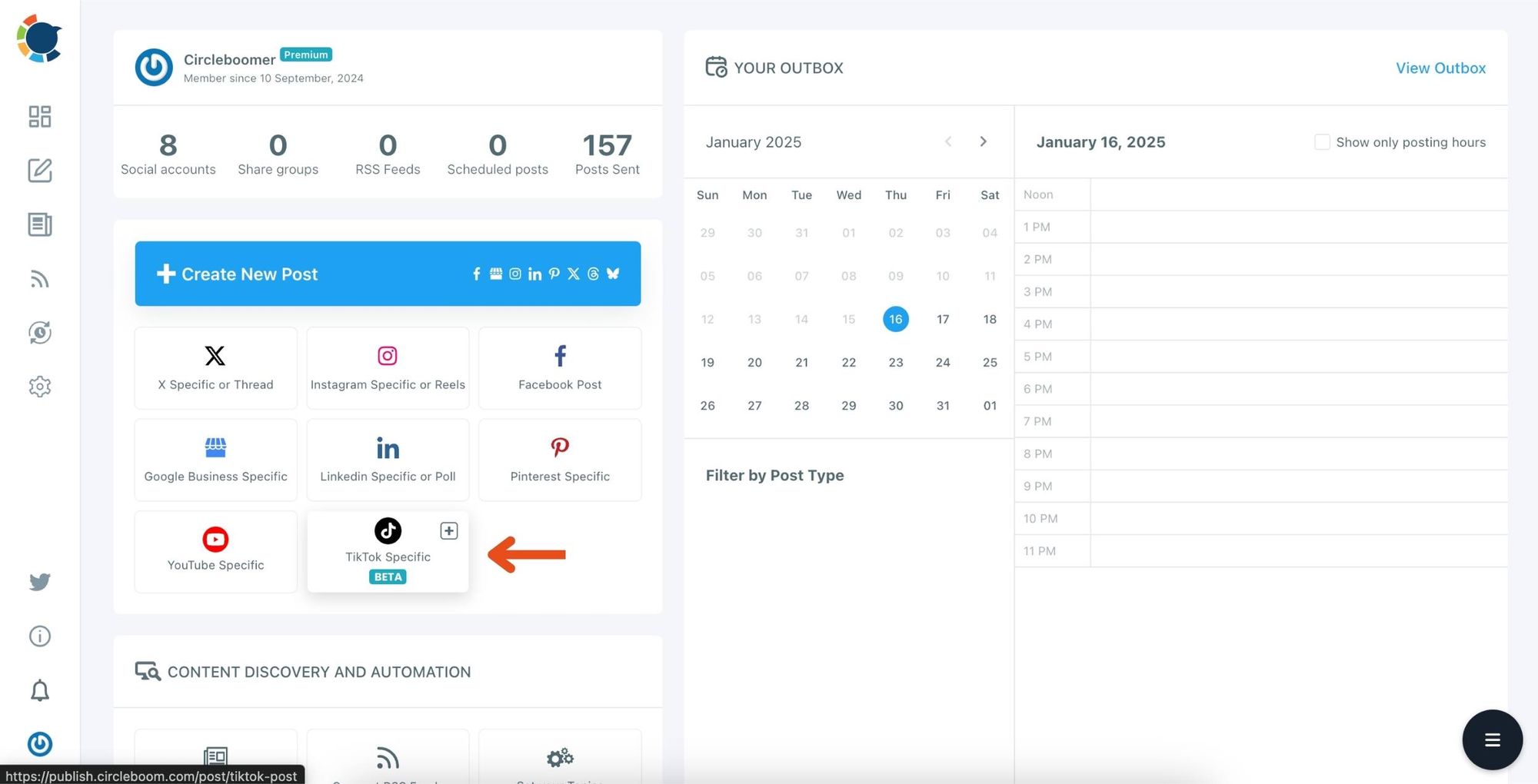
Step #2: You are on the Circleboom dashboard. There, you will see buttons for each social media platform that Circleboom supports.
Select “TikTok Specific” and move forward.
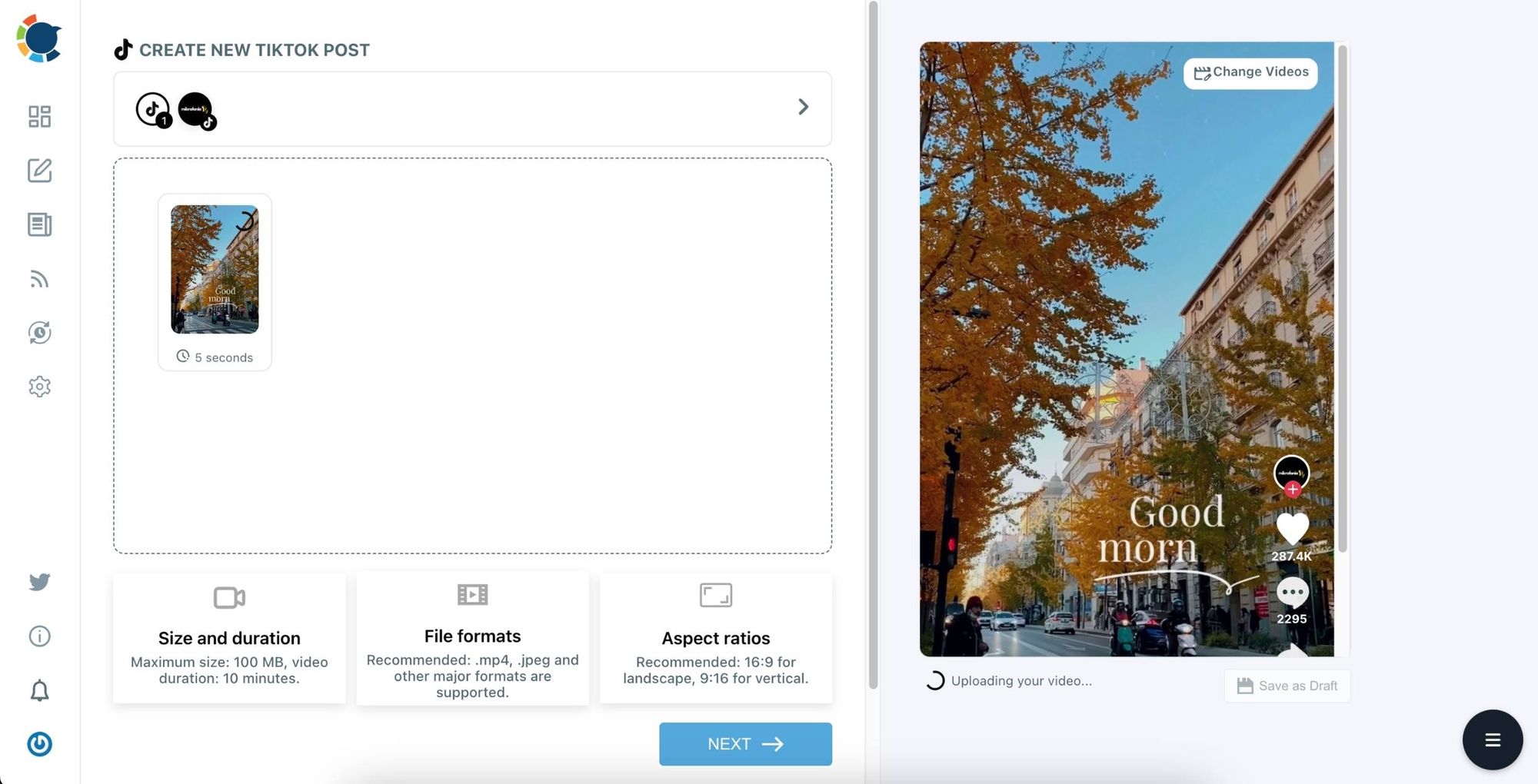
Step #3: Next, you will upload your TikTok video from your device.
You can simply drag and drop your video in line with the platform requirements.
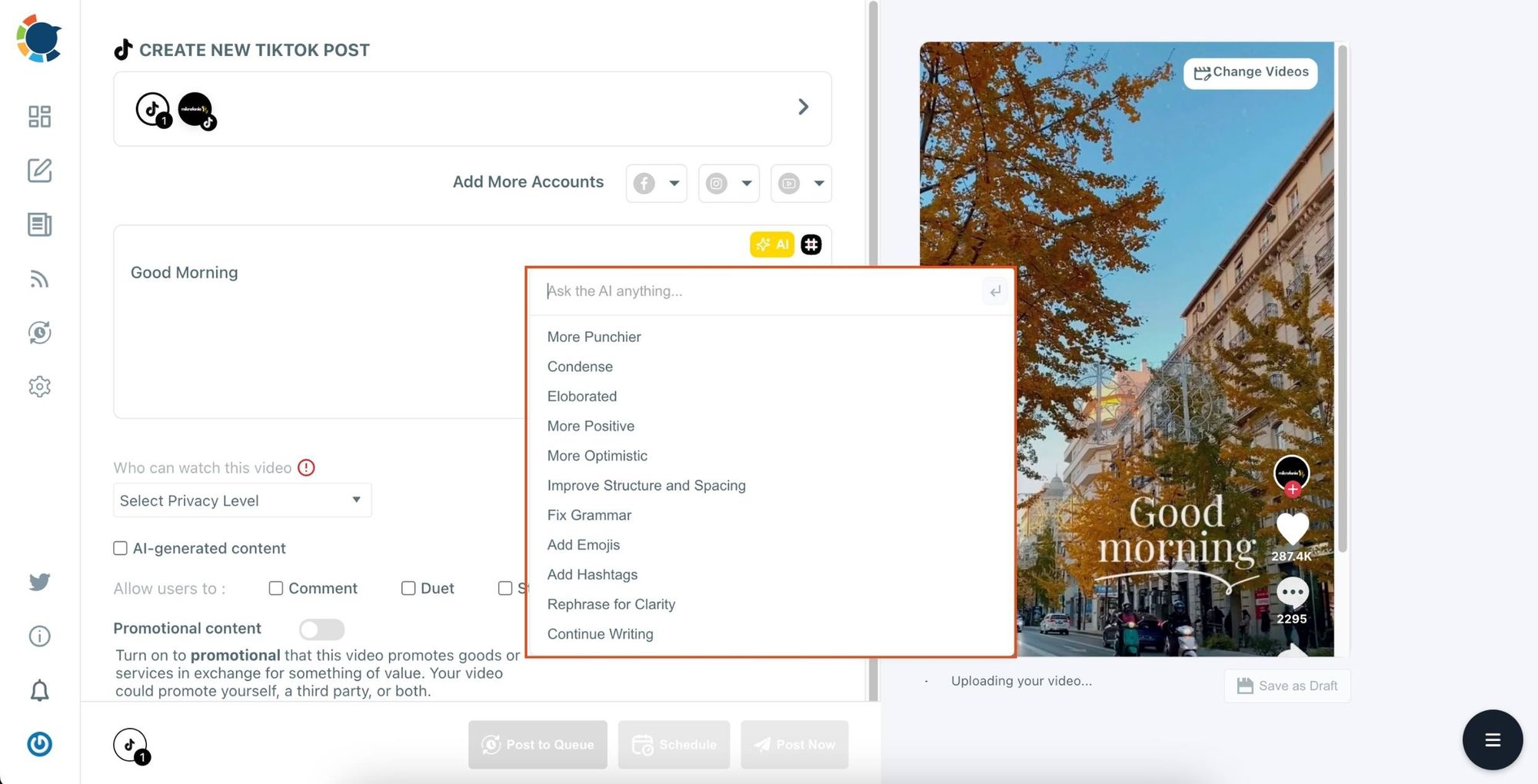
Step #4: Once it is uploaded, it's time for your description and hashtags.
You can benefit from Circleboom's AI TikTok caption generator to create compelling texts along with fitting hashtags.
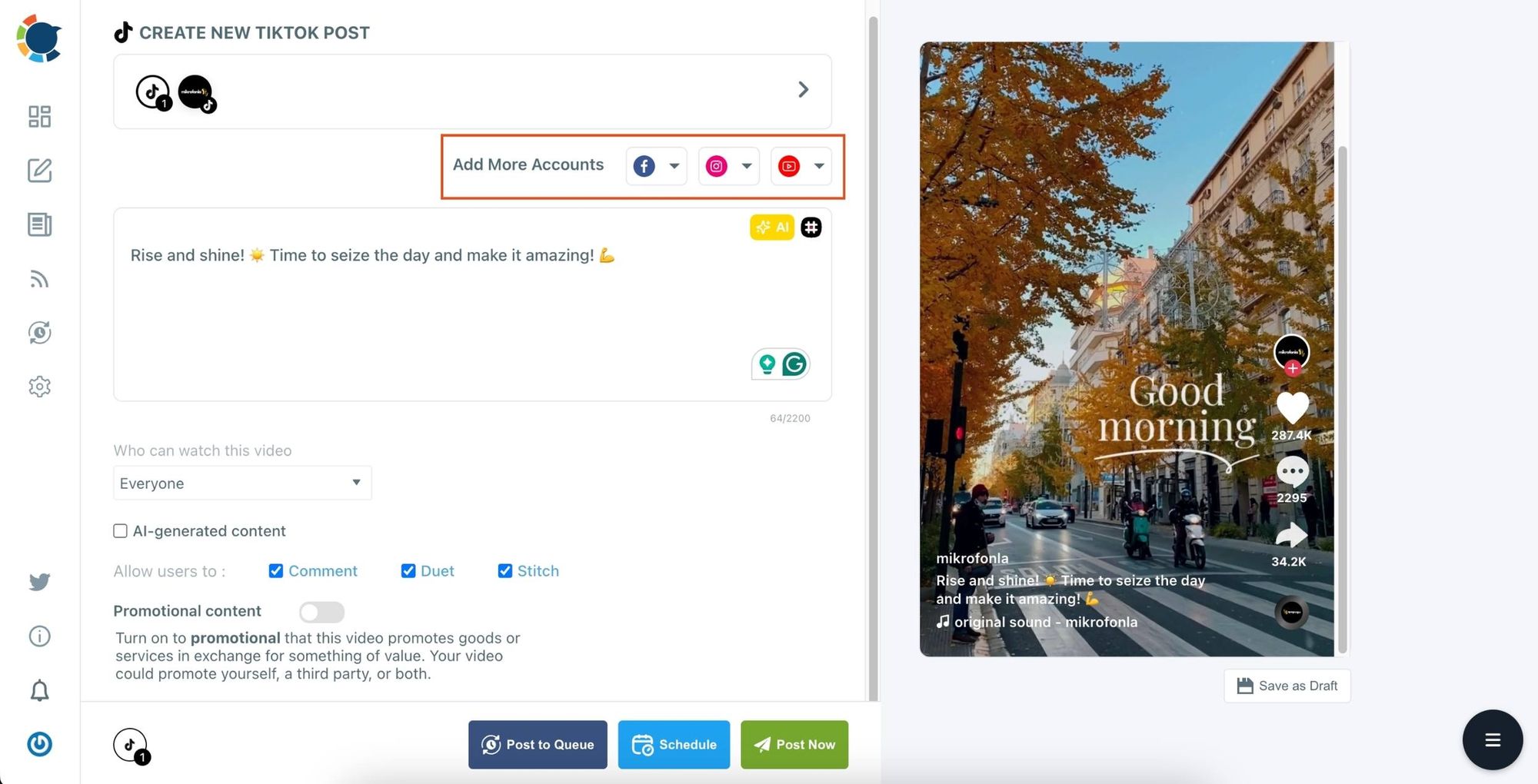
Step #5: Then, you should specify other details, such as the visibility levels.
You can also add your Instagram and YouTube profiles to simultaneously post your video as Instagram Reels and YouTube Shorts.
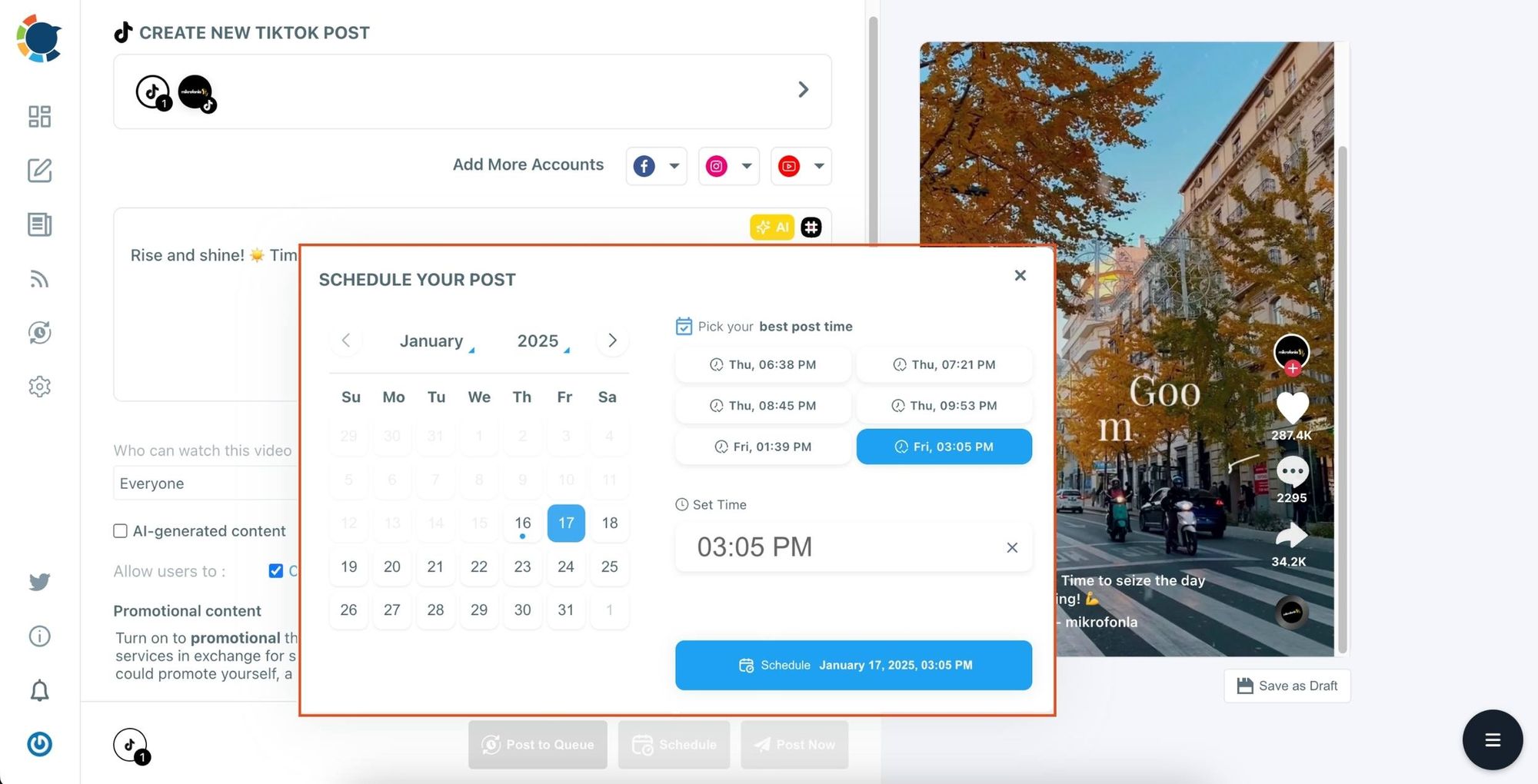
Step #6: Once everything is set, you can immediately share your TikTok post or schedule it for later.
When scheduling, you'll have the options of picking the built-in best times to post on TikTok or sticking with your own calendar.
Example: A post scheduled at 8 PM; when 70% of your followers are active, will likely get more early watch time and interactions than one posted at 11 AM when only 20% are online.
Timing Amplifies Content, It Doesn’t Replace It
Posting at the right time won’t save weak content.
CTR still depends on:
- A strong hook in the first seconds
- Clear value before asking for action
- A CTA that feels like the next logical step
Timing gives your video a fair chance. Content decides the outcome.
When Low CTR Is Actually Fine
Not every video should be optimized for clicks.
Low CTR is normal for:
- Brand awareness videos
- Authority-building content
- Early-stage accounts reaching cold audiences
In these cases, watch time, follows, and saves matter more than traffic.
CTR becomes critical when the goal is to move people off-platform.
Final Thoughts
A good TikTok CTR isn’t about chasing a number.
It’s about aligning content, timing, and audience behavior. Early engagement determines distribution. Distribution creates opportunity. CTR reflects intent.
Once those pieces work together, CTR becomes a result, not a struggle.