
The honest answer is neither, universally. Reply and quote optimize for two different audiences, and picking the wrong one for what you're actually trying to achieve is a bigger mistake than picking the format people call "weaker." The real question isn't which performs better in general. It's which kind of visibility you're actually trying to get from this specific tweet.
There's a bigger variable than format that gets overlooked: which tweet you're replying to or quoting in the first place. Both formats borrow some amount of visibility from the original post, and a random, low-traction tweet has very little visibility to lend either one. The account and the specific tweet matter as much as the format choice, sometimes more.
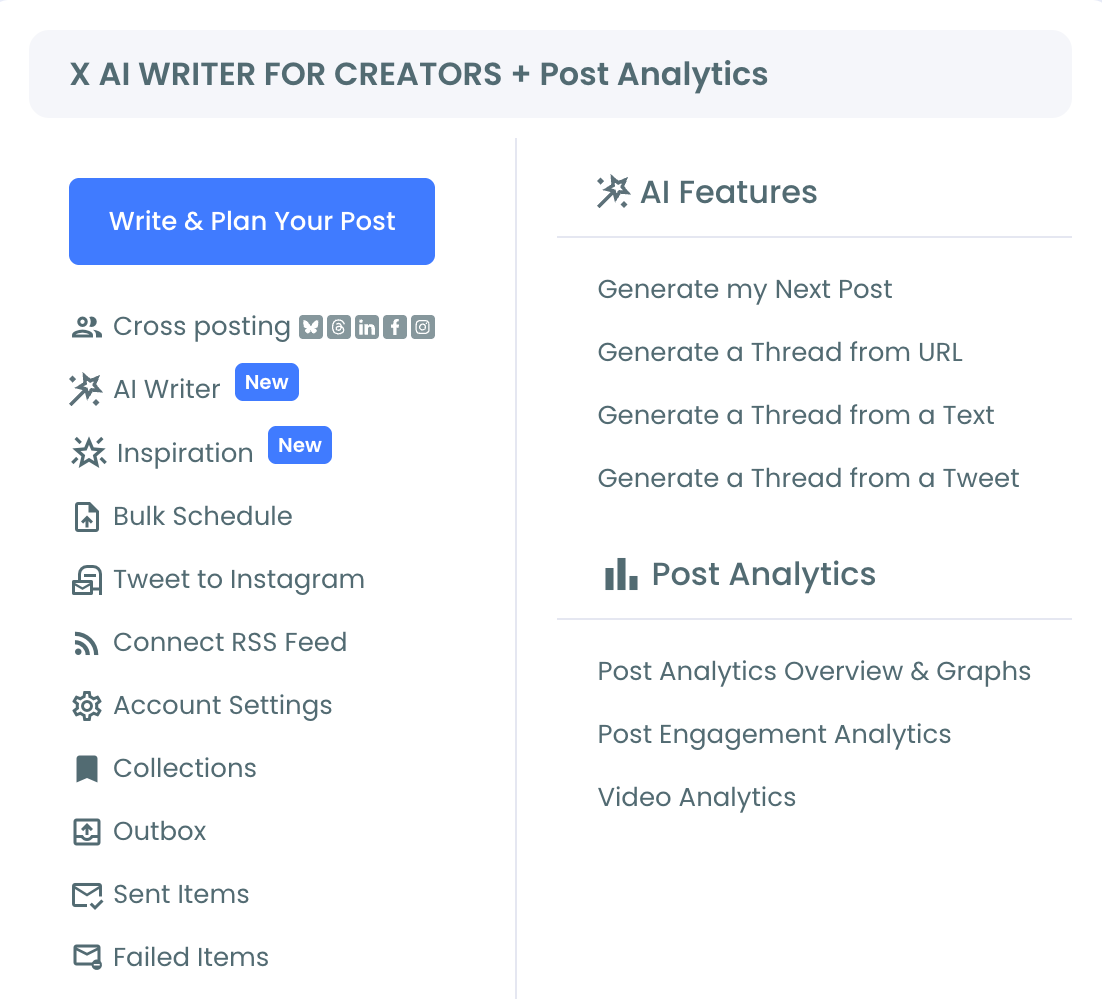
Inspiration surfaces tweets posted by other accounts, filtered to your chosen topics, and from there Circleboom's AI Reply and AI Quote can generate either format instantly from the same selected tweet. The decision between them is about audience, not effort, since both take the same amount of work to produce.
→ decide between reply and quote
Why "which is better" is the wrong first question
A reply joins a conversation that already has an audience attached to it, the people currently reading that specific thread. Whatever reach the original tweet has becomes the reach your reply is visible within, but only to people actively in that thread.
A quote tweet does something structurally different. It publishes a standalone post to your own profile and timeline, with the original embedded as supporting context underneath. The original tweet's traction adds something to that post, but the post itself lives in your own content history, visible to your own followers independent of whether they ever see the source thread.
Asking which one wins in general skips the actual decision: are you trying to be seen by the audience already gathered around someone else's tweet, or are you trying to add something to your own profile that your own audience will see regardless of the source.
Don't reply or quote random accounts
Both formats work by attaching your content to someone else's tweet, which means the value of either one is capped by how much traction that tweet actually has. Replying or quoting a tweet from a random account with little engagement borrows almost nothing, regardless of which format you pick.
This is exactly what Inspiration's engagement data is for. Every tweet card in the feed shows real numbers, views, replies, retweets, likes, bookmarks, filtered to your chosen topics. A tweet already generating strong engagement in your subject area has actual traction worth borrowing from. A tweet with no engagement, even if it happens to match your topic, doesn't.
Picking the tweet deserves at least as much thought as picking the format. Scan the engagement numbers before deciding to reply or quote, not just the topic match. The format decision only matters once you've already found a tweet worth attaching your content to in the first place.
The actual tradeoff between the two formats
Each format trades visibility differently, and the tradeoff matters more than any general performance claim.
- Reply borrows visibility entirely. Your response is only seen by people reading that specific thread. No standalone footprint appears on your own profile.
- Reply has a lower bar for length and depth. Because the original tweet sits directly above it, a reply can be short and still make sense, since the reader already has the context.
- Quote builds your own footprint while still borrowing some attention. The post is yours, on your timeline, but the embedded original tweet's existing traction can bring in readers who wouldn't have found your account otherwise.
- Quote needs more substantial commentary to justify the format. Because it stands alone as a post, a thin or generic quote wastes the visibility it has on your own profile in a way a short reply doesn't.
Neither tradeoff is inherently better. A reply is the right call when the goal is joining an existing conversation. A quote is the right call when the goal is adding to your own content history while referencing someone else's traction.
How to choose between reply and quote for a specific tweet
Because Circleboom is an official X Enterprise Developer, publishing either format runs through sanctioned API access directly from the same screen.

1. Select a tweet with real engagement, not a random one: Browse the topic-filtered Inspiration feed and check the engagement numbers, views, replies, retweets, likes, bookmarks, on each card. Pick a tweet posted by another account that's already gaining real traction in your subject area. Skip cards that merely match the topic but show little actual engagement; there's nothing worth borrowing from a tweet nobody is reacting to.
2. Decide based on what you actually want to happen: If the goal is to be seen by the people already reading that thread, choose Reply. If the goal is a standalone post that adds to your own profile and reaches your own followers, choose Quote.
3. Generate with the matching tool: Click AI Reply or AI Quote based on that decision. Both generate a draft built from the selected tweet's actual content, shown in a modal with the original for comparison.
4. Refine and publish: Adjust tone or switch styles if needed, then use Queue Up Next, Post Now, or Schedule once the draft reads as something worth publishing in the format you chose.
That sequence makes the format decision explicit before generating anything, rather than defaulting to whichever button happens to be more familiar.
How to find out which actually works better for your account
General claims about reply versus quote performance are less useful than your own data, because the answer genuinely varies by account, audience, and topic. Post Engagement Analytics tracks replies, reposts, and other metrics per tweet, which means you can sort your own published history and see, concretely, whether your replies or your quote tweets tend to drive more profile visits, more follows, or more engagement for your specific audience.
Understanding what counts as a good engagement rate in the first place is worth establishing before comparing formats, since "better" only means something relative to your own baseline. Measuring engagement properly means looking past a single metric like likes and considering what each format is actually supposed to accomplish for you specifically.
Running both formats over time, on similar kinds of tweets, and then checking which one actually moved your numbers is a more reliable answer than any general rule could give you.
Engagement format is a targeting decision, not a quality decision
Treating reply and quote as if one is simply the better tool misunderstands what each one is for. They're not competing solutions to the same problem; they're two different distribution mechanisms aimed at two different audiences. A well-written reply that should have been a quote underperforms not because it was poorly written, but because it was aimed at the wrong audience for what it was trying to accomplish.
The more useful mental model is matching format to goal every time, rather than picking a favorite format and defaulting to it regardless of what a specific tweet and situation actually call for.
The mistake to avoid
The most common mistake is treating one format as universally superior and defaulting to it for every tweet, regardless of what's actually being optimized for. An account that only replies never builds its own standalone content history from these interactions. An account that only quotes misses the chance to be seen by audiences already gathered around bigger conversations in its niche.
The second mistake is guessing which format performs better instead of checking. Post Engagement Analytics tracks this data for your own account specifically; relying on a general assumption when actual data is available wastes the one advantage that would settle the question for good.
The third mistake is picking a tweet to reply to or quote based on topic match alone, without checking whether it actually has any engagement behind it. Both formats borrow visibility from the original tweet; a random, low-traction post has nothing to lend either format, no matter how well-written the response is.
Common questions
Does X's algorithm favor replies or quote tweets?
There's no definitive, published ranking that favors one format over the other universally. Performance depends heavily on the specific conversation, the original tweet's reach, and your own account's relationship with your audience, which is why checking your own engagement data matters more than relying on a general platform-wide claim.
Can I both reply and quote the same tweet?
Yes. Reply and quote are separate actions on the same source tweet, and nothing prevents using both, a reply to join the immediate conversation and a quote to add a standalone take to your own profile, if both genuinely serve a purpose for that specific tweet.
Which is better for building my own following versus joining a niche conversation?
Quote tends to serve building your own following better, since it's a standalone post visible to your own audience independent of the source thread. Reply tends to serve joining a niche conversation better, since it places your response directly in front of people already engaged with that specific topic.
How do I know which format is actually working better for me?
Check Post Engagement Analytics and sort your published tweets by replies, reposts, and engagement rate. Comparing how your quote tweets perform against your replies over a meaningful sample of posts gives you an answer grounded in your own account's actual data, not a generic rule that may not apply to your specific audience.
Your next move
Stop asking which format wins in general and start asking what this specific tweet is for. Join the conversation when joining is the goal, build your own post when building your own profile is the goal, and check your own data to see which one is actually moving the numbers that matter to you. Match the format, check the data, repeat.