Leave bot followers in your audience and they quietly cost you. They drag down your engagement rate, distort your analytics, and make your account look weaker to anyone who evaluates it, all while inflating a follower number that means less than it appears.
The trouble is that X gives you no way to separate the real followers from the fake ones. You can inspect a profile here and there, but you cannot triage thousands of followers by hand, especially when the signals only matter in combination.
A dedicated cleanup tool does the heavy lifting: it flags the suspicious accounts, lets you review them, and removes them in bulk. This guide walks through the whole workflow.
Circleboom's Fake/Bot Followers feature runs a multi-signal model over your full follower list, isolates the accounts that look fake or automated, and lets you review and remove them in bulk through official API access. Detection is automated; the decision stays yours.
→ find bot followers on Twitter
Below: what bot followers cost you, and how to clean them without removing real accounts.
The Hidden Cost of Bot Followers
Bot followers are not a cosmetic problem; they are an analytics problem. Every inauthentic account in your follower base inflates the size of your audience without ever contributing engagement, which quietly distorts every metric built on that number.
The clearest victim is your engagement rate. It is calculated against total followers, so bots in the denominator drag the percentage down even when your real audience is engaging normally.
Over months, an accumulating bot population can make a healthy account look like it is declining. That mismatch is exactly what people are sensing when they complain that bots keep following them and their numbers feel off.
The fix is to identify and remove the bots, which is only practical with a tool that can find bot followers on Twitter across your entire list at once.
How Circleboom Flags the Fakes
Circleboom's Fake/Bot Followers feature pulls your full follower list and runs a composite classification model over it. No single signal flags an account; it is the alignment of several, low follow ratio, near-zero tweets, recent join date, missing photo, low engagement, that pushes an account onto the list.
That composite approach reduces false positives while keeping detection thorough. As a verified Enterprise partner of X, Circleboom retrieves the data through sanctioned access and shows each flagged account with full profile details for review.
It is the structured way to act on a vague worry like getting rid of Twitter bots without guessing.
Video walkthrough: listing the fake Twitter followers in your audience.
How to Find Bot Followers on Twitter
The process, in order, grouped into two short phases.
Identify the suspicious accounts
- Log in to Circleboom Twitter and connect your X account with official OAuth.
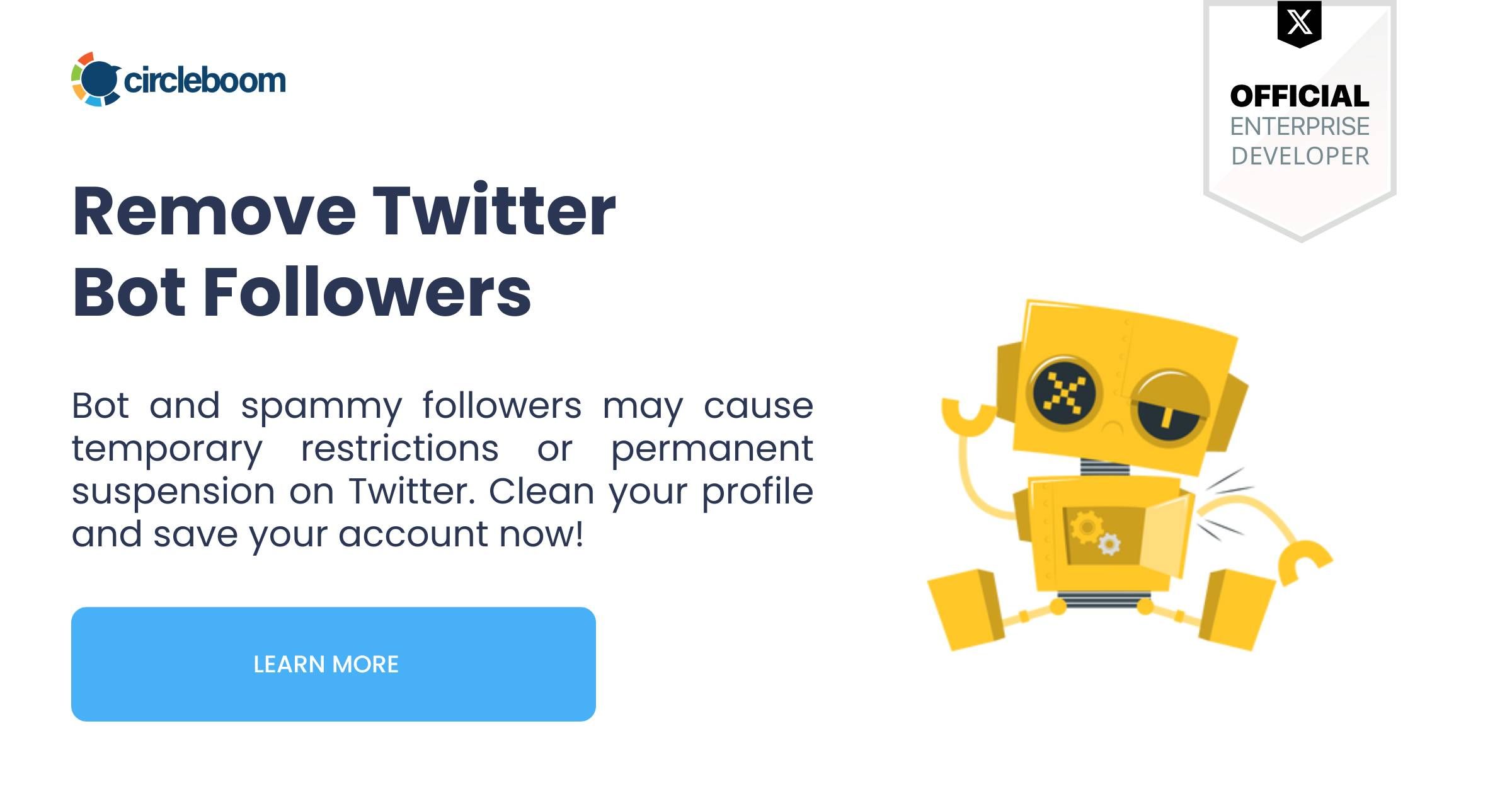
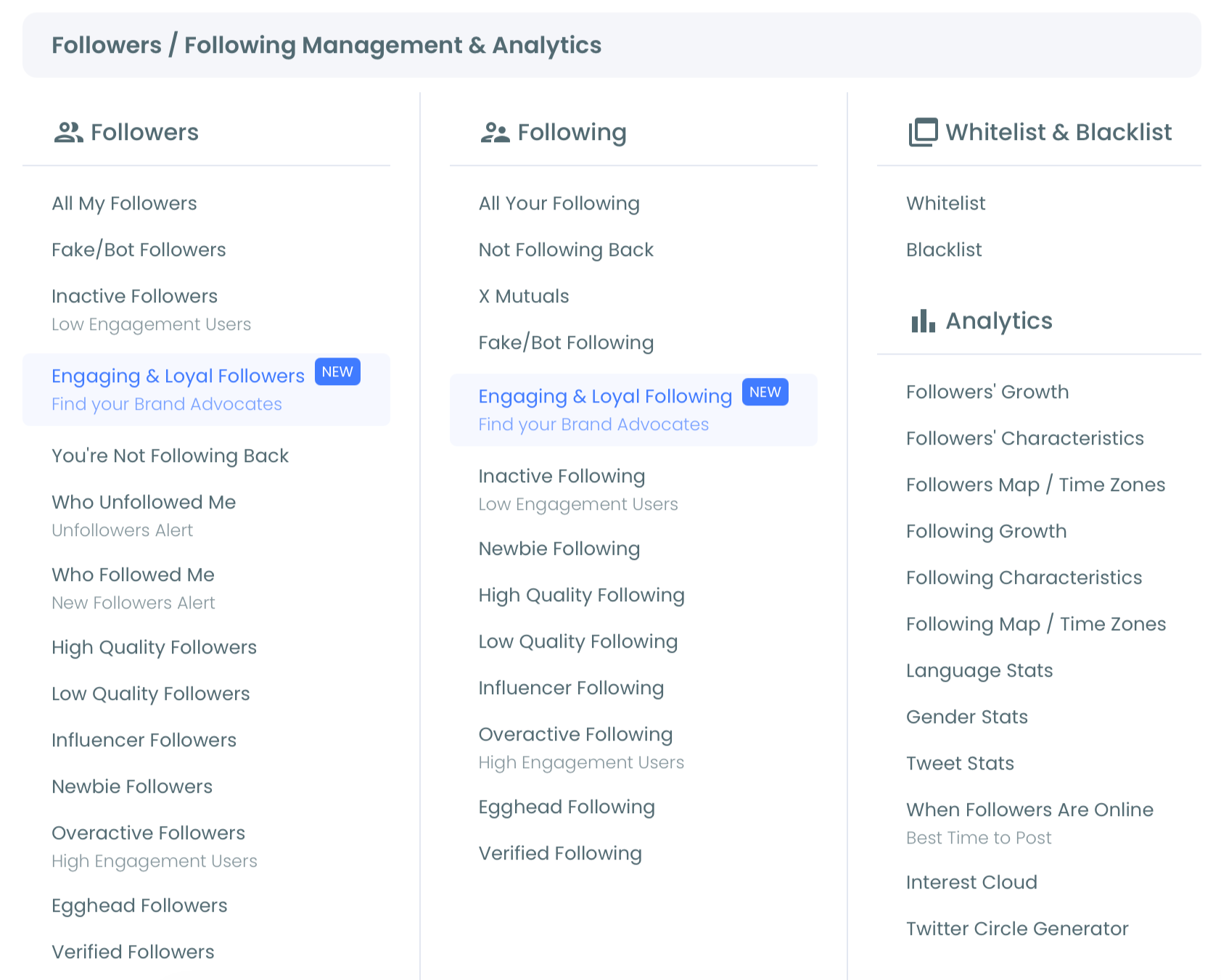
- Open the Follower & Following menu and select Fake/Bot Followers to load the flagged list.
- Sort and filter the list by follow ratio, join date, and tweet count to triage the most obvious cases first.
Review and remove
- Whitelist any legitimate accounts you recognize, so they are protected from bulk action.
- Select the confirmed bots and remove them, with bulk removal running through the Chrome extension at a safe, rate-limited pace.
That order matters because detection is automated but action is deliberate: the model identifies candidates, you validate and protect the real ones, and only then remove. Skipping the review step is how real followers get caught by mistake.
Quick recap:
- Open Fake/Bot Followers to load the flagged list.
- Triage by ratio, join date, and tweet count.
- Whitelist real contacts, then bulk-remove the rest.
Triage, Don't Trust Blindly
The fastest way to ruin a cleanup is to remove the entire flagged list without looking. Classification is probabilistic, so the list is a set of candidates, and a few may be unusual-but-real accounts.
Triage solves this. Sort by follow ratio ascending to put the most suspicious structures first, and work down from the obvious cases to the borderline ones.
Prioritize clusters, a wave of near-identical new accounts with no photos and extreme follow ratios is almost certainly a bot campaign, while a single odd account deserves a manual look. This is the discipline that separates a clean audit from one that accidentally removes a real customer, and it applies just as much when you decide how to get rid of spam followers and following.
For genuinely abusive or coordinated accounts, removal may not be enough. Adding them to a mass block is the stronger move when you want to stop interaction entirely, not just take them out of your follower count.
Time Your Cleanups
When you run the check matters as much as running it. Bot waves are most concentrated right after a trigger, so timing the cleanup catches them while they are easy to isolate.
Run it within a week of any follower spike, a viral post, a giveaway, a mention from a large account, when suspicious new accounts cluster in the recent-follower pool. After 30 days they blend into your baseline and are harder to distinguish.
Beyond spikes, a quarterly maintenance run catches the slow, steady accumulation that happens during normal use. Pairing the cleanup with a bot account checker for individual suspects and a mass block list for the worst offenders gives you a complete defense.
What Causes a Bot Wave
It helps to know where bot followers come from, because the source tells you when to check. Bots rarely arrive evenly; they come in bursts tied to specific events.
The most common trigger is visibility. A viral tweet, a mention from a large account, or a trending appearance puts you in front of follow-bot networks that sweep up newly visible accounts.
Giveaways are another magnet, since contest mechanics attract automated entries. Occasionally the wave is adversarial, a deliberate bot-follow campaign meant to inflate your count with obvious fakes and damage your credibility.
In every case the pattern is the same: a sudden cluster of near-identical low-quality accounts in a short window, which is exactly what a bot follower check is built to isolate.
Knowing the triggers turns cleanup from reactive to scheduled. Check right after any spike, and the wave is easy to catch while it is still concentrated in your recent followers.
Your Next Move
Pick the path that matches your situation:
- If you just had a spike, run the check filtered to recent join dates and clear the wave before it normalizes.
- If the accounts are abusive, remove and add them to a mass block rather than just removing.
- If this is routine maintenance, run a quarterly sweep and whitelist your known contacts first.
Each path runs through the same flagged list, so you choose the depth and the tool handles the detection.
→ Clean the bot followers from your audience
What to Know Before a Bot Cleanup
How does the tool decide an account is a bot?
It combines several public signals, follow ratio, tweet frequency, account age, profile completeness, and engagement, rather than relying on any single one. Accounts that look suspicious across multiple signals at once are flagged for your review.
Is it safe to remove flagged accounts in bulk?
Yes, as long as you review first. The list is candidates, not confirmed bots, so whitelist any real accounts you recognize before running a bulk removal. The removal itself is paced to stay within X's rate limits.
Does removing bots block them?
No. Removing a follower takes them out of your audience without blocking. For abusive or persistent accounts, add them to a mass block instead, which prevents future interaction.
Will cleaning bots change my follower count?
Yes, it will drop as inauthentic accounts are removed, but your engagement rate and audience accuracy improve. A slightly smaller, real audience is healthier than an inflated one.
How long does a large cleanup take?
It depends on volume. Bulk removal runs through the Chrome extension and pauses automatically for X's rate limits, so large cleanups process in batches over a longer session.