Your follower count says one thing; your engagement says another. That gap is often bot followers, the inauthentic accounts that inflate your number while contributing nothing, and X gives you no native way to find them in your list.
Spotting one bot by hand is doable. Finding them across thousands of followers is not, because the tells, low tweet count, skewed ratio, no photo, recent join date, only mean something in combination, and no single one is conclusive.
A proper bot-follower check does that combination for you, listing the suspicious accounts for review. This guide walks through finding them and cleaning them safely.
What this guide gives you.The signals that actually identify a bot follower.A step-by-step way to reveal bot followers in your list.A safe review-then-remove workflow that protects real accounts.
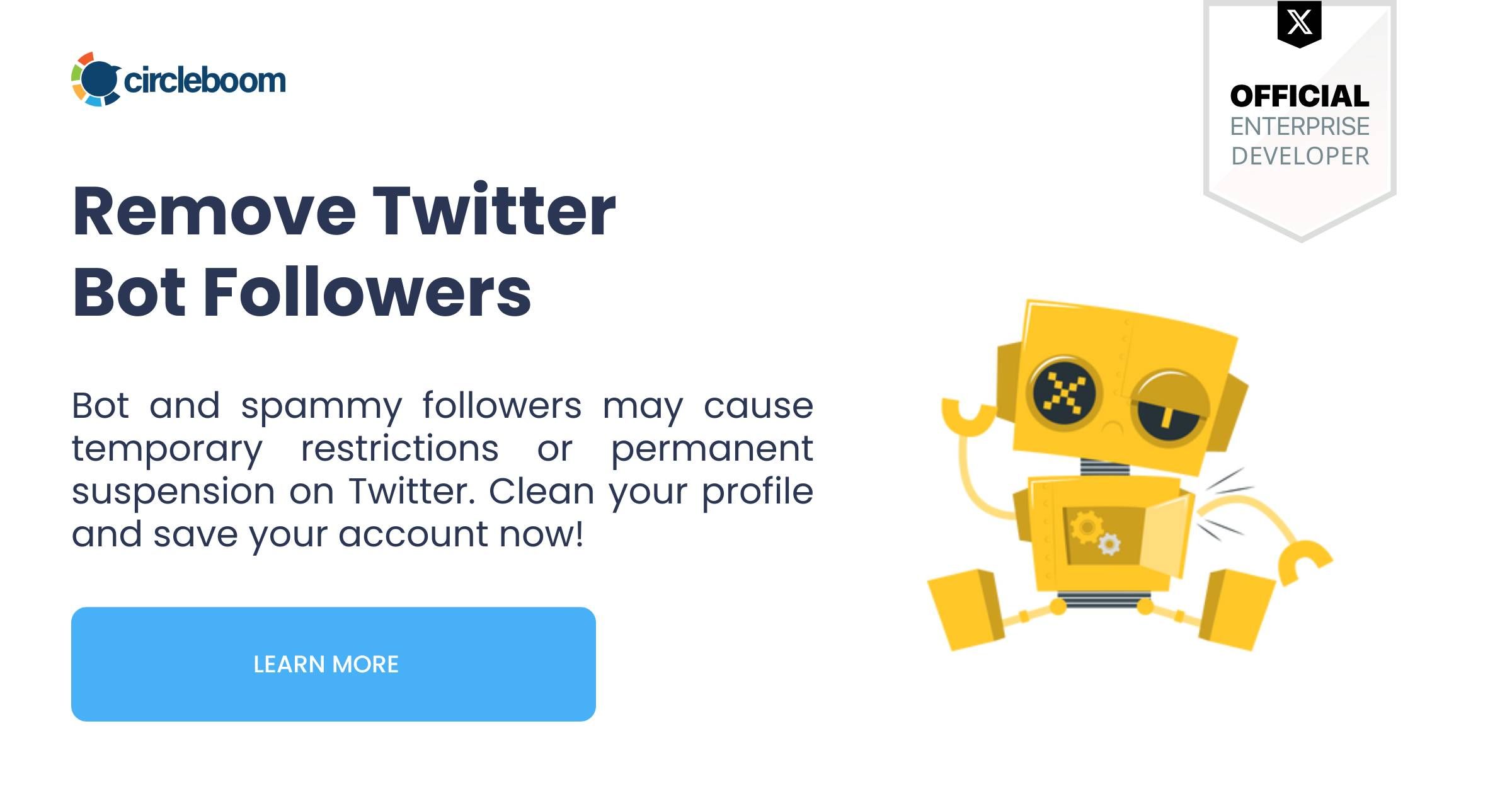
Built on Circleboom's Fake/Bot Followers feature, delivered through official API access.
→ find bot followers on Twitter
Why You Can't Find Them Manually
Manual hunting fails because bot detection is a pattern problem, not a single-clue problem. A low tweet count alone might be a quiet real user; a missing photo alone might be a new account; a high follow ratio alone might be a curious browser.
It is the combination that betrays a bot: a recent join date plus a follow ratio under 0.05 plus no photo plus near-zero tweets plus low engagement, all at once. Evaluating that across an entire follower base by hand is impossible, which is why people end up asking how many of their followers are bots without ever getting a real answer.
A tool that scores many signals together is the only practical path to find bot followers on Twitter at scale.
The Tool That Flags Them for You
Circleboom's Fake/Bot Followers feature retrieves your full follower list and runs a multi-signal classification model over it. It weighs activity, follow ratio, tweet frequency relative to age, profile completeness, and engagement, then isolates the accounts that cross the suspicion threshold on several signals at once.
Crucially, it presents a candidate list for review, not a verdict for automatic deletion. As an official X Enterprise Developer company, Circleboom pulls the list through sanctioned access and shows each flagged account with full data, so you can validate before acting.
It is the structured version of a fake-followers audit you would otherwise attempt by hand.
Video walkthrough: a bot purge that flags and removes fake followers in bulk.
How to Find Bot Followers on Twitter
The process, in order, grouped into two short phases.
Flag the suspicious accounts
- Log in to Circleboom Twitter and connect your X account with official OAuth.
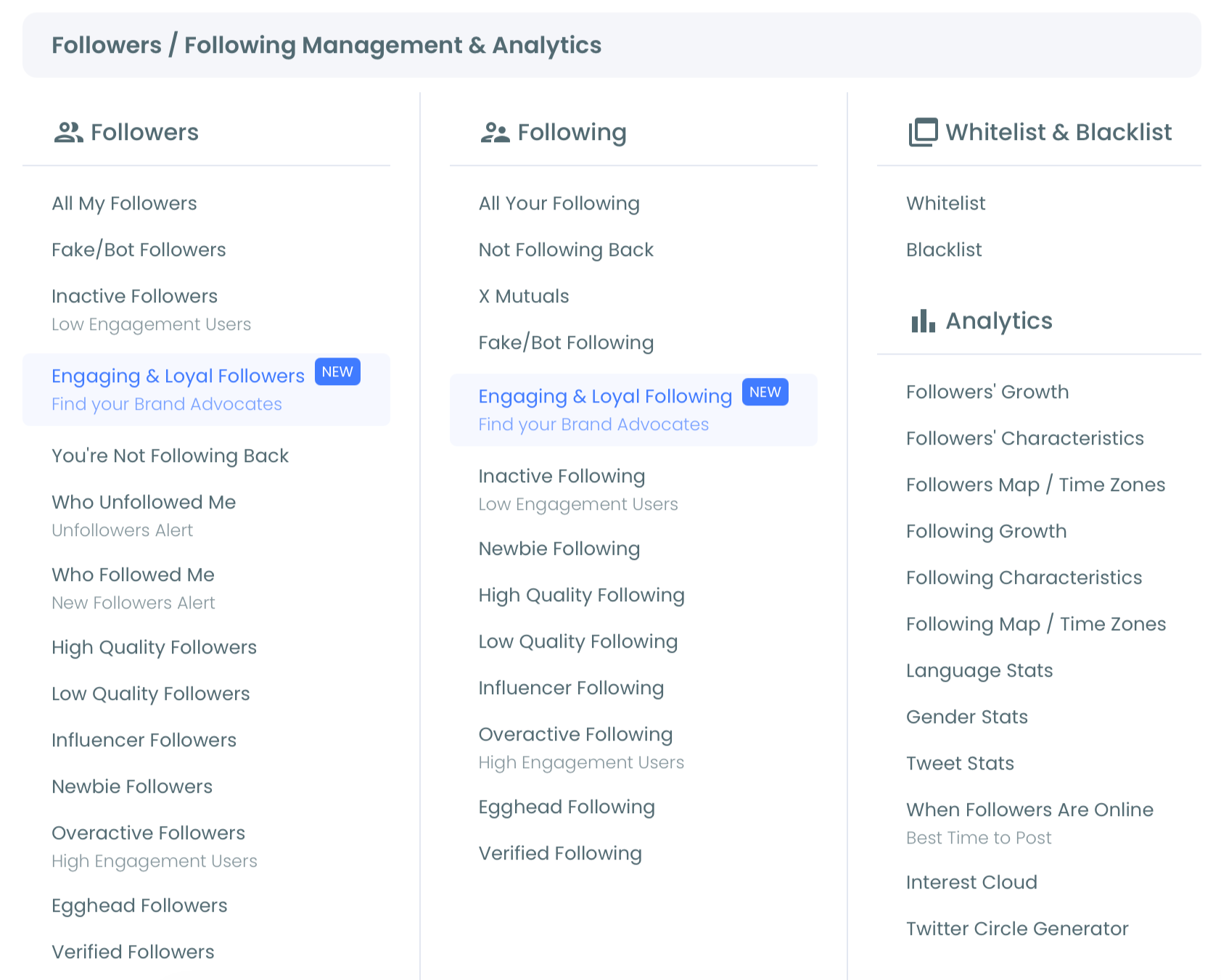
- Open the Follower & Following menu and select Fake/Bot Followers to load the flagged candidate list.
- Sort by follow ratio and join date to bring the most suspicious accounts, low ratio and recent creation, at the top.
Review and clean
- Whitelist any account you recognize as a real contact before any bulk action, so legitimate accounts are protected.
- Select the confirmed-suspicious accounts and remove them, with bulk removal running through the Chrome extension at a safe, rate-limited pace.
That sequence works because detection precedes action: the model flags candidates, you sort and validate them, you protect known-good accounts, and only then do you remove. The order is what keeps real followers safe.
Quick recap:
- Open Fake/Bot Followers to flag candidates.
- Sort by ratio and join date to triage.
- Whitelist real contacts, then remove the rest.
Review Before You Remove
The single most important habit is to treat the list as candidates, not confirmed bots. The classification is probabilistic, and a flagged account can occasionally be a legitimate but unusual profile, a brand support account, an international user with no photo, or a real person who rarely posts.
That is why the workflow builds in review. Sort by the most revealing columns, sample a few accounts with Open Profile, and whitelist anyone you recognize before running a bulk removal.
Prioritizing clusters over isolated accounts, a wave of near-identical new accounts is far more clearly bots than one odd profile, keeps your cleanup accurate. The same caution applies whenever you check whether followers are fake or real before acting.
Removing a follower takes them out of your audience without blocking them. For genuinely abusive or coordinated accounts, blocking is the stronger move, but for ordinary bot cleanup, removal is the right level.
Why Finding Them Actually Matters
Bot followers are not just clutter; they actively distort your account. Every inauthentic follower inflates the denominator of your engagement rate without ever adding to the numerator.
The math is unforgiving. A tweet that reaches 10,000 followers performs very differently if 3,000 of them are bots that never interact, and the algorithm reads that lack of engagement as a weak signal.
Removing the bots corrects the denominator, so your engagement rate finally reflects your real audience. That accuracy matters for your own analytics and for any sponsor or partner evaluating you, and it is the cleanup that often resolves the frustration of bots that keep following you.
Make It a Habit
A one-time cleanup helps; a recurring one keeps your audience healthy. Bots accumulate gradually during normal use and in waves after viral posts or giveaways, so a periodic check catches them before they normalize into your baseline.
Run the check within a week of any follower spike, when suspicious new accounts are most concentrated, and as a quarterly maintenance sweep otherwise. Pair it with a broader follower quality review and a quick follower checker audit to see your whole audience picture, not just the obvious bots.
Your Next Move
Pick the path that matches your situation:
- If you just had a follower spike, run the check now, filtered to recent join dates, to catch the wave early.
- If your engagement has been sliding, clean the accumulated bots to correct your engagement-rate denominator.
- If you are prepping for a sponsor, audit and clean first, since active audience maintenance is itself a credibility signal.
Each path starts from the same flagged list, so you choose the trigger and the tool flags the candidates.
→ Find and clean bot followers now
What to Know Before You Remove Bot Followers
How does the tool decide an account is a bot?
It combines multiple public signals, activity, follow ratio, tweet frequency, account age, profile completeness, and engagement, rather than any single one. Accounts that cross the suspicion threshold on several signals at once are flagged for your review.
Is the flagged list guaranteed accurate?
No. Classification is probabilistic, so the list is candidates, not confirmed bots. Review and whitelist legitimate accounts before bulk removal to avoid removing unusual but real followers.
Will removing bot followers hurt my account?
The opposite, usually. Removing inauthentic followers corrects your engagement-rate math and improves audience credibility, which helps both your analytics and any partner evaluation.
Do I need anything special to remove them in bulk?
Bulk Remove Follower runs through the Chrome extension, which paces the removals to stay within X's rate limits. The tool pauses automatically when limits are approached.
How often should I check for bot followers?
Within a week of any follower spike, and as a quarterly maintenance run otherwise. Bots accumulate gradually and in waves, so periodic checks keep your audience clean.
Should I remove bot followers or block them?
For ordinary bot cleanup, removing them is enough; it takes them out of your audience without escalating. Reserve blocking for accounts that are abusive, scam-like, or coordinated, where you want to prevent any future interaction entirely.
Will the bots I remove be able to follow me again?
Removing a follower does not prevent re-following. If a persistent spam account keeps coming back, a block is the stronger option, since it stops the account from following or interacting with you again.