
Most people think stalking someone on Twitter/X means reading their tweets, scrolling through replies, or checking who they argue with in comment sections.
That kind of stalking is loud, and mostly useless.
Tweets are what people want you to see. Replies are emotional, situational, and often impulsive. Both are shaped by audience pressure, image management, and algorithms.
Following is different.
Following is quiet. It’s rarely curated for outsiders. And because of that, it carries meaning.
Once you learn how to evaluate the intent behind following behavior, your entire understanding of Twitter accounts changes. Careers make sense. Identity shifts become visible. Strategic moves stop being mysterious.
That’s why I don’t stalk tweets or replies.
I focus on following, because following tells the truth.
 Arif Akdogan
Why Following Is a Stronger Signal Than Content
Content is performance. Following is preference.
When someone posts, they are broadcasting. When they follow, they are choosing.
People carefully think about:
- What they tweet
- How they sound
- Who might judge them
They think far less about who they follow.
That gap is where insight lives.
A following list is a living record of:
➡️ What someone wants to learn
➡️ Who they respect or aspire to
➡️ Which spaces they’re trying to enter
➡️ What direction they’re moving toward
You can see this clearly when someone’s interests change. A timeline might stay the same for months, but their following list starts filling with: new industry voices, new communities, new role models.
By the time the tweets catch up, the decision was already made.
How Meaning Hides Inside Following Patterns
Looking at following isn’t about spotting individual accounts. It’s about patterns.
One follow means nothing. Repetition means intent.
For example:
- Someone suddenly follows multiple startup founders → they’re likely preparing a career shift
- A wave of fitness creators → lifestyle or identity change
- Many accounts from the same niche, language, or region → entering a new community
- Influencers who all know each other → social alignment, not random discovery
Following behavior answers questions people never tweet about.
And this becomes even clearer when you look at new follows, not old ones.
Recent following activity is the loudest signal an account gives.

Why Twitter/X Makes Real Following Analysis Impossible
Here’s the problem.
Twitter/X doesn’t want you to analyze networks deeply.
Yes, you can see how many accounts someone follows. But when you click into the list, you get:
- Partial results
- Incomplete loading
- A short, unreliable slice of the actual list
You never see the full picture.
That means:
❌ You can’t study patterns properly
❌ You can’t tell what’s new vs old
❌ You can’t filter noise from signal
Any conclusion you reach is based on fragments.
Which makes serious following analysis impossible, unless you use external tools.
How I Analyze Following Properly With Circleboom Twitter
To actually understand following behavior, I use Circleboom Twitter.

Circleboom Twitter is an official X Enterprise developer, which is important. It means the platform works with X’s infrastructure instead of scraping unreliable fragments.
With Circleboom Twitter, you can:
- Search any public account’s following
- Access the complete following list
- See meaningful data for each account, including:
- Fake or bot likelihood
- Active or inactive behavior
- Follower and following counts
- Total tweet numbers
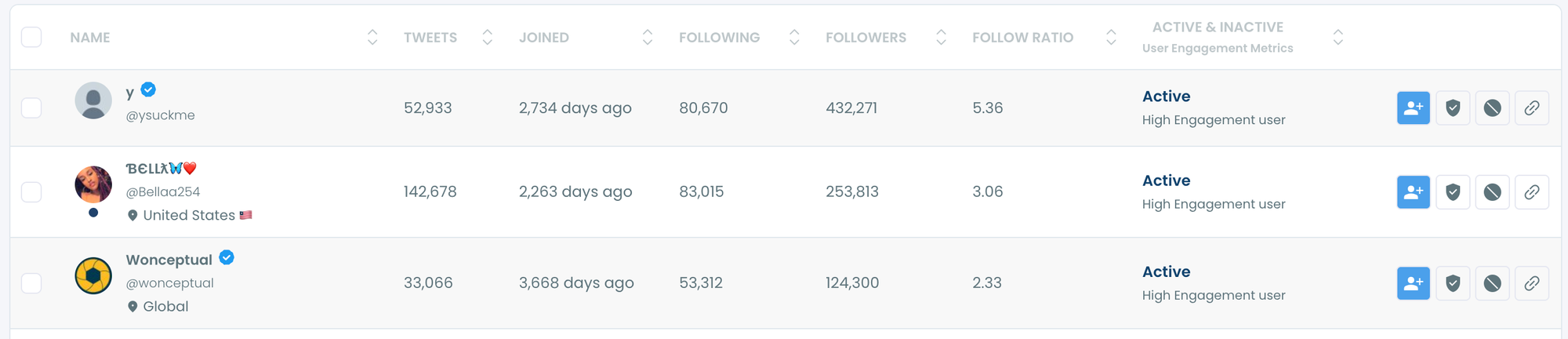
This turns following from a scroll into a dataset.
And datasets tell stories.
Why Account-Level Details Matter
Knowing who someone follows isn’t enough. You need to know what kind of accounts they follow.
An account with:
- 5 tweets in 6 years
- No engagement
- Random follower spikes
…doesn’t mean the same thing as an active expert with consistent posting.
Circleboom Twitter lets you see this distinction instantly.
Once you remove bots, inactive profiles, and spammy accounts from a following list, what remains is a much clearer picture of someone’s real interests.
That’s when patterns stop being vague and start being obvious.
Filtering: Turning Noise Into Insight
Filters are what make following analysis powerful.
Instead of looking at hundreds or thousands of accounts, you can narrow things down to:
- Active accounts only
- Accounts above a certain follower threshold
- Profiles with real posting history
- Accounts that match specific behavioral criteria
Without filters, following is chaos.
With filters, it becomes readable.
Exporting Following Lists: Why This Changes Everything
Viewing data is temporary. Exporting makes it permanent.
When you export a following list using Circleboom Twitter, you stop relying on memory or screenshots. You get a structured file you can actually work with.
The process is simple:
- Load the account’s full following list
- Apply the filters you care about
- Export the list in a structured format
Now you can:
✅ Sort accounts by follower size
✅ Group them by activity
✅ Compare lists over time
✅ Track direction changes objectively
This is where following analysis becomes serious.
How to See Someone’s Full Following List
Step #1: Log in to Circleboom Twitter.
If you don't have a Circleboom Twitter account, you can quickly sign up by clicking "Create an account."

Step #2: Find the "Advance X Search." tool on the left-hand menu and navigate over it.
From the dropdown menu, select "Followers / Following Search."
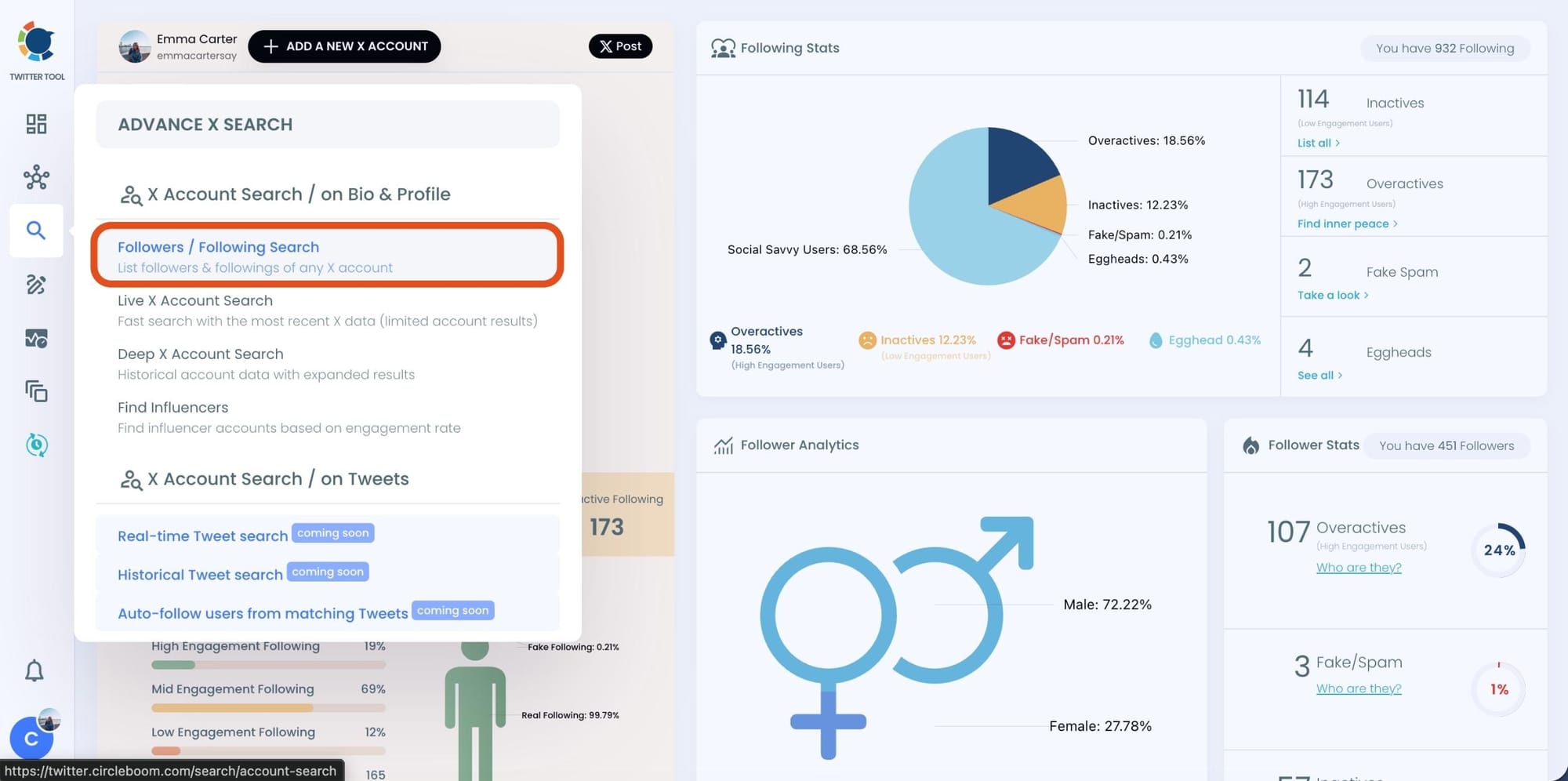
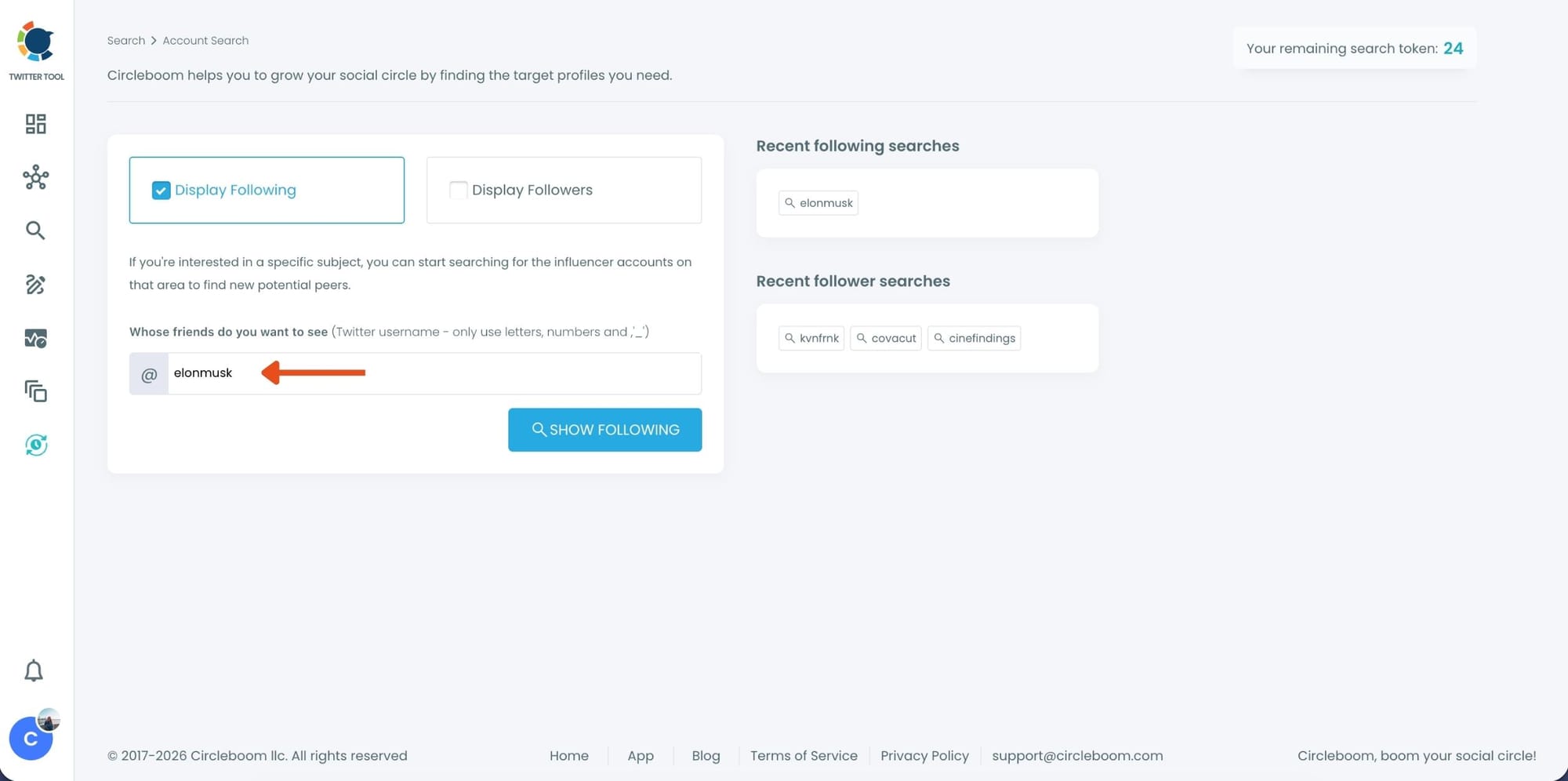
Step #3: If you want to search someone's Twitter followings, click the "Display Followings" option. Or, you can select "Display Followers" to search to see all of someone's followers on Twitter.
Then, you need to type the Twitter account's username in the search bar.
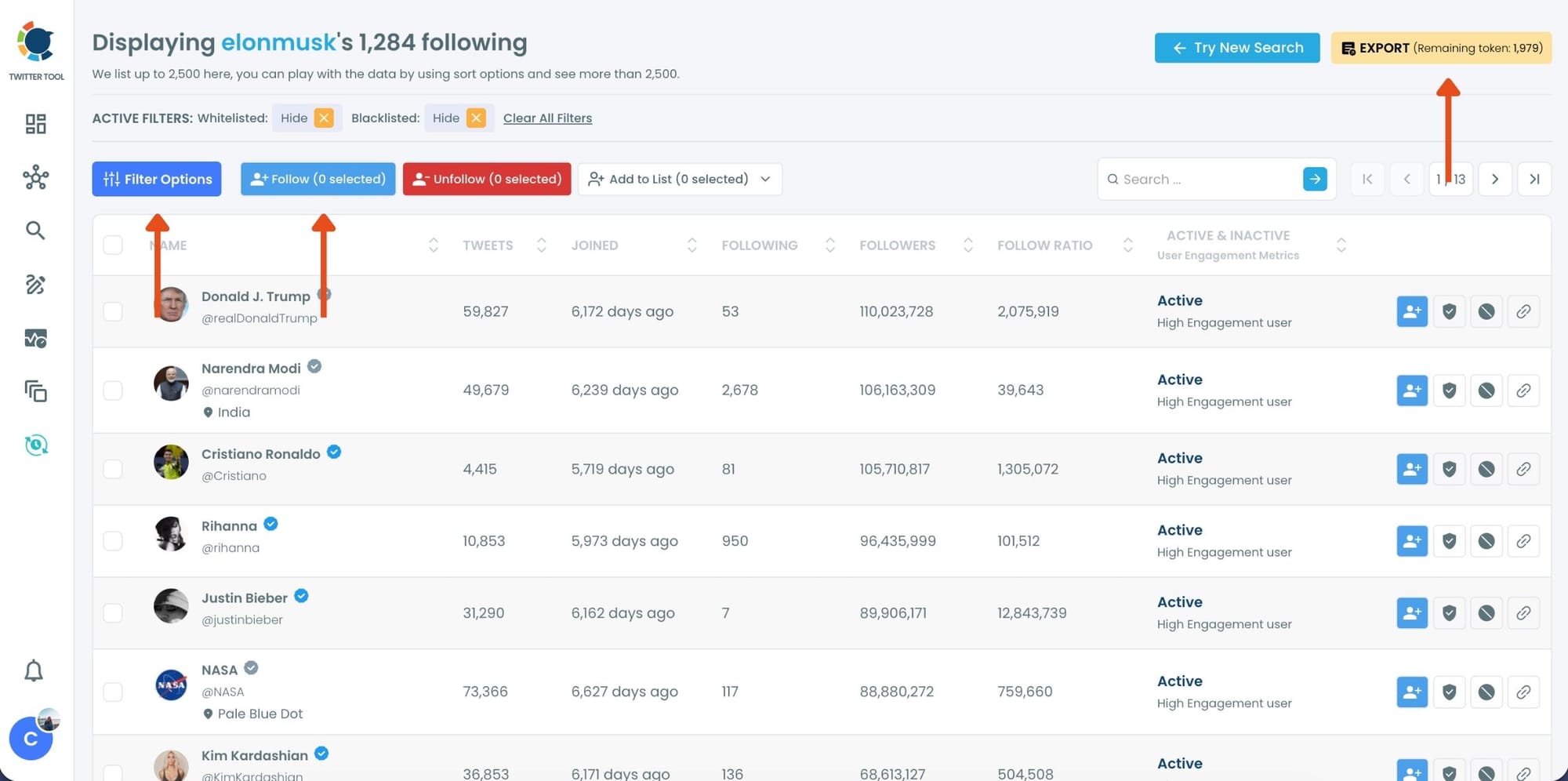
Step #4: A Following list of targeted Twitter profiles will be listed.
You can check these accounts. and if you wish you can add them to Twitter lists where you can see the content of X accounts without really following them!
Or mass follow/unfollow with one click!
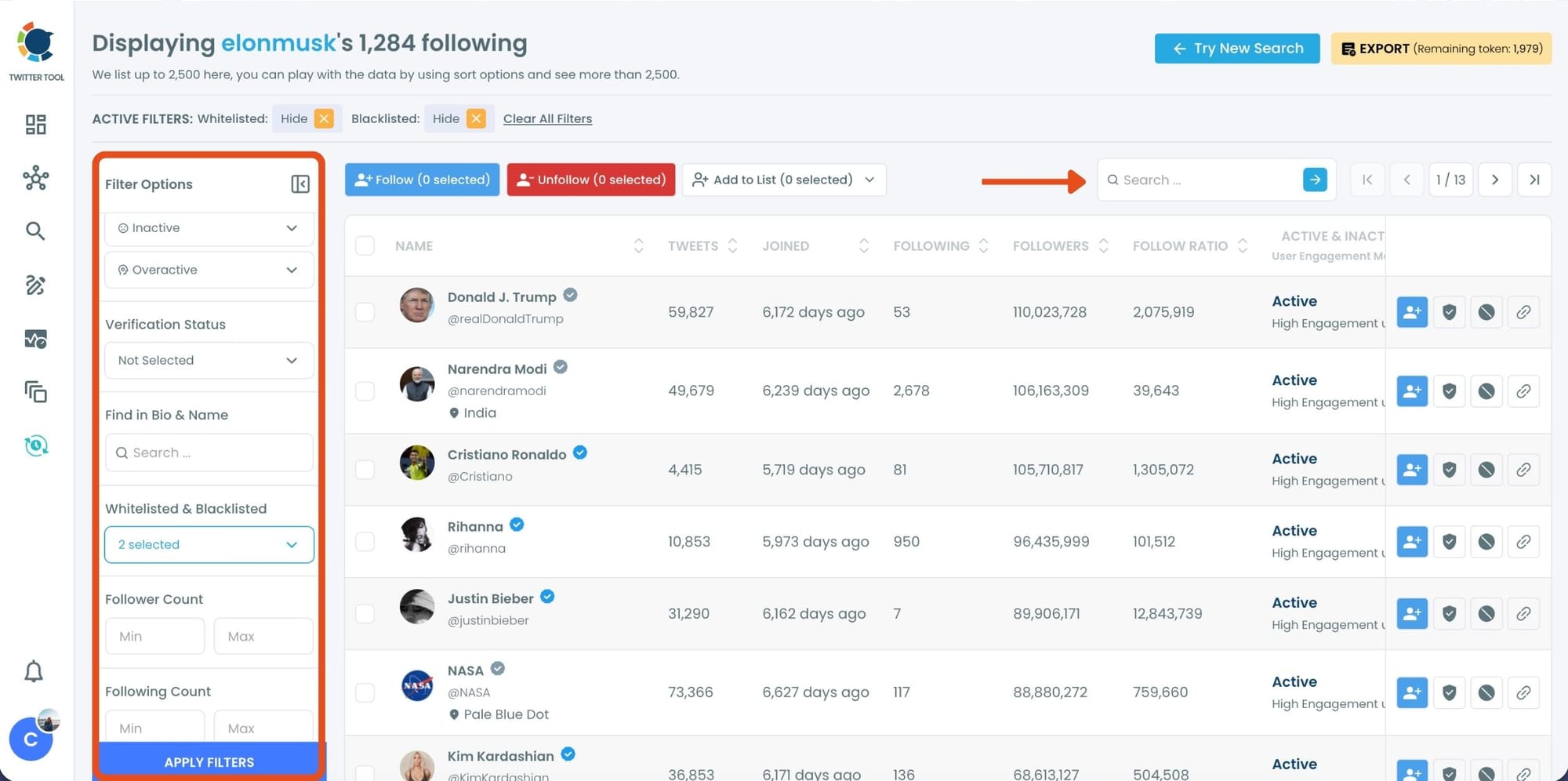
Step #5: You can search for a specific keyword to narrow down the list using the keyword search bar as the lists are ready.
Circleboom also provides users with advanced search filter options to search someone's Twitter followers without eggheads, inactives, etc.
If you need a more detailed explanation, check this video ⬇️
Why Tracking Change Is More Important Than Seeing the List
A following list is a snapshot.
Change is the story.
The most valuable insight comes from seeing:
- Who someone followed today
- Who they unfollowed
- What patterns repeat over days or weeks
Circleboom Twitter allows you to set daily following alerts for any public account.
 infocircleboom.com
That means following behavior stops being invisible.
Step-by-Step: How to Set Daily Following Activty Alert With Circleboom
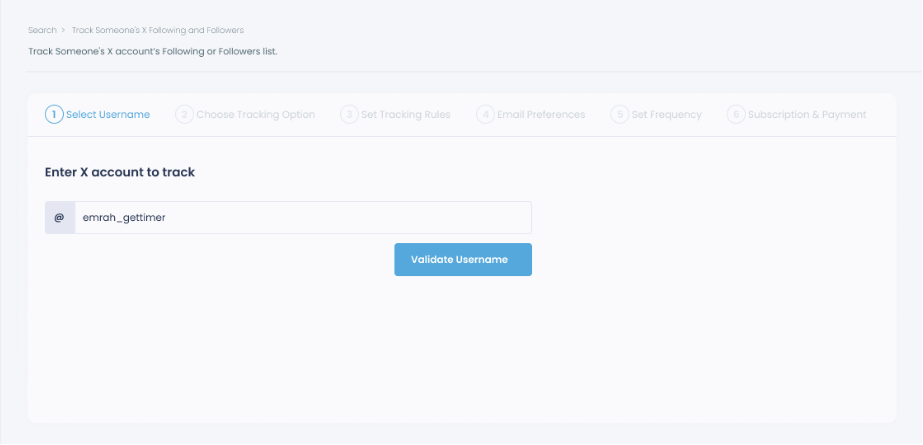
Step #1: Select any username you want to track on X.
You will track their recently followed audience.
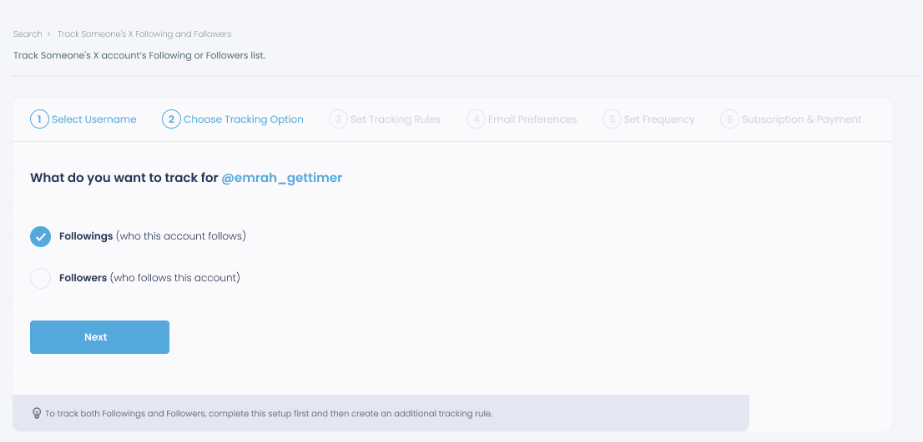
Step #2: Next, you will choose "Followings" or "Followers".
You should select one of the tracking options.
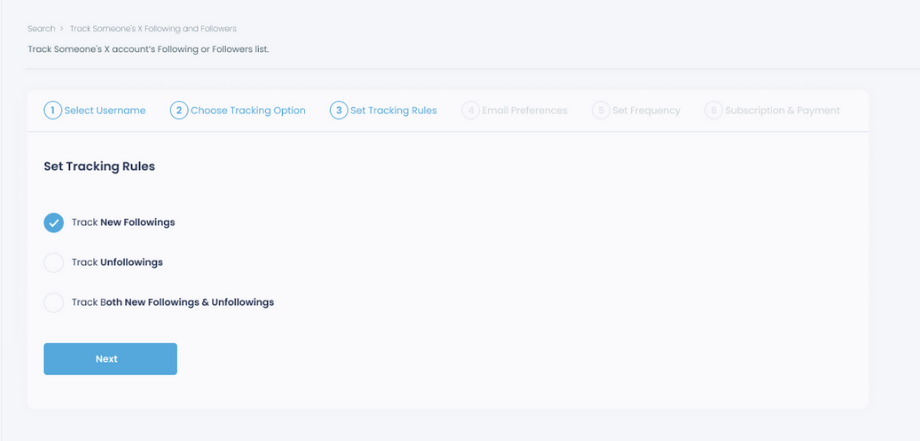
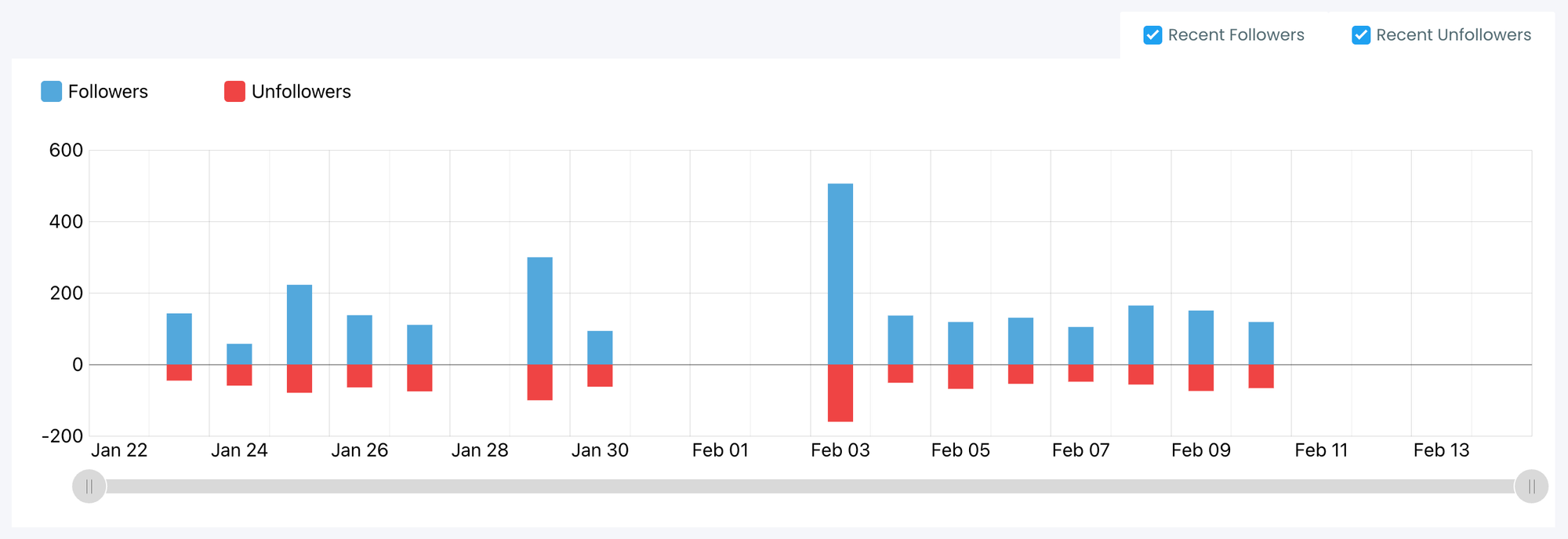
Step #3: Regarding the followings, you can track new, recent followings and unfollowings.
You can track both at the same time!
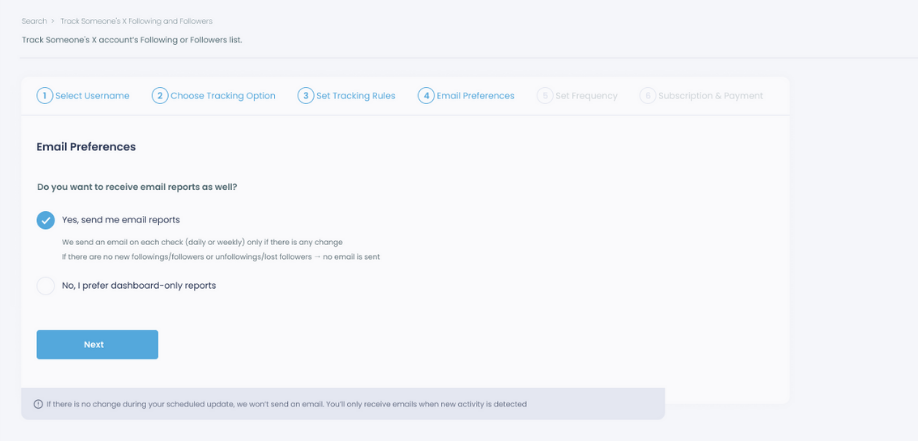
Step #4: For your tracking operations, you can receive email updates for each check.
You can still track new followings or followers without email notifications. You can monitor the following or followers with dashboard-only reports.
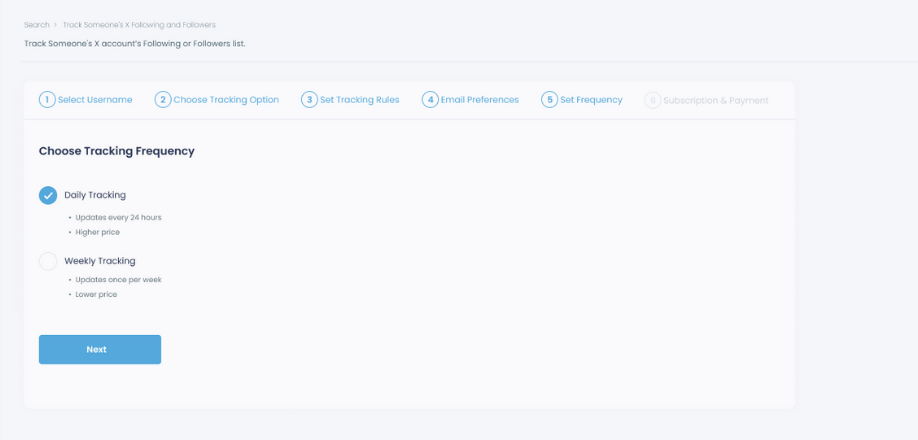
Step #5: Now, you should set the frequency.
You can get "Daily Tracking" or "Weekly Tracking".
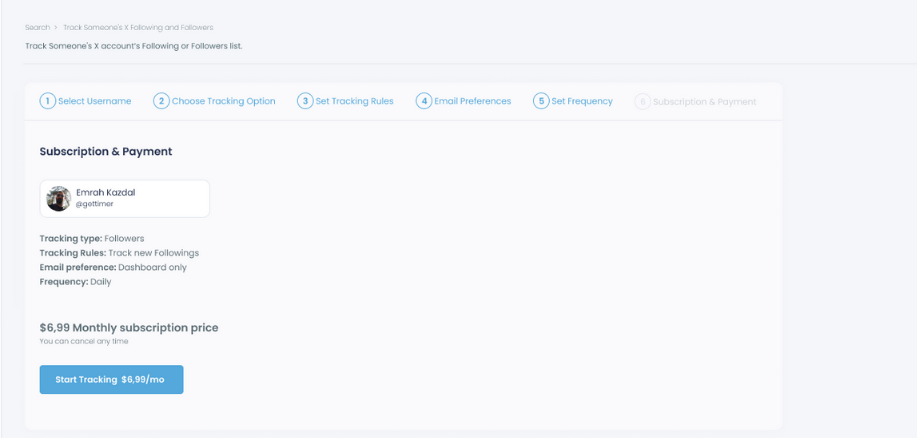
Step #6: The next step is subscription.
After checking the rules, you can start tracking.
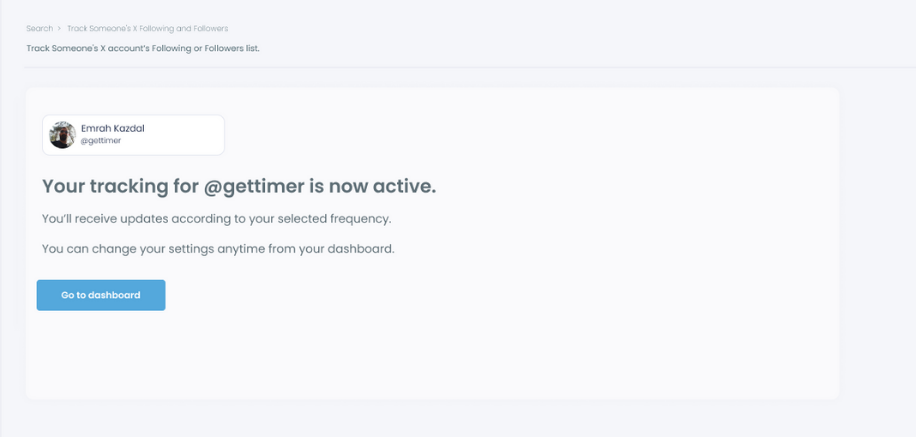
Tracking is now active. That's it! Now you can monitor newly followings and followers of anyone on X with Circleboom!
How Daily Following Alerts Work in Practice
Once alerts are enabled, Circleboom monitors the account for you.
Each day, you can see:
- Newly followed accounts
- Recently unfollowed ones
This is powerful because people rarely announce why they follow or unfollow someone.
But behavior reveals intent.
A cluster of new follows in one niche often signals:
- A new project
- A career move
- A personal rebrand
- A shift in values or interests
You see the direction before it becomes public.
Reading Following Changes Without Overthinking
Not every follow matters. Context matters more than curiosity.
A few important rules:
- One-off follows are usually noise
- Repeated themes are signals
- Unfollow waves often mean cleanup, not drama
- Directional shifts happen gradually, not instantly
Following analysis rewards patience and pattern recognition.
Stalking vs Monitoring: The Real Difference
This isn’t about harassment or obsession.
Everything described here is based on public information, just presented in a way that makes real analysis possible.
Twitter/X gives you fragments.
Circleboom gives you structure.
If understanding someone’s network, strategy, or direction matters to you, manual stalking on X will always be incomplete.
That’s why I rely on Circleboom Twitter to monitor following behavior properly, not guess based on partial lists and missing context.
Once you start reading following the right way, you stop watching what people say
and start seeing where they’re going.
)