
What are the red flags on a Twitter account? They are the profile and behavior signals that mark an account as likely fake, bot, or spam: a missing photo, a follow ratio near zero, near-empty tweet history, a brand-new join date, and an inactive engagement pattern. No single flag is proof. A cluster of them is.
What counts as a red flag on a Twitter account?
A red flag is a warning signal, not a verdict. Circleboom classifies your X followers against several signals at once, then isolates the fake, bot, and spam candidates so you can review them through the official X API.
→ check your followers for Twitter red flags
Most guides teach you to judge a stranger's account one profile at a time. That is useful when you are vetting a reply, but it misses the bigger problem: the red-flag accounts already sitting inside your own follower list. Those are the ones quietly distorting your numbers, and they are the ones worth cleaning first.
X itself treats these signals seriously. Under its authenticity rules, accounts that use stock, stolen, or AI-generated profile photos and manufactured identities are prohibited. That is exactly the profile shape most red-flag followers wear.
You do not have to inspect each one by hand. Instead of opening profiles one at a time, you can review the red-flag followers on your account in a single filtered view. If you are vetting a stranger rather than your own list, the checklist in this walkthrough on how to check if someone's followers are fake or real covers the same tells.
Why Red Flags on Your Twitter Account Actually Matter
A red-flag follower costs you more than a cosmetic number. Every inauthentic account inflates the denominator of your engagement rate without ever adding to the top. A post that reaches 10,000 followers behaves very differently when 3,000 of them will never like, reply, or amplify anything.
Here is the part people miss. Fake followers are not neutral dead weight. They actively mislead you: your growth charts look healthier than they are, your sponsor decks overstate real reach, and your content decisions get made against a polluted baseline. When engagement drops while your follower count climbs, red-flag accounts are usually the reason. The newest wave makes this harder to catch by eye, because a breakdown of AI-made fake Twitter profiles shows how convincing generated avatars and bios now clear a quick glance while still ruining the analytics underneath.
There is also a trust cost. Any brand partner or media contact who audits your audience can see the same signals you can. Cleaning your red-flag Twitter account before that review is itself a credibility signal.
The Red-Flag Signals, and Why Clusters Beat Single Tells
The strongest way to read a Twitter account is by combination, not by any one attribute. These are the signals that carry the most weight:
- Missing profile photo or a stock/AI-looking image, paired with a blank bio.
- A follow ratio below 0.05, following thousands while almost no one follows back.
- Near-zero tweets, or burst-then-silence posting that looks automated.
- A very recent join date on an account that already follows thousands.
- An Inactive or Low Engagement classification across its activity.
One weak signal is a maybe; four aligned signals are a pattern. A real person with an old account and no photo is a false positive waiting to happen, which is why detection should always precede removal.
That composite logic is the information most single-tell checklists skip. Circleboom scores each follower on all of these dimensions together rather than flagging on one attribute alone. The same reasoning drives this guide to spotting fake Twitter followers: weigh the signals as a set, and a profile that looks damning on one axis but ordinary on the other four sorts itself back out of the flagged pile.
The practical upside of scoring is speed. When the model ranks accounts by how many signals align, you spend your review time on the clearest cases instead of second-guessing every borderline profile. That is the difference between a checklist you abandon after ten accounts and a cleanup you actually finish. From that ranked view you can spot and remove red-flag Twitter followers in one pass.
How to Spot Red Flags on a Twitter Account with Circleboom
The process below turns hours of manual profile inspection into a filterable, sortable dataset you can act on. It runs in two phases: pull your list, then triage the red-flag cluster. Because Circleboom is an official X Enterprise Developer, every follower signal comes from authorized data, not scraping, so your account stays compliant while you work.
Connect your account and pull the full follower list
- Log in to Circleboom Twitter and connect your X account with official OAuth.
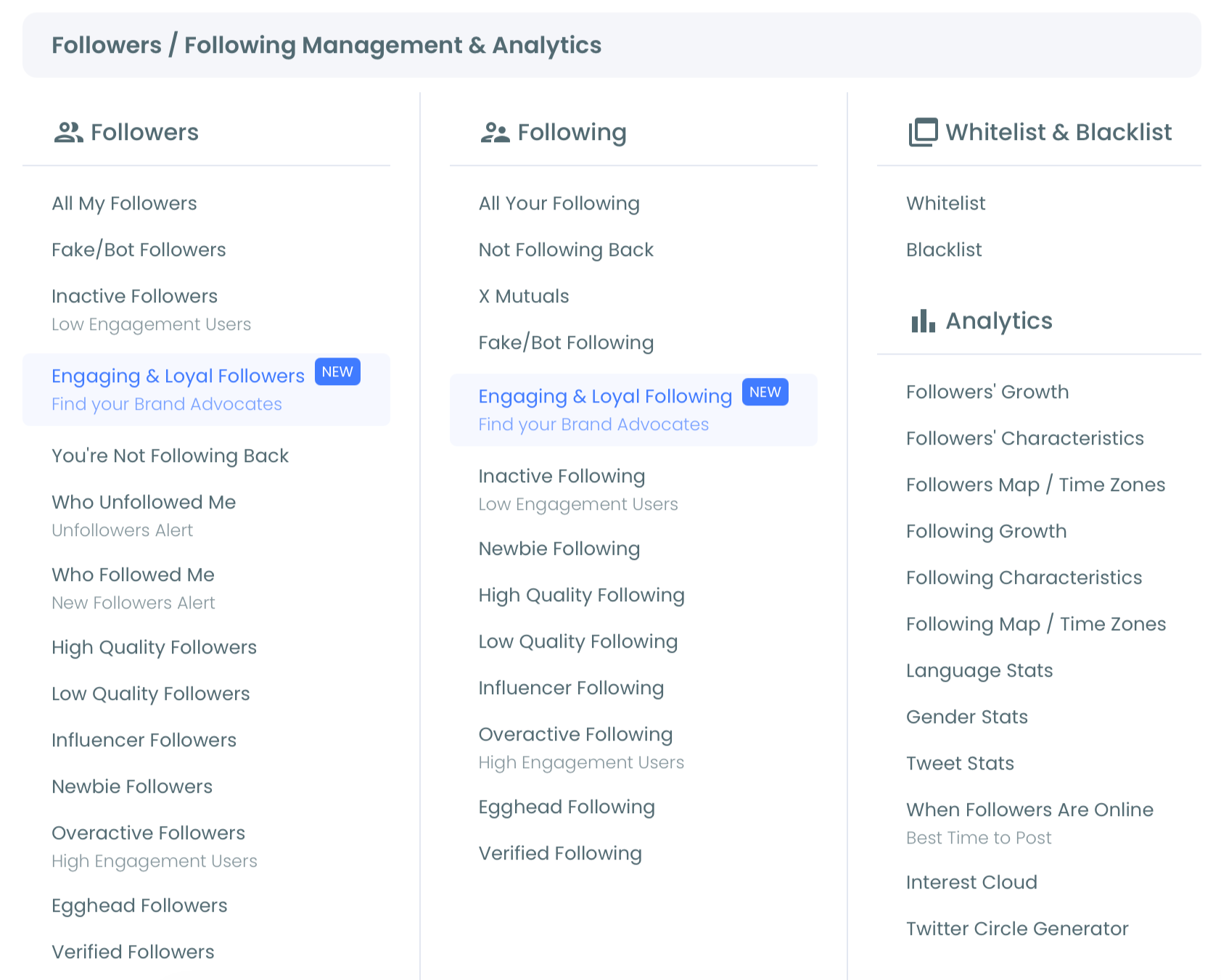
- Open the Follower & Following menu to load your complete follower list with enriched data columns.
Triage the red-flag cluster before you act
- Open the Fake/Bot Followers view to isolate every account Circleboom classified as suspicious.
- Apply filters for follow ratio, join date, tweet count, and engagement to rank the strongest red-flag candidates first.
- Review borderline profiles, whitelist known contacts, then remove or block the confirmed segment in a paced batch.
That order matters because detection is automated but the decision stays yours: the login authorizes safe API access, the filters narrow the segment, and the review step keeps a real but unusual account from getting swept out. Remove Follower and Mass Block run gradually and auto-pause when X rate limits are near, so nothing looks aggressive to the platform.
See it live: how one filtered view separates red-flag followers from real ones before a single removal.
What You Get After Clearing the Red Flags
Once the red-flag accounts come off your base, your metrics start telling the truth. Engagement rate recalculates against real people, growth analysis reflects genuine audience change, and your reporting holds up under scrutiny.
Pairing this with a follower quality check shows how the composition of your audience shifts after a cleanup, because the same accounts that scored as red flags drop out of the quality distribution the moment they leave your base. Watching that distribution tighten is the clearest confirmation that the removal did real work rather than trimming a few random profiles.
A follow-up bot follower audit is worth running a few weeks later, since it re-scores the list and surfaces the new bots that arrived while you were clearing the old ones. Treating that second pass as routine is what stops the problem from rebuilding quietly between cleanups.
Many accounts start by sizing the problem, checking how many of their followers are bots, before they act. Seeing the raw percentage first tends to make the cleanup feel less drastic, because you are removing a measured slice of the list rather than guessing at the size of the damage.
If you prefer a manual double-check before trusting the model, the classic four ways to identify fake Twitter accounts still hold up against anything the filter marks, and they build the instinct you will reuse every time you vet a reply in your mentions.
The shift is qualitative before it is quantitative: you stop guessing why your reach feels thin and start seeing the audience you actually have.
The Bottom Line on Twitter Red Flags
Red flags on a Twitter account are a cluster, not a single tell, and the ones that matter most are already following you. Detect the pattern, review the segment, and clear it on a schedule so the accounts never normalize into your baseline. When your follower list reflects real people, every downstream number gets more honest.
→ clear the red-flag accounts from your followers
Questions Readers Ask About Twitter Red Flags
Is one red flag enough to call an account fake?
No. A single signal like a missing photo or a low tweet count is weak on its own. Treat an account as a strong red-flag candidate only when several signals align, then review before removing.
Will removing red-flag followers hurt my account?
No, it usually helps. Clearing fake and bot accounts improves the accuracy of your engagement rate and strengthens the trust signals a sponsor or partner looks at. Circleboom paces every removal through the official X API to keep your account safe.
How often should I check my Twitter account for red flags?
Run a check within a week of any follower spike, and again as a quarterly maintenance pass. Bots that follow after a viral post age into your count fast, so catching them early keeps them out of your baseline.
Can a real person get flagged by mistake?
Yes. A dormant real account, a parody account, or an international user with no photo can trip the signals. That is why the flagged list is a review queue, not an auto-delete: whitelist the accounts you recognize before any bulk action.