
An account that falls from 8,400 followers to 8,120 overnight has not lost a number. It has lost 280 specific accounts, and those 280 accounts are the entire diagnosis.
Read them and you find out whether X swept a batch of spam profiles off the platform, whether one post pushed real readers away, or whether a handful of ratio-farming accounts followed you last week and left on schedule.
The count on your profile tells you none of that.
What this page gets you.The three things that actually produce a step change in a Twitter follower count.The account attributes that separate a platform sweep from a content-driven exit.A repeatable check you can run the next time the number moves.
Circleboom compares your X follower list against stored daily snapshots and names the accounts that left, through the official X API. Check why you suddenly lost followers on Twitter before you rewrite anything about your content plan.
Why the follower count is the least useful number on your profile
X publishes a follower count and nothing behind it. No unfollow notification, no departure log, no way to ask which accounts are missing since yesterday.
That gap is why a drop feels personal. You saw 8,400 last night and 8,120 this morning, so your brain fills the blank with the most recent thing you posted.
Circleboom closes that gap by keeping follower-list snapshots for your X account and reporting which profiles are missing from today's version.
The blank is fillable, just not from the profile page. A drop of 280 could be 280 suspended spam accounts that never read a word you wrote, or 280 people who followed you for football and stayed through three weeks of product marketing.
Same number, opposite meaning, opposite response.
Treat why you keep losing followers on Twitter as a category of problem rather than a single event.
Then pull the list and read why you suddenly lost followers on Twitter from the accounts themselves. Do that before you delete a post or apologise to an audience that never left.
How to find out why you suddenly lost followers on Twitter, step by step
See it run: the unfollower list filling in with dated accounts you can sort by join date and follow ratio.
https://www.youtube.com/watch?v=2MhU32QunxQ
The flow, in order.
Pull the accounts that actually left
- Log in to Circleboom Twitter and connect your X account with official OAuth.
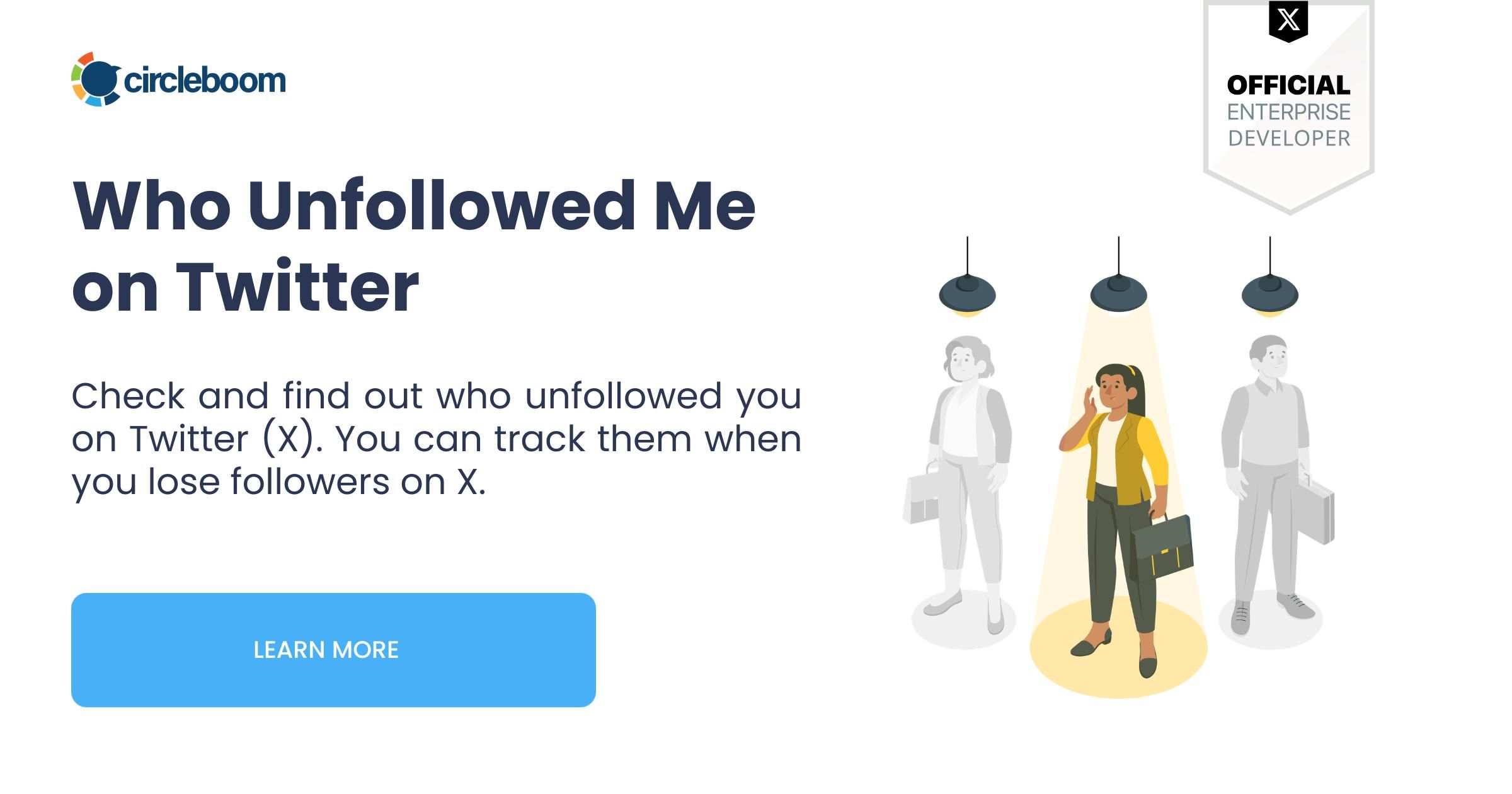
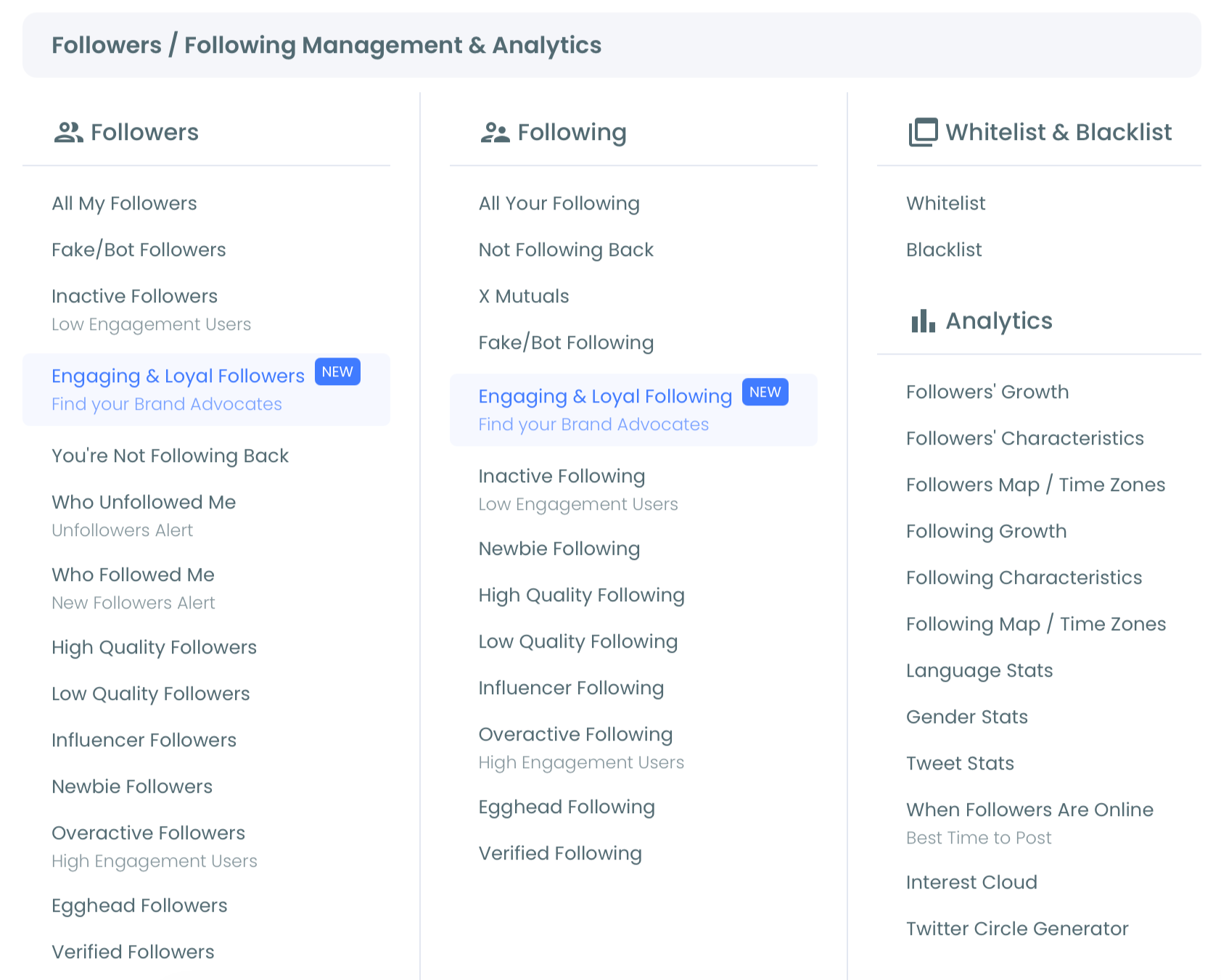
- Open the Follower / Following Management and Analytics menu and select the Who Unfollowed Me section.
- Set the time period selector to the window that covers your drop. The selector sits directly above the account list. It runs from last 1 day through last 2 days, last 3 days, last 5 days, last week, last 2 weeks, last 4 weeks, last 3 months, last 6 months, and last year. It opens on last 1 day.
Read the accounts before you read the number
- Sort the Joined column and look at the spread. Every row shows the account's join date in days, so a run of profiles created within the same few weeks is visible in one scroll.
- Sort by Follow Ratio and scan the Active & Inactive column beside it. Follow ratio is followers divided by following, and the activity column classifies each account as active with high engagement, moderately active with medium engagement, or inactive with low engagement.
Keep a record before you touch anything
- Export the segment as a CSV. The export button shows your remaining token balance, and the file carries the fields the on-screen table hides, including CreatedAt, IsFake, IsInactive, IsEgghead, and Verified_Type.
That order matters because each stage removes a guess. The login earns official API access.
The time window narrows the question from "who ever left" to "who left during the drop", the two sorts turn a list into a pattern, and the export freezes the evidence before any action changes it.
Quick recap:
- Connect through official OAuth.
- Open Who Unfollowed Me under Follower / Following Management and Analytics.
- Match the time window to the drop.
- Sort by join date, then by follow ratio.
- Export before you act.
What the accounts that left tell you about the cause
A step change in follower count has three common origins, and each one leaves a different fingerprint in the table you just sorted.
A cluster of new accounts with lopsided ratios points to a platform sweep
X removes accounts that break its spam and manipulation rules, and it says out loud that follower counts move when it does. In April 2024 it announced a proactive sweep, telling users it was casting a wide net to remove bots. Falling follower counts were named as the expected side effect.
Removal is not the only platform action that moves the number. Accounts can also be locked or restricted, and X documents that class of behavior in its help with common following issues pages.
Both states land in your list the same way. A departure is recorded either way, and the row never says which mechanism produced it.
The fingerprint is structural, not emotional:
- Join dates bunched into a narrow range.
- Follow ratios far below 1, because the account follows thousands and is followed by almost nobody.
- Empty or near-empty bios.
- No verification.
If most of your departures look like that, nothing you posted caused this.
A quick fake followers audit on Twitter on your remaining audience usually confirms it, because a sweep rarely catches every inauthentic account in one pass. The Twitter Join Date Checker is the fastest way to see how tightly those creation dates cluster.
Long-standing accounts with real posting histories point at your content
The opposite fingerprint is a set of accounts that have been around for years, post regularly, sit in the active or moderately active engagement tiers, and carry ordinary follow ratios near 1.
Those are readers.
When a group of them leaves inside the same 48 hours, the timing is the signal. The useful question is what changed in that window: a topic pivot, a posting burst, a tone shift, a campaign that ran too long.
Filter that segment by language and location before you conclude anything. A departure concentrated in one language usually means a content-audience mismatch rather than a mistake.
The Twitter Follower Checker shows you the same breakdown across the audience that stayed, which is the comparison that makes the mismatch obvious.
Accounts that followed you days earlier point at a ratio sweep
The third pattern gets missed most often. Some accounts follow in bulk, wait for a follow back, then unfollow everybody to improve their own follower-to-following ratio.
In the table they look like this: joined recently, following counts in the thousands, and a join date only days or weeks before they appeared in your follower list.
Their departure says nothing about your writing. It says they were never staying.
The tell that settles it is repetition. Blacklist the accounts in this group as you review them, and the next time the same usernames show up in a follow-then-leave cycle you have a labeled history rather than a hunch.
This group is also the only one of the three where unfollowing back is the obviously correct move. A ratio farmer that you followed in good faith is a one-sided connection sitting in your following list, quietly making your own ratio worse for no return.
How to tell a real drop from ordinary churn
Every active account loses followers every week, so the first job is deciding whether anything unusual happened at all.
Build the baseline before you need it. Open the unfollower list on a quiet week, set the window to last 4 weeks, and note the total.
That figure is your normal, and it scales with audience size rather than with how good your posts are.
A step change is a number several times that baseline landing inside one or two syncs. A slow bleed is the same baseline continuing while your new-follower rate falls, which is a different problem with a different fix.
The two look identical on the profile page and completely different in the list.
A drop only counts as sudden when it breaks your own baseline, not when it breaks your mood.
Losses of one to five accounts a day on an active profile are the platform working normally, and chasing them is how people end up rewriting a content plan that was fine.
Is a sudden Twitter follower drop bad for your account?
Not automatically, and often the opposite. Losing accounts that never opened your posts raises the share of your audience that actually reads you, which is the base every engagement rate is calculated against.
Work the arithmetic on your own numbers. If 12% of a 10,000-follower audience is inauthentic and a sweep clears it, your posts land in front of the same real readers as before while the denominator drops by 1,200.
The loss that deserves attention is a different shape: engaged, niche-relevant, long-tenured accounts leaving together. That is retention feedback, and it is worth more than the count it cost you.
What to do once you know which drop you had
Match the response to the fingerprint rather than to the size of the number.
If the departures were spam-shaped, treat the sweep as free cleaning and finish the job yourself. Running a pass to check your unfollowers, fake, spam, and inactive followers on the accounts still following you keeps the audience honest between platform sweeps.
If the departures were reader-shaped, leave the accounts alone and go look at what you published in the window. The unfollow list gives you the timestamp; your own post history supplies the cause.
If they were ratio farmers, unfollow back the ones you had followed and move on. Circleboom paces that action at 50 unfollows every 15 minutes, up to 800 per day, and resumes on its own the next day once the ceiling is reached.
That pacing exists because Circleboom operates as an official X Enterprise Developer company rather than through unofficial workarounds, so a cleanup never costs you the account you are cleaning.
One caution before any bulk action. Circleboom refreshes follower data from the X API daily, and the feature page notes that a small number of accounts can appear as unfollowers in error and are typically corrected in the next day's fetch.
Review the list, then act. Open the accounts that unfollowed you once, sleep on it, and act on the second read.
The checklist for the next drop
The next drop will arrive without warning, so decide now what you will do with it.
- Pull the unfollower list for the window that covers the drop, not for today.
- Sort by join date and follow ratio before forming any theory.
- Export the segment so the evidence survives whatever you do next.
- Compare the departures against what you published in the same 48 hours.
- Act on the second reading, never the first.
A Twitter follower count tracker gives you the movement over time that a single day's number hides. The accounts themselves are still the answer, and they are one click away.
→ Kick off your check here: who unfollowed me on Twitter
Questions about drop timing and what counts as normal
How fast will an unfollow show up after it happens?
Circleboom pulls follower data from the X API on a daily cycle, so an unfollow that happened an hour ago appears after the next sync rather than instantly. For a drop you noticed this morning, check again tomorrow before deciding the list is complete.
Can I get told about unfollows without logging in to check?
Yes. The Who Unfollowed Me page carries a set-up button for unfollower alerts, which sends recurring email summaries of new departures to the address you enter, so you find out about a drop without opening the dashboard.
Will unfollowing the accounts that left get my account restricted?
No, as long as the pace stays inside X's limits, which Circleboom handles for you at 50 unfollow actions every 15 minutes and up to 800 in a day. Every action runs through the official X API, and the queue pauses and resumes on its own rather than pushing your account past the ceiling.