

I used to think following fewer people on Twitter was a cool thing.
You know the look: thousands of followers, following only a handful of accounts. It felt clean. Exclusive. Almost elite.
But over time, I realized something important, the rules are actually the opposite.
When people land on your profile and see that you have many followers but barely follow anyone back, it doesn’t always look impressive. In many cases, it looks strange. Distant. Even a little unapproachable.
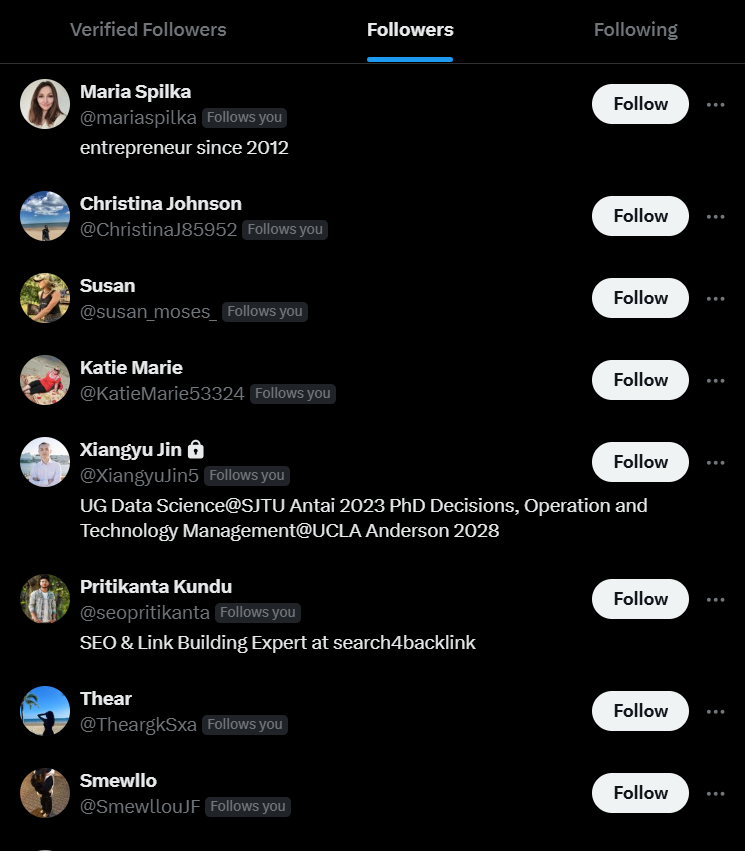
And once I started paying attention, I noticed something else: profiles with a balanced follower–following ratio usually felt stronger. More real. Like actual networks, not just numbers.
What is a good follower-following ratio? If you want to find out, you should read this article ⬇️
 Fatih Kemal Oksuzoglu
Why Following Back Matters More Than You Think
1. It feels natural and human
When someone follows you and you never follow back, it creates a one-way relationship.
For creators, founders, and professionals trying to build real connections, that’s a missed opportunity.
Following back signals openness. It shows that the account isn’t just collecting followers, but actually participating in conversations and relationships.
 Altug Altug
2. A close follower/following ratio builds trust
People make quick judgments on Twitter (X). A follower–following ratio that’s close often suggests:
- A real network
- Mutual connections
- Strong community engagement
This isn’t just about appearances. Mutual follows increase replies, profile visits, and the chance of turning followers into real connections.
If you are a creator on X and want to know about the latest developments regarding the algorithm changes, engagement strategies, payout boosts, etc., you can join Circleboom's X Creator Growth Lab Community and enjoy a free space to learn from and contribute to!

The real problem: doing it manually is hard
That’s where things get complicated.
Twitter (X) doesn’t clearly show which followers you’re not following back. Finding those accounts manually takes time, and following them one by one is exhausting.
On top of that, rushing through profiles increases the risk of following bots or fake accounts.
This is exactly why manual follow-back doesn’t scale.
The Tool I Use to Bulk Follow Back: Circleboom Twitter
To solve this, I use Circleboom Twitter.

Circleboom Twitter is an official X (Twitter) developer, and it analyzes your entire account structure, followers, followings, and their relationships.
Instead of guessing, it clearly categorizes:
➡️ Accounts you follow / Following List
➡️ Accounts that follow you / Follower List
➡️ Followers you don’t follow back
➡️ Accounts not following you back
Each account comes with detailed statistics, such as: Tweet count, Follower–following ratio, Account join date, Activity signals and more...
Circleboom also analyzes which accounts look real and which ones are likely fake or bot accounts, helping you make smarter decisions instead of bulk-following blindly.
Beyond analysis, it supports mass actions, including:
This makes managing your network fast, clean, and controlled.
Step-by-Step: How to Bulk Follow Back All Your Followers on Twitter (X)
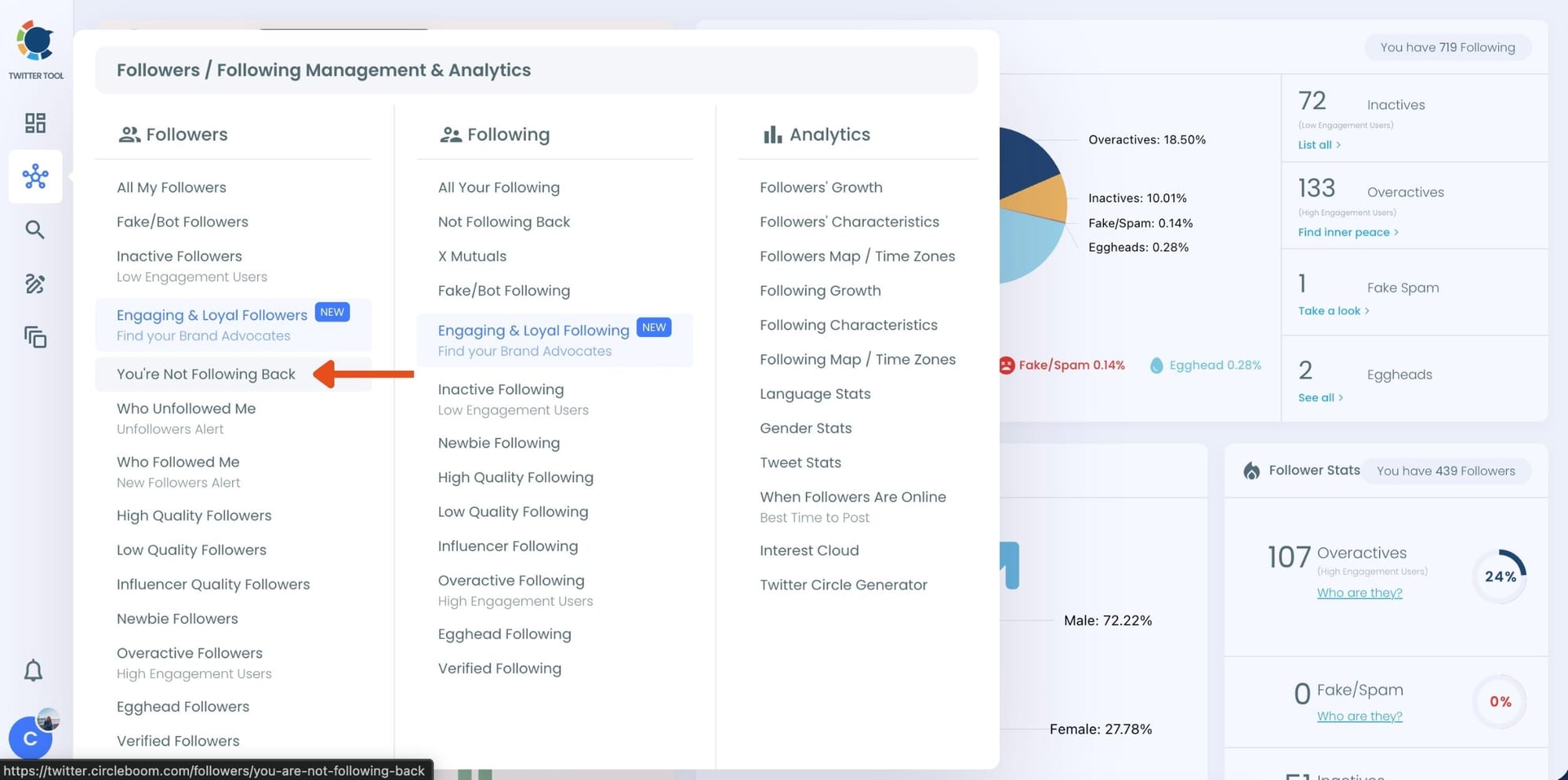
Step #1: First, log in to Circleboom Twitter.
From the left menu, open Followers / Following Management, then click “You’re Not Following Back.”
This section instantly shows the followers who follow you, but you’re not following back yet.
Instead of manually checking profiles one by one on X, Circleboom lists everything clearly in one place.
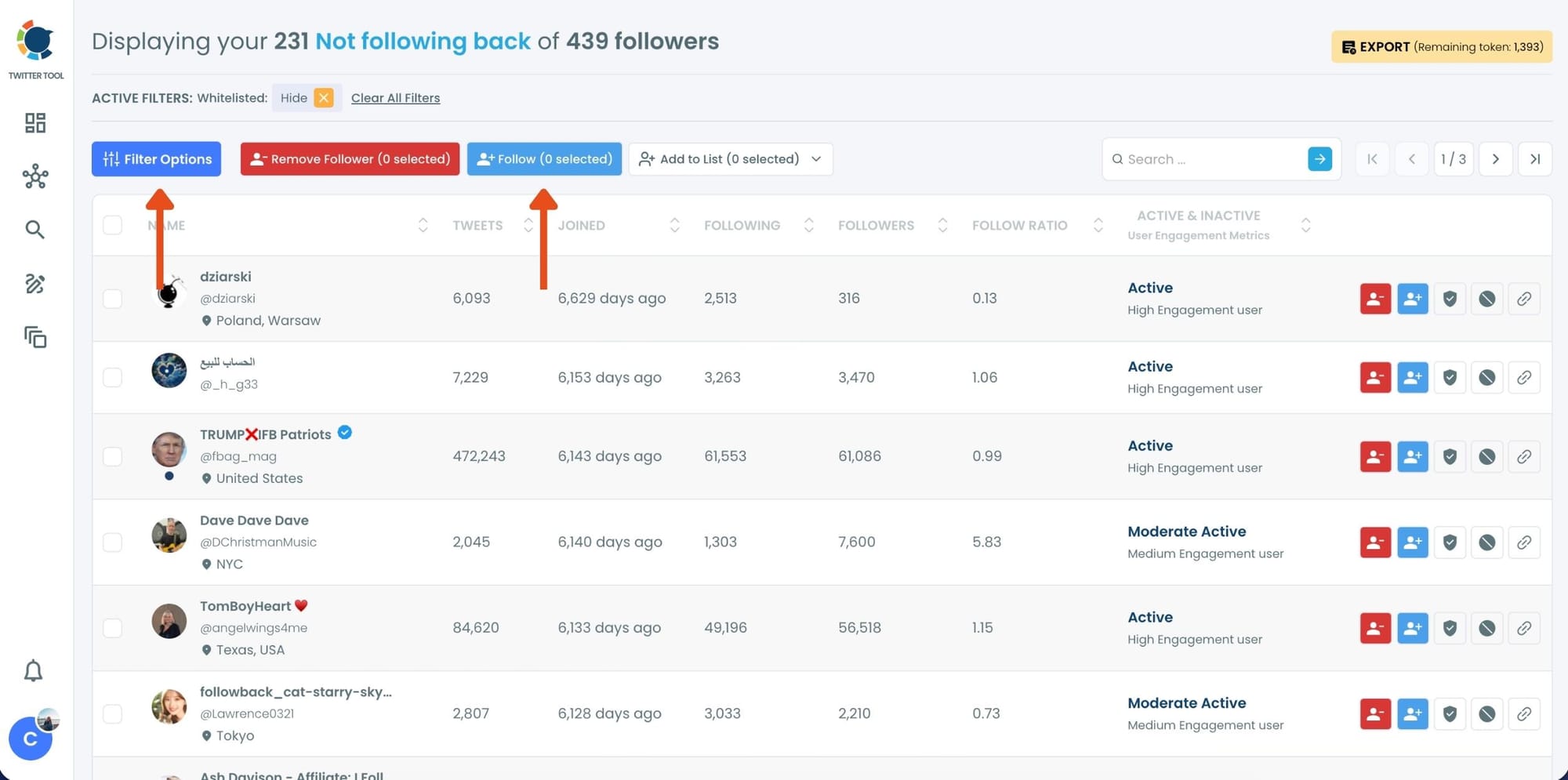
Step #2: Once the list loads, Circleboom displays every account with important context, not just usernames.
For each follower, you can see:
- Tweet count
- Follower–following ratio
- Account age (join date)
- Activity level (active, moderate, inactive)
This makes it much easier to understand who you’re following back and avoid blindly following low-quality or suspicious accounts.
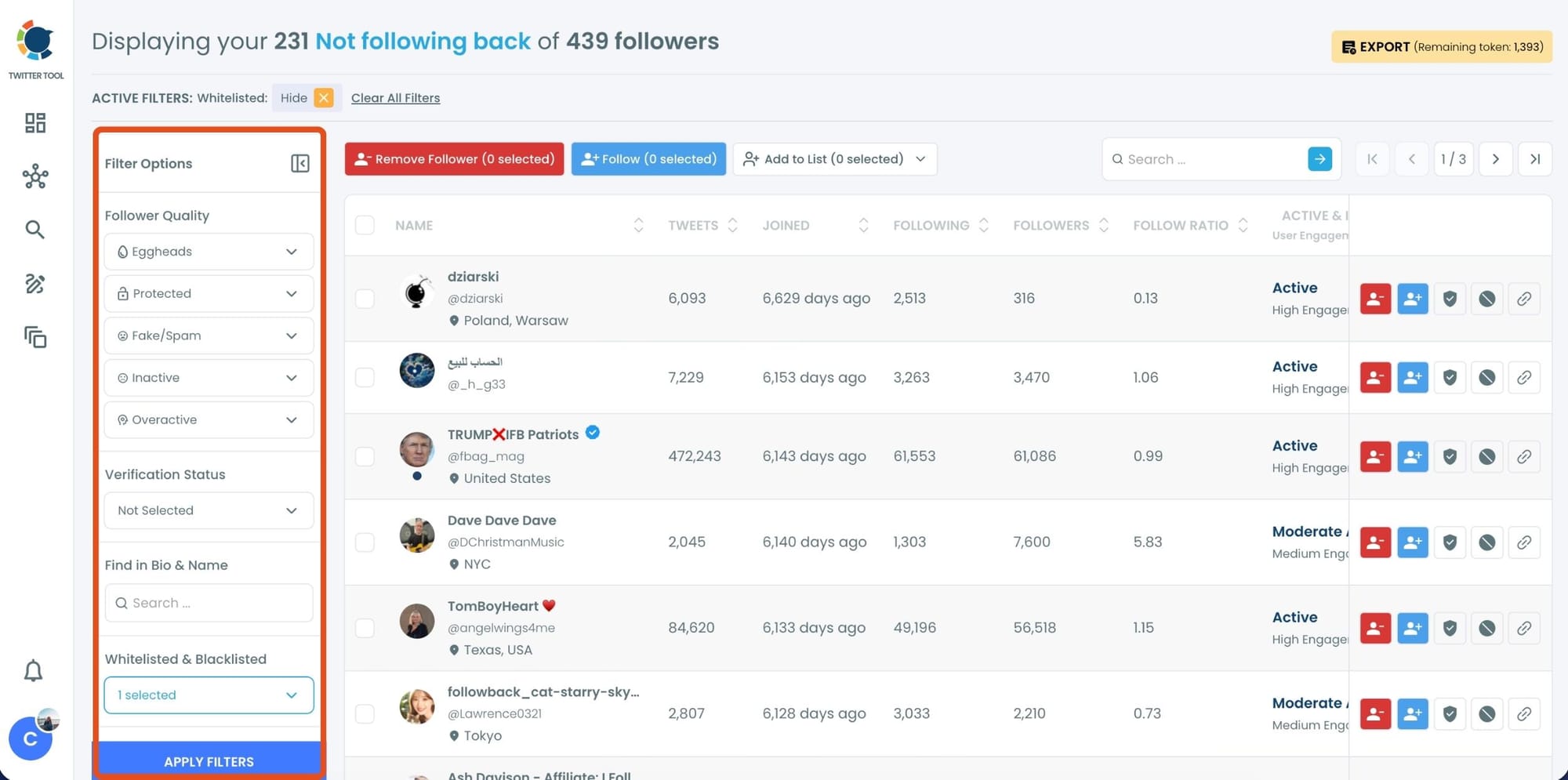
Step #3: Before following back, you can refine the list using Filter Options.
You can filter followers by:
- Fake / spam
- Inactive
- Overactive
- Egghead accounts
- Protected accounts
This step is important if you want a clean, high-quality network instead of following everyone automatically.
After selecting your filters, click Apply Filters to update the list.
Step #4: Now comes the easy part.
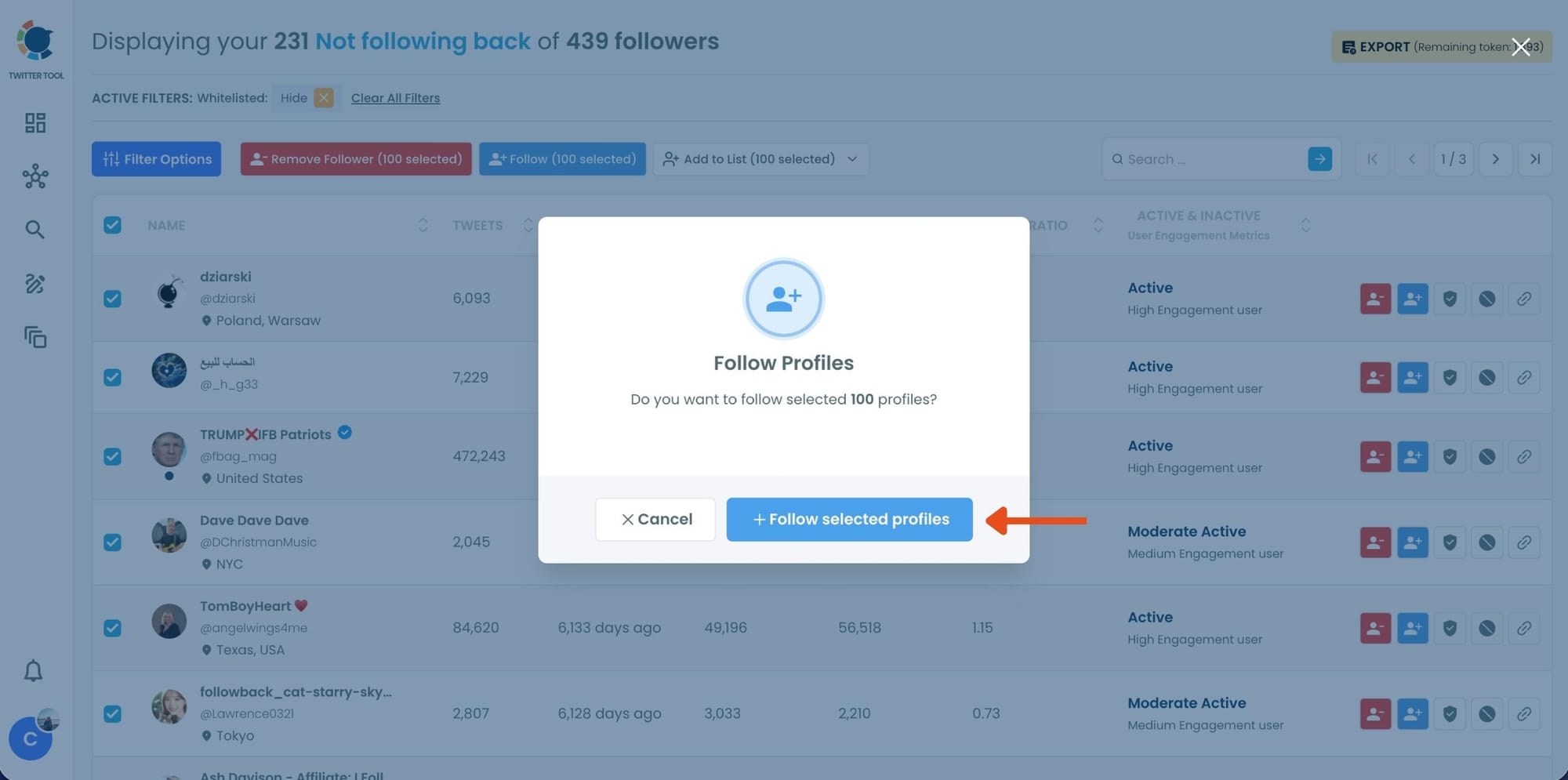
Select the followers you want to follow back (you can select many at once), then click Follow.
Circleboom will confirm the action and follow the selected profiles in bulk.
No repeated clicks.
No switching profiles.
No manual work.
Circleboom handles the process safely using X’s API limits.
What Changed After I Followed All My Followers Back
The difference was noticeable almost immediately.
Conversations started feeling easier. People who had followed quietly before became more comfortable replying, liking, and jumping into discussions.
The account no longer felt like a one-way broadcast, it felt like a shared space.
Engagement also became more consistent. Replies increased, not because the content changed, but because the relationship did. Once followers turned into mutuals, interaction felt more natural on both sides.
Another unexpected change was how the profile itself was perceived. The follower–following ratio looked healthier, and the account felt more approachable. New visitors didn’t just see numbers, they saw a connected network.
 infocircleboom.com
Most importantly, Twitter started feeling less transactional.
Following back removed an invisible barrier and turned passive followers into real connections, which is exactly what the platform is meant for.
Final Thoughts
Following fewer people might look impressive at first glance, but it doesn’t always create a strong network. On Twitter (X), real value comes from connection, not distance.
Following followers back changes how people interact with your account. It makes conversations easier, engagement more natural, and your profile more approachable. Instead of a one-way audience, you end up with a network that actually participates.
Once manual follow-back becomes unrealistic, having a clear view of who you’re not following back, and the ability to act on it efficiently, makes all the difference.
That’s how following back stops being a chore and becomes a simple part of managing a healthy Twitter presence.


%20Follow%20Back%20All%20My%20Followers%20on%20Twitter%20(X)%3F)
