How do you analyze a celebrity's Twitter account when the follower count runs into the millions? You look past that number to how much of the fan base is real and active, where the fans are, and how a typical post performs next to the viral one.
Manual: read the follower count, scroll the latest posts, and judge the account by the one post that went viral last month. Circleboom: type the handle into X Account Analysis and read the celebrity's audience quality, global spread and per-post results in one dated report, built from X's official API at Enterprise level.
→ Analyze a celebrity's Twitter account from the handle
Then judge the account by its typical post, not its famous one.
Why celebrity accounts break the usual reading
Celebrity accounts are different in scale, age and audience, and each difference bends the numbers.
Scale. A huge follower count makes every ratio small. An engagement rate that would look weak on a small account can be normal on a very large one.
Age. Many celebrity accounts are among the oldest on X. Years of followers pile up, including people who stopped logging in and accounts that were created in bulk and never removed.
Audience. Fame travels across borders. A singer from one country can have most of their followers in another, in several languages and time zones.
A celebrity's follower count measures fame; it does not measure the audience a post will meet.
That is why people who analyze celebrity accounts for work, such as brands weighing an endorsement or journalists covering a fan base, start from the audience, not the total.
Here is how the main panels read differently on a celebrity account:
| Report panel | Question on a celebrity account | Watch for |
|---|---|---|
| Human vs Fake/Bot | How much of the fame is people? | Large share built up over years |
| Active vs Inactive | How many fans still post? | Old, dormant layers |
| Ordinary vs Overactive | How big is the core fandom? | Fan accounts posting all day |
| Geography and language | Where are the fans? | Most fans outside your market |
| Top 5 Tweets | What carries the averages? | One viral post dwarfing the rest |
| Following view | Who do they follow? | A very short list |
Each row gets its own section below, in roughly that order.
What dormant and fake followers do to a large account
The longer an account exists, the more dead weight its follower list carries. Celebrity accounts carry the most.
Circleboom's report explains why that matters for reach. X first shows a new post to a small test group of the account's followers. If they engage fast, reach grows. If they do not, reach slows or stops. Dormant and automated followers in that first group make the test fail, even when the post is good.
The report's Audience Quality section shows the split: Human vs Fake/Bot, Active vs Inactive and quality tiers, with counts behind each share.
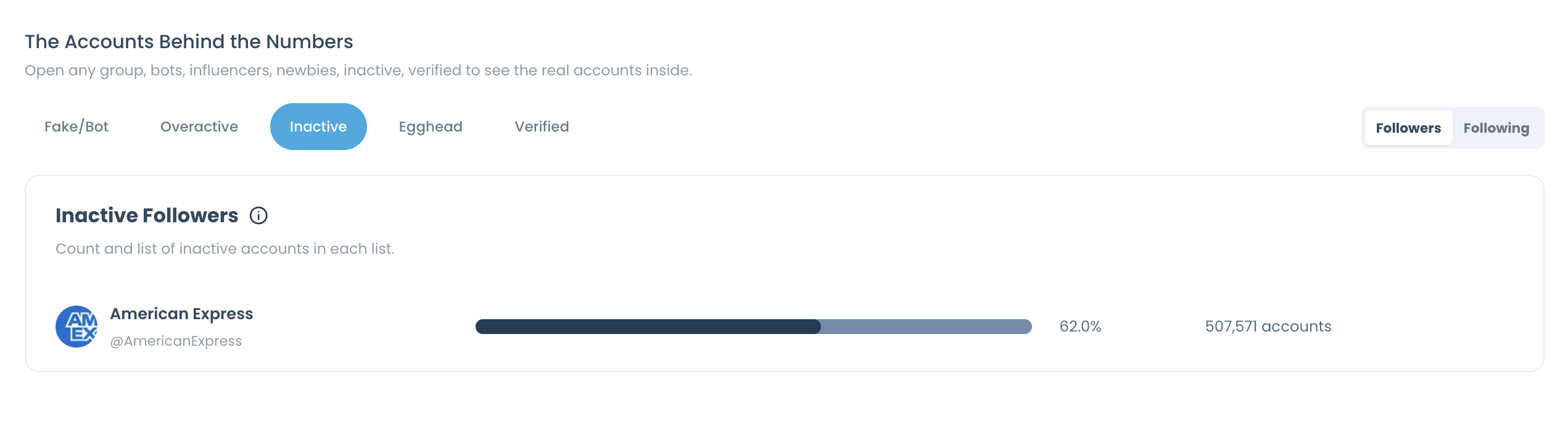
Here is an illustrative reading for a celebrity account with 8,000,000 followers:
- 9% suspected fake or bot accounts, about 720,000.
- 22% inactive, about 1,760,000.
- After both, roughly 5,520,000 remain.
Because a bot can also be inactive, the two groups can overlap, so treat the remainder as a floor. It is still millions of people, but it is not eight million.
The wider link between bots and reach is covered in do fake followers hurt your reach on Twitter. Treat each share as a signal for review, not a verdict on the celebrity: very large accounts collect unwanted followers without asking for them. The same signals are explained for any public profile in can you check if another account has fake followers on Twitter.
The fan accounts that post all day
Celebrity audiences contain a group most accounts do not: dedicated fan accounts that post far more than an ordinary user.
The Ordinary vs Overactive panel splits followers into those who post at normal daily volume and those who post far more than average.
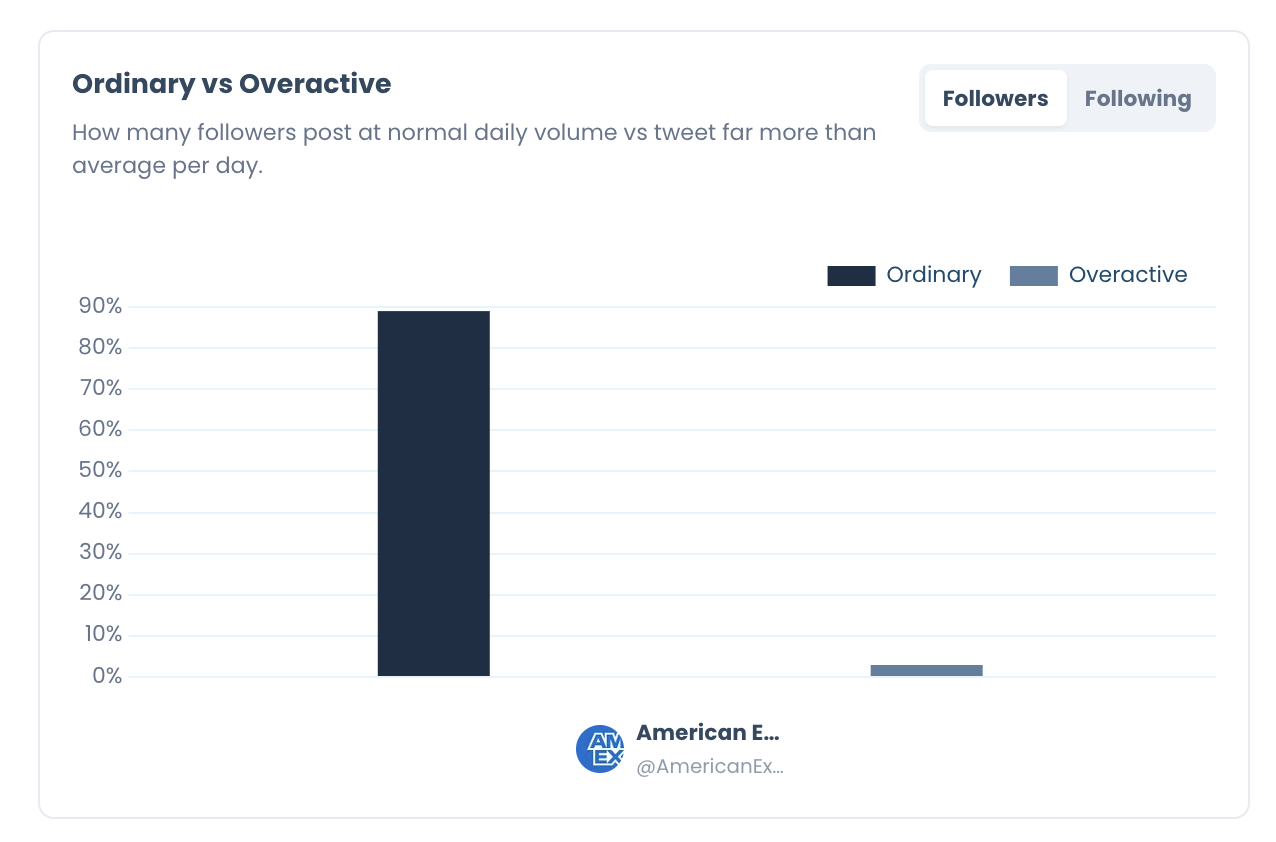
High volume can mean several things: fan accounts, news accounts, enthusiasts or automation. Circleboom's documentation is clear that volume alone does not identify spam, so inspect before you judge.
For a celebrity, a large overactive share is often a sign of an engaged fandom. Those accounts repost, quote and reply, and they carry posts into their own audiences.
On a celebrity account, an overactive follower may be the most valuable fan, not a problem.
Where a celebrity's fans actually are
Global reach is the part of a celebrity analysis that surprises people most. The demographics panels show it from four angles.
Geographic distribution names the four largest countries and groups the rest as Other. Language breakdown shows the languages detected on follower profiles in six fixed buckets: English, Chinese, German, Spanish, French and Other.
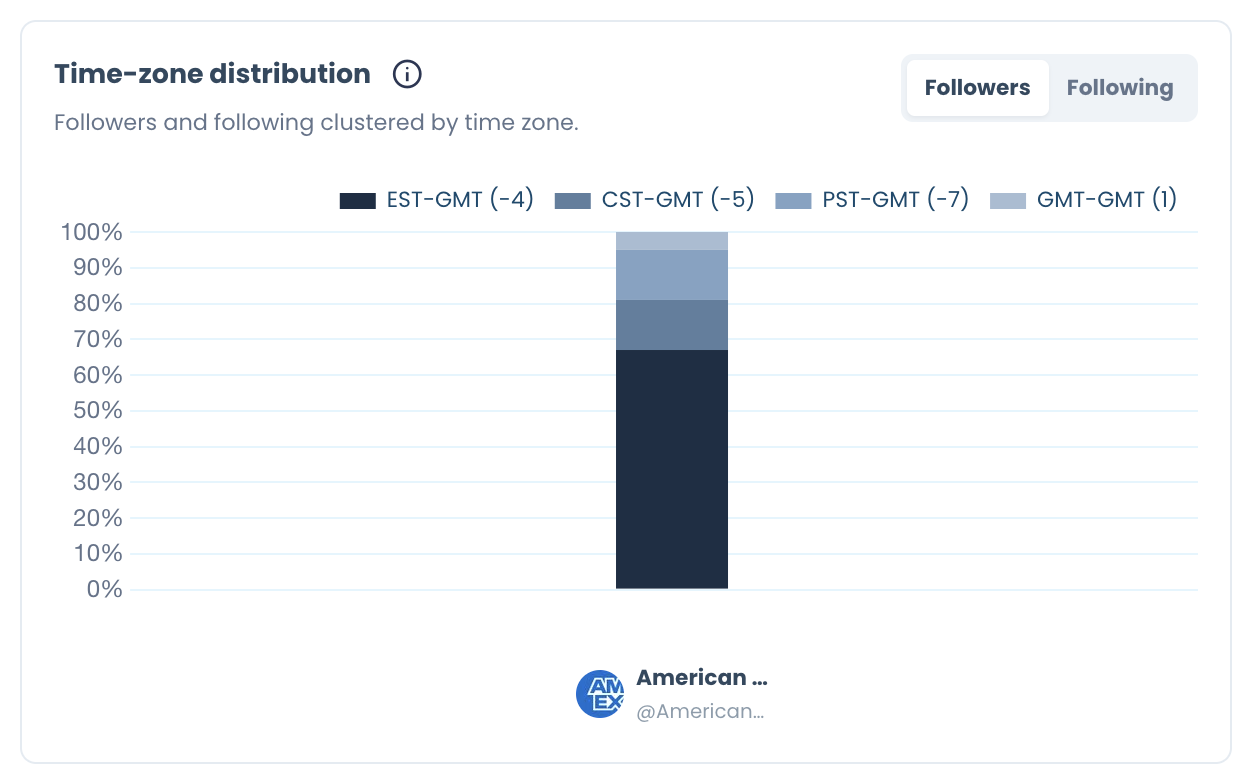
Time-zone distribution shows followers in four time-zone bands chosen from the data.
Gender breakdown shows the male and female share of followers as a group.
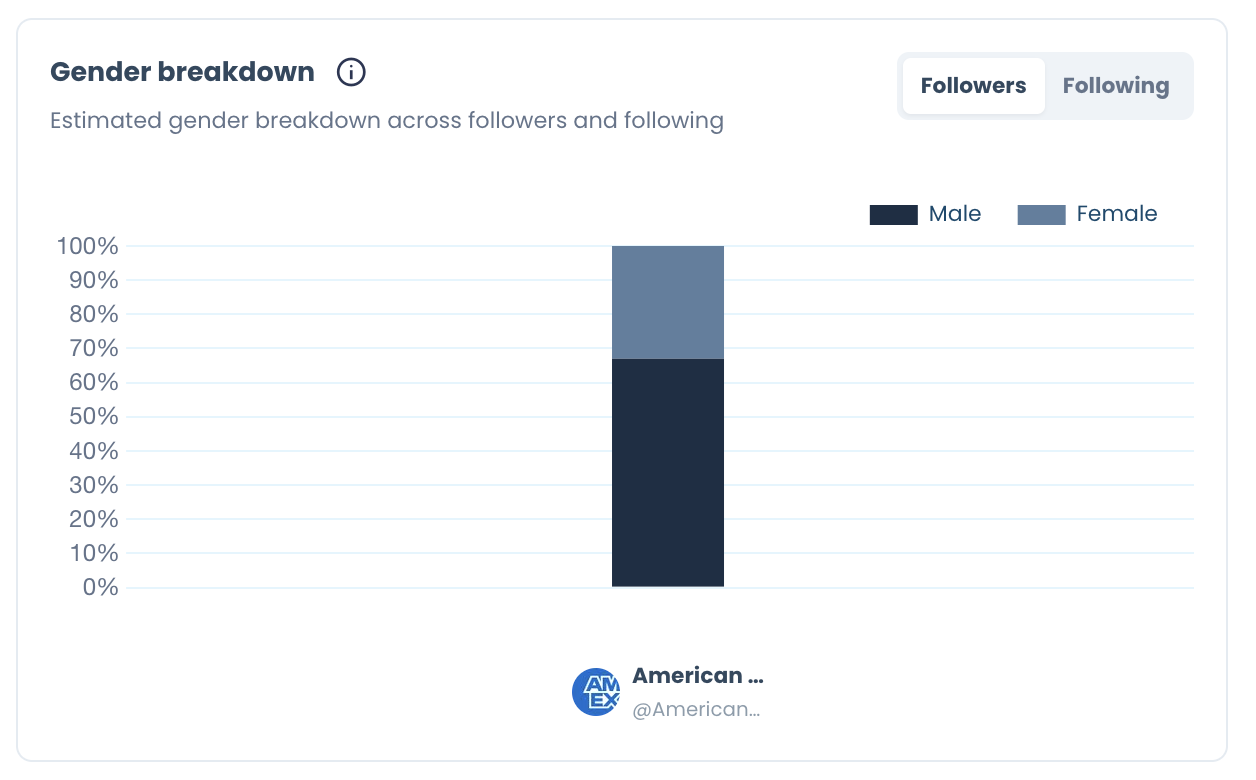
Circleboom calculates these from profile data in X's records, and they describe the audience as a whole, not any one fan. What a gender split can and cannot tell you is covered in how to analyze the gender demographics of Twitter followers. For a brand weighing an endorsement, they answer the question that decides the deal: are the fans in our market?
A celebrity with a vast following and a small share in your country can still be the wrong partner. The broader trade-off is discussed in should your business account follow celebrities on X.
Who the verified fans are
A celebrity's verified followers are a small slice with outsized pull: journalists, brands, other public figures and organizations.
The Verified panel breaks verified followers down by Blue, Gold and Gray badge. X's user data dictionary records a verification type for each account, such as blue, business or government, which is what makes that split possible.
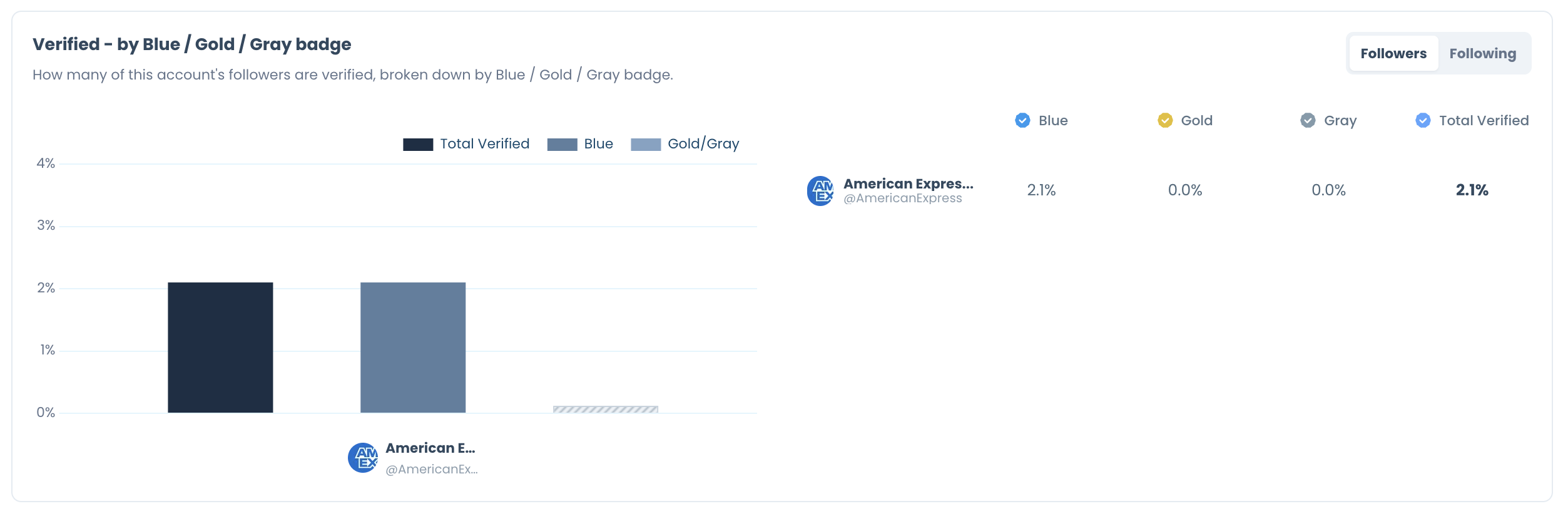
A celebrity whose verified followers lean toward organizations is part of an industry conversation, and their posts are more likely to be picked up by brands and media. One whose verified followers are mostly Blue subscribers has a fan base that pays for X, which is a different kind of reach.
Neither is better in general. It matters only against what you want the celebrity's posts to do.
If you want to go from shares to the actual accounts, analyzing any public account's Twitter followers shows how to list and filter them.
How Circleboom reads a celebrity's account
With Circleboom's X Account Analysis tool, you can analyze a celebrity's Twitter account by typing the handle. The account does not need to be connected to Circleboom, and you need no access to it.
Circleboom retrieves the account's followers, following and recent posts through X's official Enterprise APIs, the same access X grants the companies in its Enterprise customer listing. For an account this large, the source matters: scraping-based collection can miss records, and on a fan base of millions, missing records change the shares.
Every analysis is dated and saved, which is useful when a celebrity's audience shifts after a tour, a scandal or a new project.
You can analyze a celebrity's Twitter account with X Account Analysis and follow the steps below.
How to analyze a celebrity Twitter account with Circleboom
Run the report on the celebrity's handle, then read audience before results. Seven steps in two phases.
Run the report on the handle
- Log in to Circleboom Twitter with your X account.
- Open the Followers / Following Management & Analytics menu and choose X Account Analysis Report under Analytics.
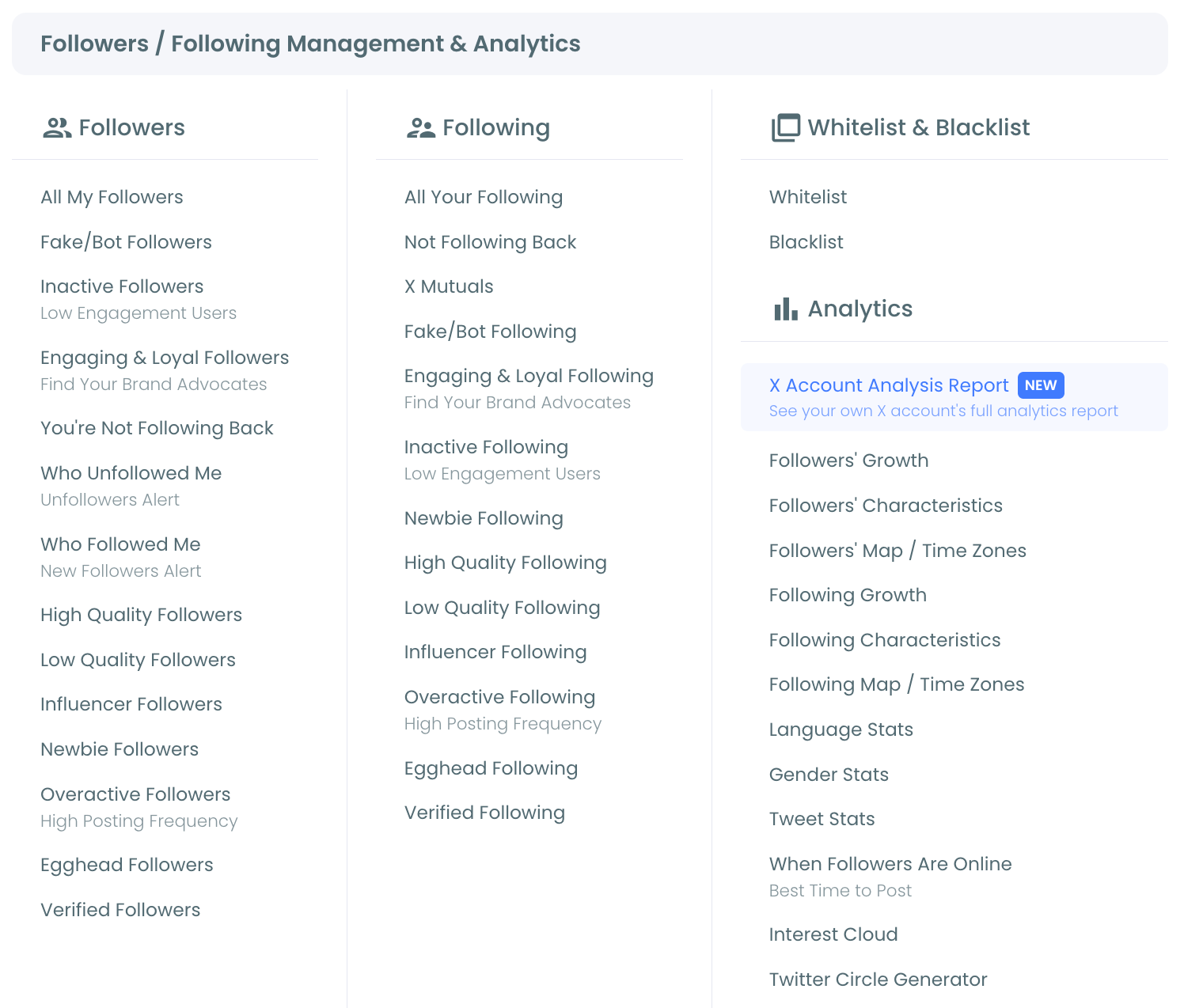
- Type the celebrity's handle and click Start Account Analyses.
- Choose Just this once for a single read, or Keep it up to date every month to follow the fan base over time.
Read the audience, then the results
- Read Audience Quality for the real, active and overactive shares behind the follower count.
- Read the demographics panels for countries, languages, time zones and gender.
- Read the Engagement summary, Impression/Views and Top 5 Tweets by Engagements to see how a typical post performs.
Audience comes first because on a celebrity account, the follower count is the least reliable number in the report.
In short: type the handle, read who the fans are and where, then judge a typical post.
Judge the typical post, not the viral one
Celebrity accounts produce outliers. One post can travel far beyond the follower list and dominate every average for months.
The Engagement summary shows per-post averages over the last 90 days. Top 5 Tweets by Engagements shows which posts carry those averages. If the first post dwarfs the other four, the averages describe that post.
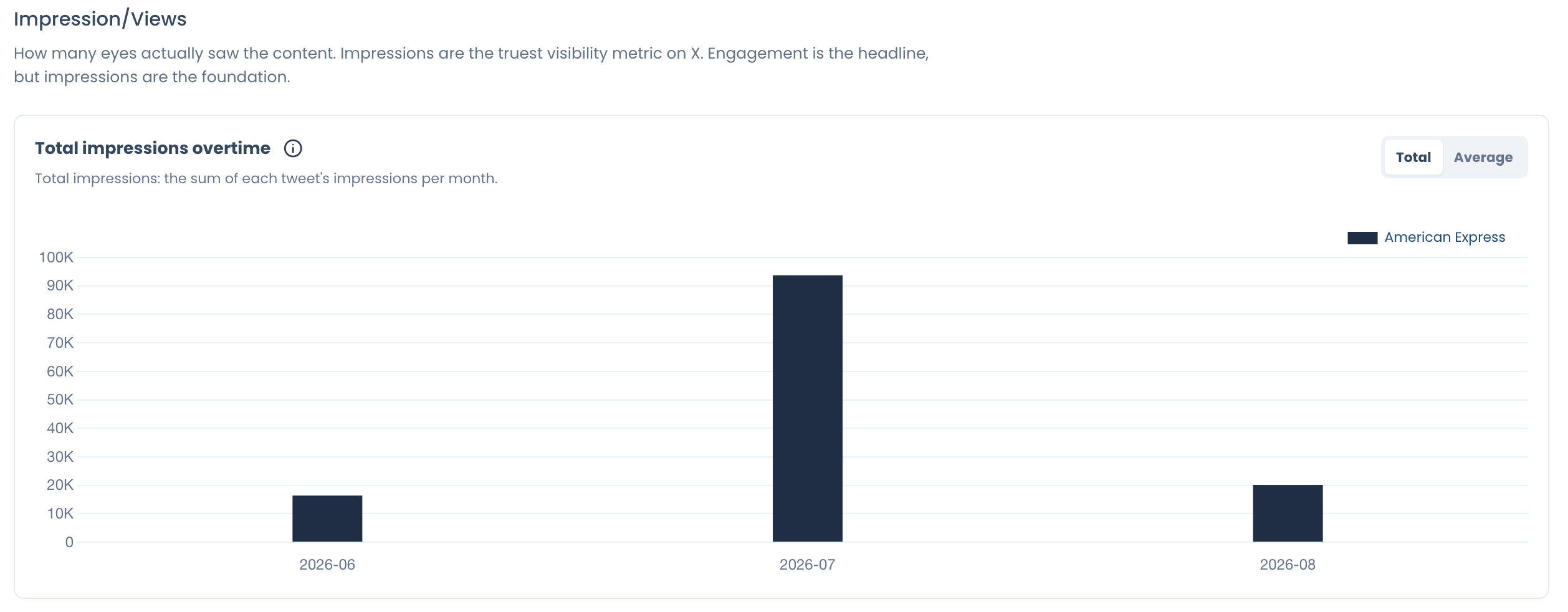
Impression/Views helps separate the two. Total impressions overtime shows the sum of each post's impressions per month, and a tall month can come from more posts, one post that traveled, or both.
Video performance deserves a look on celebrity accounts too. Video posting rate shows the share of posts with video, and Total video views shows views per video and in total. Views often concentrate in one or two clips.
A celebrity is worth what their ordinary post earns, because that is the post you can count on.
Why the Following view may look empty
Many celebrities follow very few accounts. That is normal, and it affects one part of the report.
The Followers / Following toggle switches every audience panel to the accounts the celebrity follows. When that list is small, the Following view can show near-empty panels: "Other 0.0%" in geography, empty time-zone and gender charts, or "No interest data available" for bio keywords.
That is not missing data. It is an accurate picture of a short following list. Read the follower side, and treat the Following view as a list of names rather than a statistical audience.
If who the celebrity follows is exactly what you want to know, tracking celebrity or influencer following activity on Twitter covers alerts for new follows and unfollows through Track Someone's X Account.
Which reading fits your reason
The right focus depends on why you are analyzing the celebrity:
- If you are weighing an endorsement, read Audience Quality and Geography first, then the typical post in the Engagement summary.
- If you are comparing celebrities, put them side by side in X Competitor Analysis, the method in how to compare celebrity Twitter accounts.
- If you want to know whether two celebrities share fans, Compare X Accounts shows the followers they have in common.
- If you are covering a fan base, read demographics and the overactive share, and keep the report date with every figure you quote.
The report is the same in each case; the first section you open is what changes.
→ Analyze a celebrity's Twitter account before you quote the numbers
Fame is the input, not the answer
A celebrity's follower count tells you how famous they are. The real, active, located audience behind it tells you who a post will reach, and the typical post tells you what to expect.
Circleboom reads that for any celebrity handle, from records retrieved by an Official X Enterprise Developer, with a date on each report.
→ Run X Account Analysis on a celebrity's X account
Celebrity account analysis: common questions
Does a large fake follower share mean the celebrity bought followers?
No. Very large accounts attract unwanted followers on their own, and a classification is a signal for review, not proof of a purchase. A sudden jump with no matching engagement is the pattern people look for when they check if a Twitter account buys fake followers.
Can I share a celebrity analysis in a pitch or article?
Yes. Create Your Presentation builds a branded export with the report date, so readers can see exactly which day the numbers describe.
How do I see a celebrity's audience change over time?
Choose Keep it up to date every month. Each month adds a new dated report you can read against the earlier ones.
Does the celebrity need to approve the analysis?
No. You type the handle, and the account does not need to be connected to Circleboom. The report reads public records through X's official API.