
You have something to sell. Maybe it's a car, a house, handmade jewelry, old clothes, or a full line of products you want to sell every week. You've thought about using a Facebook Page for it. But then the real question hits you: where do buyers actually go to find this kind of thing? Which marketplace is the right one?
This guide answers that question in plain terms. No jargon, no fluff. Just a clear way to figure out where you should be selling, based on what you're selling.
What a marketplace actually is
A marketplace is simply a place where buyers already go looking for things to buy. You don't have to build that audience yourself. You just show up where they already are.
This is different from having your own website or your own Facebook Page. A Page is your storefront. It tells people who you are. A marketplace is where strangers who don't know you yet are actively searching to buy something like what you have.
Both matter. But they solve different problems, and mixing them up is where most people waste time.
Speaking about Facebook Pages, do you have one? I shocked when one of my friends said I am searching on Facebook Pages because it is the only option for those local people when she was looking for a rental house in the town she recently moved to.
Yes, I did use it too when I sold my second-hand furniture during my university years and seeing people are still using it was very shocking. So, the lesson to be learned is this: if you are selling something, you should be on Facebook, and you should create a Facebook business page. If you don't know how to do it, here is our guide on how to create a business page on Facebook ⬇️
 Altug Altug
Start with one question: what are you selling?
This one question decides almost everything else. A car buyer, a house buyer, and someone looking for a handmade candle are not searching in the same place, in the same way, or with the same expectations.
Before picking any platform, be honest with yourself about the answer to these three things.
Is it something local, or something you'd ship anywhere? A couch is local. A necklace can go in a box and travel across the country.
Is it a one time sale, or something you'll sell again and again? Selling your old car once is different from running a shop that sells ten items a week.
Are buyers looking for it by browsing, or by searching with a specific need? People browse Facebook Marketplace for a nice couch. People search Zillow because they need a house in a specific city, right now.
Once you can answer these three questions, the right marketplace becomes obvious. Here is where that leads, category by category.
If you're selling a car
Car buyers do very specific research before they buy. They compare prices, mileage, and condition across multiple listings before contacting anyone. This means your car needs to show up where those comparisons happen.
AutoTrader, Cars.com, and CarGurus are the three big names built specifically for buying and selling vehicles. They let buyers filter by year, mileage, and price, which is exactly how car buyers shop. These are the best fit if you want a serious buyer who has already done their homework.
Facebook Marketplace works well too, especially for a quick local sale without listing fees. It's a good second stop, not always the first one, because it doesn't have the same filtering tools that dedicated car sites have.
Carvana and similar instant offer services are worth checking if you'd rather sell in one click and skip the back and forth of negotiating with strangers, even if the price is usually a bit lower.
If you're selling a house or renting a property
Real estate buyers almost always start their search on a small handful of sites, because that's where property listings are expected to be.
Zillow, Redfin, and Realtor.com are where most house hunters begin looking, whether they're working with an agent or not. If you're selling without an agent, look for a "flat fee MLS" service, since these sites pull their listings from the MLS database that real agents use.
Facebook Marketplace has a real estate section too, and it's genuinely useful for rentals, room shares, or a for sale by owner listing aimed at local buyers. It won't replace the MLS for a full home sale, but it's a smart place to add extra visibility for free.
The rule here is simple: for a full home sale, go where serious buyers already expect to find listed properties. For rentals or a quick local sale, Facebook Marketplace adds reach at no cost.
If you're selling handmade or craft items
Handmade buyers are looking for something they can't get from a big brand. They want to feel like they found something special, made by a real person.
Etsy is still the biggest destination built around this exact idea. Buyers go there specifically expecting handmade, vintage, or custom items, which means you don't have to convince them that handmade is worth buying. They already believe that.
Facebook Marketplace and a Facebook Page together work well as a second channel, especially for local buyers who'd rather pick something up in person or message you directly with a custom request.
If your items are more one of a kind or custom order based, keep a Facebook Page active alongside Etsy. It gives buyers a way to see your full range of work and message you directly, which a marketplace listing alone doesn't offer.
If you're selling clothes or fashion items
Clothing resale has its own separate world of buyers, and where you sell depends on how much effort you want to put into each listing.
Poshmark and Depop attract buyers who enjoy browsing style and outfits, closer to scrolling a feed than searching a catalog. They reward good photos and a bit of personality in how you present items.
Vinted has grown fast because it doesn't charge the seller a fee, which matters if you're selling in volume rather than one item at a time.
Facebook Marketplace is still the fastest option for local, no shipping, no photos as fashion required, sale of a bag of clothes or a single item you don't want to hold onto anymore.
If you're selling electronics or gadgets
Buyers of used electronics care about one thing above all else: proof that the item actually works and isn't stolen or locked to another account.
Swappa and Decluttr are built around this exact concern, with steps that verify devices before they're listed, which builds trust that a random listing can't offer on its own.
eBay remains the largest general marketplace for electronics, especially for anything a bit older, rare, or collectible, where a buyer is searching for a specific model rather than browsing.
Facebook Marketplace works fine for a quick local sale of something common, like a phone or a laptop, when you'd rather hand it over in person than deal with shipping and returns.
If you're selling furniture or home items
Furniture is heavy, awkward to ship, and usually sold to someone nearby. That single fact decides most of this choice for you.
Facebook Marketplace and OfferUp are the two biggest local options, and both are built for exactly this kind of in person, pick it up yourself sale.
Chairish is worth a look specifically for vintage, designer, or higher end furniture, where buyers are willing to pay for shipping because the piece itself is the draw.
If you're running a full online store with many products
If you're not selling one item but a whole product line, you're not choosing one marketplace anymore. You're choosing a mix.
Amazon and Walmart Marketplace put your products in front of the largest number of buyers, but come with more competition and stricter seller rules.
Etsy still applies here if your products are handmade, craft supplies, or vintage, even if you're selling many of them at once.
Faire is built specifically for wholesale, meaning you're selling to other small businesses and shop owners rather than individual shoppers.
Most sellers at this stage end up on two or three of these at once, plus a Facebook Page that ties everything back to one brand.
If you offer a local service instead of a physical item
Not everything you sell is a product. If you're offering a service, a repair, a lesson, or a job like moving help, the marketplace question shifts again.
Nextdoor works well because it's organized entirely around neighborhoods, which means you're reaching people who can actually use a local service.
Thumbtack and TaskRabbit connect you with people actively searching for someone to do a specific job, rather than browsing for something to buy.
How to actually search and compare marketplaces yourself
Reading a list like this is a good start, but the real test is doing a bit of your own research before you commit your time to one platform. This takes fifteen minutes and it's worth it.
Search for what a buyer would type, not what you'd type as a seller. Try "buy used car near me" or "handmade candles online" and see which sites actually show up first.
Look at existing listings for something like yours. If a marketplace is full of similar items selling at reasonable prices, buyers are there. If it's empty or full of unrelated items, they're not.
Check what it costs before you list anything. Some marketplaces are free to list and only take a cut when you sell. Others charge a flat listing fee whether it sells or not. Read this before, not after.
Post in two or three places at once for your first item. You don't have to guess right the first time. Try a couple of options and see where you actually get real messages from buyers, then focus your effort there.
Where a Facebook Page fits into all of this
A Facebook Page is not a replacement for a marketplace, and it's not competing with one either. It's your home base. It's where someone lands after they've already found you somewhere else and want to see more of what you offer.
Use Facebook Marketplace to get found by local buyers searching for exactly what you have right now. Use your Facebook Page to turn a one time buyer into someone who comes back, follows what you post, and trusts you enough to buy again.
The two work best together, not as a choice between one or the other.
If you are like me, selling more than one items from more than one category, you need more Facebook Pages, dedicated to a separate niche. But, when the number goes higher, it is becoming harder to manage the pages all together. For example, I have 30 Facebook Pages 😅
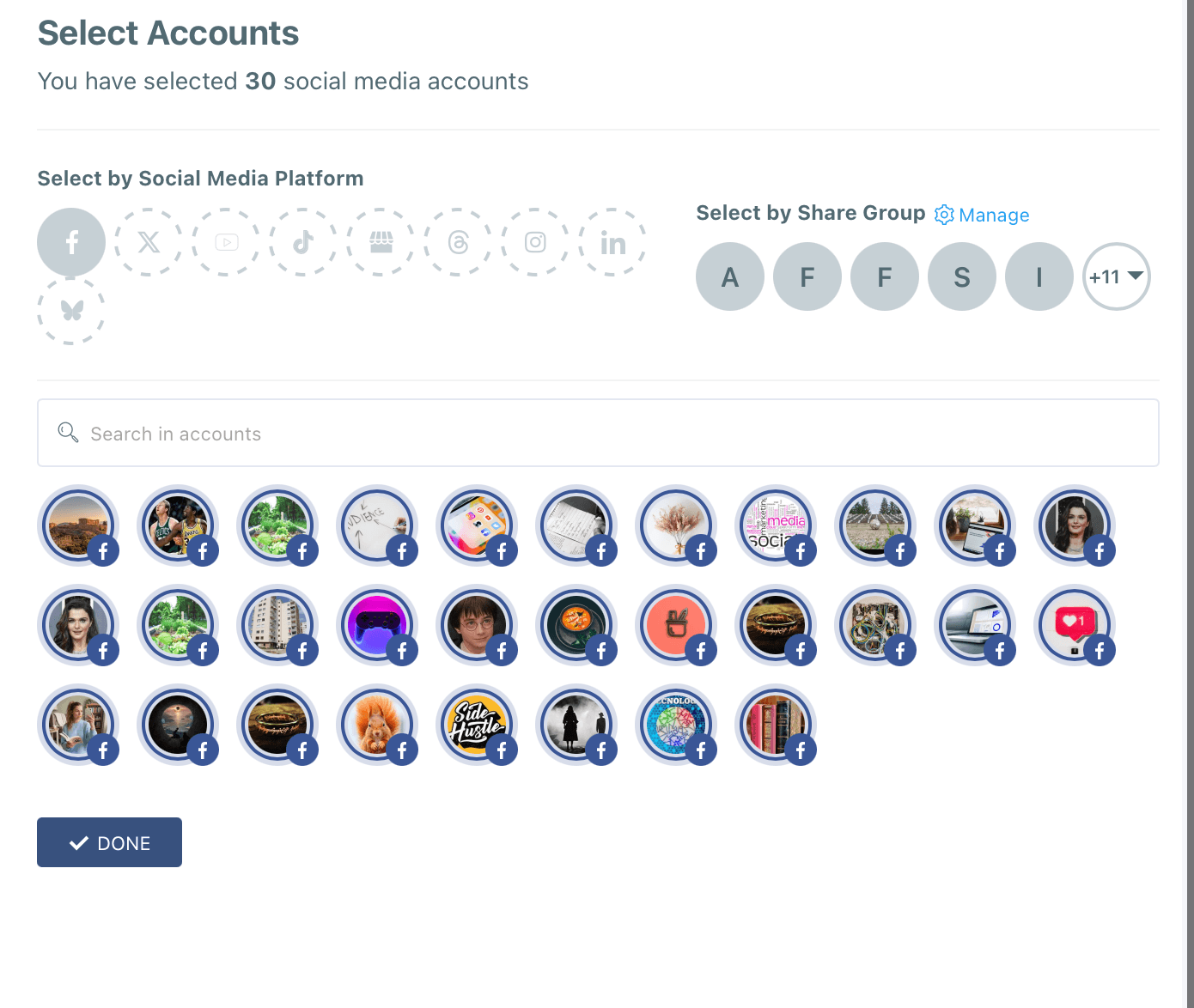
I manage them with Circleboom. I can connect them to all the same dashboard, post from one place, assign team members to manage pages together and create a content plan.
You can see my content plan for my all Facebook Pages here:
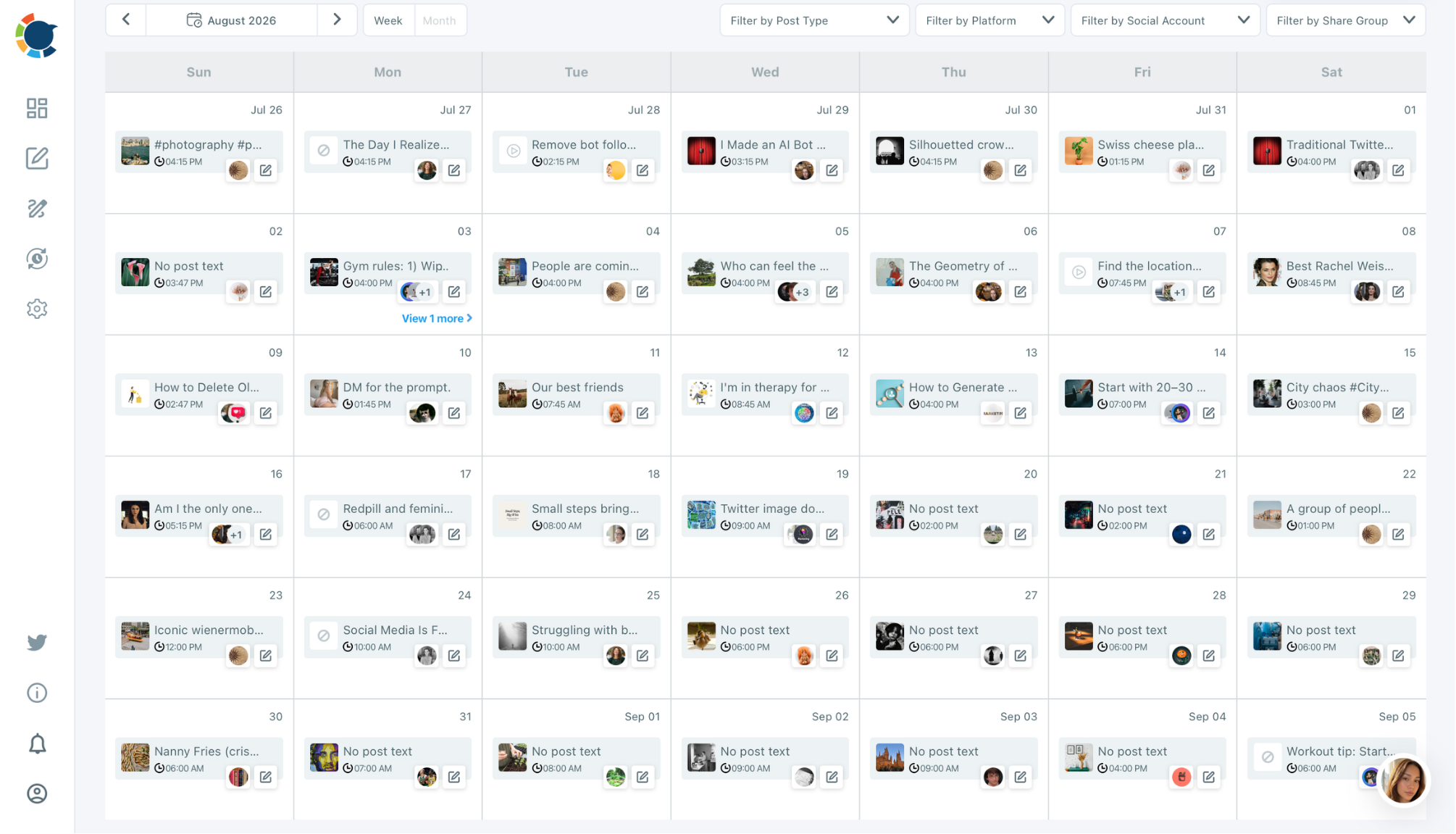
It is for one month and it only took 3 hours, one sitting.
Quick decision checklist
Before you pick a marketplace, run through this short list.
Is your item local or shippable? Local items do best on Facebook Marketplace, OfferUp, or Craigslist. Shippable items do better on eBay, Etsy, or a category specific site.
Is it a one time item or an ongoing product line? A one time sale needs one good listing. A product line needs a real store, on Amazon, Etsy, or your own Page, not just one marketplace post.
Does the category have a dedicated site? Cars, houses, and handmade goods all have marketplaces built specifically around them. Use those first, then add Facebook Marketplace as extra reach.
Frequently Asked Questions
Can I sell on more than one marketplace at the same time? Yes, and for most sellers this is the smart approach. Selling on two or three platforms at once costs nothing extra in most cases and simply increases how many buyers can find your listing.
Is Facebook Marketplace good enough on its own? For local, one time sales, often yes. For something that needs to reach buyers outside your area, like a specialty item or a full house sale, you'll want a category specific site alongside it.
Do I need a Facebook Page if I'm already using Facebook Marketplace? Not strictly, but it helps if you plan to sell more than once. A Page gives repeat buyers a place to follow you and see new items, instead of finding you only through a single old listing.
How do I know if a marketplace is worth the fees it charges? Compare what it costs to what a similar item is actually selling for on that platform. If real buyers are paying fair prices there, the fee is usually worth it. If listings sit unsold for weeks, it isn't.
What if my product doesn't fit neatly into one category? Start with the marketplace closest to your main category, then add a general one like Facebook Marketplace or eBay as a second listing. You don't need a perfect fit on the first try.
Should I always pick the biggest marketplace? Not always. A smaller, category specific marketplace with fewer but more serious buyers often works better than a huge general site where your listing gets buried.
In short
The right marketplace isn't the most popular one. It's the one where the people already looking for what you sell happen to be searching. Start with what you're selling, match it to the platform built for that category, and add Facebook Marketplace or a Facebook Page as extra reach once you know where your real buyers are.