The fastest way to make Twitter work for B2B companies in 2026 is to run it as an operating system rather than a broadcast channel. Three loops compose the OS: ICP discovery and engagement (audience), scheduled content (broadcast), and analytics (optimization). The combined system produces durable pipeline contribution; broadcast-only Twitter for B2B does not.
Circleboom's Find Influencers, Bulk Schedule, and Engagement Analytics features run the OS, on Circleboom's verified Enterprise developer access.
→ Run the B2B Twitter OS
Below: the three loops, the targeting workflow, and the analytics that close the loop.
Why B2B Companies Need an OS, Not a Channel
Most B2B companies treat Twitter as a broadcast channel: post announcements, run paid ads, hire influencers. The approach produces the predictable results: low engagement, high CAC, channel cuts.
The structural fix treats Twitter as an operating system with three loops running simultaneously. Each loop produces something the other two cannot.
The audience loop discovers and engages ICP-aligned accounts.
The broadcast loop publishes scheduled content for visibility.
The analytics loop closes the optimization cycle.
The article on maximizing ROI with B2B lead generation campaigns covers the same multi-loop principle from a campaign angle.
How to Run Twitter for B2B Companies (Step by Step)
The flow has three phases corresponding to the three loops.
Hands-on demo: how Find Influencers ranks B2B prospects.
The flow, in order.
Phase 1: Audience loop
- Log in to Circleboom Twitter and connect through OAuth.
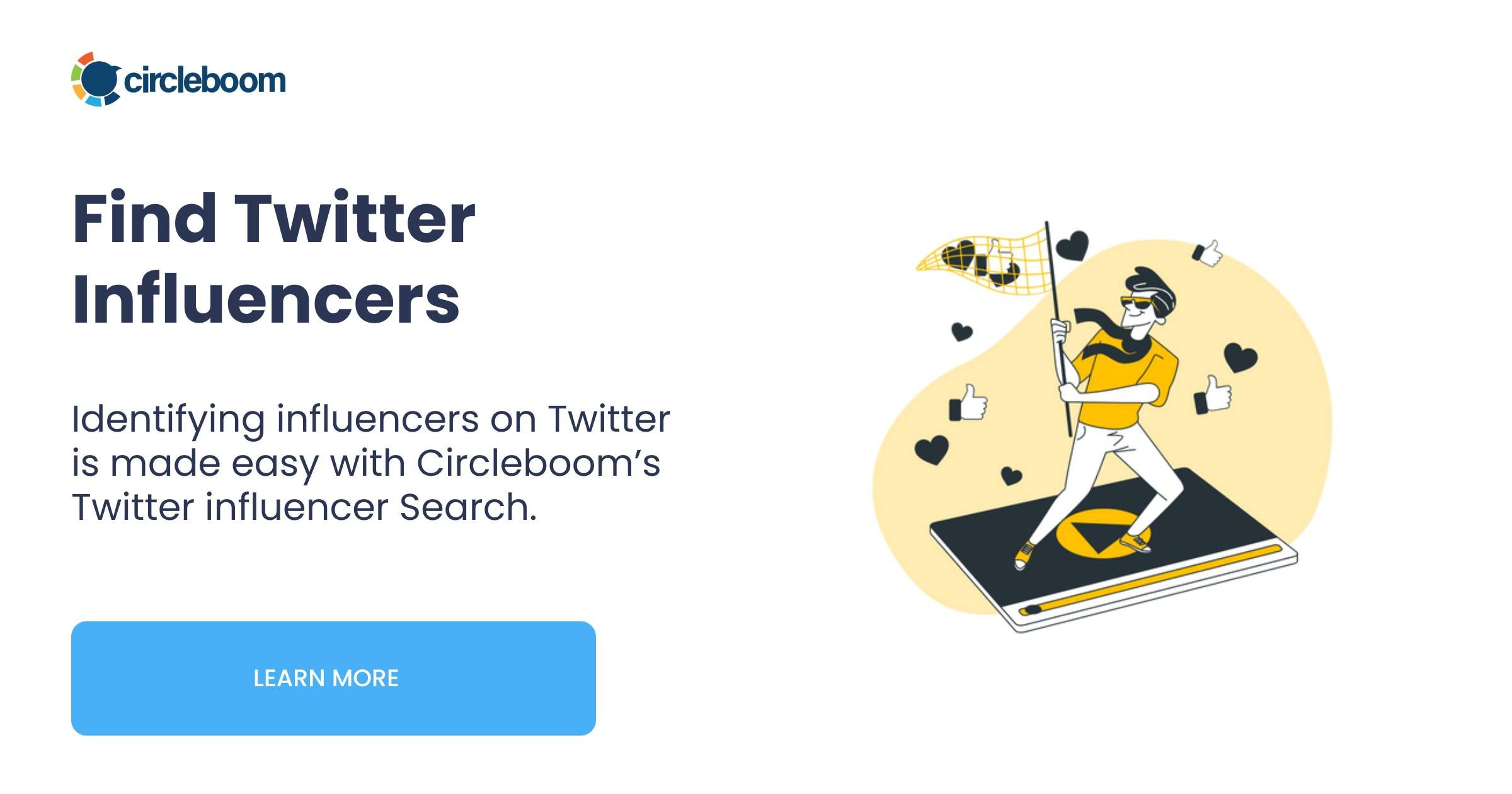
- Open the Advanced X Search menu.
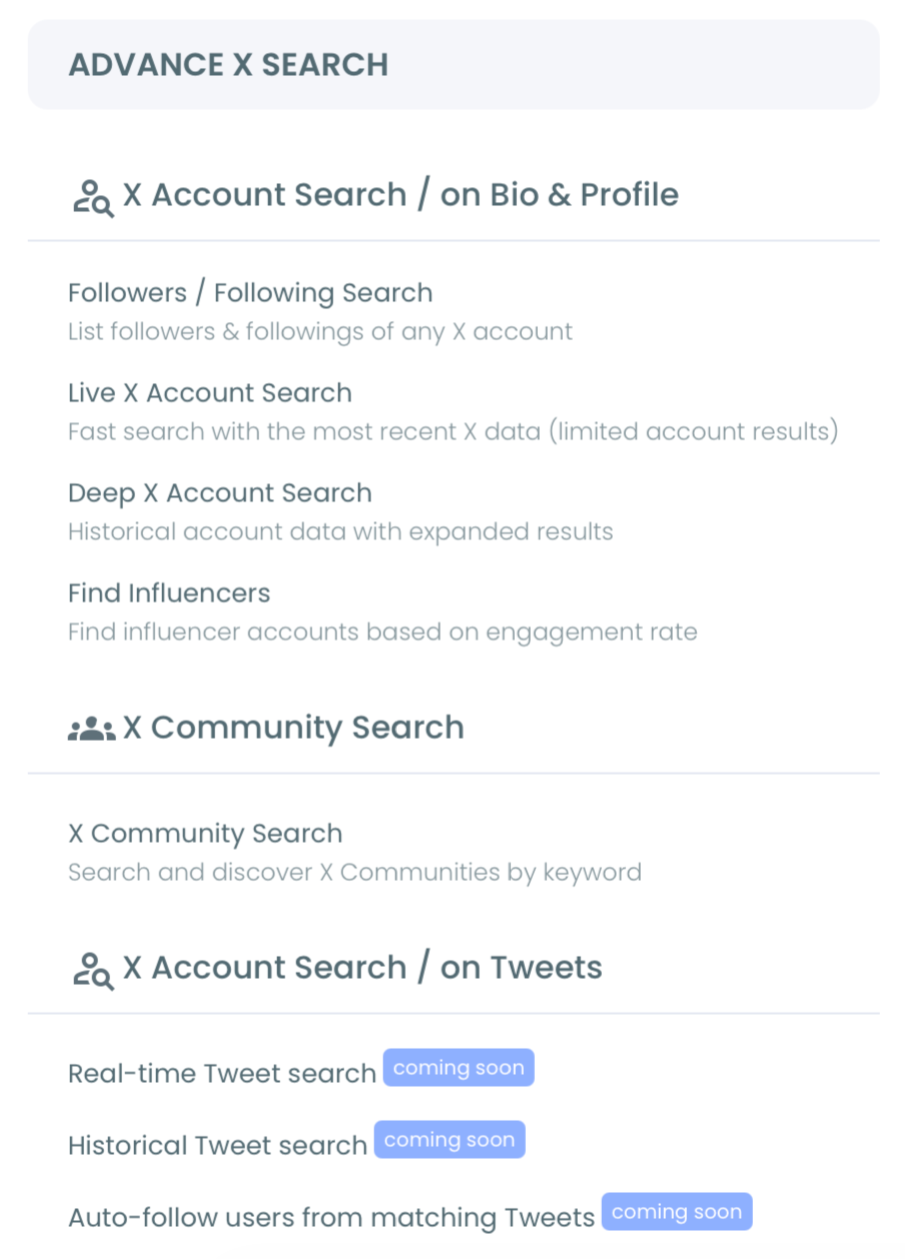
- Run Find Influencers with B2B ICP keywords (persona role, vertical, technology stack).
Phase 2: Broadcast loop
- Build a 14-day Bulk Schedule queue with hook-plus-link-tweet-2 threads in the X Post Planner.
- Enable Cross-Posting to LinkedIn for B2B audience overlap.
Phase 3: Analytics loop
- Open Engagement Analytics weekly to identify converting post shapes.
- Refine ICP keywords and engagement priorities based on engagement signals.
That sequence runs the B2B Twitter OS.
What Each Loop Specifically Does
The audience loop builds relationships with ICP-aligned accounts. Without it, the broadcast loop reaches cold audiences and produces low conversion.
The broadcast loop creates the visibility surface. Without it, the audience loop produces relationships without the discovery mechanism that scales them.
The analytics loop closes the optimization. Without it, both other loops run on unchanging assumptions about what works.
The article on your most engaging followers on Twitter covers the engagement-side dynamics directly.
What B2B Twitter Looks Like Across Categories
The OS adapts per B2B category with keyword and tone adjustments.
For B2B SaaS: technical-tone content, developer-persona engagement, technology-stack keywords.
For B2B consulting: thought-leadership content, C-level engagement, practice-area keywords.
For B2B services: case-study content, industry-vertical engagement, deliverable-type keywords.
For B2B manufacturing: industry-trend content, supply-chain engagement, product-category keywords.
The structural framework is identical; the keyword sets and content tones adjust per category.
What to Avoid
Three failure modes for B2B Twitter.
- Broadcast-only campaigns. Reaches cold audiences; produces low conversion.
- Mismatched targeting between organic and paid. Eliminates the layering effect.
- No engagement-amplifier role. Without dedicated time, the audience loop does not run.
The article on keyword-safe alternative to Twitter auto-follow covers the safety question.
Why Twitter Specifically (vs Just LinkedIn)
LinkedIn often outperforms Twitter for B2B at the paid level. Twitter's complementary value is engagement-driven relationship-building and demographic reach LinkedIn alone does not provide.
Most successful B2B teams use both: LinkedIn for primary paid pipeline, Twitter for engagement-driven trust signals and audience diversification.
The Bottom Line
Twitter for B2B companies works as an operating system, not as a channel. The three-loop structure produces durable pipeline contribution; broadcast-only does not. Circleboom integrates all three loops on one dashboard.
Common Questions About B2B Twitter
How long until the OS produces results?
Initial lift in 4 to 6 weeks; meaningful compounding at 90 to 180 days.
Does the OS scale to enterprise companies?
Yes. Multiple engagement-amplifiers handle scaled organic; the broadcast and analytics loops scale automatically.
Can the OS run alongside LinkedIn campaigns?
Yes. Most B2B teams run both for overlapping audiences and complementary motions.
Is the workflow safe under X's rules?
Yes. All loops run through Circleboom's Enterprise developer access.