Buried in your following list are accounts that were never real: bots, spam profiles, and fake personas you followed back without a second look. They add nothing, clutter your feed, and make your account look careless. To find the fake accounts in your Twitter following list, you need multi-signal detection that reads the tell-tale patterns of inauthenticity, not a manual scroll through thousands of profiles.
Circleboom scans your following list on X for fake and bot accounts using multiple signals at once, missing photos, lopsided ratios, recent join dates, and more, then isolates the suspicious ones for review.
→ find fake accounts in your following list
Below: how fakes are detected, and how to clear them without cutting real accounts.
 infocircleboom.com
What Makes an Account Fake
A fake account is inauthentic by design: a bot, a spam profile, or a manufactured persona pretending to be a real person. These inauthentic profiles are often connected to broader forms of account creation fraud, where fake identities are generated at scale to manipulate platforms. The challenge is that no single trait proves it, which is why detection relies on signals stacking together rather than one obvious flag.
The classic signals are well known. A missing profile photo and empty bio, a tweet count far too low for the account's age, an extreme following-to-followers ratio, a very recent join date, and near-zero genuine engagement. Any one of these can appear on a real account; several together almost never do.
That is the principle behind catching fakes. You are not looking for a single smoking gun, you are looking for a cluster of weak signals that, combined, point clearly at an account that should not be in your following.
Why Fake Follows Hurt Your Account
The accounts you follow shape your feed, so fake follows pump spam and bot content straight into your timeline. Every fake account you follow is an input the algorithm uses, and inputs full of spam produce a feed full of noise.
There is a credibility cost as well. When anyone reviews who you follow and finds clusters of obvious bots, your account reads as careless or as a follow-for-follow gamer. X treats inauthentic accounts as a serious problem, as its authenticity rules make clear, and a following list visibly full of them undercuts your standing.
Clearing the fakes fixes both. Your feed loses the spam, and your following starts to read as a deliberate set of real accounts rather than a padded number.
Fake, Low Quality, and Newbie Are Different
It helps to separate fake from its neighbors. A low quality account is often real but weak, a thin profile or a lopsided ratio on a genuine person. A newbie account is simply new. A fake account is inauthentic at its core, regardless of age or polish.
The distinction changes how you act. Fakes are almost always safe to remove, because a bot has no legitimate claim to your following. Low quality and new accounts deserve a review, since some are real and worth keeping. Knowing which category an account falls into keeps your cleanup precise.
So while these views overlap, the fake/bot view is the one tuned specifically for inauthenticity, reading the multi-signal pattern that marks an account as manufactured rather than merely weak or new.
How Circleboom Detects Fake Follows
Circleboom is an official X Enterprise Developer company, so it reads your following and each account's signals through sanctioned access rather than scraping.

Your account stays safe, and the detection runs on complete, authorized profile data.
From there, the tool evaluates every account you follow against the multi-signal criteria, missing photo or bio, low activity for the account's age, extreme ratios, recent creation, weak engagement, and flags the accounts where several signals overlap. The suspicious follows land in one view, each enriched so you can see why it was flagged before you act.
Watch how to find a fake Twitter account:
How to Find Fake Accounts in Your Twitter Following List
The whole process takes a couple of minutes. Follow the steps in order.
- Log in to Circleboom Twitter and connect your X account with secure OAuth.

- Open the Follower and Following management and analytics menu to reach the detection tools.
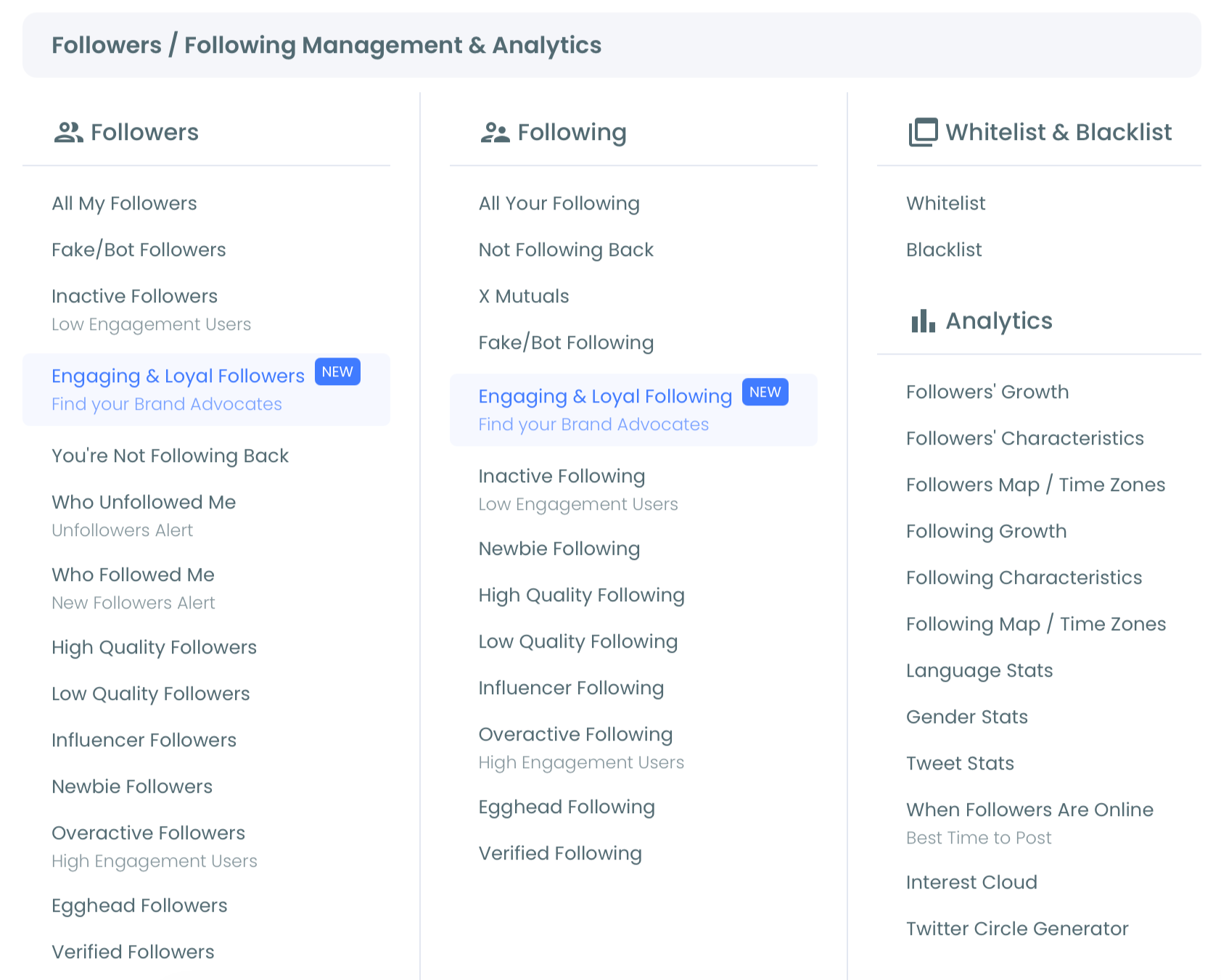
- Open the Fake/Bot Following view to isolate the suspicious accounts you follow.
- Whitelist any real accounts, then unfollow or block the fakes at a safe, gradual pace.
Because the view is built from live signals, re-running it regularly catches new fakes as they slip in, which keeps your following from quietly refilling with bots between cleanups.
Review the Borderline Cases First
The one habit that keeps a cleanup honest is reviewing before removing. The detection is accurate about signals, but a few real accounts can trip them, a genuine person with a sparse new profile, for instance. Open the borderline cases and confirm.
Whitelist the real ones with a click so they are protected from this and every future cleanup. The clear fakes, the no-photo, no-bio, thousand-follow bots, can go without hesitation. The guides to spotting fake Twitter followers and distinguishing fake accounts from real ones sharpen the call.
For confirmation, a second tool helps. A bot check reads an individual account, and a baseline read of how many of your follows are bots tells you the scale of the problem before you start.
Clear the Fakes Safely
Once you have confirmed the fakes, clearing them is straightforward and safe. Circleboom paces unfollows within X's limits, so even a large purge of bot follows stays compliant and never looks aggressive. For persistent or hostile accounts, you can escalate to blocking instead of just unfollowing.
Make it a routine rather than a one-time event. Fakes slip in continuously through follow-back waves, so a regular pass keeps them from accumulating. Pair the fake/bot view with a low quality following check for the weak-but-real accounts, and lean on a structured fake followers audit to keep the whole list clean.
The fakes in your following are the easiest accounts to justify removing, and a tuned detection view is what turns finding them from an impossible manual job into a two-minute review.
The Bottom Line
Fake accounts hide in every following list, and X gives you no real way to see them all as one group. Multi-signal detection reads the pattern of inauthenticity across your whole following, isolates the bots and spam, and lets you clear them while protecting the real accounts.
Detect the fakes, review the borderline cases, and clear the rest on a safe, gradual path.
→ Find the fake accounts in your following
Questions Readers Ask
What is the difference between a fake account and a low quality one?
A fake account is inauthentic by design, a bot, spam profile, or manufactured persona. A low quality account is often a real person with weak signals. Fakes are usually safe to remove outright, while low quality accounts deserve a review, since some are genuine and worth keeping.
Can the detection flag a real account as fake?
Occasionally. A genuine person with a sparse, brand-new profile can trip some of the same signals as a bot, which is why the workflow includes a review step. You whitelist the real accounts before removing anything, so the cleanup only clears confirmed fakes.
Should I unfollow or block fake accounts?
Unfollowing removes a fake from your following and is enough for most cases. Blocking is stronger and prevents the account from interacting or re-following, which is better for hostile or persistent bots. The view supports both, so you can match the action to the account.
Is it safe to clear a lot of fake follows at once?
Yes. Circleboom paces unfollows within X's rate limits, so a large cleanup of bot follows stays compliant and your account stays safe. The throttling is what keeps bulk action from looking aggressive to the platform.