
Deleting the wrong tweet costs you more than the unfollows ever did.
X publishes no record of who left or when, so the tweet people blame is usually the one they remember writing, not the one the timing points at. The check below takes about ten minutes, and more often than not it clears the tweet you were about to delete.
You cannot prove which tweet made people unfollow you, and no product can, because X notifies nobody when a follow ends. What you can do is date the departures and lay them against your own posting record. Circleboom sets your current X follower list beside the snapshots it has kept and hands back the accounts that left inside a window you choose, through official X API access.
→ Run the check: which tweet made people unfollow me on X
The distance between correlation and proof is the whole subject here, and it is shorter than most pages on this query admit.
How to find out which tweet made people unfollow me on Twitter, step by step
Three passes, run in sequence.
Pull the departures for a window you can defend
- Log in to Circleboom Twitter and authorize access to the X account you post from.

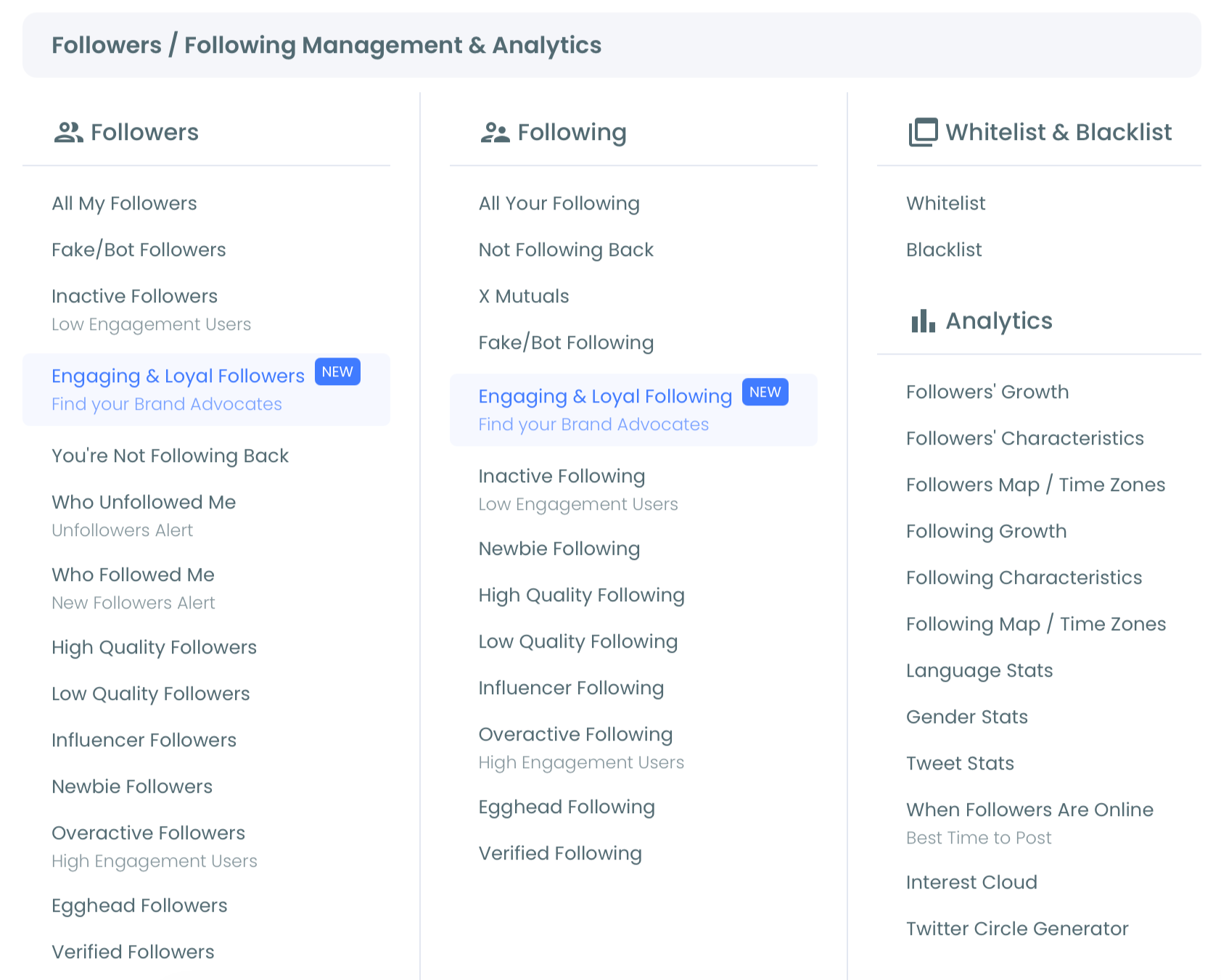
- Open the main menu and choose Follower / Following Management and Analytics, where the Who Unfollowed Me section sits.
- Set the time period selector that sits directly above the list. Its narrowest setting is a single day, its widest is a full year, and it opens on the narrowest. Pick the tightest window that still contains the tweet you are questioning.
Read the accounts before you read the total
- Click the JOINED column header to sort by account age, then click it again to reverse the order. A block of profiles created within days of each other is a different story from a spread of long-standing accounts.
- Open Filter Options and set the quality dropdowns for Fake/Spam, Inactive, and Eggheads so you can see the segment with and without them. Whatever survives that pass is the group that could plausibly have read you.
Keep the reading before you act on it
- Export the filtered segment as a CSV so the window you just read stays recoverable after the list moves on.
Skipping to the headline count is the common shortcut, and it yields nothing usable. That total has no meaning until you know which window produced it and which accounts sit inside it.
That order holds up because each pass limits what the next one is allowed to claim. The window fixes the timing, the sort and filters describe who left, and the export freezes both before the next daily fetch changes the list underneath you.
Quick recap:
- Set the shortest honest window around the tweet.
- Sort by join date before reading the total.
- Filter out the quality classes that were never reading you.
- Export, because tomorrow's list is a different list.
Why X never tells you which tweet cost you a follower
X does not notify anyone when a follow ends. Its own documentation on how to unfollow people on X confirms that the account being unfollowed receives nothing at all.
That silence is where the problem starts. Your follower count moves, and the platform hands you no name, no timestamp, and no reason.
So people reconstruct a cause from memory. The tweet that felt risky becomes the tweet that did the damage, and a decent piece of writing gets deleted on a hunch.
The mistake I run into most often is a writer treating the tweet they were nervous about as the tweet that did the damage.
Memory is a bad instrument for this because it is selective in exactly the wrong direction. You remember the tweet you hesitated over, not the four routine ones you published around it, and the hesitation itself becomes the evidence.
A Twitter follower tracker replaces the hunch with a dated list. That is not the same thing as an answer, but it beats a memory by a wide margin.
The habit that makes people misread a loss also makes them misread a win. Knowing which tweets are performing well matters as much as knowing which ones sent people away.
Can you honestly say a single tweet made people unfollow you?
The question is answerable only when your posting cadence is sparser than the data behind the list.
Circleboom pulls fresh follower data from X once every day, and the narrowest window the time period selector offers is a single day. Both facts point the same direction: the finest unit of attribution available to anyone is a day, not a tweet.
That gives you a clean test. Count the tweets you published inside the window that shows the losses.
If the answer is one, the correlation is worth something. If the answer is four, nothing in the list can separate them, and any page claiming otherwise is selling a certainty it does not have.
Attribution is a property of your posting schedule before it is a property of any dashboard.
Accounts that publish once or twice a day can run this check meaningfully. Accounts that publish twenty times a day mostly cannot, whatever they read on their phone while they track Twitter unfollowers on iPhone.
What the daily sync does to a day with three tweets
A one-day window containing three tweets returns one list, not three.
The departures inside it carry no ordering relative to your posting times, so a morning thread and an evening reply land in the same bucket with the same evidence behind them. Widen the window and you lose resolution. You cannot narrow it below the sync.
A second edge matters here. Because unfollows appear after the next daily fetch, a list opened hours after posting is incomplete by construction, and a small number of rows can show as unfollowers when the account has not actually unfollowed. Circleboom flags this on the feature page and says those rows usually resolve on the next fetch.
The working rule: read the window a day later than feels natural, and never bulk-act on a list pulled the same evening.
Timing confusion runs in the other direction just as often. Why your Twitter impressions suddenly drop covers the platform-side lags that make an ordinary day look like an event.
What to do when the window holds more than one tweet
Widen the window and read the rate instead of the incident.
A four-week window gives you a total you can divide by your follower base, and that ratio is comparable to the next four weeks in a way that a single alarming day never is. You lose the ability to name a tweet. You gain the ability to notice that nothing unusual happened at all, which is the correct finding most of the time.
If you genuinely need tweet-level attribution, the honest route is to change the input rather than the analysis. Space the tweets you care about so that no two land inside the same daily window, and run the check on each one. That costs you posting frequency for a week or two, and it is the only method that produces a defensible single-tweet answer.
Most accounts should not bother. The cost of publishing on a slower schedule usually exceeds the value of knowing which of Tuesday's four tweets annoyed eleven people, and eleven people is a number that moves on its own.
The question worth answering is whether a pattern exists, not which tweet to apologize for.
What the departure list proves and what it only suggests
The list proves membership and window. It suggests cause.
What you get is specific: the accounts that were following you at the last snapshot and are not following you now. Each row carries display name, join date, tweet count, follower and following counts, follow ratio, and an activity classification.
Filter and sort that set and you can describe the group that left with real precision.
Where the evidence stops
What you never get is intent. Nobody in that list was asked why, and X keeps no record of the decision, so the honest ceiling is a correlation across a window plus a description of who moved.
Circleboom is an official X Enterprise Developer company, which is what makes those snapshots worth arguing from. The follower history comes from X's own API rather than a scraped page, so when the list says an account left, any disagreement is with X's data and not with somebody's crawler.
Screen recording: the unfollow tracker running against a live X account, which is the view every timing claim above depends on.
https://www.youtube.com/watch?v=2MhU32QunxQ
Pair the departure window with Twitter follower growth stats before you draw any conclusion. That comparison tells you whether the day was unusual at all, or simply a day you happened to look at.
Once you have both, naming the tweet that made people unfollow you becomes a repeatable reading instead of an argument with yourself.
Reading the accounts you lost before you rewrite anything
Three descriptions of a departure group cover most real cases, and each one changes what you should conclude about the tweet.
A cluster of recently created profiles with lopsided follow ratios and near-zero tweet counts is not an audience reacting to your writing. Those accounts were never reading. A drop that resolves to that group tells you about platform hygiene, not about your judgment.
A spread of long-standing accounts with real posting histories and mixed engagement tiers is the version worth taking seriously. That group had a reason, even though you will never be told what it was.
Read their bios and locations before you assume the reason was the tweet. A departure group that shares a language, a region, or an industry is describing an audience-fit problem that predates whatever you published on Tuesday.
A group that arrived within the last week and left just as quickly usually reflects follow-and-unfollow behavior aimed at their own ratio. The standalone who unfollowed me on Twitter view makes that shape obvious the moment you sort by join date.
When a small number matters more than a big one
Filtering here matters more than counting. Losing thirty accounts flagged Inactive changes nothing about your reach, while losing five verified accounts who reply to you regularly is a real signal at a much smaller number. For the comparison in engagement terms, a good engagement rate on Twitter supplies the baseline that makes small losses legible.
What a month of this changes
Give this three readings across a month and the picture changes shape.
The first reading tells you almost nothing about which tweet made people unfollow me on Twitter, because you have no idea yet what a normal day of departures looks like on your account. The third one does, and by then most of the tweets you would have deleted in month one are still up and still working.
Attribution is not something you buy. It is the habit of setting the window before you form the opinion, and of saying "the timing fits" rather than "this tweet did it" when the data only supports the first.
I still catch myself reaching for the memory instead of the window, which is exactly why the export step earns its place.
Start with the window, the list, and the export. You will delete less and understand more.
The accounts worth keeping are rarely the ones that leave over a single sentence, and the tweets worth keeping are rarely the ones that make you nervous the morning after.
→ Open the tracker and find the tweet that lost you followers
Questions left over
How long should I wait after posting before I check?
Give it a full day. Follower data arrives from X once every day, so a list pulled a few hours after a tweet is missing every departure that has not synced yet. The same early list can also carry rows that the next fetch corrects.
Does the exported CSV record when each account unfollowed me?
No. The export carries account attributes such as username, join date, follower and following counts, quality flags, and bio, but no per-row departure timestamp. The window you set before exporting is the timestamp, which is why writing that window down beside the file matters.
Can I get told about departures without opening the dashboard?
Yes. The Unfollowers Alert sends recurring email summaries of new unfollowers to an address you choose, so the reading arrives on its own schedule instead of whenever you remember to look.