Twitter does not tell you when someone leaves. That silence is the whole reason you ended up here, searching for who stopped following you on Twitter, instead of getting on with your day.
Circleboom snapshots your follower list daily and surfaces every account that unfollows you with full profile context, as an official X Enterprise Developer company. You filter by time range, unfollow back in one click, or export the list to CSV.
→ Track who stopped following me on Twitter
Keep reading for the full workflow, the alerts setup, and the patterns that actually matter once you have the data.
Why Twitter Does Not Show You Who Unfollowed
Twitter's product design treats unfollows as private events. The platform has never shipped a native unfollower tracker because surfacing churn would change behavior on both sides: the unfollower would feel exposed, and the person being unfollowed would chase a notification they cannot act on without context.
The result is the gap you are sitting in right now. You see the follower count tick down, you scroll your follower list for ten minutes trying to figure out who left, and you give up.
Pew Research's 2023 survey on Americans and Twitter confirms what you already suspect about platform behavior: most active accounts have audiences in the thousands, and the human eye cannot diff two follower snapshots in any usable time.
There is a strategic cost to the gap too. Without dated unfollow events, you cannot connect churn to anything you actually did. A controversial post, a posting-frequency change, a campaign that landed flat: none of it gets attributed to outcomes you can act on. The follower count drops, the cause stays invisible, and the next content decision gets made on the same incomplete information.
The workaround is structural, not manual. You need a system that snapshots your follower list on a schedule, diffs each new snapshot against the previous, and surfaces every disappearance as a dated, profiled event. That is exactly what Circleboom's full unfollower tracking workflow does, and it is the only path that scales past the first few hundred accounts.
How to Find Who Stopped Following You on Twitter
Here is the flow, in order. You connect your account once, the system starts taking snapshots immediately, and from that point forward every unfollow event is dated, profiled, and recoverable.
Connect your X account to Circleboom
- Log in to Circleboom Twitter and authorize your X account with official OAuth.
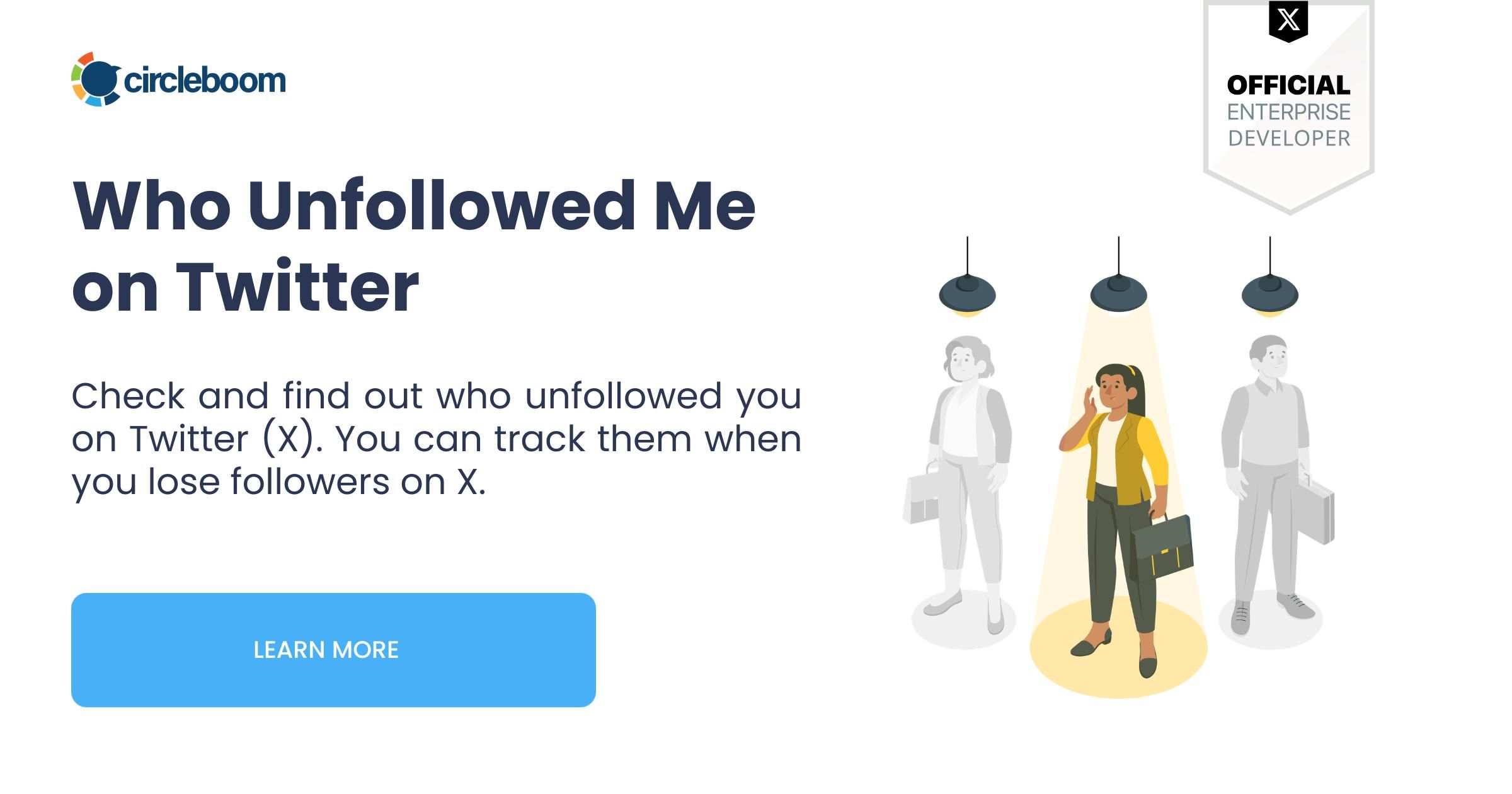
Open the Follower / Following Management menu
- Open the Follower / Following Management and Analytics menu from the left sidebar.
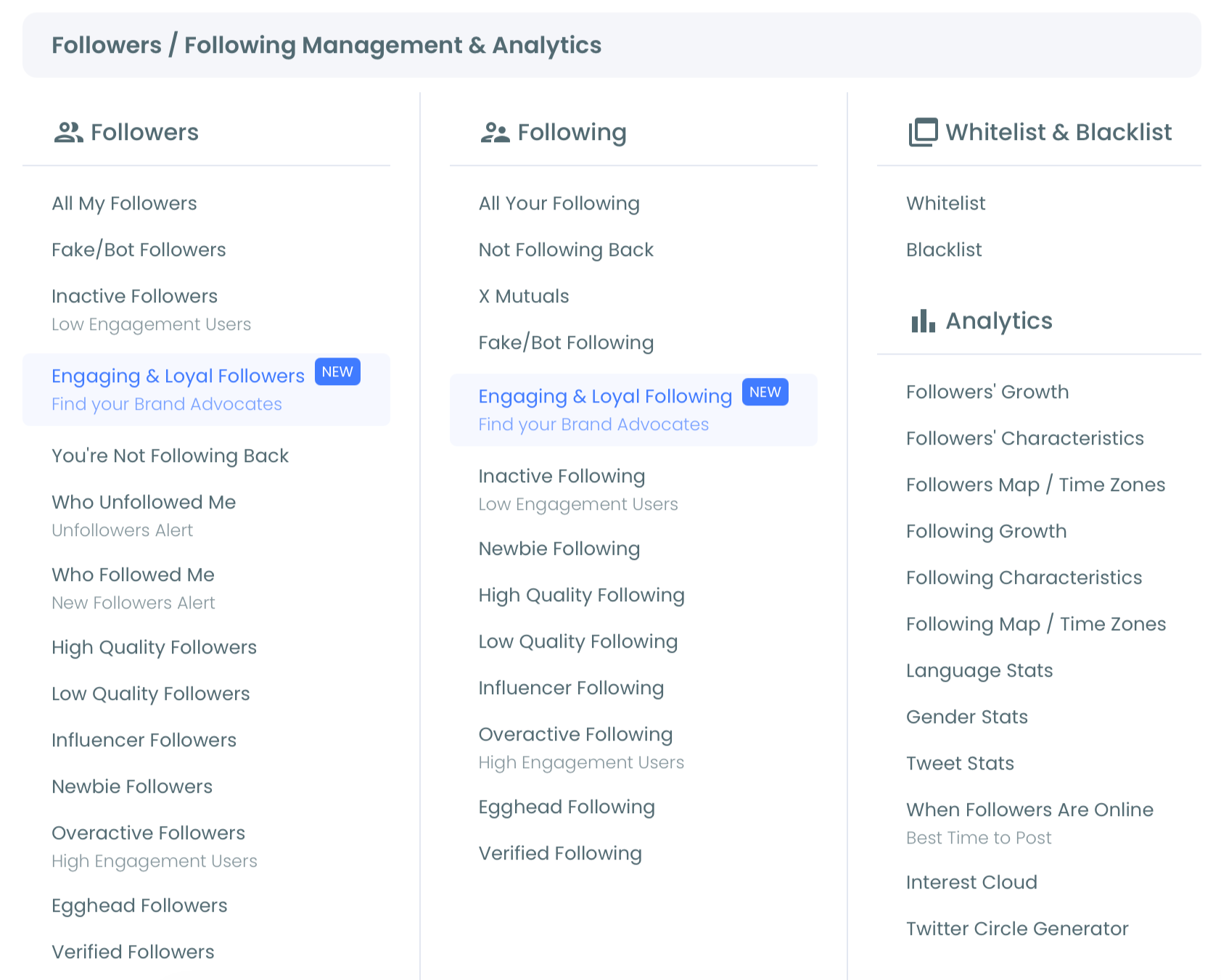
Open the Who Unfollowed Me section
- Click Who Unfollowed Me under the audience insights group. The table loads with every account that disappeared since your account was first connected, each row carrying username, bio, follower and following counts, account age, and verification status.
Filter, act, or set alerts
- Apply a time-range filter (last day, last 3 days, last week, or last month) and pick an action: unfollow back, export the list to CSV for reporting, or enable daily / weekly email alerts so future unfollows arrive in your inbox instead of waiting to be discovered on your next login.
That sequence is what makes the workflow hold up. The login earns official-API access first, the menu narrows scope before you act, the table gives you a dated audit instead of a guess, and the alerts step turns the whole thing into passive tracking. Skip any of those and you are back to manually diffing follower lists every time the count moves.
Video walkthrough: how the Who Unfollowed Me table renders dated unfollow events with full profile context for fast triage.
What Tracking Unfollowers Actually Tells You
The data is more useful than most people expect. A single unfollow event is meaningless on its own, but a dated stream of them becomes a content audit you cannot buy any other way. You can correlate spikes against specific posts, tone shifts, posting frequency changes, or campaign launches. That correlation is the real product, not the list itself.
Pattern recognition is where the value compounds. Repeated unfollows from the same account type (newly-created, low-follower, low-tweet) usually point to bot churn that you can ignore safely. Repeated unfollows from accounts with established profiles, mature follower counts, and overlapping interests are signal: those people decided your content was no longer worth their attention, and that is a question you can actually act on by adjusting cadence or angle.
There is a reframe worth catching here. Unfollows are usually treated as failure, but most experienced operators use them as the cleanest feedback loop the platform offers. Likes, replies, and impressions all have positive bias built in. Unfollows are the only metric where the audience has to actively decide to leave, which makes the data unusually honest about what is not working.
Circleboom is an official X Enterprise Developer company, so the snapshots come from sanctioned API access against X's published platform limits, not scraping. That is the difference between a tracker you can leave running on your account safely and one that will eventually get flagged.
The Twitter unfollower alerts add-on extends the same passive model to email. The broader Twitter follower tracker shows gains and losses side by side, so net audience health is always visible at a glance.
When you are ready to start, Circleboom's Who Unfollowed Me tool handles the snapshot loop, the diffing, the action layer, and the alerts in one place.
Related Circleboom reading that goes deeper on the adjacent angles:
- how to see who unfollowed you on Twitter walks through the in-app experience step by step.
- why people follow then unfollow you covers the behavioral side once you have the dated data.
- the best tool for monitoring Twitter unfollowers compares monitoring approaches side by side.
- who follows whom on X extends the tracking idea outward to other accounts in your network.
FAQ
Does Twitter notify you when someone unfollows you?
No. Twitter has never offered native unfollower notifications, which is why third-party trackers exist. Circleboom fills the gap by snapshotting follower lists on a schedule and surfacing every disappearance as a dated event with full profile context.
How far back can the tracker see?
Tracking begins the moment your account is first connected to Circleboom. Earlier unfollows that happened before the first snapshot are not recoverable, so the longer you have been tracking, the deeper your usable history becomes.
Can I unfollow accounts back from the same screen?
Yes. The unfollow-back action sits next to each row in the Who Unfollowed Me table, and you can run it individually or in bulk subject to standard X platform rate limits to keep the account safe.
Will Circleboom email me when someone new unfollows?
Yes. Daily or weekly email alerts can be enabled from the alerts panel, so unfollow events arrive in your inbox without you needing to log in and check the dashboard.
Is it safe to run this tracker on my Twitter account?
Yes. All snapshots and actions go through official X (Twitter) APIs and respect platform rate limits, so there is no scraping involved and no risk to your account standing or platform compliance.
The Decision That Actually Matters
The choice in front of you is not whether to track unfollowers. It is whether to keep guessing or start measuring. Guessing keeps you reactive: you only notice churn when the follower count drops far enough to bother you, and by then the underlying cause has moved on and the data is gone. Measuring inverts that timeline.
The snapshots run quietly in the background, the alerts surface events as they happen, and your content decisions get to use real audience data instead of intuition. The cost of the switch is the five minutes it takes to connect the account once. Everything after that is passive.
Start tracking your Twitter unfollowers and the next time someone leaves, you will know who, when, and what they looked like before deciding whether it matters.