The best way to search Twitter bios for a keyword is to run an account search instead of a tweet search, then require the word in the bio with a bio filter. X’s People tab can match names and bios, but it gives you no filters and no list to work with. With Circleboom Twitter, you can search X profiles by keyword, narrow the result to accounts whose bio actually says it, and follow, list or export them from one table.
Type “product designer” into the X search bar and the Top tab fills with posts. Some are from designers. Most are from people who mentioned designers once, retweeted a job ad, or argued about a portfolio site.
The People tab is closer to what you wanted. It matches names and bios, so the profiles look more relevant. Then you notice the problem: there is no way to filter them. No follower range, no location, no way to hide empty or abandoned accounts. You scroll, open a profile, go back, open the next one.
After twenty profiles, you have a few good accounts in your head and nothing saved anywhere.
What you actually needed was a list of people who describe themselves with that keyword, with enough data on each row to decide quickly. With Circleboom Twitter, you can search Twitter bios and recent tweets for a keyword, see every matching profile in one table with its follower count, join date and activity level, and keep only the accounts whose bio carries the word you searched.
Why Circleboom is the safer way to search Twitter bios
Circleboom is an Official X Enterprise Developer, so the profile data in your results comes from X’s official API records rather than from scraping. Scraping-based tools can miss accounts or return partial lists when a page fails to load, which matters when the whole point is to find people you have never seen before. You also never hand over your X password: Circleboom connects through X’s own login.
For bio research specifically, these are the parts you will use:
- Live X Account Search, which finds accounts active around a keyword right now
- Deep X Account Search, which scans a much larger historical set and lists up to 5,000 profiles per keyword
- Filter Options with Find in Bio & Name, follower and following counts, join date, location and quality filters
- Bulk actions to follow, add accounts to an X List, whitelist, blacklist or export
Put together, you can search Twitter profiles by keyword and leave with a clean, reviewed list instead of a browser full of open tabs.
How to search Twitter bios for keywords with Circleboom
- Log in to Circleboom Twitter and connect the X account you research from. The connection runs through X’s official login, so your password never reaches Circleboom.
- Open the Advanced X Search menu in the left sidebar and pick your search type. Choose Live X Account Search when you want people active on the topic now, and Deep X Account Search when you want the biggest possible list.
- Type one keyword that describes the person, not the topic. “Recruiter”, “podcaster” or “Figma” works better than a broad word like “design”. The search reads names, bios, profiles and tweets, so a word people use about themselves pulls in the right accounts.
- Read the result count before touching anything. The results page opens with a line such as “Listing 277,244 profiles who are interested in software”, and every row shows the name, tweets, join date, following, followers, follow ratio and an Active & Inactive label.
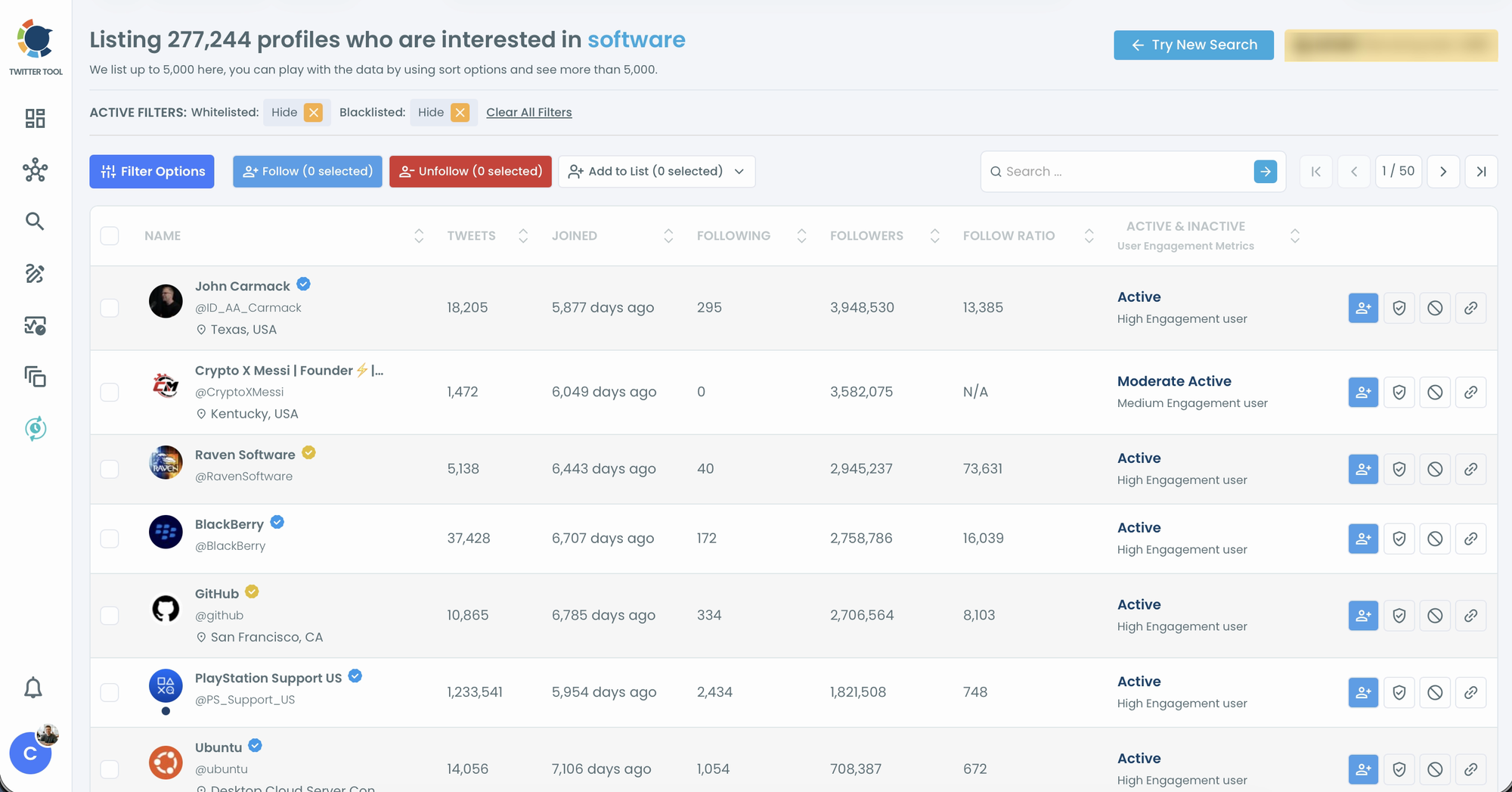
- Open Filter Options and type your keyword into Find in Bio & Name. This is the step that turns a topic search into a true bio search: only accounts whose display name or bio contains the word stay in the table. Add a location, a follower range, a join date, or hide Fake/Bot and Inactive accounts, then click Apply Filters.
- Sort and review. Click any column header to sort, for example by followers or by join date, and open a profile with the link icon whenever a bio looks unclear.
- Follow the accounts you checked. Tick them and click Follow, then confirm the selection in the pop-up.
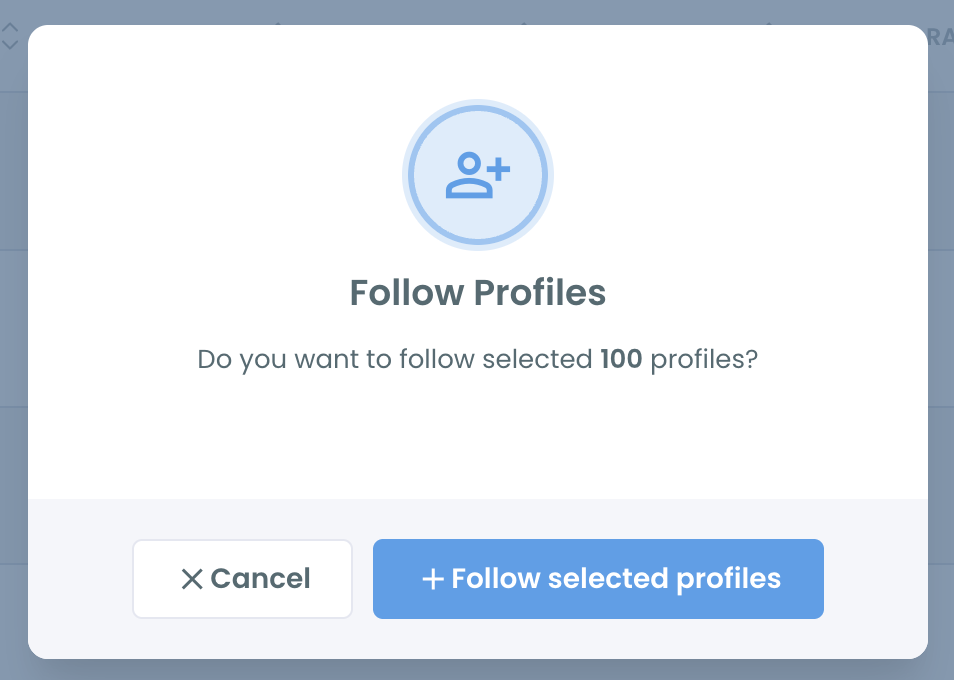
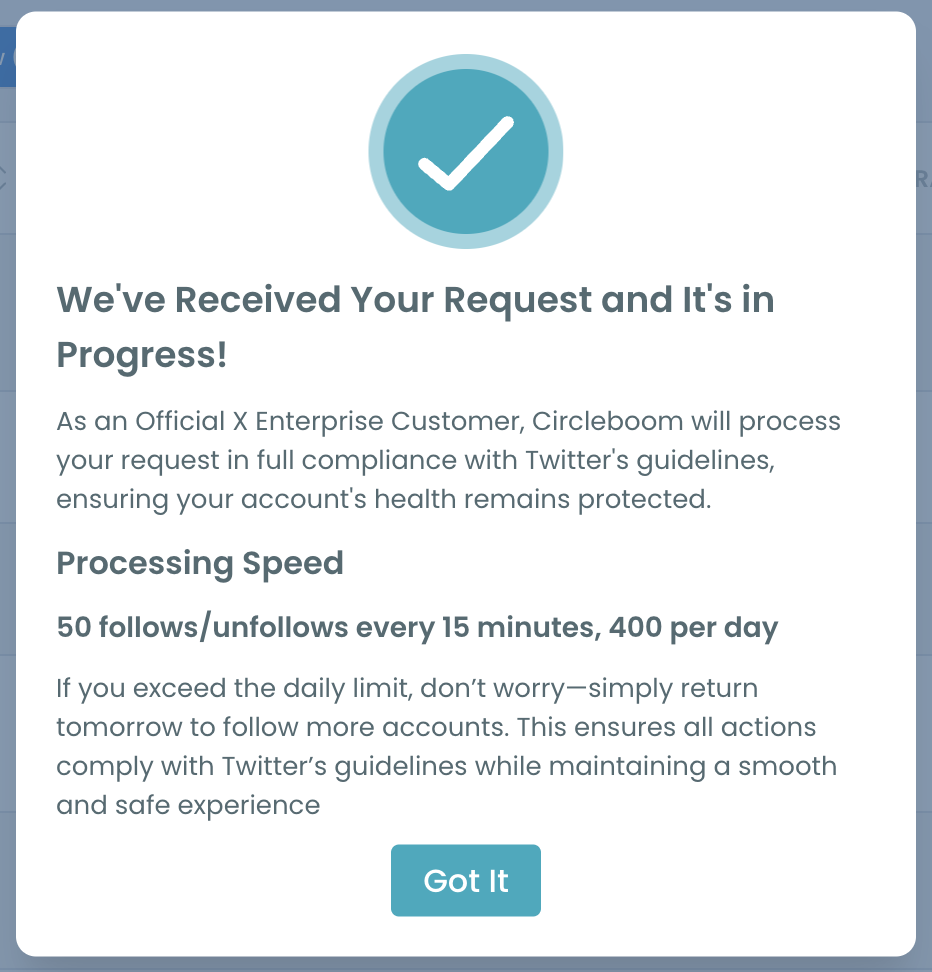
Circleboom processes follows at a steady pace that protects your account, up to 400 a day, and anything still queued continues automatically the next day.
- Keep the rest in a list. Open Add to List, choose Twitter List and add the selection to an existing list or a new private one, so you can read these accounts without following all of them. You can also export the filtered table as a CSV.

Why searching Twitter profiles by keyword is harder than it looks
X built its search around posts. The default results rank tweets, because that is what most people search for. Profiles are a second tab, and they come without the controls you would expect from a people search.
That is why the same keyword gives such different results depending on where you look. A tweet search tells you who said a word. A bio search tells you who identifies with it, which is why a dedicated Twitter account finder beats scrolling posts when you need people. If you want to find Twitter accounts in a specific industry, the second one is what you need, and the People tab only gets you halfway there.
📌 A word in a bio is a stronger signal than a word in a tweet. Someone who writes “SaaS founder” in their bio chose that label on purpose. Someone who tweeted “SaaS” once might have been joking.
There is also the wording problem. People describe the same job in different ways: “recruiter”, “talent acquisition”, “hiring for”. Run a separate search for each variant rather than one broad term, as you would when you find Twitter accounts by keyword, and the Twitter bio search engine approach starts to cover the whole group.
⚠️ Keyword matches still need a human check. A bio can contain your word in an ironic, outdated or unrelated way, so review before any bulk follow or outreach.
What you lose when you skip a real bio search
Time, first of all. Opening profiles one by one from the People tab is slow, and nothing you learn is saved. A filtered table lets you judge fifty accounts in the time it takes to open five.
Quality of the list. Without filters, empty accounts, abandoned profiles and bots sit next to real people. Hiding them before you follow anyone is how you keep a clean following list, the same logic behind checking for fake accounts in your Twitter following.
Local relevance. A bio search with a location filter is how a shop, an agency or a recruiter finds people nearby. It is the core of searching Twitter for accounts in a specific location, and the People tab cannot do it at all.
Follow-up. When the result lives only in your memory, the outreach never happens. Saving the reviewed accounts to an X List or a CSV turns one search into a working targeted outreach list.
Reach beyond the obvious names. Live search shows who is loud right now. Deep search also surfaces quieter experts who post rarely but carry real credibility, which is often where the best micro influencers are hiding.
FAQ
Can you search Twitter bios without a third-party tool?
Partly. Type a keyword into X search and open the People tab, and X shows accounts whose name or bio matches. You cannot filter that list by followers, location, join date or activity, and you cannot select or export the accounts.
What is the difference between a bio search and a tweet search on X?
A tweet search finds posts that contain a word. A bio search finds accounts that describe themselves with it. If you need people, start with an account search such as Twitter user search by bio and tweets; if you need what was said, use a tweet search like the historical method for searching tweets.
How do I make sure the keyword is in the bio and not only in a tweet?
Run the search in Circleboom, then open Filter Options and enter the same keyword in Find in Bio & Name. Only accounts whose display name or bio contains it remain in the table.
Should I use Live or Deep X Account Search?
Use Live X Account Search when timing matters and you want accounts active around the topic now; it returns a smaller, current set. Use Deep X Account Search when you want coverage, since it scans historical bio and tweet data and lists up to 5,000 profiles per keyword.
Can I search Twitter profiles by location as well as keyword?
Yes. After the keyword search, type a city or region into Filter by Location, the same approach behind Circleboom’s Twitter location search. Use the spellings people actually write, such as “NYC” and “New York”, and run them separately if needed.
Is it safe to follow many accounts from a bio search?
Circleboom paces bulk follows within its daily safety limit of 400 follows and continues any queued follows the next day. Follow selectively, though: a smaller list of reviewed accounts brings better follow-backs than a large unreviewed one.
Can I find people who mention a keyword in their bio among my own followers?
Yes. Open your follower list in Circleboom and use the same Find in Bio & Name filter, or use Followers / Following Search to search inside another account’s audience.
Final thoughts on how to search Twitter bios
X makes it easy to find what people say and surprisingly hard to find who people are. The People tab points in the right direction, then leaves you scrolling without filters and without a way to keep what you find.
When you search Twitter bios with Circleboom, the keyword turns into a table of real profiles you can narrow by bio, location, size and activity, then follow, list or export in a few clicks. If you also want to see the most influential accounts in a niche, Find Influencers is the natural next stop.
Start your next bio search with Circleboom’s account search and keep only the profiles that truly fit:
https://circleboom.com/twitter-management-tool/twitter-search-tool/search-twitter-bios-and-profiles