
A bloated follower count looks good and performs badly. Fake, bot, and inactive accounts inflate the number while dragging down your engagement rate, because they never like, reply, or share. Cleaning them up in bulk is less about vanity and more about math: a smaller, real audience reaches further than a large, dead one.
What cleaning up your followers in bulk gives you.A real follower base, with fake, bot, and inactive accounts filtered out.A higher engagement rate, because dead accounts stop diluting it.A safer profile, since removal runs through official X access, not scraping.
Circleboom lets you clean up your Twitter followers in bulk by filtering accounts by type and removing them in controlled batches. Start with the follower cleanup tools.
→ clean up your Twitter followers in bulk
Most cleanup advice lumps everything into one "remove bad followers" step. That is too blunt. There are different kinds of unwanted followers, each needs a different filter to find, and the right action sometimes is not removal at all. The taxonomy is the whole skill.
Why a clean follower base matters
Engagement rate is engagements divided by audience size. When a third of your audience is inactive, your denominator is inflated by accounts that will never engage, so your rate looks worse than your real reach deserves. The algorithm reads that weak rate and shows your posts to fewer people.
The math is concrete. If 30 percent of your 10,000 followers are inactive, that is 3,000 accounts dragging every engagement calculation, and they also occupy the early seed group X uses to decide whether to distribute a post wider. Removing them does not shrink your real audience, it reveals it.
There is broad evidence that automated and low-quality accounts are a real share of the platform. Pew Research's work on bots on Twitter found bots account for a large portion of certain activity, which is why a follower base accumulates dead weight over time without you noticing.
The cleanup taxonomy: four follower types
Not all unwanted followers are the same, and treating them identically is the common mistake. Each type has a signature you can filter for.
The four types worth separating:
- Fake and bot accounts, marked by no profile photo, very low follow ratios, and spammy patterns.
- Inactive or ghost accounts, which have not posted or engaged in a long time.
- Low-quality accounts, a broader bucket of weak, irrelevant, or suspicious profiles.
- Non-engaging real accounts, genuine people who simply never interact with you.
The action depends on the type. Fake, bot, and inactive accounts are clear removal candidates. Non-engaging real accounts are a judgment call, since some are dormant followers who still count as reach. Circleboom's filters isolate each type, so you decide per category rather than wiping blindly.
How to clean up your Twitter followers in bulk
The flow connects your account, filters to a confident segment, protects your real accounts, and removes the rest through the Chrome extension. It is gradual by design.
Connect and filter your followers
- Log in to Circleboom Twitter and connect your X account with official authorization.
- Open the Follower and Following menu, where the audience tools and filters live.
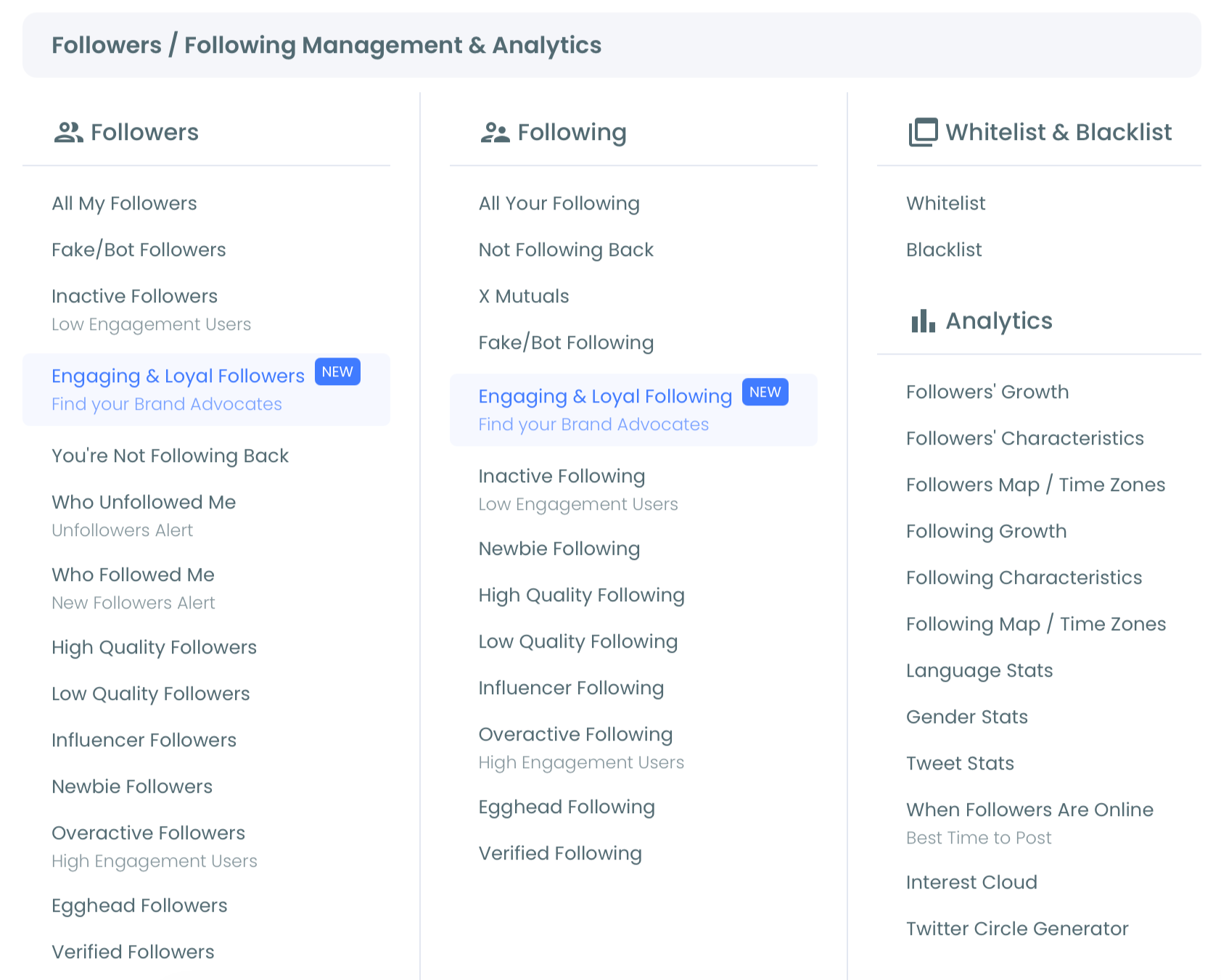
- Apply filters to isolate a type, such as Fake/Spam, Inactive, or low follow ratio, so you act on one clear segment at a time.
Protect your real accounts, then remove
- Whitelist accounts you want to keep, like partners, customers, and loyal engagers, so they are excluded from the bulk action.
- Select the filtered segment and stage it with Mass Remove Follower.
- Run the Circleboom Remove Twitter/X Followers Chrome extension, keeping your browser open while it processes; it pauses automatically for 1 to 20 minutes when X's rate limit is reached, then resumes.
That order works because it puts safety before scale. You connect through official access, narrow to one confident type, protect the accounts that matter, and only then remove, in gradual batches the platform recognizes as legitimate. Skipping the filter or the whitelist is how people accidentally remove accounts they wanted.
See it live: removing Twitter followers in bulk with a dedicated removal tool.
Why the Chrome extension is part of the process
Removing a follower is not something X's API supports directly, so Circleboom runs the actual removals through the Circleboom Remove Twitter/X Followers Chrome extension. The extension executes the staged list in your browser, which is why the browser must stay open until the queue finishes.
This is architectural, not optional, and it is also what keeps the operation safe. The extension paces removals and pauses when X's rate limit is reached, so the cleanup looks like normal browser activity rather than an aggressive burst. Circleboom is an official X Enterprise Developer company, so the data behind the filters comes through sanctioned access, and the gradual extension pacing keeps your account compliant. For the deeper breakdown of identifying the worst accounts, how to remove bot, fake, inactive, and ghost followers covers the signatures in detail.
Remove or block: a quick distinction
Cleanup is not always removal. Removing a follower takes them out of your follower list, but they can still see your content and re-follow. For accounts that are merely irrelevant or inactive, that is the right, gentle action.
Blocking is stronger and reserved for accounts that are abusive or persistently unwanted, because it severs interaction entirely. Most cleanup is a removal job, not a blocking job, and conflating the two leads people to over-block.
For the genuinely low-quality segment, how to identify and remove low-quality followers walks the filters, and the engagement upside is laid out in increasing engagement by deleting inactive followers.
How to decide on the non-engaging real accounts
The hardest call in any cleanup is the genuine accounts that simply never interact. They are real people, not bots, so removing them feels different, and the right answer depends on what you want your follower count to mean.
If your goal is a high engagement rate and a tight, active community, trimming long-dormant real followers can help, because they dilute your rate without contributing reach. If your goal is broad visibility or social proof from a large number, you may prefer to leave them, since a dormant follower still occasionally sees a post and still counts toward your apparent scale. Neither choice is wrong, but pretending the question does not exist is, because it is where most cleanups either overreach or stall.
A useful middle path is to remove the clear-cut categories first, fake, bot, and long-inactive accounts, and only then decide whether to touch the borderline real ones. By the time you have cleared the obvious dead weight, your numbers will already look healthier, and the decision about dormant real accounts becomes lower-pressure. The follower audit view helps here by showing the composition before you commit, so the call is informed rather than reflexive.
Common Questions About Cleaning Up Followers
Will removing followers hurt my reach?
The opposite, usually. Removing inactive and fake accounts raises your engagement rate, because your posts are measured against a real audience, and it frees up the early seed group that decides whether a post spreads. You lose a number, not reach.
Will the removed follower be notified?
No. Removal is quiet, and the account can re-follow if they choose, since you have not blocked them. That makes removal a low-stakes action compared to blocking, which is permanent until reversed.
Do I really need the Chrome extension?
Yes, for removal. X's API does not support removing a follower, so Circleboom uses the Remove Twitter/X Followers extension to execute the action in your browser. It is what makes bulk removal possible at all, and it paces the action to stay safe.
How often should I clean up?
Regularly rather than once. Follower bases accumulate dead weight over time, so a periodic pass keeps the audience real, as explained in why you should regularly clean your followers. Small routine cleanups beat one massive overdue purge.
What to Do Next
Cleaning up followers in bulk is a filter-and-protect job, not a blanket purge. Isolate one type at a time, protect your real accounts, and remove gradually through the extension.
- Filter by type: fake, bot, inactive, or low quality.
- Whitelist the accounts you want to keep.
- Stage the segment and run the extension, browser open.
- Repeat periodically rather than waiting for a huge cleanup.