Trusting the wrong account has a real cost. Reply to an impersonator posing as a support desk and you can hand over a password; partner with a manufactured profile and you tie your name to a fake. Knowing how to verify if a Twitter account is real before you engage is basic self-defense, and it takes seconds once you know which signals to read.
How do you know a Twitter account is real before you trust it?
You read its age, profile completeness, follower structure, and reply behavior together, then act on the combined signal. Circleboom's Fake X Account Checker verifies whether a Twitter account is real from a single username through official API access.
→ Verify if a Twitter account is real
Why the Blue Check Is No Longer a Shortcut
The badge changed meaning, and most guides have not caught up.
A blue check once meant X confirmed the account's identity. After verification became a paid subscription, it mostly means the account pays for one. An impersonator can wear the same badge as the brand it copies, so the icon can no longer stand in for a real check. That is the single biggest reason people misjudge accounts today.
X's deceptive identities policy is blunt about what a fake looks like: stock or stolen photos, copied bios, and manufactured profile details built to deceive. A purchased badge blocks none of those, so the reliable signals live elsewhere.
The practical answer is to skip the badge and read the signals directly. You can verify if a Twitter account is real from one username in the time it takes to hover over a profile.
The Signals That Separate Real From Fake
Before the steps, know what the check is actually reading. These are the public data points where a fake profile gives itself away.
- Account age, since brand-new accounts often pose as established ones.
- Profile completeness, because fakes skip bios and use stock avatars.
- Follower ratio, where following thousands with few followers back is a tell.
- Follower quality, since bot handles with random numbers cluster around fakes.
- Reply behavior, because manufactured profiles broadcast and rarely converse.
No single signal convicts an account. The verdict comes from how many point the same way.
Consider a worked example. An account two weeks old, following 3,000 profiles, followed back by 40, with a stock photo, no bio, and a feed of pure reposts, fails five signals at once. Compare that to a quiet but genuine account: years old, a real photo, a short bio, and a handful of real replies scattered through its history. The second account might look inactive, but it does not fail the structural signals, and that is the difference the check is reading.
One distinction saves a lot of confusion: a fake account is a manufactured or stolen identity, while a bot is automation that can run on any identity. An account can pass as a real identity and still behave like a script, so a full read checks both. A Twitter bot follower check covers the automation side that a pure identity check leaves open.
For a plain-language checklist of the same tells, ways to identify fake Twitter accounts runs through them one by one.
Real Fakes Versus Labeled Parody
One more filter keeps you from flagging the wrong accounts. Not every unusual profile is trying to deceive you.
X permits parody, commentary, and fan accounts when they identify themselves clearly, using words like "parody," "fake," or "fan" in the name or bio. Those accounts are compliant by design and are not what a fake check is hunting for.
The target is the account that copies a real identity while hiding that it is a copy. When you evaluate a profile, hold both questions in mind: does it behave like a fake, and is it pretending to be someone it is not. A labeled fan account answers no to the second question; an impersonator answers yes to both.
How to Verify If a Twitter Account Is Real, Step by Step
The process, in order. Instead of reading five signals by hand across a profile, Circleboom weighs all of them in one search and returns a plain verdict. Start by opening the Fake X Account Checker, then follow the four steps below.
1. Open the Fake X Account Checker, which runs in your browser with no login for the public check.
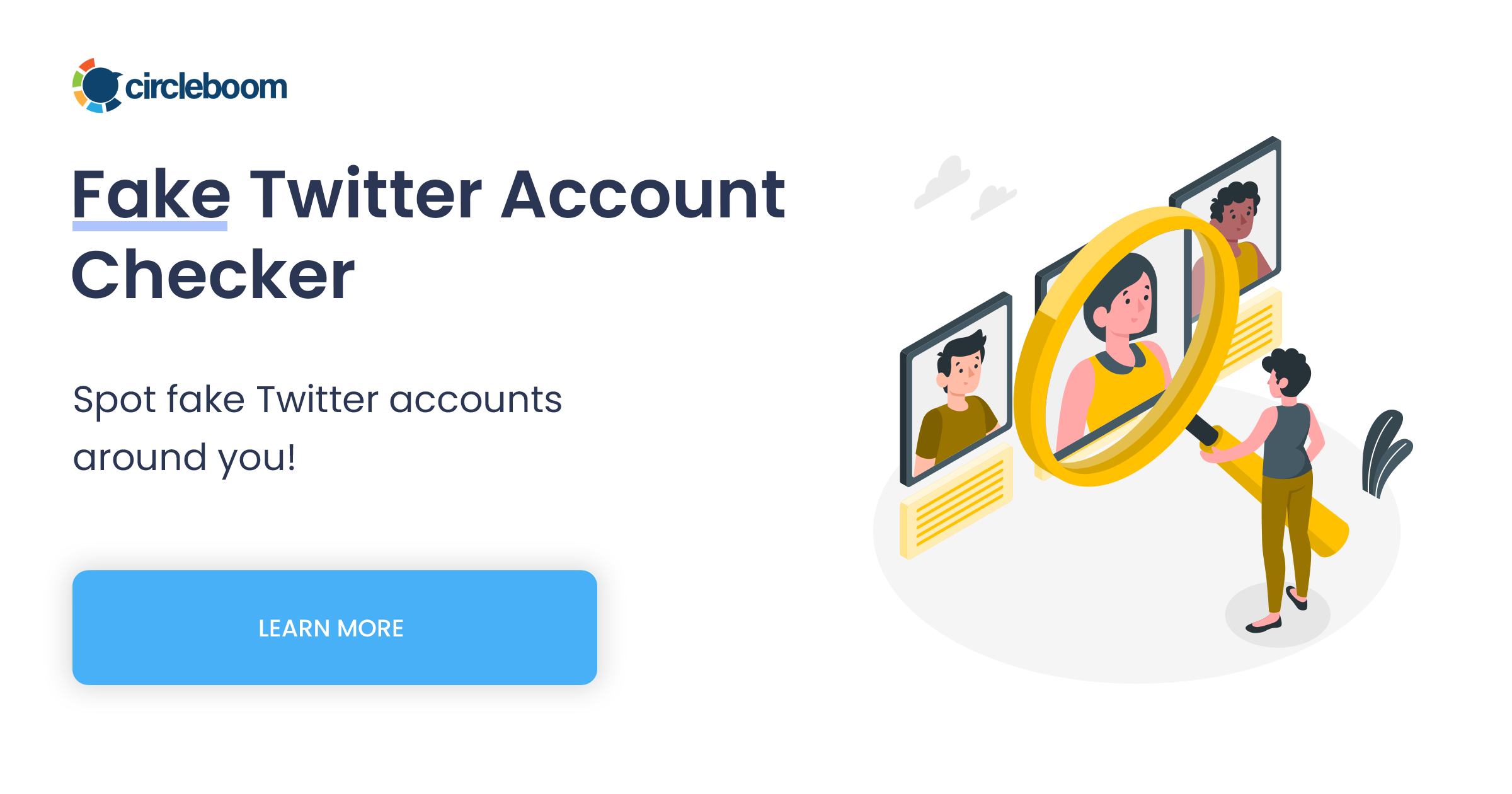
2. Type the Twitter username into the input field, using letters, numbers, and underscores.
3. Click Search so Circleboom reads the account's public signals in a single pass.
4. Read the verdict below the field, for example "This Twitter / X account isn't a fake profile," and act on it.
That order matters because the tool does the cross-referencing a human eye skips under time pressure. It weighs age, structure, and behavior together, so the verdict reflects the full picture rather than the one trait you noticed first. Read it as a strong signal, then apply context before you act.
Short demo: the single-search verdict that checks fake, spam, and inactive signals in one read.
The data behind that verdict comes through sanctioned access, not scraping. Circleboom is listed on X's Enterprise customer directory, which means it reads complete, current profile data through official APIs. Scraping tools work from partial snapshots and miss the exact fields a fake account manipulates, so sanctioned access is what makes the verdict trustworthy.
The most common mistake to avoid is acting on a single check in isolation. A verdict tells you whether one account fits fake-profile characteristics, but it does not tell you why the account reached you or how many others like it are already in your orbit. Treat the check as the opening move, not the whole game. When one profile comes back fake, it is worth asking whether it is a lone case or the visible edge of a pattern in your follower list.
What to Do With the Verdict
A verdict is only useful if it changes your next move. The action depends on where the fake account showed up.
If it is a new follower, the cleanest response is removal. Walking through how to remove fake Twitter accounts shows the flow from verdict to a cleaner follower list.
If the fake is someone you are following, unfollowing is the fix. A short guide to unfollowing fake Twitter accounts keeps your following list honest in a few clicks.
If fakes keep arriving at your mentions, the problem is upstream. Learning how to stop bots from following you on X reduces the inflow so you check fewer suspicious profiles in the first place.
For your own account health, pair the check with a broader read. A Twitter follower checker scores your audience quality, so you can see at a glance how much of your base holds up.
When you want the full picture, a Twitter follower audit reads the same signals across every follower at once, turning the single-account method into a base-wide sweep.
It also helps to rule out the problems a padded follower count can hide. A Twitter shadowban test checks whether your reach is being quietly limited, which a bloated count can mask.
What to Know Before You Trust an Account
How long does a single check take?
Seconds. You enter one username, click Search, and read the verdict, so there is no waiting on a report or a scan to finish.
Can I check an account without logging in?
Yes. The public Fake X Account Checker runs a single-username check with no login, so you can verify a profile before it ever touches your account.
What if a real account gets flagged?
Treat the verdict as a strong signal, not a final ruling. Genuine accounts that are new, inactive, or freshly rebranded can trip a signal, so weigh the result against context you already have about the account.
Does the check work on accounts with a blue badge?
Yes, and that is the point. Because the badge now signals a paid subscription rather than confirmed identity, the check reads behavioral and structural signals the badge cannot vouch for.
Should I report a fake account or just avoid it?
Both are valid, depending on the harm. If the account is impersonating a real person or brand, X's reporting path exists for exactly that case, while a low-level spam profile is often not worth more than a block or a removal from your followers.
Your Next Move
Match the action to what you found. If a follower comes back fake, remove it. If an account you follow fails, unfollow it. If fakes keep flooding in, cut the inflow at the source. And if you are just checking one suspicious profile, run the verdict before you reply.
Whichever situation you are in, the check is the same fast first step. It costs seconds, needs no login, and gives you a clear answer before you decide what to do next.