
Scheduling a month of X posts in one sitting is a workflow problem, not a posting-cadence problem. The platform's native scheduler handles individual posts well, but it does not give you a single-screen view where you can queue 30 or 60 posts at once, fill empty time slots, and balance content categories across the calendar. A bulk scheduler with a CSV upload and a calendar grid solves all three constraints at once.
Circleboom's Bulk Schedule Tweets feature retrieves the connected X account through official X Enterprise APIs and queues up to a month of posts from a single CSV or calendar build. The scheduler handles images, threads, polls, and reposts in the same upload.
→ Schedule a month of X posts in one sitting
Keep reading for the structural reason batch scheduling works, the four-step monthly workflow, and the cadence-balancing tactics that keep a queued month from looking automated.
Why Batch Scheduling Beats Daily Posting on Pace and Quality
Daily scheduling means you have to remember to write and queue a post every day, which means the cadence breaks on busy days and the writing happens under deadline pressure. Both failure modes drag content quality. The cadence break makes the algorithmic distribution unstable, and the deadline writing produces posts that feel rushed.
Batch scheduling inverts both problems. The cadence becomes fixed once the calendar is filled, which means missed days stop happening even on travel weeks or vacation. The writing happens during a focused block when you can compare drafts, balance topics across the month, and revise posts that do not work. The quality lift compounds across the queue because every post benefits from the same focused attention.
The third structural benefit is content portfolio balance. When you write one post at a time, you tend to repeat your favorite formats and topics without noticing.
When you fill a 30-post calendar in one session, the overall mix becomes visible, and the gaps (no questions this week, too much promo, no reposts of older threads) become obvious before they hit publish. Circleboom's piece on the AI-powered tweet scheduler covers how AI-assisted drafting integrates into the bulk workflow.
What a Monthly X Post Queue Should Contain
A balanced monthly X queue is not just 30 posts on the same topic. The mix that performs well on the algorithm and reads well to a human follower has visible variety across the calendar. Most operators converge on something like this:
- A weekly anchor post or thread on the account's core topic.
- A weekly question or poll designed to invite replies.
- A few reposts of older content that did well, reformatted for the current audience.
- A handful of opportunistic posts on industry news or trending topics, written closer to publish time.
- A consistent rhythm of supporting posts (links, observations, micro-takes) that fill the spaces between anchors.
That mix produces enough variety that the queued month does not feel automated, while still hitting the cadence and category coverage that makes the calendar legible. Circleboom's piece on bulk scheduling tweets with images walks through the image-attachment side of the workflow, which matters because image posts tend to drive higher engagement than text-only posts in most niches.
The opportunistic-post slot is the only one that resists pre-scheduling. Trending-topic posts depend on what is happening at publish time, so the bulk schedule leaves those slots empty for same-day filling. The other categories all fit cleanly into a calendar that gets built in one sitting.
How to Schedule a Month of X Posts Step by Step
Four actions. The setup is one-time and the monthly build takes about an hour for 30 posts.
Connect your X account to Circleboom
- Log in to Circleboom Twitter and authorize the account with the official OAuth flow.
Open the X Post Planner menu
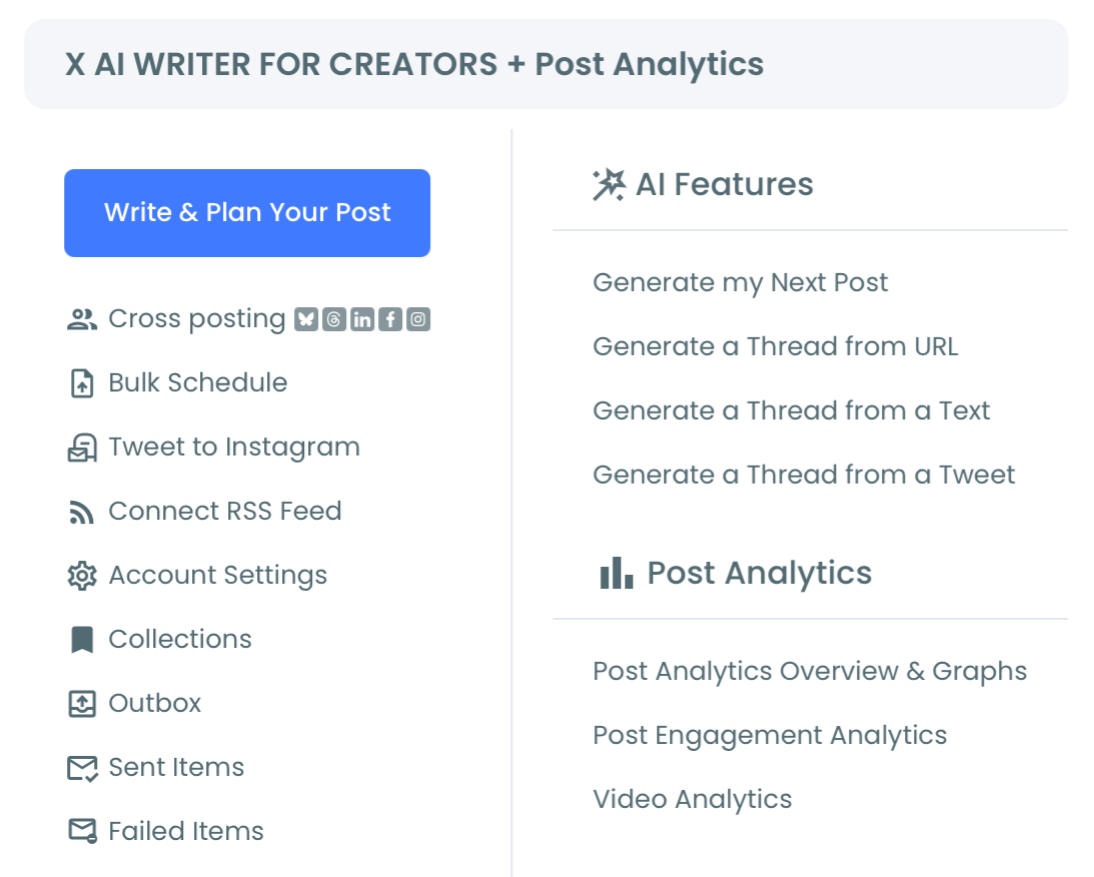
- Open the X Post Planner menu and click Bulk Schedule Tweets to load the bulk-upload and calendar surface.
Upload the CSV or build directly in the calendar grid
- Either upload a CSV of pre-written posts with publish-time columns, or build the queue directly in the calendar grid by dragging posts into time slots. The CSV path is faster for high-volume queues, and the calendar build is better for spacing and balance review.
Review the queue, attach media, and confirm
- Walk through the queued posts with the calendar view open. Attach images to any post that needs them, set polls or thread structure where appropriate, and confirm the schedule to push the queue to the live bulk-schedule queue.
That ordering is what makes the monthly build reliable. The OAuth login earns sanctioned API access. The menu navigation loads the bulk-build interface. The upload or grid build is the input layer, and the review pass is what catches the typos, broken links, and timing conflicts before the queue runs live.
Video walkthrough: the bulk-upload workflow that turns 30 days of post planning into a one-hour calendar build.
What the Queued Month Actually Returns
The first thing a queued month returns is cadence stability. Every day in the queue publishes on schedule regardless of what your calendar looks like that day, which is what most accounts need to keep algorithmic distribution stable. Cadence breaks are one of the silent drivers of engagement-rate decline, and a queued month removes the most common cause.
The second return is writing-quality lift. When you write 30 posts in a focused block, you can compare drafts side by side, kill the weak ones, and revise the borderline ones. The average quality of a queued month is usually higher than the average quality of daily posts written under deadline pressure, simply because of the batched-attention effect.
The third return is freed-up daily capacity. Once the month is queued, the daily X work shifts from drafting and posting to engaging with replies, joining trending conversations, and writing the opportunistic posts that benefit from same-day timing.
The reactive part of X grows without the proactive part shrinking, and the account gets more valuable over time. Circleboom's piece on automating Twitter posts covers the broader automation strategy that bulk scheduling fits into.
The Circleboom workflow uses official X Enterprise Developer access for the queue submission, and the bulk schedule stays within X's published platform limits at every step. That compliance layer matters more once the queue size hits 30+ posts a month, because unsanctioned schedulers risk platform restrictions on accounts that hit visible automation thresholds.
For adjacent surfaces, the X Post Planner overview shows the full set of post-creation tools (AI drafting, thread building, poll generator, cross-posting) that pair with the bulk scheduler. The tweet planner view gives the per-post planning surface for the items that need more drafting than a CSV row.
Schedule a month of X posts in one sitting is the workflow that turns daily posting from a deadline grind into a focused monthly build.
External context for the cadence math: DataReportal's global digital reports cover the platform-level posting and engagement trends that frame what realistic daily X cadence looks like for different account sizes.
Related Circleboom reading on the bulk-scheduling angle:
- Free Twitter scheduler to schedule your tweets on the entry-level scheduling option.
- How to schedule tweets using the Twitter web app on the native-scheduler comparison.
FAQ
Can I really schedule a full month of X posts without the platform flagging the account?
Yes, as long as the scheduling uses sanctioned API access and stays within published rate limits. Circleboom runs through official X Enterprise APIs, so the queue submission is treated like any other compliant scheduling tool the platform sanctions.
What happens if I want to edit a queued post after the schedule is live?
The bulk scheduler supports editing individual posts in the queue up until the publish moment. Any edit, swap, or delete operation runs through the same compliant API surface.
Should I queue the whole month at once, or week by week?
For most accounts, queuing the whole month at once produces better balance and cadence stability. Week-by-week queues tend to repeat formats and topics because the broader portfolio view is missing.
How do I handle time-sensitive posts that depend on news or trends?
Leave two or three slots per week empty in the queued month for opportunistic posts. The bulk schedule fills the predictable slots, and the reactive slots get drafted closer to publish.
Can the bulk scheduler handle threads and polls in the same queue?
Yes. The Bulk Schedule Tweets workflow supports threads, polls, image posts, and standard tweets in the same upload. The CSV format includes columns for each post type's specific fields.
Action Summary: Schedule a Month of X Posts
The short version. Run through this once at the start of each month.
- Connect the X account to Circleboom. One-time per account.
- Open the X Post Planner menu and click Bulk Schedule Tweets. Per session.
- Build the calendar mix with anchors, questions, reposts, and supporting posts. Per session.
- Upload via CSV or drag into the calendar grid, attach media, and confirm. Per session.
- Leave two or three slots per week empty for opportunistic same-day posts. Per session.
Schedule a month of X posts in one sitting and the deadline pressure on daily posting disappears, while the cadence stays stable.