

Posting tweets one by one is already time-consuming.
Adding images manually to every single tweet makes it even slower.
If you're managing multiple posts, campaigns, or accounts, this quickly turns into a repetitive task that eats up your time.
That’s exactly why bulk scheduling exists. And with Circleboom Twitter, it becomes even more powerful.
Instead of creating tweets one by one, you can prepare everything in advance and upload it in one go. Even better, you don’t need to upload images manually.
You can simply include image URLs inside a CSV file, and Circleboom will automatically fetch those images and attach them to your tweets.
That means:
- No manual uploads
- No switching tabs
- No repeating the same steps over and over
Just prepare once, upload once, and your tweets with images are scheduled automatically.
Circleboom Twitter: Schedule Multiple Tweets with Images at Once
Circleboom Twitter, as an Official X Enterprise Developer, is designed to simplify content management on X, especially when you need to handle multiple posts efficiently.

One of its most useful features is bulk tweet scheduling with images.
 infocircleboom.com
Here’s what makes it different:
- You can upload a CSV file containing multiple tweets
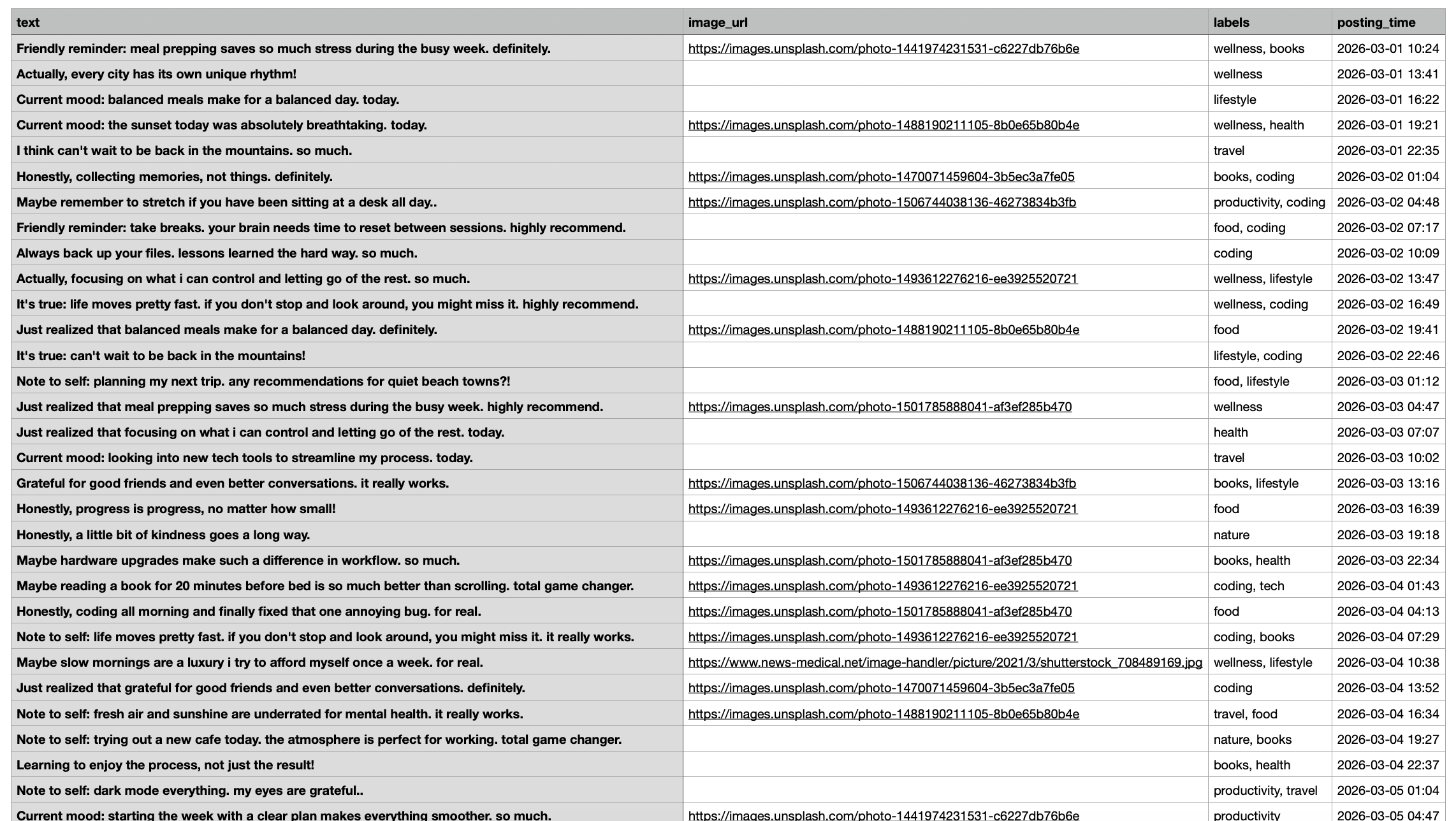
- Each row can include:
- Tweet text
- Image URL
- Posting date and time
- Labels (optional)
Circleboom automatically pulls images from the URLs and attaches them to your tweets, and everything is scheduled in one action.
This removes the need to:
- Upload images one by one
- Copy-paste content repeatedly
- Manually schedule each tweet
How to Bulk Schedule Tweets with Images in Advance on Circleboom Twitter
Step #1: After logging in to Circleboom Twitter, click Bulk Schule.
This opens the bulk scheduling interface and allows you to import multiple tweets at once instead of creating them one by one.

Step #2: Upload your CSV file
Upload your CSV file by dragging it into the upload area or selecting it from your computer.
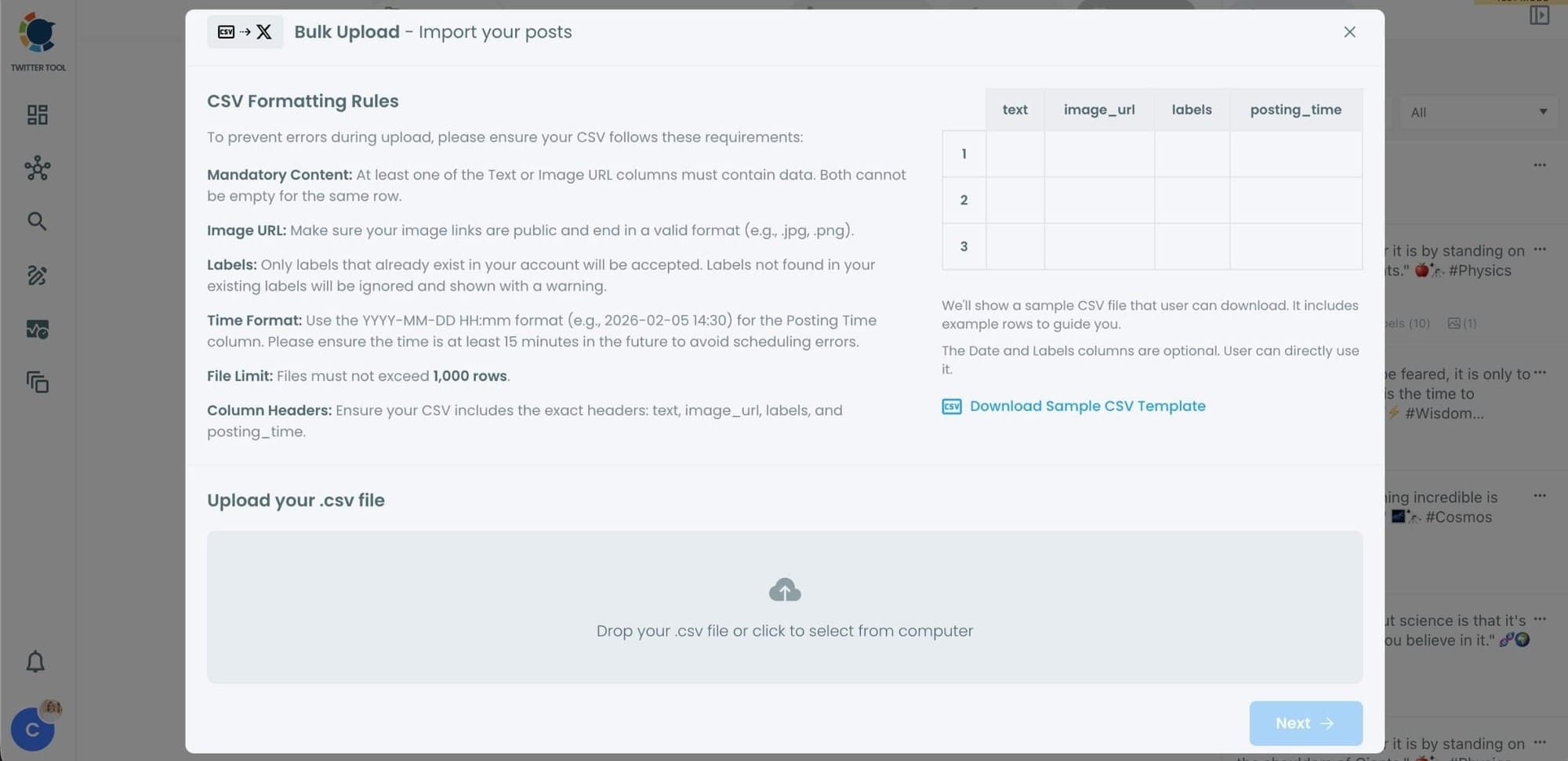
Before uploading, make sure your CSV file follows the required format.
Your file should include the correct column headers, and each row should represent a single tweet.
You can include tweet text, image URLs, labels, and posting times.
Preparing the file in the correct format prevents errors during scheduling.
Step #3: Review your imported tweets
After uploading the CSV file, Circleboom shows all your tweets in a preview list.
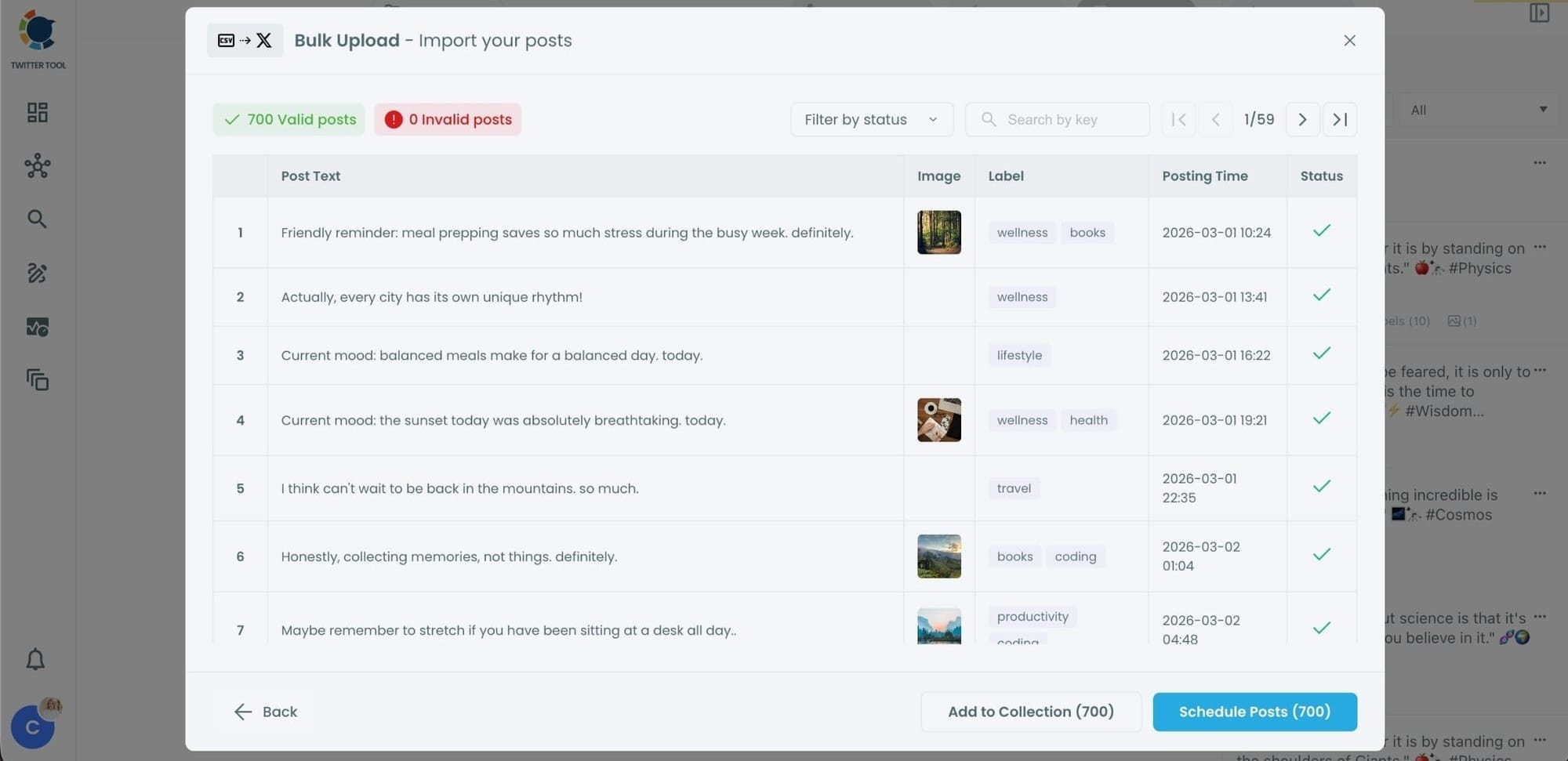
At this stage:
- Valid tweets are marked clearly
- Invalid tweets are shown with the reason for the error
- You can also add tweets to Collections if you want to organize or reuse them later
This step helps you catch and fix problems before anything is scheduled.
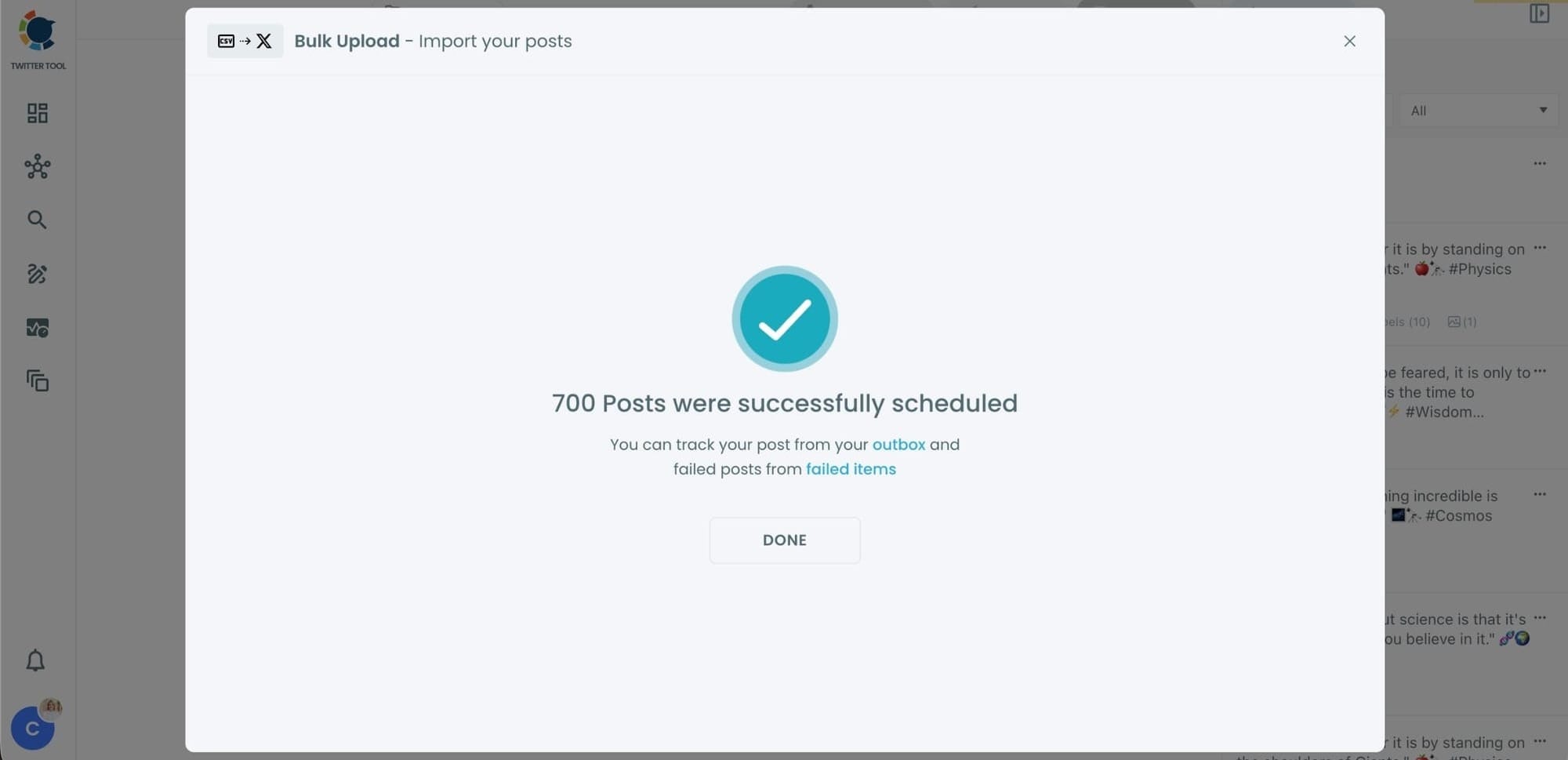
Step #4: Schedule all tweets at once
Once everything looks correct, click Schedule Posts.
Circleboom automatically schedules all valid tweets based on the posting times in your CSV file.
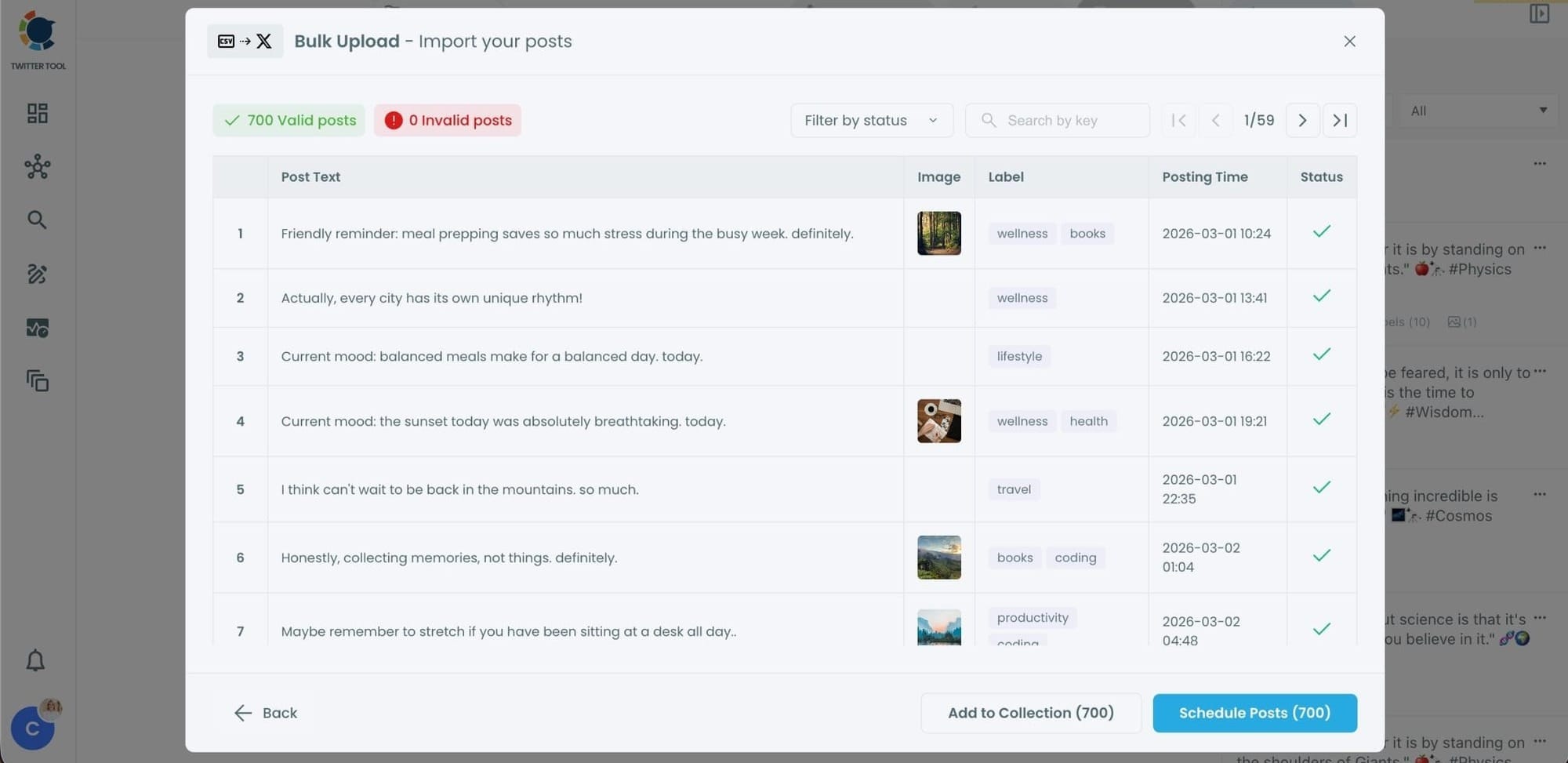
Even hundreds of tweets can be scheduled in seconds, without manual work.
Step #5: Manage scheduled tweets from the Outbox
After scheduling, all your tweets appear in the Outbox and calendar view.
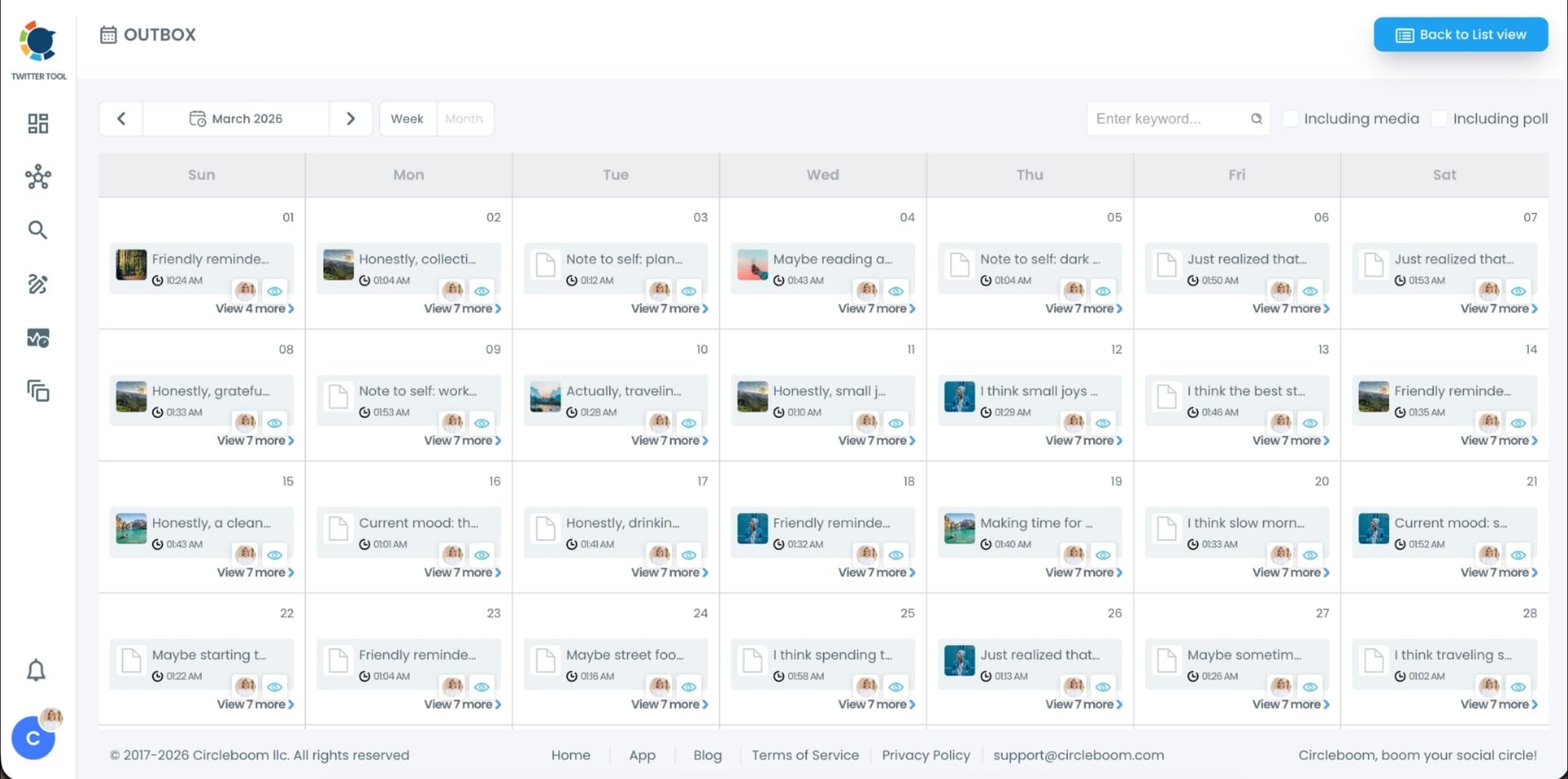
From here, you can:
- See all scheduled tweets by date and time
- Make changes if needed
- Edit or remove scheduled posts
- Keep track of your content easily
This gives you full control even after bulk scheduling is completed.
Why Bulk Scheduling Tweets with Image URLs Saves So Much Time
Think about the traditional way of posting:
You write a tweet → upload an image → set the time → repeat.
Now multiply that by 20, 50, or even 100 tweets.
With bulk scheduling using image URLs, you skip all of that repetition.
Instead:
- You prepare everything in one CSV file
- Add image links once
- Upload the file
And you're done.
This approach is not just faster, it’s also more structured.
You can plan your content like a calendar instead of reacting daily.
What to Include in Your CSV File for Bulk Tweet Scheduling
To make bulk scheduling work smoothly, your CSV file should include the right fields.

Typically, you’ll prepare:
- Tweet text → The content of your post
- Image URL → A public link to the image
- Posting time → Exact date and time for scheduling
- Labels (optional) → Categories like “marketing”, “tech”, “wellness”
The key detail here is the image URL.
Instead of uploading images, you simply paste a direct public image link (like from Unsplash or your own hosted files).
Circleboom will automatically grab that image and attach it to the tweet.
This makes the entire process cleaner and much easier to manage.
 Arif Akdogan
Who Should Use Bulk Tweet Scheduling with Images
This method isn’t just for large teams. It works for almost anyone who wants to stay consistent on Twitter.
It’s especially useful for:
- Social media managers → Managing multiple accounts efficiently
- Agencies → Handling content for different clients
- Brands → Planning campaigns in advance
- Content creators → Staying consistent without daily effort
- Small businesses → Saving time while keeping an active presence
If you’re posting regularly and using images, this workflow can make a big difference.
Benefits of Scheduling Tweets with Images in Advance
Using bulk scheduling with image URLs gives you several advantages:
- Saves time → No manual uploading for every post
- Reduces repetitive work → One upload instead of dozens
- Improves consistency → Plan content ahead
- Keeps your feed active → Even when you're offline
- Organizes your content → Everything is in one structured file
- Scales easily → Schedule large amounts of content without extra effort
Common Mistakes to Avoid
To get the best results, there are a few things to watch out for:
- Using broken or private image URLs (images must be publicly accessible)
- Uploading the CSV in the wrong format
- Forgetting to double-check posting times
- Leaving tweet text incomplete
- Skipping the preview before scheduling
A quick check before uploading can save you from errors later.
Final Thoughts
Bulk scheduling tweets with images is one of the easiest ways to streamline your Twitter workflow in 2026.
Instead of manually creating and uploading every post, you can prepare everything in advance and automate the process.
With Circleboom Twitter, you can:
- Upload a CSV file
- Add image URLs
- Let the system automatically attach visuals
- Schedule all your tweets at once
This turns a repetitive task into a simple, scalable workflow.
If you're serious about saving time and staying consistent, this is one of the smartest ways to manage your Twitter content.






%20do!)